

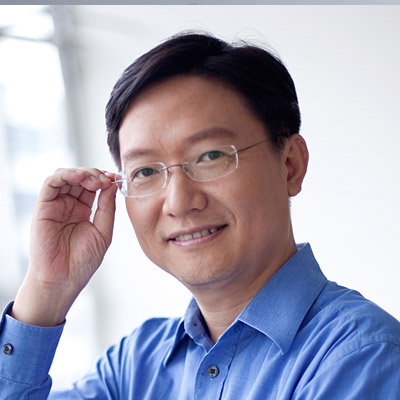
YU Hanry
Professor, Mechanobiology Institute, National University of Singapore
phsyuh@nus.edu.sg
+65 6516 3466
MD 9, #03-03; MD 1, #B1-03;
National University of Singapore
2 Medical Drive #04-01
Singapore 117597
Laboratory website
Translational Mechanobiology Laboratory
Research Program
Technology Innovation for Mechanobiology
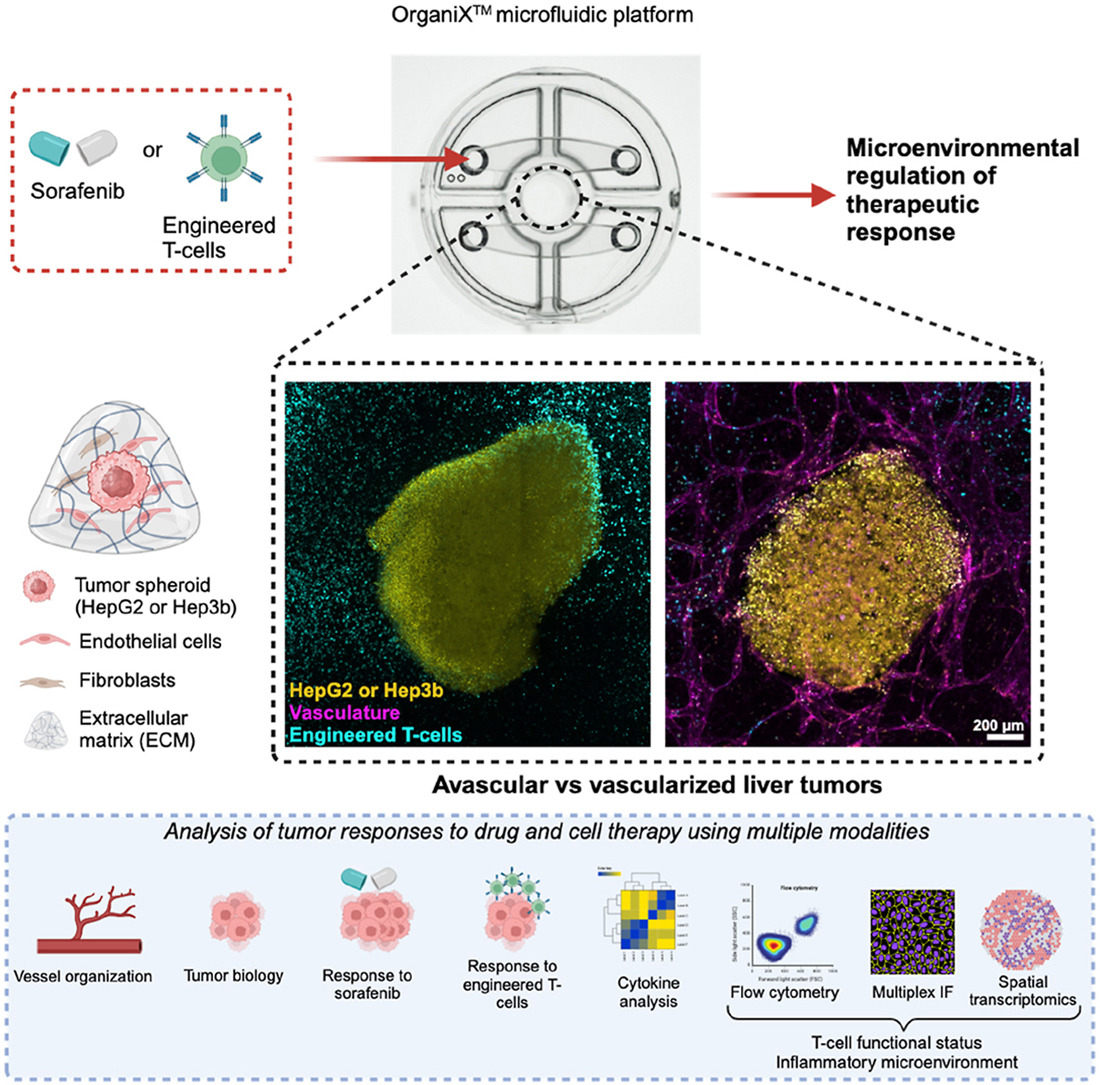
Tumor-on-a-chip Shows How Microenvironment Architecture Affects Liver Cancer Therapies
Researchers from the Pavesi Group at the Mechanobiology Institute, NUS develops in vitro models of liver tumors to study how the presence of vasculature networks affect cancer therapies.

Liu Shutong
Research Assistant, Hirashima Group
Seeking Research Assistant in the Vascular Mechano-medicine Lab of Dr. Shailaja Seetharaman at the Mechanobiology Institute, NUS
We are seeking to recruit a Research Assistant in the research group of Dr. Shailaja Seetharaman at the Mechanobiology Institute and Department of Physiology at the Yong Loo Lin School of Medicine, NUS.
Yu Hanry
Principal Investigator
Research Areas
Cell and Tissue Engineering Laboratory translates the latest biological and engineering knowledge into innovative technologies for diagnostics, therapeutics and drug testing applications in pharmaceutical and healthcare industry.
Research Interests
We adopt the latest industrial management models of teams to train future leaders of the R&D-based industry and academia. Our research expertise span from basic biological studies, biomaterials synthesis, to integrative engineering of biomedical devices that facilitate the translation of systems level understanding of biological functional processes into significant application solutions to help patients with liver diseases; and fuel biomedical industrial development in Asia. We acquire fundamental principles and technologies to quantitatively study and manipulate liver cell and tissue polarity and functions at meso-scale such that their global tissue structures and functions can be precision-engineered at mm-cm scales for applications.
Biography
Prof Yu is a Professor in the Department of Physiology, YLL School of Medicine, National University Health System, Principal Investigator at MBI, and Co-Lead Principal Investigator, Critical Analytics for Manufacturing Personalized-Medicine (CAMP), Singapore-MIT Alliance for Research and Technology (SMART). He was trained as a cell biologist but ventured into various other disciplines such as imaging, biomaterials, tissue engineering, drug testing, and computational biology of liver fibrosis. He takes pride in the interdisciplinary approach to research and graduate training; and he strives to build integrated teams to equip future graduates to readily adapt into both industrial and future academic settings.
Education
PhD, Duke University, USA
Recent Publications
- Balachander GM, Ng IC, Pai RR, Mitra K, Tasnim F, Lim YS, Kwok R, Song Y, Yaw LP, Quah CB, Zhao J, Septiana WL, Kota VG, Teng Y, Zheng K, Xu Y, Lim SH, Ng HH, and Yu H. LEADS – a comprehensive human liver-on-a-chip for non-alcoholic steatohepatitis (NASH) drug testing. Lab Chip 2025;. [PMID: 40391591]
- Wu X, Raymond JJ, Liu Y, Odermatt AJ, Sin W, Teo DBL, Natarajan M, Ng IC, Birnbaum ME, Lu TK, Han J, Springs SL, and Yu H. Rapid Universal Detection of High-Risk and Low-Abundance Microbial Contaminations in CAR-T Cell Therapy. Small Methods 2025;:e2500253. [PMID: 40159755]
- Zhou H, Loo LSW, Ong FYT, Lou X, Wang J, Myint MK, Thong A, Seow DCS, Wibowo M, Ng S, Lv Y, Kwang LG, Bennie RZ, Pang KT, Dobson RCJ, Domigan LJ, Kanagasundaram Y, and Yu H. Cost-effective production of meaty aroma from porcine cells for hybrid cultivated meat. Food Chem 2025; 473:142946. [PMID: 39864181]
- Bennie RZ, Ogilvie OJ, Loo LSW, Zhou H, Ng SK, Jin A, Trlin HJF, Wan A, Yu H, Domigan LJ, and Dobson RCJ. A risk-based approach can guide safe cell line development and cell banking for scaled-up cultivated meat production. Nat Food 2025;. [PMID: 39753758]
- Lou X, Wang J, Kwang LG, Zhou H, Ong FYT, Ng S, and Yu H. Perforated imprinting on high moisture meat analogue confers long range mechanical anisotropy resembling meat cuts. NPJ Sci Food 2024; 8(1):106. [PMID: 39706829]
- Liu Y, Raymond JJ, Wu X, Chua PWL, Ling SYH, Chan CC, Chan C, Loh JXY, Song MXY, Ong MYY, Ho P, Mcbee ME, Springs SL, Yu H, and Han J. Electrostatic microfiltration (EM) enriches and recovers viable microorganisms at low-abundance in large-volume samples and enhances downstream detection. Lab Chip 2024;. [PMID: 39189168]
- Ma Y, Li Z, Luo Y, Chen Y, Ma L, Liu X, Xiao J, Huang M, Li Y, Jiang H, Wang M, Wang X, Li J, Kong J, Shi P, Yu H, Jiang X, and Guo Q. Biodegradable Microembolics with Nanografted Polyanions Enable High-Efficiency Drug Loading and Sustained Deep-Tumor Drug Penetration for Locoregional Chemoembolization Treatment. ACS Nano 2024;. [PMID: 38946122]
- Wu Y, Cheng J, Qi J, Hang C, Dong R, Low BC, Yu H, and Jiang X. Three-dimensional liquid metal-based neuro-interfaces for human hippocampal organoids. Nat Commun 2024; 15(1):4047. [PMID: 38744873]
- Luo X, Wang J, Tan C, Dou Q, Han Z, Wang Z, Tasnim F, Wang X, Zhan Q, Li X, Zhou Q, Cheng J, Liao F, Yip HC, Jiang J, Tan RT, Liu S, and Yu H. Rapid Endoscopic Diagnosis of Benign Ulcerative Colorectal Diseases with an Artificial Intelligence Contextual Framework. Gastroenterology 2024;. [PMID: 38583724]
Lab Members
Recent Lab Alumni
What is the role of cortactin in actin polymerization?
What is the role of cortactin in actin polymerization? Cortactin is a class II nucleation promoting factor (NPF) that binds to actin filaments and influences their stability. Cortactin specifically stabilizes Arp2/3-mediated branch points along [...]
Actin Crosslinking
Actin Crosslinking Crosslinking of actin filaments is a critical step in cell motility and is a fundamental process in filopodia protrusion and lamellipodia formation. Smaller cross-linking proteins that are more globular (e.g. fascin) [...]
What is the role of formin in actin polymerization?
What is the role of formin in actin polymerization? Formins promote the elongation of pre-existing filaments by removing barbed end capping proteins and forming a sleeve around the actin subunits. Formins are also capable [...]
What is the steady state phase of actin polymerization?
What is the steady state phase of actin polymerization? In the steady state phase, the filament dynamics enter a state of equilibrium where monomer disassembly from the (-) end and polymerization at the (+) [...]
What factors influence actin filament length and treadmilling?
What factors influence actin filament length and treadmilling? Several factors influence actin filament length and treadmilling. ATP binding on G-actin and free ATP-G-actin concentration ATP-binding on actin subunits modulates the dynamics of filament assembly, [...]
What factors regulate actin filament polymerization?
What factors regulate actin filament polymerization? Nucleation Promoting Factors (NPFs) (e.g. WASP, Scar/WAVE) modulate actin filament nucleation by bringing together actin monomers and pre-existing actin filaments, for example, during filopodial initiation where they recruit [...]
What are microtubules?
What are microtubules? Microtubules are hollow cylinders [1] that are approximately 25nm in diameter [2] and vary in length from 200 nm to 25 μm. They are formed by the lateral association of between [...]
How are intermediate filaments assembled?
How are intermediate filaments assembled? The soluble subunit for creating intermediate filaments is a tetramer. The tetramer is created from monomers in a stepwise fashion (as reviewed in [1]). First, two monomers associate via [...]
What are intermediate filaments?
What are intermediate filaments? Intermediate filaments are a primary component of the cytoskeleton, although they are not found in all eukaryotes, and are absent in fungi and plants [1]. These filaments, which extend throughout [...]
I-BAR and Other Proteins/Factors
I-BAR and Other Proteins/Factors Proteins containing I-BAR (inverted Bin/amphiphysin/Rvs i.e. IRSp53 Missing-in-metastasis homology Domain or IMD) cooperate with various components of actin filament assembly, to promote filopodia protrusion, via several mechanisms including the stimulation [...]
Fimbrin
Fimbrin Fimbrin (aka plastin homologue, accumentin) is an actin binding protein that was originally identified in microvilli [1][2]. This schematic diagram illustrates the molecular organization of fimbrin as depicted in this resource, and [...]
Filamin
Filamin The filamin family of proteins bind to both actin and a number of signaling molecules including Rho GTPases. Evidence for this was shown with the loss of Filamin-A in M2 Melanoma cells, which [...]