

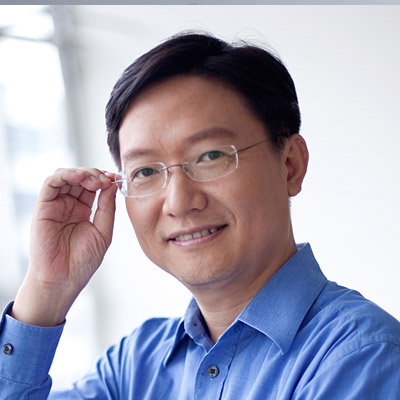
YU Hanry
Professor, Mechanobiology Institute, National University of Singapore
phsyuh@nus.edu.sg
+65 6516 3466
MD 9, #03-03; MD 1, #B1-03;
National University of Singapore
2 Medical Drive #04-01
Singapore 117597
Laboratory website
Translational Mechanobiology Laboratory
Research Program
Technology Innovation for Mechanobiology
MBI-MPG Conference 2025: Mechanobiology in Space and Time.
The MBI-MPG Conference 2025 was held from 9-12th September at the Mechanobiology Institute, National University of Singapore.
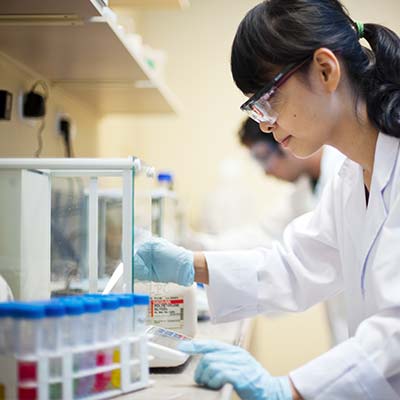
Seeking Postdoctoral Fellow in Asst. Prof. Natalie Dye’s Laboratory at the Mechanobiology Institute, NUS
We are seeking to recruit a Postdoctoral Research Fellow in the Dye Laboratory at the Mechanobiology Institute, NUS.
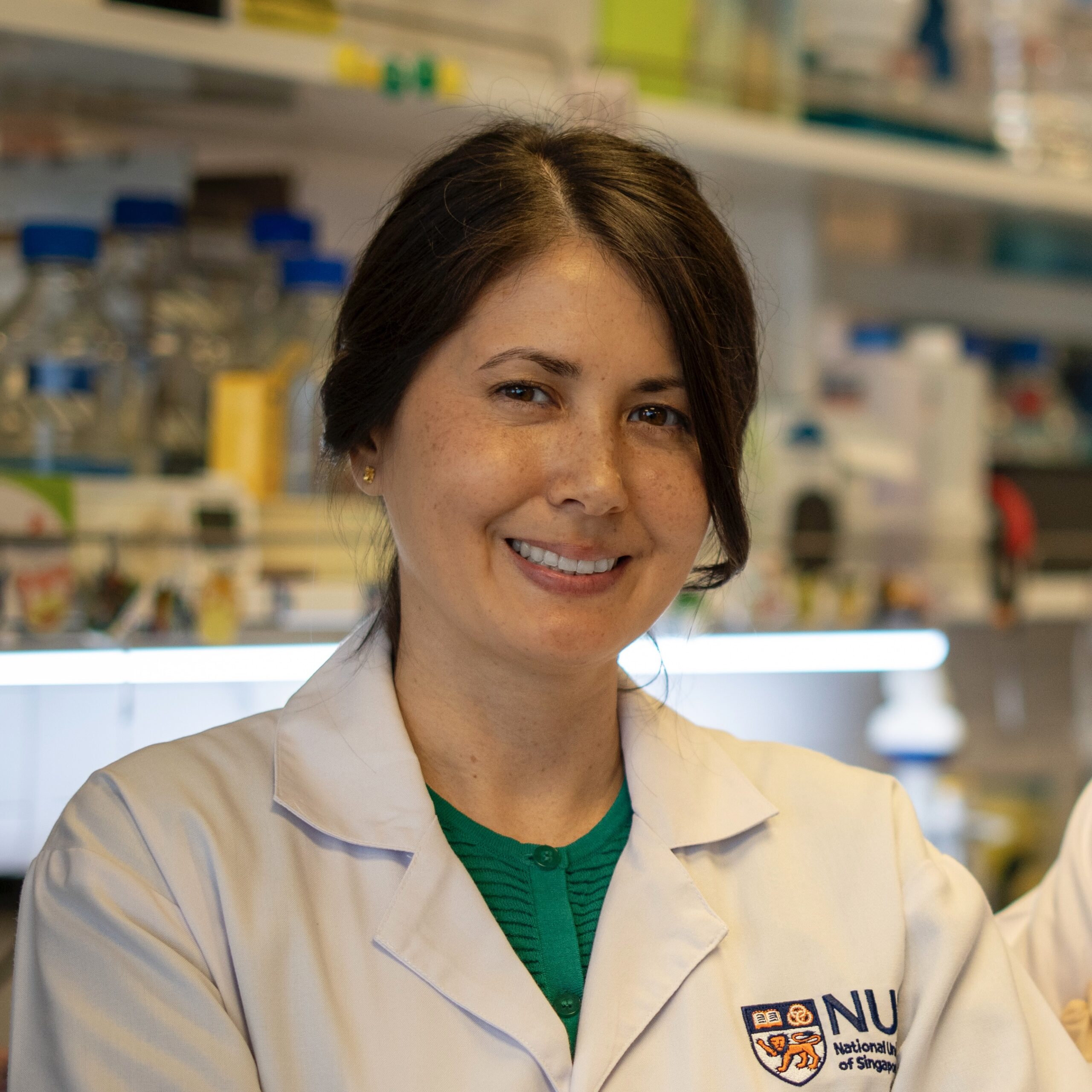
Dr. Jennifer Young Awarded Robert Brown Promising Researcher Award for MOE AcRF Tier 2 Grant
Dr. Jennifer Young received the Robert Brown Promising Researcher Award for her MOE AcRF Tier 2 Grant
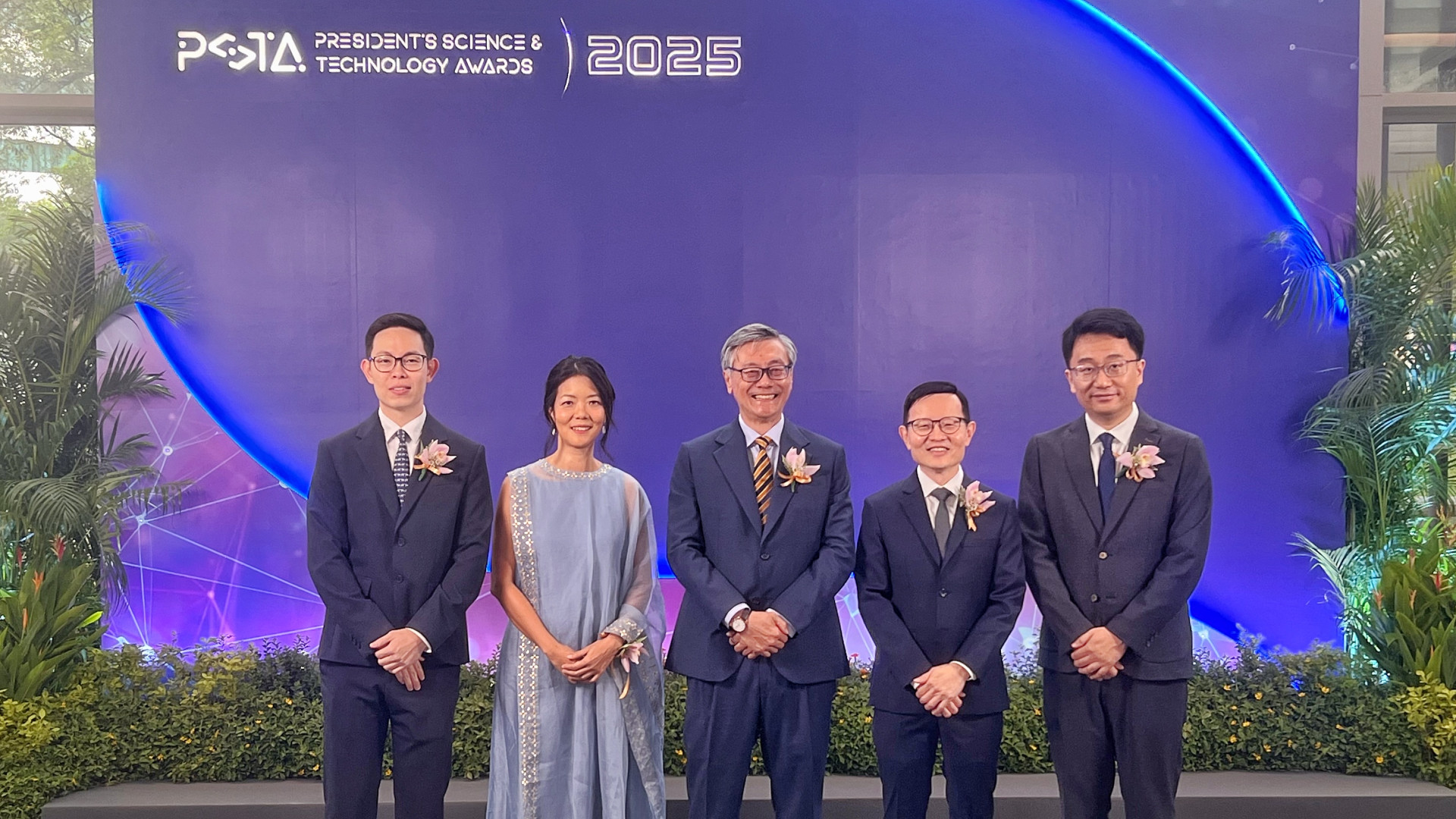
Prof Lim Chwee Teck received the 2025 President’s Science Award
Prof. Lim Chwee Teck was awarded the 2025 President’s Science Award (PSA) for his pioneering contributions to cancer research through innovative mechanobiology approaches, successfully bridging engineering, biological sciences and medicine to foster a deeper understanding of cancer metastasis.
Yu Hanry
Principal Investigator
Research Areas
Cell and Tissue Engineering Laboratory translates the latest biological and engineering knowledge into innovative technologies for diagnostics, therapeutics and drug testing applications in pharmaceutical and healthcare industry.
Research Interests
We adopt the latest industrial management models of teams to train future leaders of the R&D-based industry and academia. Our research expertise span from basic biological studies, biomaterials synthesis, to integrative engineering of biomedical devices that facilitate the translation of systems level understanding of biological functional processes into significant application solutions to help patients with liver diseases; and fuel biomedical industrial development in Asia. We acquire fundamental principles and technologies to quantitatively study and manipulate liver cell and tissue polarity and functions at meso-scale such that their global tissue structures and functions can be precision-engineered at mm-cm scales for applications.
Biography
Prof Yu is a Professor in the Department of Physiology, YLL School of Medicine, National University Health System, Principal Investigator at MBI, and Co-Lead Principal Investigator, Critical Analytics for Manufacturing Personalized-Medicine (CAMP), Singapore-MIT Alliance for Research and Technology (SMART). He was trained as a cell biologist but ventured into various other disciplines such as imaging, biomaterials, tissue engineering, drug testing, and computational biology of liver fibrosis. He takes pride in the interdisciplinary approach to research and graduate training; and he strives to build integrated teams to equip future graduates to readily adapt into both industrial and future academic settings.
Education
PhD, Duke University, USA
Recent Publications
- Balachander GM, Ng IC, Pai RR, Mitra K, Tasnim F, Lim YS, Kwok R, Song Y, Yaw LP, Quah CB, Zhao J, Septiana WL, Kota VG, Teng Y, Zheng K, Xu Y, Lim SH, Ng HH, and Yu H. LEADS – a comprehensive human liver-on-a-chip for non-alcoholic steatohepatitis (NASH) drug testing. Lab Chip 2025;. [PMID: 40391591]
- Wu X, Raymond JJ, Liu Y, Odermatt AJ, Sin W, Teo DBL, Natarajan M, Ng IC, Birnbaum ME, Lu TK, Han J, Springs SL, and Yu H. Rapid Universal Detection of High-Risk and Low-Abundance Microbial Contaminations in CAR-T Cell Therapy. Small Methods 2025;:e2500253. [PMID: 40159755]
- Zhou H, Loo LSW, Ong FYT, Lou X, Wang J, Myint MK, Thong A, Seow DCS, Wibowo M, Ng S, Lv Y, Kwang LG, Bennie RZ, Pang KT, Dobson RCJ, Domigan LJ, Kanagasundaram Y, and Yu H. Cost-effective production of meaty aroma from porcine cells for hybrid cultivated meat. Food Chem 2025; 473:142946. [PMID: 39864181]
- Bennie RZ, Ogilvie OJ, Loo LSW, Zhou H, Ng SK, Jin A, Trlin HJF, Wan A, Yu H, Domigan LJ, and Dobson RCJ. A risk-based approach can guide safe cell line development and cell banking for scaled-up cultivated meat production. Nat Food 2025;. [PMID: 39753758]
- Lou X, Wang J, Kwang LG, Zhou H, Ong FYT, Ng S, and Yu H. Perforated imprinting on high moisture meat analogue confers long range mechanical anisotropy resembling meat cuts. NPJ Sci Food 2024; 8(1):106. [PMID: 39706829]
- Liu Y, Raymond JJ, Wu X, Chua PWL, Ling SYH, Chan CC, Chan C, Loh JXY, Song MXY, Ong MYY, Ho P, Mcbee ME, Springs SL, Yu H, and Han J. Electrostatic microfiltration (EM) enriches and recovers viable microorganisms at low-abundance in large-volume samples and enhances downstream detection. Lab Chip 2024;. [PMID: 39189168]
- Ma Y, Li Z, Luo Y, Chen Y, Ma L, Liu X, Xiao J, Huang M, Li Y, Jiang H, Wang M, Wang X, Li J, Kong J, Shi P, Yu H, Jiang X, and Guo Q. Biodegradable Microembolics with Nanografted Polyanions Enable High-Efficiency Drug Loading and Sustained Deep-Tumor Drug Penetration for Locoregional Chemoembolization Treatment. ACS Nano 2024;. [PMID: 38946122]
- Wu Y, Cheng J, Qi J, Hang C, Dong R, Low BC, Yu H, and Jiang X. Three-dimensional liquid metal-based neuro-interfaces for human hippocampal organoids. Nat Commun 2024; 15(1):4047. [PMID: 38744873]
- Luo X, Wang J, Tan C, Dou Q, Han Z, Wang Z, Tasnim F, Wang X, Zhan Q, Li X, Zhou Q, Cheng J, Liao F, Yip HC, Jiang J, Tan RT, Liu S, and Yu H. Rapid Endoscopic Diagnosis of Benign Ulcerative Colorectal Diseases with an Artificial Intelligence Contextual Framework. Gastroenterology 2024;. [PMID: 38583724]
Lab Members
Recent Lab Alumni
Protein Localization
Protein LocalizationIn order for subcellular processes to be carried out within defined compartments or cellular regions, mechanisms must exist to ensure the required protein components are present at the sites and at an adequate concentration. [...]
Spatiotemporal control of DNA, RNA, protein and lipid synthesis
Spatiotemporal control of DNA, RNA, protein and lipid synthesisIn eukaryotes, synthesis of DNA, RNA, proteins and lipids is performed in a spatiotemporal manner. Each molecule is produced within specialized organelles or compartments with strict regulatory [...]
How do Focal Adhesions Sense the Physical Properties of the Matrix?
How do Focal Adhesions Sense the Physical Properties of the Matrix?Based on the hypothetical protein switches, two models (1 and 2 below) have been put forth to describe the physical mechanism of focal adhesion mechanosensitivity [...]
The Cell
The CellCells are the basic units of life; small machines that facilitate and sustain every process within a living organism. Muscle cells contract to maintain a heartbeat and allow us to move, neurons form networks [...]
Actin Filaments
What are actin filaments? Actin filaments (F-actin) are linear polymers of globular actin (G-actin) subunits and occur as microfilaments in the cytoskeleton and as thin filaments, which are part of the contractile apparatus, in [...]
How are actin filaments distributed in cells and tissues?
How are actin filaments distributed in cells and tissues? Actin filaments are widely distributed throughout cells, forming a range of cytoskeletal structures and contributing to an even broader range of processes. Some of the [...]
How do actin filaments act as a force-sensing conduit for both internal and external forces?
How do actin filaments act as a force-sensing conduit for both internal and external forces? Internal forces The orientation of individual actin filaments in the cytoskeleton is a force-driven evolutionary process [1] that contributes [...]
How do actin filaments depolymerize?
How do actin filaments depolymerize? Introduction to Actin Filament Depolymerization Whole cell motility and mechanosensing rely on the continual restructuring of the cytoskeleton, particularly within lamellipodia and filopodia; two dynamic structures that contribute to [...]
How does Arp2/3-mediate the nucleation of branched filaments?
How does Arp2/3-mediate the nucleation of branched filaments? The Arp2/3 complex is composed of 7 evolutionarily conserved subunits (Arp2, Arp3, ARPC1-C5) that are structurally similar to the barbed end of actin [1]. The complex [...]
How do actin filaments grow?
How do actin filaments grow? Actin Filaments (F-actin) grow from the polymerization of G-actin monomers Actin is a highly abundant (10-100 micromolar on average),~42 kDa structural protein found in all eukaryotic cells (except for [...]
What are the functions of actin filaments?
What are the functions of actin filaments? Several biological processes related to cell shape and movement depend on actin filaments (reviewed in [1]). Some keys functions are: To form the dynamic cytoskeleton, which gives [...]
What is actin nucleation?
What is actin nucleation? The first step in actin polymerization is known as ‘nucleation’. This step sees the formation of an actin nucleus, which is essentially a complex of three actin monomers, from which [...]