

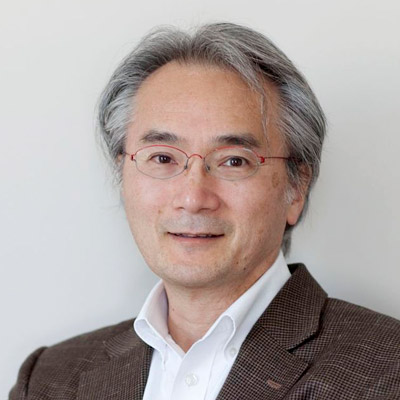
Paul MATSUDAIRA
Founding Deputy Director and Professor, Mechanobiology Institute, National University of Singapore
Research Program
Leader, Mechanotransduction in Tissues
Affiliations
Emeritus Professor, Department of Biological Sciences, National University of Singapore
Emeritus Professor, Centre for BioImaging Sciences, Department of Biological Sciences, National University of Singapore
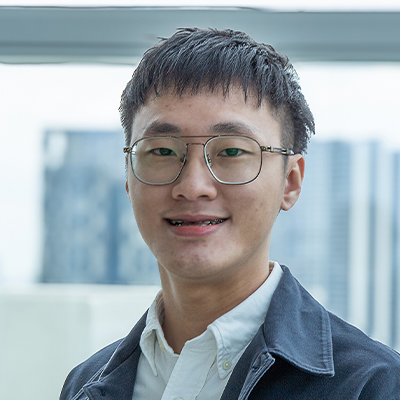
Brandon Goh Yeow Wee
Research Fellow, Seetharaman Group
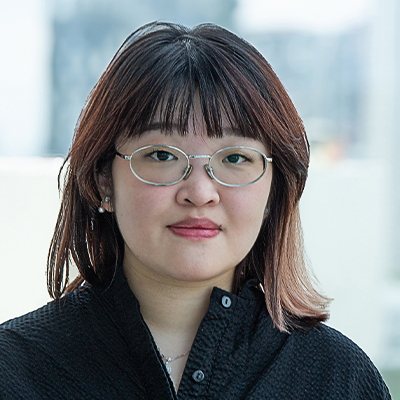
Hana Maldivita Tambrin
Research Fellow, Seetharaman Group
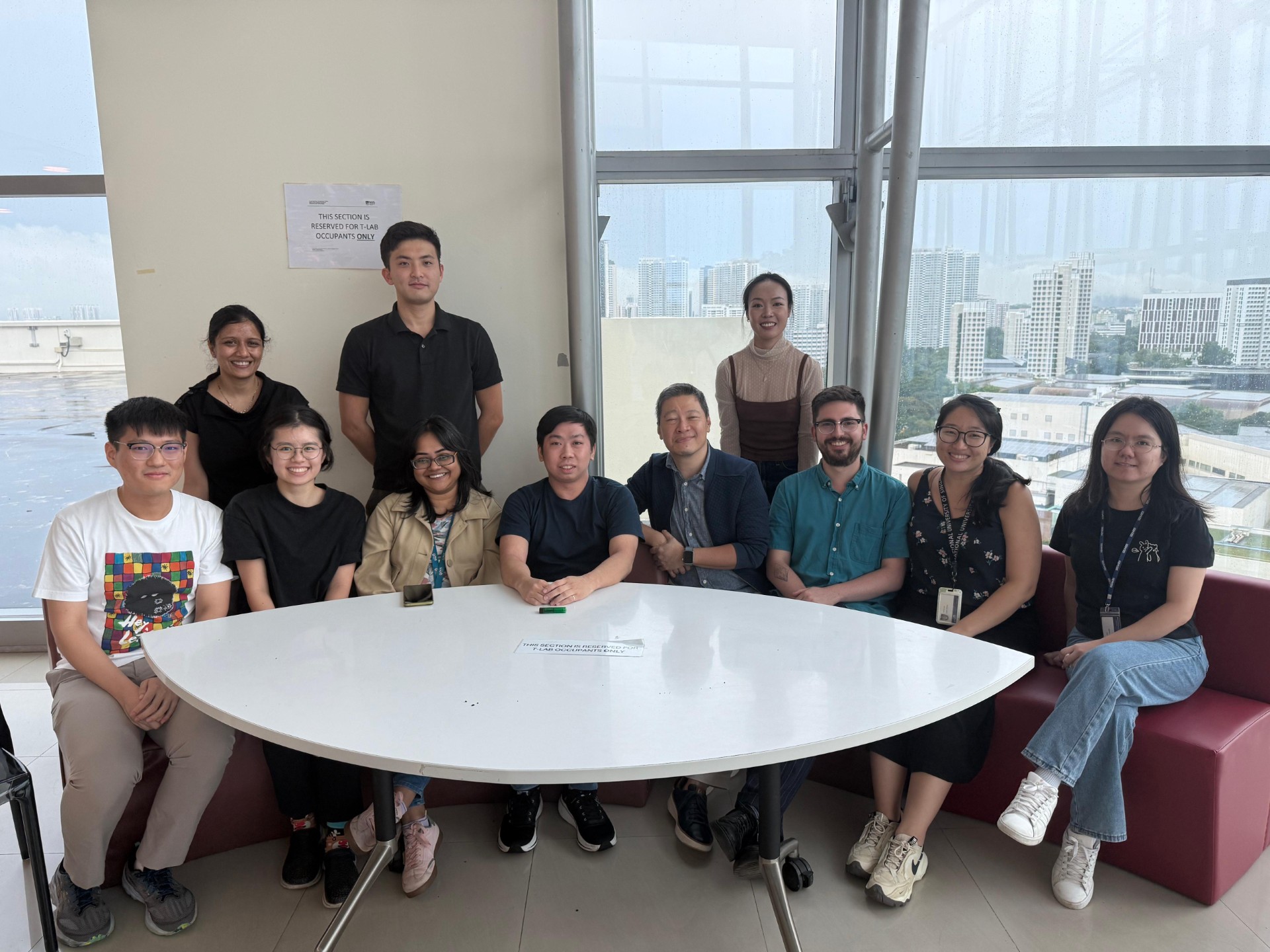
Congratulations to Boon Heng for successfully defending his thesis!
Our heartfelt congratulations to Boon Heng!
Paul Matsudaira
Emeritus Professor
Research Areas
Mechanobiology of cells and tissues on viscoelastic surfaces, nanoscale dynamics, biomaging sciences.
Research Interests
The Matsudaira Lab studies the role of mechanics in epithelial tissue migration and remodeling during development and disease. The organization and migration of epithelial tissues are sensitive to the underlying substratum, especially on visco-elastic substrates. This range of stiffness defines the environment of most basement membranes, cell-cell interactions, and early developmental processes. On the one hand, the lab is interested in the mechanical signatures of the development of chirality, convergence, and extension during the early steps in morphogenesis of the Zebrafish embryo. Other studies are focused on the role of substrate viscoelasticity in tissue remodeling during disease and its regulation by cell-matrix and cell-cell signaling pathways. In order to study complex, multi-scale dynamics the lab develops and applies novel imaging methods such as in situ TEM and strain light-sheet microscopy.
Biography
Formerly a biology and bioengineering professor at the Massachusetts Institute of Technology (MIT), Paul Matsudaira has studied the cytoskeleton since graduating from college. He was the EM technician of Tom Schroeder where he helped investigate the role of microfilaments in the contractile ring. As a graduate student of Dave Burgess he identified the structure and function of the intestine brush border cytoskeleton. Following postdoctoral research on the assembly of actin bundles at the MPI Biophysical Chemistry with Klaus Weber and the MRC LMB with Alan Weeds, Paul started his academic career at the Whitehead Institute and MIT where his lab studied biophysics of actin and other polymer protein bundles, mechanics of polymers and single cells motility, and developed microanalytical methods. In 2009, he moved to Singapore to establish the Centre for BioImaging Sciences, head the Department of Biological Sciences, and help found the Mechanobiology Institute, National University of Singapore.
Education
PhD in Biological Sciences from Dartmouth College, Hanover, New Hampshire
Selected Publications (5 of 177)
- Zheng J, Han SP, Chiu YJ, Yip AK, Boichat N, Pauli AR, Zhu S, Matsudaira P. 2017 Substrate viscoelasticity induces coalescence of epithelial monolayers via subcellular redistribution of vinculin. Biophys J. 113:1585-98.
- Loh D, Sen S, Bosman M, Tan SF, Zhong J, Nijhuis C, Kral P, Matsudaira P, Mirsaidov U. 2016 Multi-step nucleation of nanocrystals in aqueous solution. Nat. Chem 9:77-82.
- Ai Kia Yip, Keng-Hwee Chiam and Paul Matsudaira. Traction stress analysis and modeling reveal that amoeboid migration in confined spaces is accompanied by expansive forces and requires the structural integrity of the membrane–cortex interactions. Integrative Biology, 2015, DOI: 10.1039/ C4IB00245H. First published online 27 May 2015
- Bhattacharya D, Singh V R, Zhi C, Peter T C, Matsudaira P, Barbastathis G. 2012. Three dimensional HiLo-based structured illumination for a Digital Scanned Laser Sheet Microscopy (DSLM) in thick tissue imaging. Optics Express 20(25):27337-27347.
- Mirsaidov UM, Zheng H, Bhattacharya D, Casana Y, Matsudaira P. 2012. Imaging protein structure in water at 2.7 nm resolution by TEM. Biophys J. 102:L15-7.
Recent Publications
- Zhu S, Loo YT, Veerapathiran S, Loo TYJ, Tran BN, Teh C, Zhong J, Matsudaira P, Saunders TE, and Wohland T. Receptor binding and tortuosity explain morphogen local-to-global diffusion coefficient transition. Biophys J 2024;. [PMID: 39049492]
- Tavakoli S, Zhu S, and Matsudaira P. Cell clusters containing intestinal stem cells line, the zebrafish intestine intervillus pocket. iScience 2022; 25(5):104280. [PMID: 35586068]
- Bhattacharya D, Zhong J, Tavakoli S, Kabla A, and Matsudaira P. Strain maps characterize the symmetry of convergence and extension patterns during zebrafish gastrulation. Sci Rep 2021; 11(1):19357. [PMID: 34588480]
- Wu H, Ng DTW, Cheong I, and Matsudaira P. The degradation-promoting roles of deubiquitinases Ubp6 and Ubp3 in cytosolic and ER protein quality control. PLoS ONE 2020; 15(5):e0232755. [PMID: 32401766]
- Chan SN, Prasad R, and Matsudaira P. Genetic Selection Based on a Ste6*C-HA-Ura3 Substrate Identifies New Cytosolic Quality Control Alleles in Saccharomyces cerevisiae. G3 (Bethesda) 2020; 10(6):1879-1891. [PMID: 32299823]
- Matsudaira PT, and Verma CS. Editorial. Prog. Biophys. Mol. Biol. 2019;. [PMID: 30951764]
- Wadduwage DN, Singh VR, Choi H, Yaqoob Z, Heemskerk H, Matsudaira P, and So PTC. Near-common-path interferometer for imaging Fourier-transform spectroscopy in wide-field microscopy. Optica 2017; 4(5):546-556. [PMID: 29392168]
- Zheng JY, Han SP, Chiu Y, Yip AK, Boichat N, Zhu SW, Zhong J, and Matsudaira P. Epithelial Monolayers Coalesce on a Viscoelastic Substrate through Redistribution of Vinculin. Biophys. J. 2017;. [PMID: 28844472]
- Zheng JY, Tan HL, Matsudaira PT, and Choo A. Excess reactive oxygen species production mediates monoclonal antibody-induced human embryonic stem cell death via oncosis. Cell Death Differ. 2017;. [PMID: 28106884]
- . https://www.ncbi.nlm.nih.gov/pubmed/28007915
MBI Lab Members

Chang Ye Ji
PhD Student, Biomedical Engineering Dept, Holle Group

Gao Xu
PhD Student, Biomedical Engineering Dept, Holle Group

Raageshwari D/O Arulselvam
PhD Student, Biomedical Engineering Dept, Young Group
Seeking Postdoctoral Fellow in the Young & Thibault Laboratories at the Mechanobiology Institute, NUS
The Mechanobiology Institute, NUS seeks to recruit a Postdoctoral Research Fellow to Asst. Prof. Jennifer Young's lab.

An early Christmas dinner to celebrate Chan Lab’s accomplishments in 2023!
As the year draws to a close, the Chan Lab celebrated the achievements and contributions by everyone (including many new faces!) in 2023 with an early Christmas dinner, and to thank them for their hard work this busy year. The Lab looks forward to more wonderful things to come in 2024!
What is Mechanobiology?
What is Mechanobiology?Mechanobiology describes how physical factors, such as forces and mechanics, are able to influence biological systems at the molecular, cellular, and tissue level. The fundamental process which drives mechanobiology is mechanotransduction, the ability [...]
How are forces transduced in a cellular environment?
How are forces transduced in a cellular environment?The application of the tensegrity, semiflexible chain and dipole polarization models to biological scenarios has proven most successful in the case of the tensegrity hypothesis (as reviewed in [...]
How is Energy Transferred Across the Cellular System?
How is Energy Transferred Across the Cellular System?Cellular systems function at a nanometer level and use a highly dynamic set of components. Both of these factors act as primary constraints that prevent the generation of [...]
Is Mechanosensing an Active Process?
Is Mechanosensing an Active Process?Types of MechanosensingWhen a cell periodically tests its external environment, a mechanical signal is converted to a chemical signal across the cell membrane. Adhesion receptors located on the external cell membrane [...]
How does the cytoskeleton transmit mechanical forces?
How does the cytoskeleton transmit mechanical forces?It is clear that mechanical forces and structural cues influence cell behavior by regulating signal processes. These signals go on to alter gene expression and reorganize the cytoskeleton and [...]
How do Focal Adhesions Facilitate Mechanosensing?
How do Focal Adhesions Facilitate Mechanosensing?Focal adhesions are known to sense both chemical and physical properties of their matrix environment. Chemical sensing is mediated by the different types of receptors that may function additively, synergistically [...]
What types of forces do cells encounter?
What types of forces do cells encounter?Cells and subcellular structures experience forces from a variety of sources. In general, forces are developed from within the cell via the cytoskeleton (endogenous forces) or come from outside [...]