


Linda J KENNEY
Alumni, Mechanobiology Institute, National University of Singapore
MBI-MPG Conference 2025: Mechanobiology in Space and Time.
The MBI-MPG Conference 2025 was held from 9-12th September at the Mechanobiology Institute, National University of Singapore.
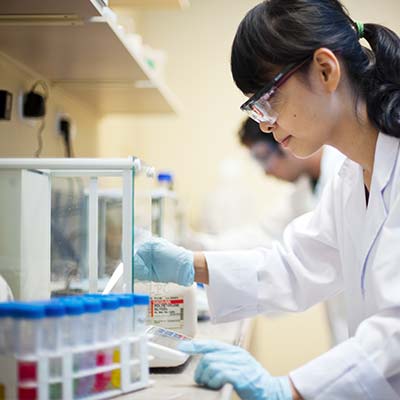
Seeking Postdoctoral Fellow in Asst. Prof. Natalie Dye’s Laboratory at the Mechanobiology Institute, NUS
We are seeking to recruit a Postdoctoral Research Fellow in the Dye Laboratory at the Mechanobiology Institute, NUS.
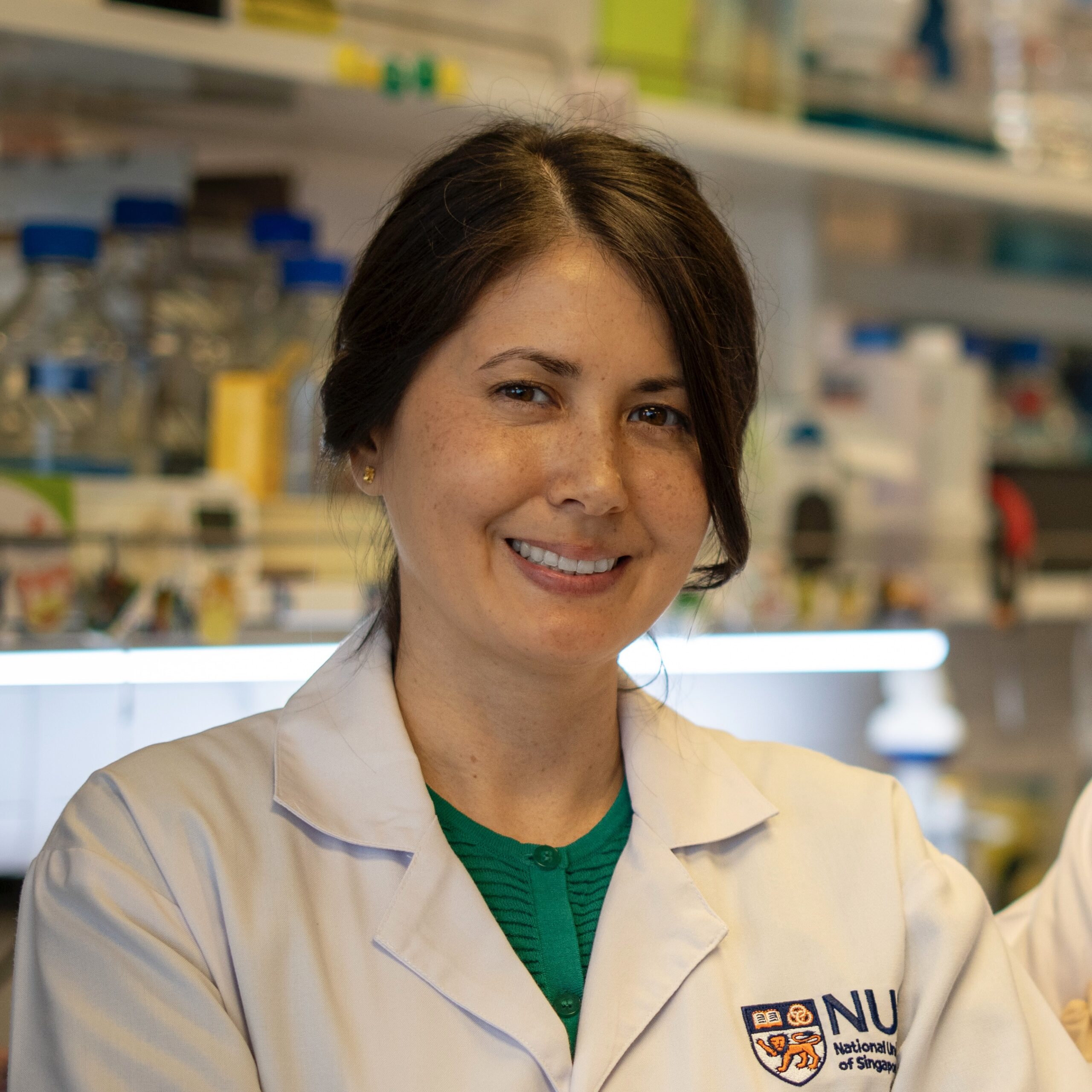
Dr. Jennifer Young Awarded Robert Brown Promising Researcher Award for MOE AcRF Tier 2 Grant
Dr. Jennifer Young received the Robert Brown Promising Researcher Award for her MOE AcRF Tier 2 Grant
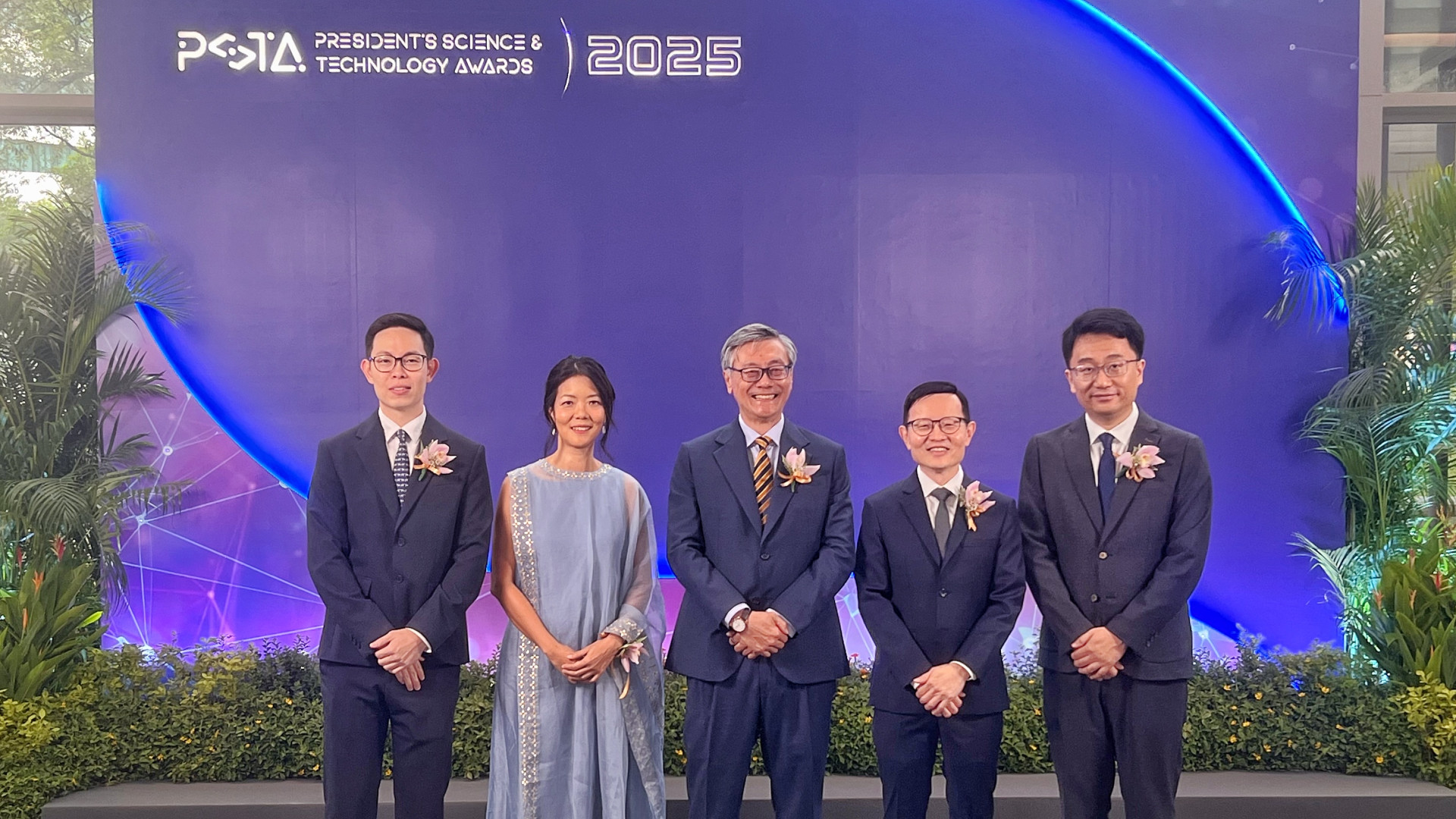
Prof Lim Chwee Teck received the 2025 President’s Science Award
Prof. Lim Chwee Teck was awarded the 2025 President’s Science Award (PSA) for his pioneering contributions to cancer research through innovative mechanobiology approaches, successfully bridging engineering, biological sciences and medicine to foster a deeper understanding of cancer metastasis.
Linda J Kenney
Alumni
Research Areas
Signal transduction in bacteria; Bacterial Pathogenesis; Mechanotransduction and osmotic signaling in E. coli; Mechanisms of anti-silencing of virulence genes in Salmonella
Research Interests
Our laboratory is interested in signal transduction and the regulation of gene expression in prokaryotes. In particular, we are studying the two-component regulatory system EnvZ/OmpR that regulates the expression of outer membrane proteins as well as many other genes. Our present work focuses on how OmpR activates genes required for systemic infection (located on Salmonella pathogenicity island 2) in Salmonella enterica.
The Kenney Lab’s research was recently featured in an article exploring the bacterial molecular switch between virulence or dormancy, Salmonella Lifestyle Choices. Members of her lab have discovered that the bacterial protein SsrB is the molecular switch for determining whether Salmonella infections become acute and virulent, or remain in a dormant carrier state.
The study is published in eLife (Desai et al., The horizontally-acquired response regulator SsrB drives a Salmonella lifestyle switch by relieving biofilm silencing, February 2, 2016, eLife 2016; 5: e10747, doi: 10.7554/eLife.10747). Read full article.
Biography
Dr Kenney is a Professor of Microbiology at the University of Illinois-Chicago. Her laboratory studies two-component systems in bacteria that control gene expression at a single cell and nanometer level.

Professor Linda J Kenney and Professor Michael Sheetz interviewed by the Washington Post at the April 2017 March for Science.
Education
PhD University of Pennsylvania
Recent Publications
- Fernandez M, Yamanaka Y, Zangoui P, White MA, and Kenney LJ. The sulfur assimilation pathway mitigates redox stress from acidic pH in Salmonella Typhi H58. mBio 2025;:e0046725. [PMID: 40422406]
- Shetty D, and Kenney LJ. A pH-sensitive switch activates virulence in Salmonella. Elife 2023; 12. [PMID: 37706506]
- Oh D, Liu X, Sheetz MP, and Kenney LJ. Small, Dynamic Clusters of Tir-Intimin Seed Actin Polymerization. Small 2023;:e2302580. [PMID: 37649226]
- Mon KKZ, Si Z, Chan-Park MB, and Kenney LJ. Polyimidazolium Protects against an Invasive Clinical Isolate of Salmonella Typhimurium. Antimicrob Agents Chemother 2022;:e0059722. [PMID: 36094258]
- Jacob H, Geng H, Shetty D, Halow N, Kenney LJ, and Nakano MM. Distinct Interaction Mechanism of RNAP and ResD and Distal Subsites for Transcription Activation of Nitrite Reductase in Bacillus subtilisψ. J Bacteriol 2021;:JB0043221. [PMID: 34898263]
- Singh MK, Zangoui P, Yamanaka Y, and Kenney LJ. Genetic code expansion enables visualization of Salmonella type three secretion system components and secreted effectors. Elife 2021; 10. [PMID: 34061032]
- Kenney LJ, and Anand GS. EnvZ/OmpR Two-Component Signaling: An Archetype System That Can Function Noncanonically. EcoSal Plus 2020; 9(1). [PMID: 32003321]
- Desai SK, and Kenney LJ. Switching Lifestyles Is an in vivo Adaptive Strategy of Bacterial Pathogens. Front Cell Infect Microbiol 2019; 9:421. [PMID: 31921700]
- Desai SK, Padmanabhan A, Harshe S, Zaidel-Bar R, and Kenney LJ. Salmonella biofilms program innate immunity for persistence in Caenorhabditis elegans. Proc. Natl. Acad. Sci. U.S.A. 2019;. [PMID: 31160462]
- Ottemann KM, and Kenney LJ. Editorial overview: Host-pathogen interactions: bacteria. Curr. Opin. Microbiol. 2019; 47:iii-v. [PMID: 31138403]
Lab Members
Protein Localization
Protein LocalizationIn order for subcellular processes to be carried out within defined compartments or cellular regions, mechanisms must exist to ensure the required protein components are present at the sites and at an adequate concentration. [...]
Spatiotemporal control of DNA, RNA, protein and lipid synthesis
Spatiotemporal control of DNA, RNA, protein and lipid synthesisIn eukaryotes, synthesis of DNA, RNA, proteins and lipids is performed in a spatiotemporal manner. Each molecule is produced within specialized organelles or compartments with strict regulatory [...]
How do Focal Adhesions Sense the Physical Properties of the Matrix?
How do Focal Adhesions Sense the Physical Properties of the Matrix?Based on the hypothetical protein switches, two models (1 and 2 below) have been put forth to describe the physical mechanism of focal adhesion mechanosensitivity [...]
The Cell
The CellCells are the basic units of life; small machines that facilitate and sustain every process within a living organism. Muscle cells contract to maintain a heartbeat and allow us to move, neurons form networks [...]
Actin Filaments
What are actin filaments? Actin filaments (F-actin) are linear polymers of globular actin (G-actin) subunits and occur as microfilaments in the cytoskeleton and as thin filaments, which are part of the contractile apparatus, in [...]
How are actin filaments distributed in cells and tissues?
How are actin filaments distributed in cells and tissues? Actin filaments are widely distributed throughout cells, forming a range of cytoskeletal structures and contributing to an even broader range of processes. Some of the [...]
How do actin filaments act as a force-sensing conduit for both internal and external forces?
How do actin filaments act as a force-sensing conduit for both internal and external forces? Internal forces The orientation of individual actin filaments in the cytoskeleton is a force-driven evolutionary process [1] that contributes [...]
How do actin filaments depolymerize?
How do actin filaments depolymerize? Introduction to Actin Filament Depolymerization Whole cell motility and mechanosensing rely on the continual restructuring of the cytoskeleton, particularly within lamellipodia and filopodia; two dynamic structures that contribute to [...]
How does Arp2/3-mediate the nucleation of branched filaments?
How does Arp2/3-mediate the nucleation of branched filaments? The Arp2/3 complex is composed of 7 evolutionarily conserved subunits (Arp2, Arp3, ARPC1-C5) that are structurally similar to the barbed end of actin [1]. The complex [...]
How do actin filaments grow?
How do actin filaments grow? Actin Filaments (F-actin) grow from the polymerization of G-actin monomers Actin is a highly abundant (10-100 micromolar on average),~42 kDa structural protein found in all eukaryotic cells (except for [...]
What are the functions of actin filaments?
What are the functions of actin filaments? Several biological processes related to cell shape and movement depend on actin filaments (reviewed in [1]). Some keys functions are: To form the dynamic cytoskeleton, which gives [...]
What is actin nucleation?
What is actin nucleation? The first step in actin polymerization is known as ‘nucleation’. This step sees the formation of an actin nucleus, which is essentially a complex of three actin monomers, from which [...]