Guiding random events to create resilient patterns
A study from the Saunders lab uncovers how random cell fusion events during muscle development are regulated at the tissue level to ensure correct patterning of the muscle architecture. Learn more


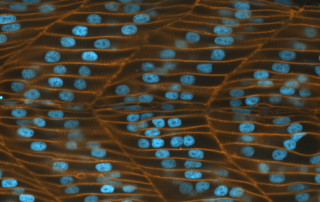
A study from the Saunders lab uncovers how random cell fusion events during muscle development are regulated at the tissue level to ensure correct patterning of the muscle architecture. Learn more
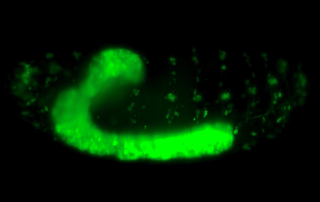
A collaborative study from the Saunders Lab and the Martin-Blanco Lab at the Molecular Biology Institute Barcelona, Spain, demonstrates how the contraction of a Drosophila's ventral nerve cord during development is oscillatory and driven by the combined contractile efforts of individual cells. Learn more
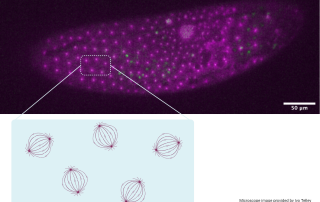
A collaborative study from the Saunders Lab and the Telley Lab at Instituto Gulbenkian de Ciência, Portugal, demonstrates how mechanical repulsive forces lead to precise arrangement of nuclei during development Learn more
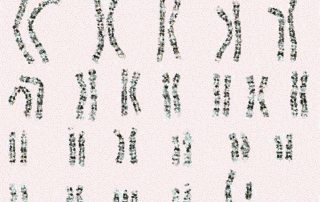
A review from Prof Rong Li and Dr. Jin Zhu outlines the the causes of aneuploidy and how it can affect cell behaviour and function. Learn more
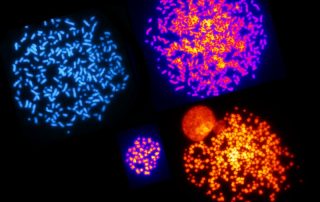
A recent study from the Li Lab at the Mechanobiology Institute, National University of Singapore and Johns Hopkins University, USA has revealed new aspects on the involvement of p53 protein in preventing mistakes in chromosomal segregation. Learn more
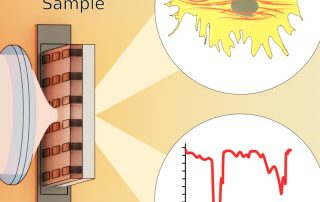
A recent study from the Grenci Lab at the Mechanobiology Institute, National University of Singapore has described a new, highly-sensitive IR spectroscopy technique that overcomes the limitations of existing techniques by utilizing optical components that are commonly used in existing visible light imaging techniques. Learn more

A recent study led by Dr. Shaobo Zhang and MBI Principal Investigator Associate Professor Timothy Saunders describes how periodic filopodial retraction caused by the contractile activity of transient Myosin II clusters at the cell leading edge ensures precise matching between primitive heart cells during heart development in Drosophila embryos. Learn more
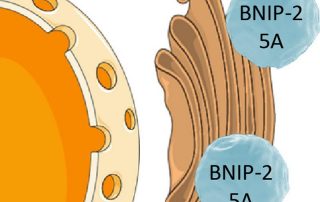
Recent study led by MBI Research Fellows Pan Meng and Ti Weng Chew and Principal Investigator Associate Professor Low Boon Chuan has revealed a role for BNIP-2 protein in scaffolding GEF-H1 and RhoA, following microtubule disassembly, and has described how this scaffolding is important for RhoA-dependent regulation of cell migration. Learn more

A collaboration between scientists from MBI and the Institute of Science and Technology (IST) Austria has revealed how Rab proteins act as molecular switches inside the cell to regulate signalling during intracellular trafficking. Learn more
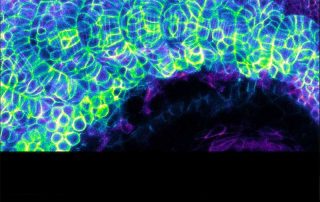
By investigating how chevron patterns form in embryonic fish muscle, a team from the Saunders Lab has revealed how physical forces are essential for correct formation of complex organ shapes. Learn more
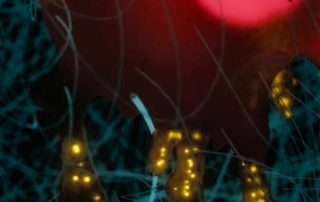
Dr Rishita Changede of the Sheetz Lab is exploring how the spacing between matrix protein fibers affect clustering of the cell surface receptors integrins and how this influences the formation of integrin-mediated cell-matrix adhesions and subsequent cell spreading. Learn more
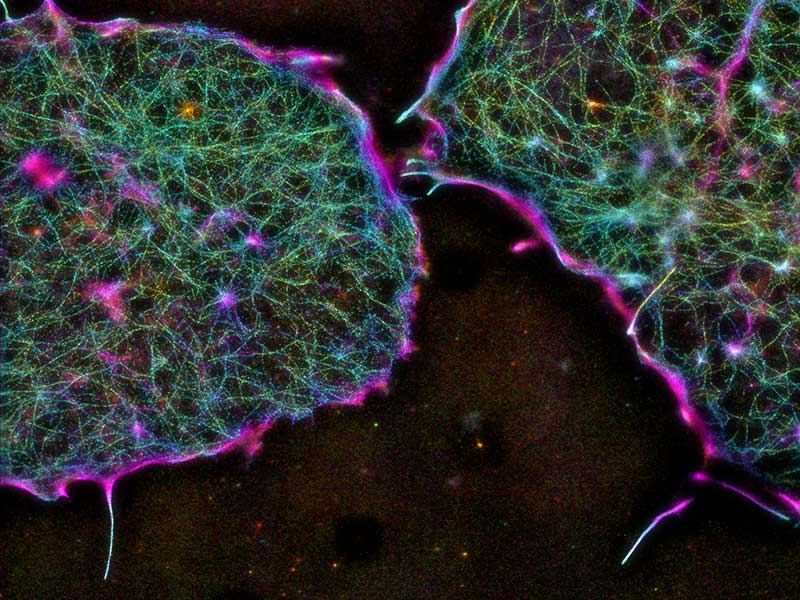
Recent study led by MBI graduate student Shumin Xia and Principal Investigator Associate Professor Pakorn Tony Kanchanawong use super resolution imaging techniques to study the nanoscale organization of the cortical actin cytoskeleton in mouse embryonic stem cells and understand the role of molecules such as Arp2/3, formins, and capping protein in coordinating cortical architecture in mESCs.
 A leading global university centred in Asia, NUS is Singapore's flagship university, offering a global approach to education and research with a focus on Asian perspectives and expertise.
 One of four Research Centres of Excellence at NUS, MBI is working to identify, measure and describe how the forces for motility and morphogenesis are expressed at the molecular, cellular and tissue level.