

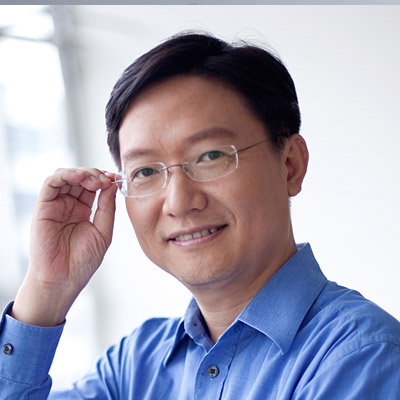
YU Hanry
Professor, Mechanobiology Institute, National University of Singapore
phsyuh@nus.edu.sg
+65 6516 3466
MD 9, #03-03; MD 1, #B1-03;
National University of Singapore
2 Medical Drive #04-01
Singapore 117597
Laboratory website
Translational Mechanobiology Laboratory
Research Program
Technology Innovation for Mechanobiology
Seeking Research Assistant in Transmission Electron Microscopy at the Mechanobiology Institute, NUS
We are seeking a Research Assistant in Transmission Electron Microscopy (TEM) at the Mechanobiology Institute, NUS
Seeking Research Fellow in Transmission Electron Microscopy at the Mechanobiology Institute, NUS
We are seeking a Research Fellow in Transmission Electron Microscopy at the Mechanobiology Institute, NUS
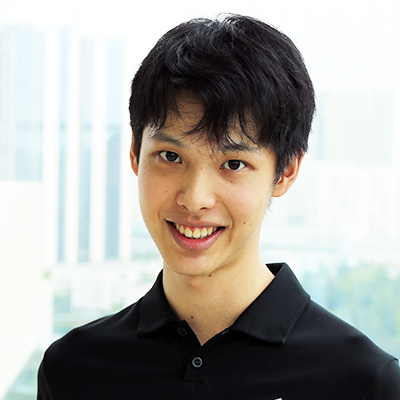
Hu Yuqi
Research Assistant, Yu Group
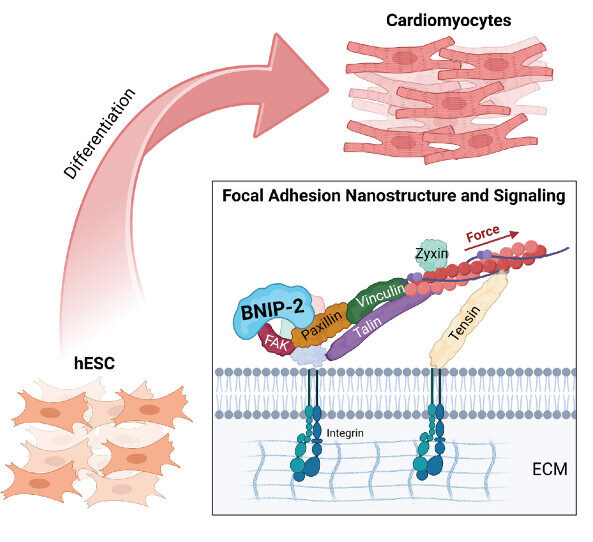
The Nano-Heartbuilder: BNIP-2 Influences Mechanosensing in Cardiomyoblast Differentiation
Researchers from the Low Lab at MBI discover a crucial role for the scaffold protein BNIP-2 in orchestrating focal adhesion dynamics during early heart development, offering new insights into heart regeneration strategies.
Yu Hanry
Principal Investigator
Research Areas
Cell and Tissue Engineering Laboratory translates the latest biological and engineering knowledge into innovative technologies for diagnostics, therapeutics and drug testing applications in pharmaceutical and healthcare industry.
Research Interests
We adopt the latest industrial management models of teams to train future leaders of the R&D-based industry and academia. Our research expertise span from basic biological studies, biomaterials synthesis, to integrative engineering of biomedical devices that facilitate the translation of systems level understanding of biological functional processes into significant application solutions to help patients with liver diseases; and fuel biomedical industrial development in Asia. We acquire fundamental principles and technologies to quantitatively study and manipulate liver cell and tissue polarity and functions at meso-scale such that their global tissue structures and functions can be precision-engineered at mm-cm scales for applications.
Biography
Prof Yu is a Professor in the Department of Physiology, YLL School of Medicine, National University Health System, Principal Investigator at MBI, and Co-Lead Principal Investigator, Critical Analytics for Manufacturing Personalized-Medicine (CAMP), Singapore-MIT Alliance for Research and Technology (SMART). He was trained as a cell biologist but ventured into various other disciplines such as imaging, biomaterials, tissue engineering, drug testing, and computational biology of liver fibrosis. He takes pride in the interdisciplinary approach to research and graduate training; and he strives to build integrated teams to equip future graduates to readily adapt into both industrial and future academic settings.
Education
PhD, Duke University, USA
Recent Publications
- Balachander GM, Ng IC, Pai RR, Mitra K, Tasnim F, Lim YS, Kwok R, Song Y, Yaw LP, Quah CB, Zhao J, Septiana WL, Kota VG, Teng Y, Zheng K, Xu Y, Lim SH, Ng HH, and Yu H. LEADS – a comprehensive human liver-on-a-chip for non-alcoholic steatohepatitis (NASH) drug testing. Lab Chip 2025;. [PMID: 40391591]
- Wu X, Raymond JJ, Liu Y, Odermatt AJ, Sin W, Teo DBL, Natarajan M, Ng IC, Birnbaum ME, Lu TK, Han J, Springs SL, and Yu H. Rapid Universal Detection of High-Risk and Low-Abundance Microbial Contaminations in CAR-T Cell Therapy. Small Methods 2025;:e2500253. [PMID: 40159755]
- Zhou H, Loo LSW, Ong FYT, Lou X, Wang J, Myint MK, Thong A, Seow DCS, Wibowo M, Ng S, Lv Y, Kwang LG, Bennie RZ, Pang KT, Dobson RCJ, Domigan LJ, Kanagasundaram Y, and Yu H. Cost-effective production of meaty aroma from porcine cells for hybrid cultivated meat. Food Chem 2025; 473:142946. [PMID: 39864181]
- Bennie RZ, Ogilvie OJ, Loo LSW, Zhou H, Ng SK, Jin A, Trlin HJF, Wan A, Yu H, Domigan LJ, and Dobson RCJ. A risk-based approach can guide safe cell line development and cell banking for scaled-up cultivated meat production. Nat Food 2025;. [PMID: 39753758]
- Lou X, Wang J, Kwang LG, Zhou H, Ong FYT, Ng S, and Yu H. Perforated imprinting on high moisture meat analogue confers long range mechanical anisotropy resembling meat cuts. NPJ Sci Food 2024; 8(1):106. [PMID: 39706829]
- Liu Y, Raymond JJ, Wu X, Chua PWL, Ling SYH, Chan CC, Chan C, Loh JXY, Song MXY, Ong MYY, Ho P, Mcbee ME, Springs SL, Yu H, and Han J. Electrostatic microfiltration (EM) enriches and recovers viable microorganisms at low-abundance in large-volume samples and enhances downstream detection. Lab Chip 2024;. [PMID: 39189168]
- Ma Y, Li Z, Luo Y, Chen Y, Ma L, Liu X, Xiao J, Huang M, Li Y, Jiang H, Wang M, Wang X, Li J, Kong J, Shi P, Yu H, Jiang X, and Guo Q. Biodegradable Microembolics with Nanografted Polyanions Enable High-Efficiency Drug Loading and Sustained Deep-Tumor Drug Penetration for Locoregional Chemoembolization Treatment. ACS Nano 2024;. [PMID: 38946122]
- Wu Y, Cheng J, Qi J, Hang C, Dong R, Low BC, Yu H, and Jiang X. Three-dimensional liquid metal-based neuro-interfaces for human hippocampal organoids. Nat Commun 2024; 15(1):4047. [PMID: 38744873]
- Luo X, Wang J, Tan C, Dou Q, Han Z, Wang Z, Tasnim F, Wang X, Zhan Q, Li X, Zhou Q, Cheng J, Liao F, Yip HC, Jiang J, Tan RT, Liu S, and Yu H. Rapid Endoscopic Diagnosis of Benign Ulcerative Colorectal Diseases with an Artificial Intelligence Contextual Framework. Gastroenterology 2024;. [PMID: 38583724]
Lab Members
Recent Lab Alumni
What are cytoskeletal cages?
What are cytoskeletal cages? Cytoskeletal components can assemble into cage-like structures within the cell. These cages serve to segregate intracellular regions or organelles, and can protect their contents from mechanical stress. At the level [...]
What is the plasma membrane?
What is the plasma membrane? Plasma membranes are subcellular structures, approximately 10nm thick, that form a protective boundary around the cell as well as the cell’s organelles. They serve to both impede foreign material [...]
How do mechanically-gated ion channels facilitate mechanotransduction?
How do mechanically-gated ion channels facilitate mechanotransduction? Mechanotransduction relies on the ability of cells to convert mechanical cues, such as stretch or compression, to biochemical signals. One way this occurs is through the activity [...]
How do lipid bilayer components move?
How do lipid bilayer components move? One of the tenets of the Fluid-Mosaic membrane model is that the components of the bilayers are free to move. Before describing the differences between lipid and protein [...]
Why are membrane lipids asymmetrical?
Why are membrane lipids asymmetrical? The human red blood cell is functionally specialized for transporting oxygen. In order to maximize oxygen capacity, it has no nucleus or organelles, consisting primarily of plasma membrane and [...]
What is Membrane Trafficking?
What is Membrane Trafficking? Membrane trafficking encompasses the wide variety of processes that go into the movement of cargo (typically proteins, pathogens and other macromolecules) using membrane bound transport vesicles. This transport can take [...]
What is caveolar endocytosis?
What is caveolar endocytosis? Caveolar endocytosis is a clathrin-independent endocytic process which involves bulb-shaped, 50-60nm plasma membrane invaginations called caveolae (or ‘little caves’). Caveolae formation is driven by integral membrane proteins called caveolins as [...]
What is clathrin-mediated endocytosis?
What is clathrin-mediated endocytosis? Clathrin-mediated endocytosis (CME) is a vesicular transport event that facilitates the internalization and recycling of receptors engaged in a variety of processes, including signal transduction (G-protein and tyrosine kinase receptors), [...]
How is clathrin recruited to the plasma membrane?
How is clathrin recruited to the plasma membrane? Clathrin-mediated endocytosis is triggered by phosphatidylinositol-4,5-bisphosphate (PIP2) accumulation within the plasma membrane. PIP2 accumulates as a result of phosphoinositide catalysis by the lipid kinases, phosphatidylinositol-4-kinase (PI4K) [...]
How does the clathrin coated pit form?
How does the clathrin coated pit form? Adaptor proteins such as AP-2, AP180 and CALM (Clathrin-assembly lymphoid myeloid leukaemia protein), which accumulate within the lipid bilayer, are responsible for the recruitment of the triskelion [...]
How does invagination and maturation of the clathrin-coated vesicle occur?
How does invagination and maturation of the clathrin-coated vesicle occur? Clathrin-coated vesicle maturation incorporates the activities of a range of proteins. Actin, myosin and WASP all have important roles in the formation and stabilization [...]
How does the clathrin-coated vesicle neck narrow?
How does the clathrin-coated vesicle neck narrow? In the final stages of clathrin-coated vesicle (CCV) formation, Phosphatidylinositol-4,5-bisphosphate (PIP2) undergoes a dephosphorylation by phosphatases such as synaptojanin 1 (Synj1) [1]. Not only does this inhibit [...]

