

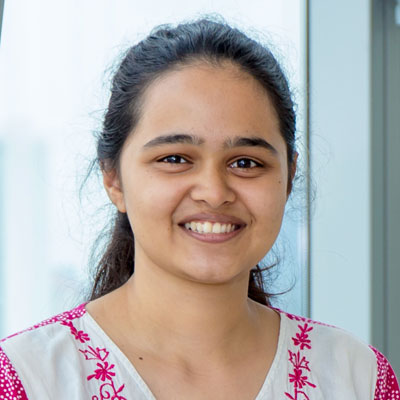
Saradha VENKATACHALAPATHY
PhD Student, Mechanobiology Institute, National University of Singapore
E0018317@u.nus.edu
Level 10 T-Lab
National University of Singapore
5A Engineering Drive 1
Singapore 117411
How do motor proteins transport cargo along the cytoskeleton?
How do motor proteins transport cargo along the cytoskeleton? Along with providing structural support to the cell, and transmitting force signals, cytoskeletal filaments also provide cells with a network of ‘tracks’ that can be [...]
What is Myosin?
What is Myosin? An Introduction to the Myosin Superfamily of Proteins Myosin I has unique tail domain(s) relative to other myosin members which allows myosin I to bind to membrane lipids or to more [...]
How do lipid bilayer components move?
How do lipid bilayer components move? One of the tenets of the Fluid-Mosaic membrane model is that the components of the bilayers are free to move. Before describing the differences between lipid and protein [...]
What are cytoskeletal cages?
What are cytoskeletal cages? Cytoskeletal components can assemble into cage-like structures within the cell. These cages serve to segregate intracellular regions or organelles, and can protect their contents from mechanical stress. At the level [...]
What steps are involved in the myosin powerstroke?
What steps are involved in the myosin powerstroke? Each myosin motor protein possesses ATPase activity and functions in a cyclical manner that couples ATP binding and hydrolysis to a conformational change in the protein. [...]
Membrane Dynamics
What are cell membranes? What are the physiological functions of biological membranes? Eukaryotic cells and their organelles are enveloped by viscoelastic layers made of lipids and proteins. These layers are generally referred to as [...]
Saradha Venkatachalapathy
PhD Student
Recent Publications
- Venkatachalapathy S, Sreekumar D, Ratna P, and Shivashankar GV. Actomyosin contractility as a mechanical checkpoint for cell state transitions. Sci Rep 2022; 12(1):16063. [PMID: 36163393]
- Venkatachalapathy S, Jokhun DS, Andhari M, and Shivashankar GV. Single cell imaging-based chromatin biomarkers for tumor progression. Sci Rep 2021; 11(1):23041. [PMID: 34845273]
- Yang KD, Belyaeva A, Venkatachalapathy S, Damodaran K, Katcoff A, Radhakrishnan A, Shivashankar GV, and Uhler C. Multi-domain translation between single-cell imaging and sequencing data using autoencoders. Nat Commun 2021; 12(1):31. [PMID: 33397893]
- Yang KD, Damodaran K, Venkatachalapathy S, Soylemezoglu AC, Shivashankar GV, and Uhler C. Predicting cell lineages using autoencoders and optimal transport. PLoS Comput. Biol. 2020; 16(4):e1007828. [PMID: 32343706]
- Venkatachalapathy S, Jokhun DS, and Shivashankar GV. Multivariate analysis reveals activation-primed fibroblast geometric states in engineered 3D tumor microenvironments. Mol. Biol. Cell 2020;:mbcE19080420. [PMID: 32023167]
- Damodaran K, Venkatachalapathy S, Alisafaei F, Radhakrishnan AV, Sharma Jokhun D, Shenoy VB, and Shivashankar GV. Compressive force induces reversible chromatin condensation and cell geometry dependent transcriptional response. Mol. Biol. Cell 2018;:mbcE18040256. [PMID: 30256731]
- Roy B, Venkatachalapathy S, Ratna P, Wang Y, Jokhun DS, Nagarajan M, and Shivashankar GV. Laterally confined growth of cells induces nuclear reprogramming in the absence of exogenous biochemical factors. Proc. Natl. Acad. Sci. U.S.A. 2018;. [PMID: 29735717]
- Belyaeva A, Venkatachalapathy S, Nagarajan M, Shivashankar GV, and Uhler C. Network analysis identifies chromosome intermingling regions as regulatory hotspots for transcription. Proc. Natl. Acad. Sci. U.S.A. 2017;. [PMID: 29229825]
- Radhakrishnan AV, Jokhun DS, Venkatachalapathy S, and Shivashankar GV. Nuclear Positioning and Its Translational Dynamics Are Regulated by Cell Geometry. Biophys. J. 2017; 112(9):1920-1928. [PMID: 28494962]
- Mitra A, Venkatachalapathy S, Ratna P, Wang Y, Jokhun DS, and Shivashankar GV. Cell geometry dictates TNFα-induced genome response. Proc. Natl. Acad. Sci. U.S.A. 2017;. [PMID: 28461498]