

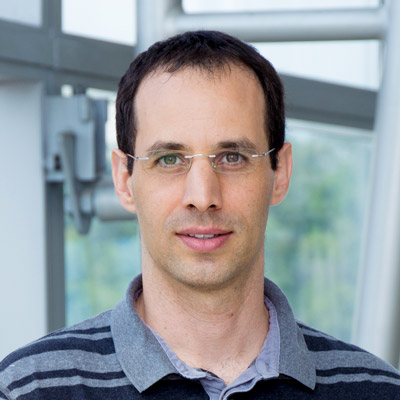
Ronen ZAIDEL-BAR
Department of Cell and Developmental Biology, Sackler Faculty of Medicine, Tel-Aviv University, Israel
Laboratory website
Zaidel-Bar Cell Adhesion Lab
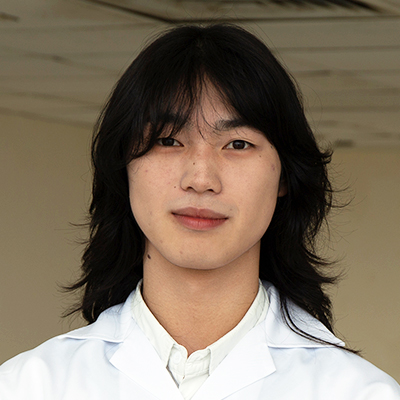
QUAN Cheng
PhD Student, Class of August 2025, Li Group

CHEAM Mei Shan
PhD Student, Class of August 2025, Toyama Group
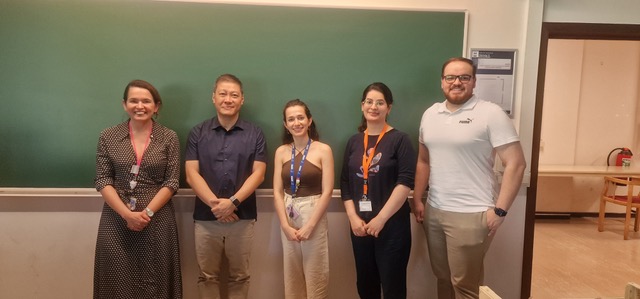
Thanks to Christiani Amorim at UC Louvain, for the kind invitation
Looking forward to new collaborations in the future!
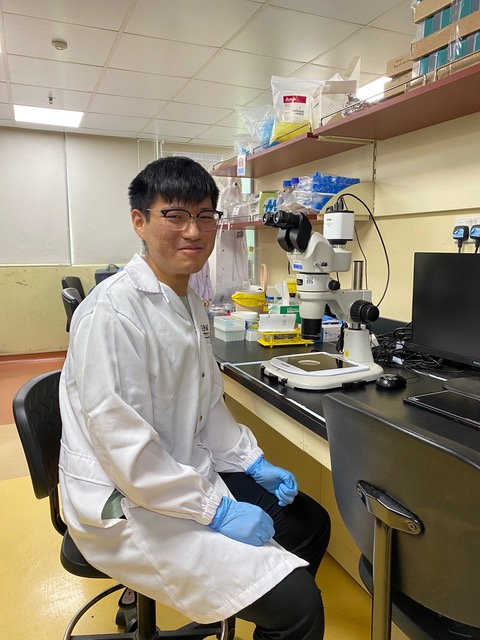
Congratulations to Wee Juin Shin for being selected to present his work at the Amgen Scholars Asia Symposium!
Our Amgen scholar, Wee Juin Shin, has been selected to present his work on ‘the Influence of substrate curvature on theca cell nematic flow’, at the Amgen Scholar Asia Symposium in Kyoto!

Geetika Chouhan
Research Fellow, Dye Group

Seeking Research Assistant for project with MBI Fellow Dr. Tee Yee Han at the Mechanobiology Institute, NUS
The Mechanobiology Institute, NUS seeks to recruit a Research Assistant to work with MBI Fellow Dr. Tee Yee Han.
Ronen Zaidel-Bar
Visiting Faculty
Currently Visting
6-12 Nov 2018
Office: T-Lab, Level 5
Research Areas
Cell-cell and cell-matrix adhesion, Regulation of actomyosin contractility and dynamics, C. elegans development, mechanics and molecular mechanisms of morphogenesis
Research Interests
- How do specific cytoskeletal proteins contribute to the organization and function of cell adhesion and actomyosin structures?
- How are signals processed within the “adhesome” and “contractome” to arrive at the appropriate cytoskeletal arrangement for a given cell state?
- How do adhesion sites and the cytoskeleton sense and respond to external mechanical forces?
Biography
Dr Zaidel-Bar obtained his Ph.D. working with Prof Benny Geiger (Weizmann Institute of Science) on the role of force in regulating cell-matrix adhesions. Their work first focused on single proteins and evolved to encompass the entire adhesome network. In his Postdoctoral training with Prof Jeff Hardin (University of Wisconsin – Madison) Dr Zaidel-Bar switched from studying cells in culture to employing the genetic model organism C. elegans for the study of cell-cell adhesions during development. Dr Zaidel-Bar was attracted to Singapore by the opening of MBI and was awarded the Singapore National Research Foundation Fellowship for promising young investigators.
Education
PhD Weizmann Institute of Science
Recent Publications
- Bertocchi C, Alegría JJ, Vásquez-Sepúlveda S, Ibanez-Prat R, Srinivasan A, Arrano-Valenzuela I, Castro-Pereira B, Soto-Montandon C, Trujillo-Espergel A, Montenegro-Rojas I, Deguchi S, Owen GI, Kanchanawong P, Cerda M, Motta G, Zaidel-Bar R, and Ravasio A. Systematic AI-assisted screening of the cadhesome to map epithelial monolayer mechanics. Cell Commun Signal 2026;. [PMID: 42399739]
- Ray S, Agarwal P, Nitzan A, Nédélec F, and Zaidel-Bar R. Actin capping protein regulates actomyosin contractility to maintain germline architecture in C. elegans. Development 2023;. [PMID: 36897576]
- Avivi Kela S, Sethi K, Tan PY, Suresh D, Ong HT, Castaneda PG, Amin MR, Laviv T, Cram EJ, Faix J, and Zaidel-Bar R. Tension-dependent RHGF-1 recruitment to stress fibers drives robust spermathecal tissue contraction. J Cell Biol 2022; 222(2). [PMID: 36574264]
- Chen Z, Oh D, Biswas KH, Zaidel-Bar R, and Groves JT. Probing the effect of clustering on EphA2 receptor signaling efficiency by subcellular control of ligand-receptor mobility. Elife 2021; 10. [PMID: 34414885]
- Hu S, Grobe H, Guo Z, Wang Y, Doss BL, Pan M, Ladoux B, Bershadsky AD, and Zaidel-Bar R. Reciprocal regulation of actomyosin organization and contractility in non-muscle cells by tropomyosins and alpha-actinins. Mol. Biol. Cell 2019;:mbcE19020082. [PMID: 31216217]
- Desai SK, Padmanabhan A, Harshe S, Zaidel-Bar R, and Kenney LJ. Salmonella biofilms program innate immunity for persistence in Caenorhabditis elegans. Proc. Natl. Acad. Sci. U.S.A. 2019;. [PMID: 31160462]
- Bouffard J, Cecchetelli AD, Clifford C, Sethi K, Zaidel-Bar R, and Cram EJ. The RhoGAP SPV-1 regulates calcium signaling to control the contractility of the C. elegans spermatheca during embryo transits. Mol. Biol. Cell 2019;:mbcE18100633. [PMID: 30726159]
- Priti A, Ong HT, Toyama Y, Padmanabhan A, Dasgupta S, Krajnc M, and Zaidel-Bar R. Syncytial germline architecture is actively maintained by contraction of an internal actomyosin corset. Nat Commun 2018; 9(1):4694. [PMID: 30410005]
- Agarwal P, and Zaidel-Bar R. Principles of Actomyosin Regulation In Vivo. Trends Cell Biol. 2018;. [PMID: 30385150]
- Chen Z, Oh D, Biswas KH, Yu C, Zaidel-Bar R, and Groves JT. Spatially modulated ephrinA1:EphA2 signaling increases local contractility and global focal adhesion dynamics to promote cell motility. Proc. Natl. Acad. Sci. U.S.A. 2018;. [PMID: 29866846]
Lab Members
What are the functions of actin filaments?
What are the functions of actin filaments? Several biological processes related to cell shape and movement depend on actin filaments (reviewed in [1]). Some keys functions are: To form the dynamic cytoskeleton, which gives [...]
How are actin filaments distributed in cells and tissues?
How are actin filaments distributed in cells and tissues? Actin filaments are widely distributed throughout cells, forming a range of cytoskeletal structures and contributing to an even broader range of processes. Some of the [...]
How do actin filaments act as a force-sensing conduit for both internal and external forces?
How do actin filaments act as a force-sensing conduit for both internal and external forces? Internal forces The orientation of individual actin filaments in the cytoskeleton is a force-driven evolutionary process [1] that contributes [...]
How do actin filaments depolymerize?
How do actin filaments depolymerize? Introduction to Actin Filament Depolymerization Whole cell motility and mechanosensing rely on the continual restructuring of the cytoskeleton, particularly within lamellipodia and filopodia; two dynamic structures that contribute to [...]
What is actin nucleation?
What is actin nucleation? The first step in actin polymerization is known as ‘nucleation’. This step sees the formation of an actin nucleus, which is essentially a complex of three actin monomers, from which [...]
How does Arp2/3-mediate the nucleation of branched filaments?
How does Arp2/3-mediate the nucleation of branched filaments? The Arp2/3 complex is composed of 7 evolutionarily conserved subunits (Arp2, Arp3, ARPC1-C5) that are structurally similar to the barbed end of actin [1]. The complex [...]
How do actin filaments grow?
How do actin filaments grow? Actin Filaments (F-actin) grow from the polymerization of G-actin monomers Actin is a highly abundant (10-100 micromolar on average),~42 kDa structural protein found in all eukaryotic cells (except for [...]
What is the role of cortactin in actin polymerization?
What is the role of cortactin in actin polymerization? Cortactin is a class II nucleation promoting factor (NPF) that binds to actin filaments and influences their stability. Cortactin specifically stabilizes Arp2/3-mediated branch points along [...]
What is the role of formin in actin polymerization?
What is the role of formin in actin polymerization? Formins promote the elongation of pre-existing filaments by removing barbed end capping proteins and forming a sleeve around the actin subunits. Formins are also capable [...]
What is the steady state phase of actin polymerization?
What is the steady state phase of actin polymerization? In the steady state phase, the filament dynamics enter a state of equilibrium where monomer disassembly from the (-) end and polymerization at the (+) [...]
What factors influence actin filament length and treadmilling?
What factors influence actin filament length and treadmilling? Several factors influence actin filament length and treadmilling. ATP binding on G-actin and free ATP-G-actin concentration ATP-binding on actin subunits modulates the dynamics of filament assembly, [...]
What factors regulate actin filament polymerization?
What factors regulate actin filament polymerization? Nucleation Promoting Factors (NPFs) (e.g. WASP, Scar/WAVE) modulate actin filament nucleation by bringing together actin monomers and pre-existing actin filaments, for example, during filopodial initiation where they recruit [...]