

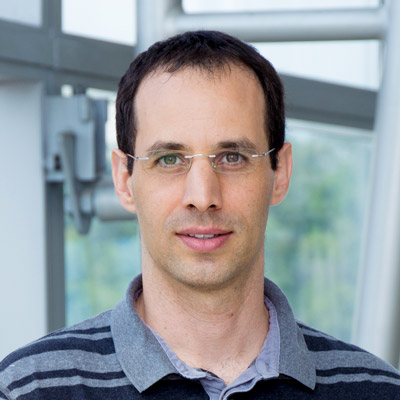
Ronen ZAIDEL-BAR
Department of Cell and Developmental Biology, Sackler Faculty of Medicine, Tel-Aviv University, Israel
Laboratory website
Zaidel-Bar Cell Adhesion Lab
NGUYEN Dinh Thach Lam
PhD Student, Class of August 2025, Hirashima Group

Miguel SOON Jun Yi
PhD Student, Class of August 2025, Low Group

LYU Min
PhD Student, Class of August 2025, Lim Group
HOANG Mai Thanh Truc
PhD Student, Class of August 2025, Yu Group

Hannah Abilaguyo YUSON
PhD Student, Class of August 2025, Holle Group

Diya NARANG
PhD Student, Class of August 2025, Michelot Group
Ronen Zaidel-Bar
Visiting Faculty
Currently Visting
6-12 Nov 2018
Office: T-Lab, Level 5
Research Areas
Cell-cell and cell-matrix adhesion, Regulation of actomyosin contractility and dynamics, C. elegans development, mechanics and molecular mechanisms of morphogenesis
Research Interests
- How do specific cytoskeletal proteins contribute to the organization and function of cell adhesion and actomyosin structures?
- How are signals processed within the “adhesome” and “contractome” to arrive at the appropriate cytoskeletal arrangement for a given cell state?
- How do adhesion sites and the cytoskeleton sense and respond to external mechanical forces?
Biography
Dr Zaidel-Bar obtained his Ph.D. working with Prof Benny Geiger (Weizmann Institute of Science) on the role of force in regulating cell-matrix adhesions. Their work first focused on single proteins and evolved to encompass the entire adhesome network. In his Postdoctoral training with Prof Jeff Hardin (University of Wisconsin – Madison) Dr Zaidel-Bar switched from studying cells in culture to employing the genetic model organism C. elegans for the study of cell-cell adhesions during development. Dr Zaidel-Bar was attracted to Singapore by the opening of MBI and was awarded the Singapore National Research Foundation Fellowship for promising young investigators.
Education
PhD Weizmann Institute of Science
Recent Publications
- Bertocchi C, Alegría JJ, Vásquez-Sepúlveda S, Ibanez-Prat R, Srinivasan A, Arrano-Valenzuela I, Castro-Pereira B, Soto-Montandon C, Trujillo-Espergel A, Montenegro-Rojas I, Deguchi S, Owen GI, Kanchanawong P, Cerda M, Motta G, Zaidel-Bar R, and Ravasio A. Systematic AI-assisted screening of the cadhesome to map epithelial monolayer mechanics. Cell Commun Signal 2026;. [PMID: 42399739]
- Ray S, Agarwal P, Nitzan A, Nédélec F, and Zaidel-Bar R. Actin capping protein regulates actomyosin contractility to maintain germline architecture in C. elegans. Development 2023;. [PMID: 36897576]
- Avivi Kela S, Sethi K, Tan PY, Suresh D, Ong HT, Castaneda PG, Amin MR, Laviv T, Cram EJ, Faix J, and Zaidel-Bar R. Tension-dependent RHGF-1 recruitment to stress fibers drives robust spermathecal tissue contraction. J Cell Biol 2022; 222(2). [PMID: 36574264]
- Chen Z, Oh D, Biswas KH, Zaidel-Bar R, and Groves JT. Probing the effect of clustering on EphA2 receptor signaling efficiency by subcellular control of ligand-receptor mobility. Elife 2021; 10. [PMID: 34414885]
- Hu S, Grobe H, Guo Z, Wang Y, Doss BL, Pan M, Ladoux B, Bershadsky AD, and Zaidel-Bar R. Reciprocal regulation of actomyosin organization and contractility in non-muscle cells by tropomyosins and alpha-actinins. Mol. Biol. Cell 2019;:mbcE19020082. [PMID: 31216217]
- Desai SK, Padmanabhan A, Harshe S, Zaidel-Bar R, and Kenney LJ. Salmonella biofilms program innate immunity for persistence in Caenorhabditis elegans. Proc. Natl. Acad. Sci. U.S.A. 2019;. [PMID: 31160462]
- Bouffard J, Cecchetelli AD, Clifford C, Sethi K, Zaidel-Bar R, and Cram EJ. The RhoGAP SPV-1 regulates calcium signaling to control the contractility of the C. elegans spermatheca during embryo transits. Mol. Biol. Cell 2019;:mbcE18100633. [PMID: 30726159]
- Priti A, Ong HT, Toyama Y, Padmanabhan A, Dasgupta S, Krajnc M, and Zaidel-Bar R. Syncytial germline architecture is actively maintained by contraction of an internal actomyosin corset. Nat Commun 2018; 9(1):4694. [PMID: 30410005]
- Agarwal P, and Zaidel-Bar R. Principles of Actomyosin Regulation In Vivo. Trends Cell Biol. 2018;. [PMID: 30385150]
- Chen Z, Oh D, Biswas KH, Yu C, Zaidel-Bar R, and Groves JT. Spatially modulated ephrinA1:EphA2 signaling increases local contractility and global focal adhesion dynamics to promote cell motility. Proc. Natl. Acad. Sci. U.S.A. 2018;. [PMID: 29866846]
Lab Members
How does the cytoskeleton transmit mechanical forces?
How does the cytoskeleton transmit mechanical forces?It is clear that mechanical forces and structural cues influence cell behavior by regulating signal processes. These signals go on to alter gene expression and reorganize the cytoskeleton and [...]
What is Mechanobiology?
What is Mechanobiology?Mechanobiology describes how physical factors, such as forces and mechanics, are able to influence biological systems at the molecular, cellular, and tissue level. The fundamental process which drives mechanobiology is mechanotransduction, the ability [...]
How are forces transduced in a cellular environment?
How are forces transduced in a cellular environment?The application of the tensegrity, semiflexible chain and dipole polarization models to biological scenarios has proven most successful in the case of the tensegrity hypothesis (as reviewed in [...]
How is Energy Transferred Across the Cellular System?
How is Energy Transferred Across the Cellular System?Cellular systems function at a nanometer level and use a highly dynamic set of components. Both of these factors act as primary constraints that prevent the generation of [...]
Is Mechanosensing an Active Process?
Is Mechanosensing an Active Process?Types of MechanosensingWhen a cell periodically tests its external environment, a mechanical signal is converted to a chemical signal across the cell membrane. Adhesion receptors located on the external cell membrane [...]
What types of forces do cells encounter?
What types of forces do cells encounter?Cells and subcellular structures experience forces from a variety of sources. In general, forces are developed from within the cell via the cytoskeleton (endogenous forces) or come from outside [...]
How do Focal Adhesions Facilitate Mechanosensing?
How do Focal Adhesions Facilitate Mechanosensing?Focal adhesions are known to sense both chemical and physical properties of their matrix environment. Chemical sensing is mediated by the different types of receptors that may function additively, synergistically [...]
Spatiotemporal control of DNA, RNA, protein and lipid synthesis
Spatiotemporal control of DNA, RNA, protein and lipid synthesisIn eukaryotes, synthesis of DNA, RNA, proteins and lipids is performed in a spatiotemporal manner. Each molecule is produced within specialized organelles or compartments with strict regulatory [...]
The Cell
The CellCells are the basic units of life; small machines that facilitate and sustain every process within a living organism. Muscle cells contract to maintain a heartbeat and allow us to move, neurons form networks [...]
How do Focal Adhesions Sense the Physical Properties of the Matrix?
How do Focal Adhesions Sense the Physical Properties of the Matrix?Based on the hypothetical protein switches, two models (1 and 2 below) have been put forth to describe the physical mechanism of focal adhesion mechanosensitivity [...]
Protein Localization
Protein LocalizationIn order for subcellular processes to be carried out within defined compartments or cellular regions, mechanisms must exist to ensure the required protein components are present at the sites and at an adequate concentration. [...]
Actin Filaments
What are actin filaments? Actin filaments (F-actin) are linear polymers of globular actin (G-actin) subunits and occur as microfilaments in the cytoskeleton and as thin filaments, which are part of the contractile apparatus, in [...]