

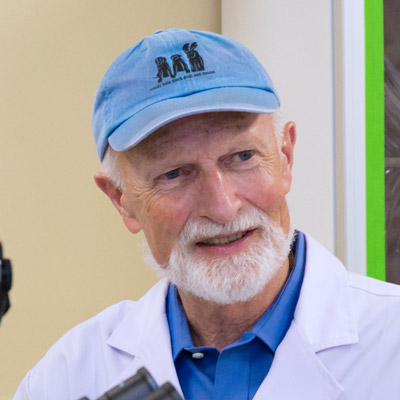
Michael SHEETZ
Founding Director and Collaborator, Mechanobiology Institute, National University of Singapore
Affiliations
Professor, Department of Biochemistry & Molecular Biology, UTMB Health
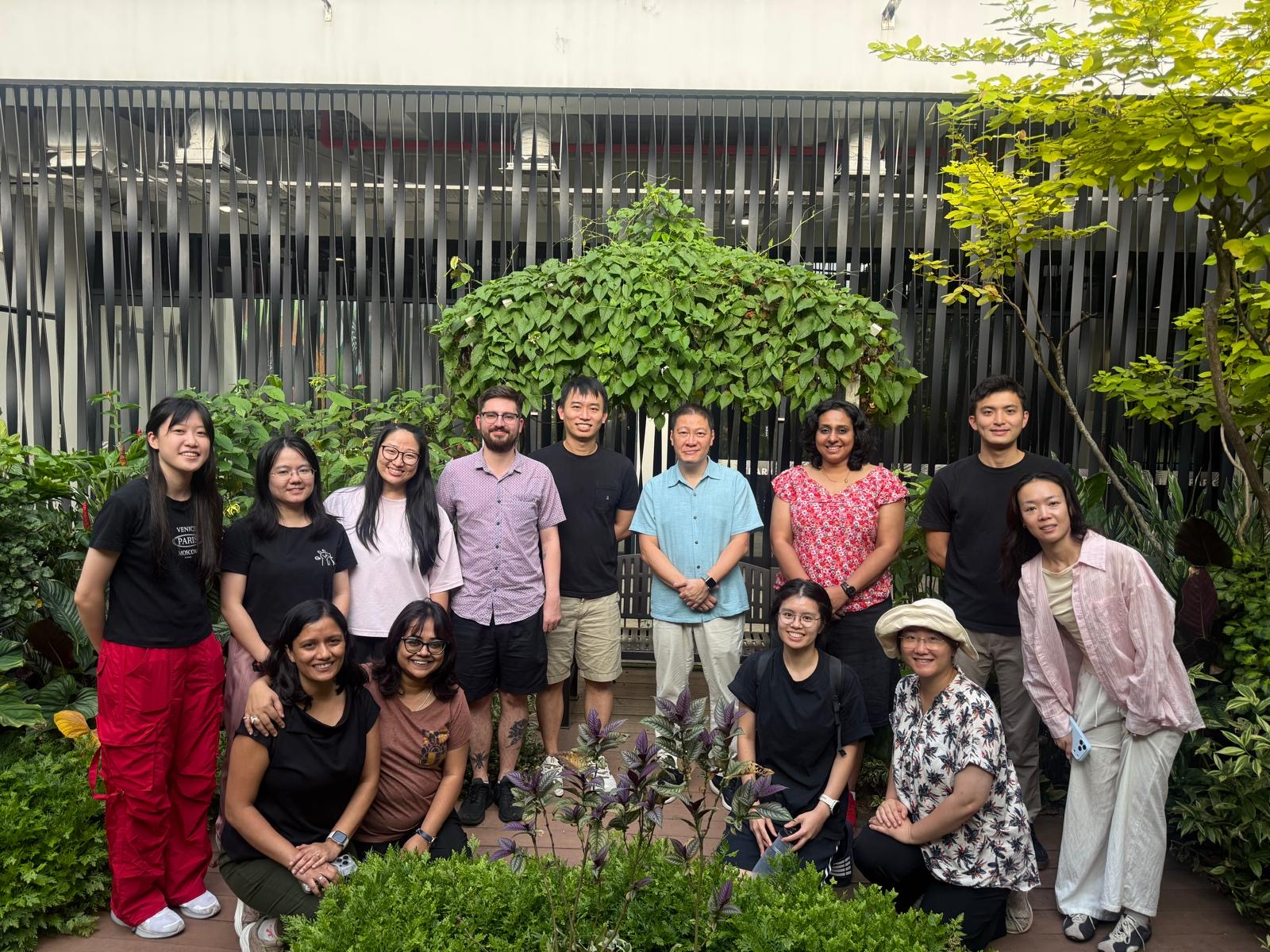
Celebrating the Chan lab’s 5th Anniversary with its first ever Lab retreat!
Lots of fun sharing crazy science and round table discussions on career development and lab culture.
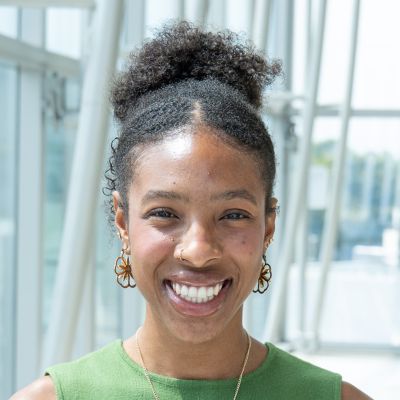
Ariell Smith
Research Fellow, Young Group
Kong Mengya
Research Fellow, Bershadsky Lab
Emily Troying Chan
Research Fellow, Bershadsky Lab
Michael Sheetz
Collaborator
Research Areas
Cell migration, cell-cell and cell-substrate interaction
Research Interests
The morphology of cells, organs and whole organisms is determined by the generation of forces on the immediate environment, which is either extracellular matrix or adjacent cells. We are currently engaged in studies to understand the detailed molecular mechanisms involved in a variety of phenomena from cancer metastasis to brain function. Further, we are developing several new tools and protocols for measuring cell forces at the molecular level, which are revealing many new aspects of how cells can both generate and respond to external forces. We have an effort underway to define quantitatively the steps involved in cell adhesion to and spreading on a matrix-coated surface. Using a variety of cell lines that are missing proteins in various motility pathways, we are determining the quantitative changes in the spreading process. This will enable us to generate a detailed model of the process of spreading that will be a model for further studies of how cells differentiate, regenerate tissues or metastasize.
Biography
Hailing from Columbia University, Prof Michael Sheetz has more than 40 years’ experience in the biomedical field. Introduced to Singapore by Prof Hew Choy Leong of the National University of Singapore’s Department of Biological Sciences, Prof Sheetz was sought to lead an RCE project. This resulted in a two-year effort to organise and submit a proposal on Mechanobiology where Prof Sheetz set the theme and direction of the Mechanobiology Institute (MBI). As Founding Director of the MBI, he led the institute for 10 years and built it into a world-leading research centre in the field of mechanobiology.
Education
PhD California Institute of Technology
Recent Publications
- Jain K, Kishan K, Minhaj RF, Kanchanawong P, Sheetz MP, and Changede R. Immobile Integrin Signaling Transit and Relay Nodes Organize Mechanosignaling through Force-Dependent Phosphorylation in Focal Adhesions. ACS Nano 2025;. [PMID: 39760672]
- Lin S, Changede R, Farrugia AJ, Bershadsky AD, Sheetz MP, Prost J, and Rupprecht J. Membrane Tilt Drives Phase Separation of Adhesion Receptors. Phys Rev Lett 2024; 132(18):188402. [PMID: 38759206]
- Jain K, Minhaj RF, Kanchanawong P, Sheetz MP, and Changede R. Nano-clusters of ligand-activated integrins organize immobile, signalling active, nano-clusters of phosphorylated FAK required for mechanosignaling in focal adhesions. bioRxiv 2024;. [PMID: 38464288]
- Jain K, Pandey A, Wang H, Chung T, Nemati A, Kanchanawong P, Sheetz MP, Cai H, and Changede R. TiO2 Nano-Biopatterning Reveals Optimal Ligand Presentation for Cell-Matrix Adhesion Formation. Adv Mater 2024;:e2309284. [PMID: 38340044]
- Jain K, Lim KYE, Sheetz MP, Kanchanawong P, and Changede R. Intrinsic self-organization of integrin nanoclusters within focal adhesions is required for cellular mechanotransduction. bioRxiv 2023;. [PMID: 38045378]
- Oh D, Liu X, Sheetz MP, and Kenney LJ. Small, Dynamic Clusters of Tir-Intimin Seed Actin Polymerization. Small 2023;:e2302580. [PMID: 37649226]
- Qin R, Melamed S, Yang B, Saxena M, Sheetz MP, and Wolfenson H. Tumor Suppressor DAPK1 Catalyzes Adhesion Assembly on Rigid but Anoikis on Soft Matrices. Front Cell Dev Biol 2022; 10:959521. [PMID: 35927990]
- Jain K, Kanchanawong P, Sheetz MP, Zhou X, Cai H, and Changede R. Ligand functionalization of titanium nanopattern enables the analysis of cell-ligand interactions by super-resolution microscopy. Nat Protoc 2022;. [PMID: 35896742]
- Toh PJY, Lai JKH, Hermann A, Destaing O, Sheetz MP, Sudol M, and Saunders TE. Optogenetic control of YAP cellular localisation and function. EMBO Rep 2022;:e54401. [PMID: 35876586]
- Oh D, Chen Z, Biswas KH, Bai F, Ong HT, Sheetz MP, and Groves JT. Competition for shared downstream signaling molecules establishes indirect negative feedback between EGFR and EphA2. Biophys J 2022;. [PMID: 35430415]
Lab Members
Check out the lab’s latest publication and preprint!
Access the publication or the preprint here!
Seeking Head of Microfabrication Core Facility at the Mechanobiology Institute, NUS
The Mechanobiology Institute, NUS, seeks to recruit a Facility Manager to heads its Microfabrication Core Facility.
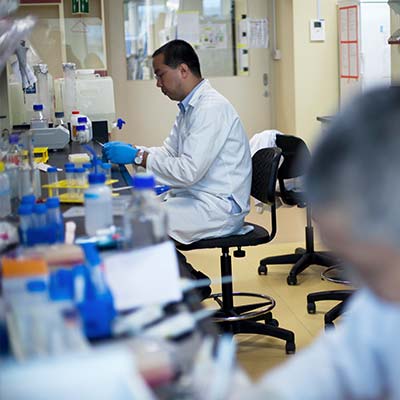
Seeking Postdoctoral Research Fellow (Biomaterials and Mechanobiology) in the group of Asst. Prof. Jennifer Young at the Mechanobiology Institute, NUS
The Mechanobiology Institute, NUS, seeks to recruit a Postdoctoral Research Fellow (Biomaterials and Mechanobiology) in the group of Asst. Prof. Jennifer Young.

Seeking Postdoctoral Research Fellow (Spatial Omics) in the group of Asst. Prof. Jennifer Young at the Mechanobiology Institute, NUS
The Mechanobiology Institute, NUS, seeks to recruit a Postdoctoral Research Fellow (Spatial Omics) in the group of Asst. Prof. Jennifer Young.
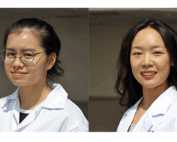
Congrats to Kelly and Gefei for passing their Qualifying Exams!
Looking forward to the exciting science ahead!
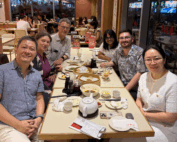
The Chan Lab is delighted to host visitor Norah Spears from U. Edinburgh!
The scientific exchange was fantastic and we deeply appreciated her sharing her scientific journey. It was both inspiring and humbling for our early career researchers!
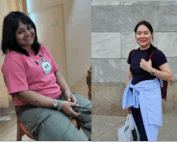
She is a Scientist: Confidence Formed by Curiosity Over Time
February 11th celebrates The International Day of Women and Girls in Science to promote full, equal access and participation in STEM fields. MBI talks to two of our posdoctoral research fellows about their career as a woman in science.

WANG Liyue
PhD Student, Class of August 2025, Yan Jie Group

She is Becoming: Curiosity, Comparison and the Making of a Scientist
February 11th celebrates The International Day of Women and Girls in Science to promote full, equal access and participation in STEM fields. MBI talks to two of our PhD students about their journey in becoming a scientist as women.
How Structural Imbalance Drives Inflammatory Signaling in Senescent Cells
In a study published in Molecular Biology of the Cell led by Celestine Ho at the Mechanobiology Institute, NUS, researchers discover that HIF-1α-activation in SASP is a defining feature of the SASP induced by diverse stressors, acting independently of micronuclei generation and cGAS/STING activation.

Chin Sze Khen
Research Assistant, Yu Group
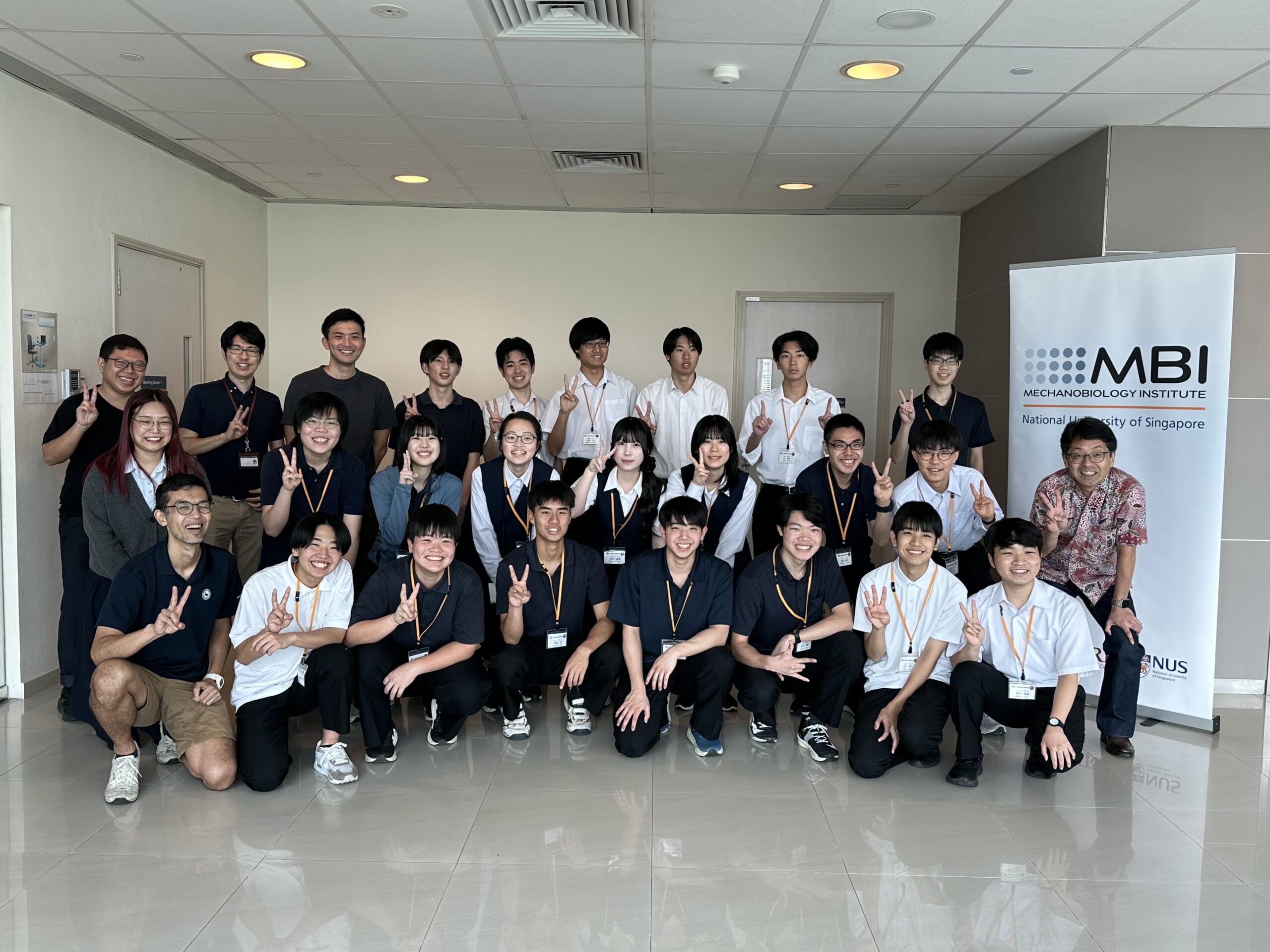
MBI Hosts Students from Sakura High School!
MBI hosted students from Sakura High School, Chiba, Japan on 22nd January 2026 for an outreach session designed to spark curiosity about mechanobiology and research careers.