

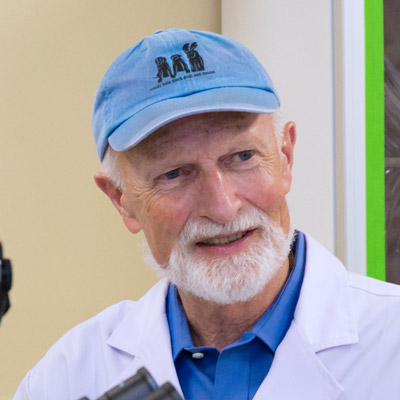
Michael SHEETZ
Founding Director and Collaborator, Mechanobiology Institute, National University of Singapore
Affiliations
Professor, Department of Biochemistry & Molecular Biology, UTMB Health

Disrupted Cell-Matrix Interactions Drives Aging and Reveals New Paths for Skin Regeneration
Researchers from the Li Lab discover how α5-integrin–FN interactions preserve dermal integrity, offering new insights for antiaging strategies targeting ECM organization and fibroblast function.
DECIPHERing the Role of Cell-Matrix Interactions in Ageing Heart Health
Researchers from the Soft Nano-Biomaterials Lab at MBI developed a material system to enable precise investigation into how individual ECM properties affect cultured heart cells.
Seeking Postdoctoral Research Fellow in the research group of Dr. Tsuyoshi Hirashima at the Mechanobiology Institute, NUS
We are seeking to recruit a Postdoctoral Research Fellow in the research group of Dr. Tsuyoshi Hirashima at the Mechanobiology Institute, NUS.
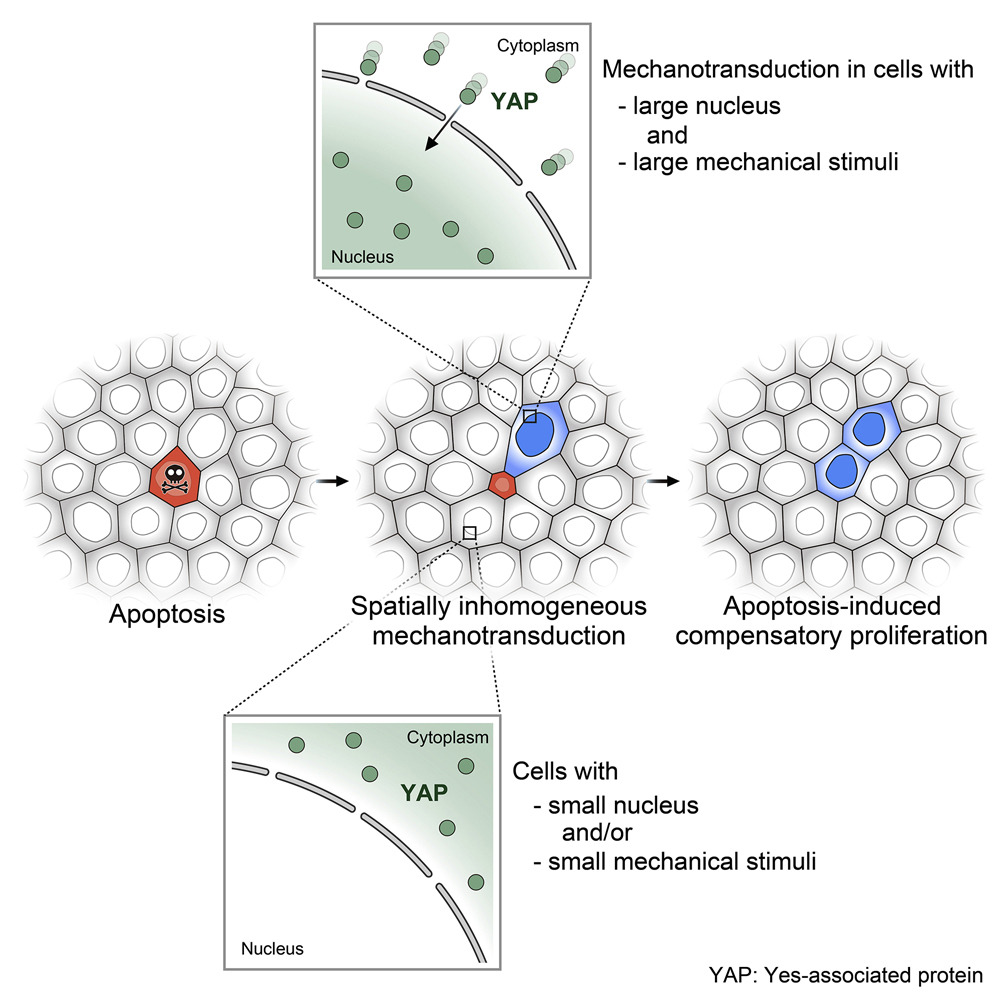
How Dying Cells Signal Growth: Mechanical Forces Drive Targeted Cell Proliferation after Apoptosis
Researchers from the Toyama Lab at MBI reveal how mechanical factors control apoptosis and cell replacement.

Scientists Develop AI-Driven Tool to Map 3D Cellular Landscapes
Researchers from the Beghin Lab at the Mechanobiology Institute, NUS combine DeepStar3D algorithm and 3DCellScope interface to develop an experimental tool for real-time interaction with cell data.
Michael Sheetz
Collaborator
Research Areas
Cell migration, cell-cell and cell-substrate interaction
Research Interests
The morphology of cells, organs and whole organisms is determined by the generation of forces on the immediate environment, which is either extracellular matrix or adjacent cells. We are currently engaged in studies to understand the detailed molecular mechanisms involved in a variety of phenomena from cancer metastasis to brain function. Further, we are developing several new tools and protocols for measuring cell forces at the molecular level, which are revealing many new aspects of how cells can both generate and respond to external forces. We have an effort underway to define quantitatively the steps involved in cell adhesion to and spreading on a matrix-coated surface. Using a variety of cell lines that are missing proteins in various motility pathways, we are determining the quantitative changes in the spreading process. This will enable us to generate a detailed model of the process of spreading that will be a model for further studies of how cells differentiate, regenerate tissues or metastasize.
Biography
Hailing from Columbia University, Prof Michael Sheetz has more than 40 years’ experience in the biomedical field. Introduced to Singapore by Prof Hew Choy Leong of the National University of Singapore’s Department of Biological Sciences, Prof Sheetz was sought to lead an RCE project. This resulted in a two-year effort to organise and submit a proposal on Mechanobiology where Prof Sheetz set the theme and direction of the Mechanobiology Institute (MBI). As Founding Director of the MBI, he led the institute for 10 years and built it into a world-leading research centre in the field of mechanobiology.
Education
PhD California Institute of Technology
Recent Publications
- Jain K, Kishan K, Minhaj RF, Kanchanawong P, Sheetz MP, and Changede R. Immobile Integrin Signaling Transit and Relay Nodes Organize Mechanosignaling through Force-Dependent Phosphorylation in Focal Adhesions. ACS Nano 2025;. [PMID: 39760672]
- Lin S, Changede R, Farrugia AJ, Bershadsky AD, Sheetz MP, Prost J, and Rupprecht J. Membrane Tilt Drives Phase Separation of Adhesion Receptors. Phys Rev Lett 2024; 132(18):188402. [PMID: 38759206]
- Jain K, Minhaj RF, Kanchanawong P, Sheetz MP, and Changede R. Nano-clusters of ligand-activated integrins organize immobile, signalling active, nano-clusters of phosphorylated FAK required for mechanosignaling in focal adhesions. bioRxiv 2024;. [PMID: 38464288]
- Jain K, Pandey A, Wang H, Chung T, Nemati A, Kanchanawong P, Sheetz MP, Cai H, and Changede R. TiO2 Nano-Biopatterning Reveals Optimal Ligand Presentation for Cell-Matrix Adhesion Formation. Adv Mater 2024;:e2309284. [PMID: 38340044]
- Jain K, Lim KYE, Sheetz MP, Kanchanawong P, and Changede R. Intrinsic self-organization of integrin nanoclusters within focal adhesions is required for cellular mechanotransduction. bioRxiv 2023;. [PMID: 38045378]
- Oh D, Liu X, Sheetz MP, and Kenney LJ. Small, Dynamic Clusters of Tir-Intimin Seed Actin Polymerization. Small 2023;:e2302580. [PMID: 37649226]
- Qin R, Melamed S, Yang B, Saxena M, Sheetz MP, and Wolfenson H. Tumor Suppressor DAPK1 Catalyzes Adhesion Assembly on Rigid but Anoikis on Soft Matrices. Front Cell Dev Biol 2022; 10:959521. [PMID: 35927990]
- Jain K, Kanchanawong P, Sheetz MP, Zhou X, Cai H, and Changede R. Ligand functionalization of titanium nanopattern enables the analysis of cell-ligand interactions by super-resolution microscopy. Nat Protoc 2022;. [PMID: 35896742]
- Toh PJY, Lai JKH, Hermann A, Destaing O, Sheetz MP, Sudol M, and Saunders TE. Optogenetic control of YAP cellular localisation and function. EMBO Rep 2022;:e54401. [PMID: 35876586]
- Oh D, Chen Z, Biswas KH, Bai F, Ong HT, Sheetz MP, and Groves JT. Competition for shared downstream signaling molecules establishes indirect negative feedback between EGFR and EphA2. Biophys J 2022;. [PMID: 35430415]
Lab Members
How is Energy Transferred Across the Cellular System?
How is Energy Transferred Across the Cellular System?Cellular systems function at a nanometer level and use a highly dynamic set of components. Both of these factors act as primary constraints that prevent the generation of [...]
Is Mechanosensing an Active Process?
Is Mechanosensing an Active Process?Types of MechanosensingWhen a cell periodically tests its external environment, a mechanical signal is converted to a chemical signal across the cell membrane. Adhesion receptors located on the external cell membrane [...]
What types of forces do cells encounter?
What types of forces do cells encounter?Cells and subcellular structures experience forces from a variety of sources. In general, forces are developed from within the cell via the cytoskeleton (endogenous forces) or come from outside [...]
How does the cytoskeleton transmit mechanical forces?
How does the cytoskeleton transmit mechanical forces?It is clear that mechanical forces and structural cues influence cell behavior by regulating signal processes. These signals go on to alter gene expression and reorganize the cytoskeleton and [...]
How do Focal Adhesions Facilitate Mechanosensing?
How do Focal Adhesions Facilitate Mechanosensing?Focal adhesions are known to sense both chemical and physical properties of their matrix environment. Chemical sensing is mediated by the different types of receptors that may function additively, synergistically [...]
How do Focal Adhesions Sense the Physical Properties of the Matrix?
How do Focal Adhesions Sense the Physical Properties of the Matrix?Based on the hypothetical protein switches, two models (1 and 2 below) have been put forth to describe the physical mechanism of focal adhesion mechanosensitivity [...]
The Cell
The CellCells are the basic units of life; small machines that facilitate and sustain every process within a living organism. Muscle cells contract to maintain a heartbeat and allow us to move, neurons form networks [...]
Spatiotemporal control of DNA, RNA, protein and lipid synthesis
Spatiotemporal control of DNA, RNA, protein and lipid synthesisIn eukaryotes, synthesis of DNA, RNA, proteins and lipids is performed in a spatiotemporal manner. Each molecule is produced within specialized organelles or compartments with strict regulatory [...]
Protein Localization
Protein LocalizationIn order for subcellular processes to be carried out within defined compartments or cellular regions, mechanisms must exist to ensure the required protein components are present at the sites and at an adequate concentration. [...]
Actin Filaments
What are actin filaments? Actin filaments (F-actin) are linear polymers of globular actin (G-actin) subunits and occur as microfilaments in the cytoskeleton and as thin filaments, which are part of the contractile apparatus, in [...]
What is actin nucleation?
What is actin nucleation? The first step in actin polymerization is known as ‘nucleation’. This step sees the formation of an actin nucleus, which is essentially a complex of three actin monomers, from which [...]
How do actin filaments depolymerize?
How do actin filaments depolymerize? Introduction to Actin Filament Depolymerization Whole cell motility and mechanosensing rely on the continual restructuring of the cytoskeleton, particularly within lamellipodia and filopodia; two dynamic structures that contribute to [...]