


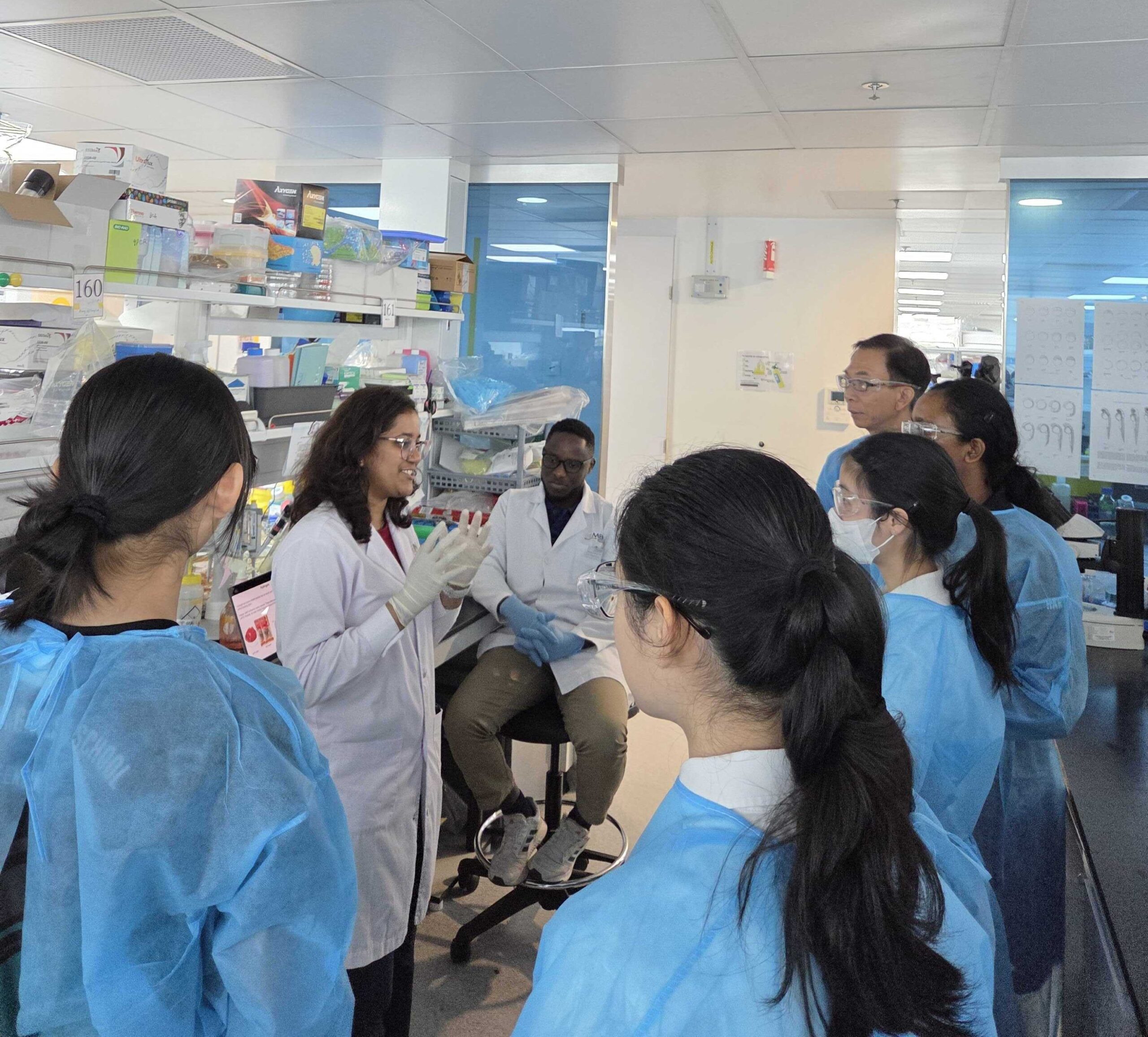
The Young Lab Welcome Visitors from Raffles Girls’ School!
The Young Lab hosted visitors from Raffles Girls' School as part of MBI's outreach event.
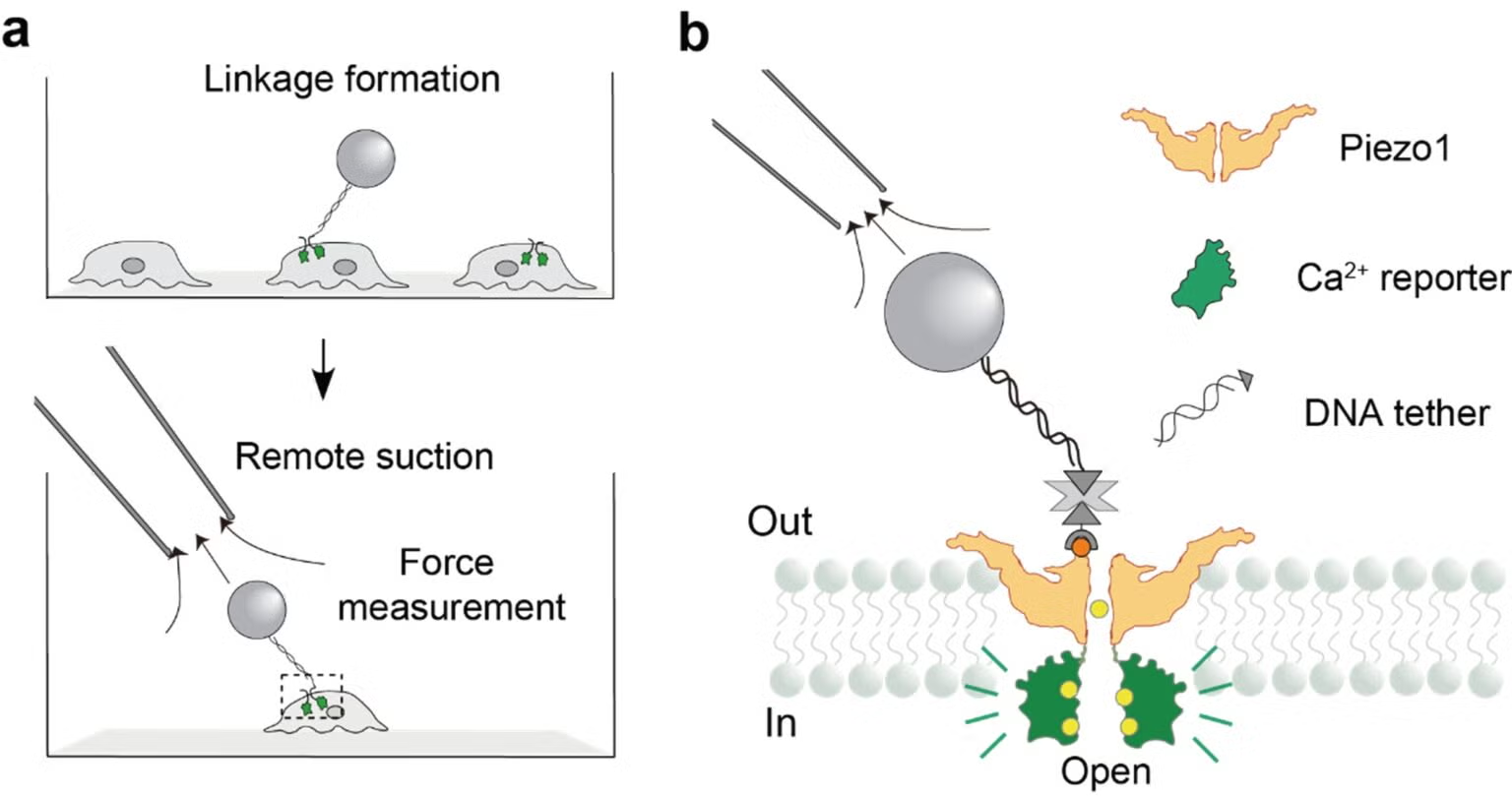
Force sensing in cells at the single molecule level
Professor Yan Jie and his team from the Mechanobiology Institute collaborated with Professor Liu Xiaogang from the Department of Chemistry, NUS, to determine the exact force needed to activate Piezo1, via a DNA-based approach.
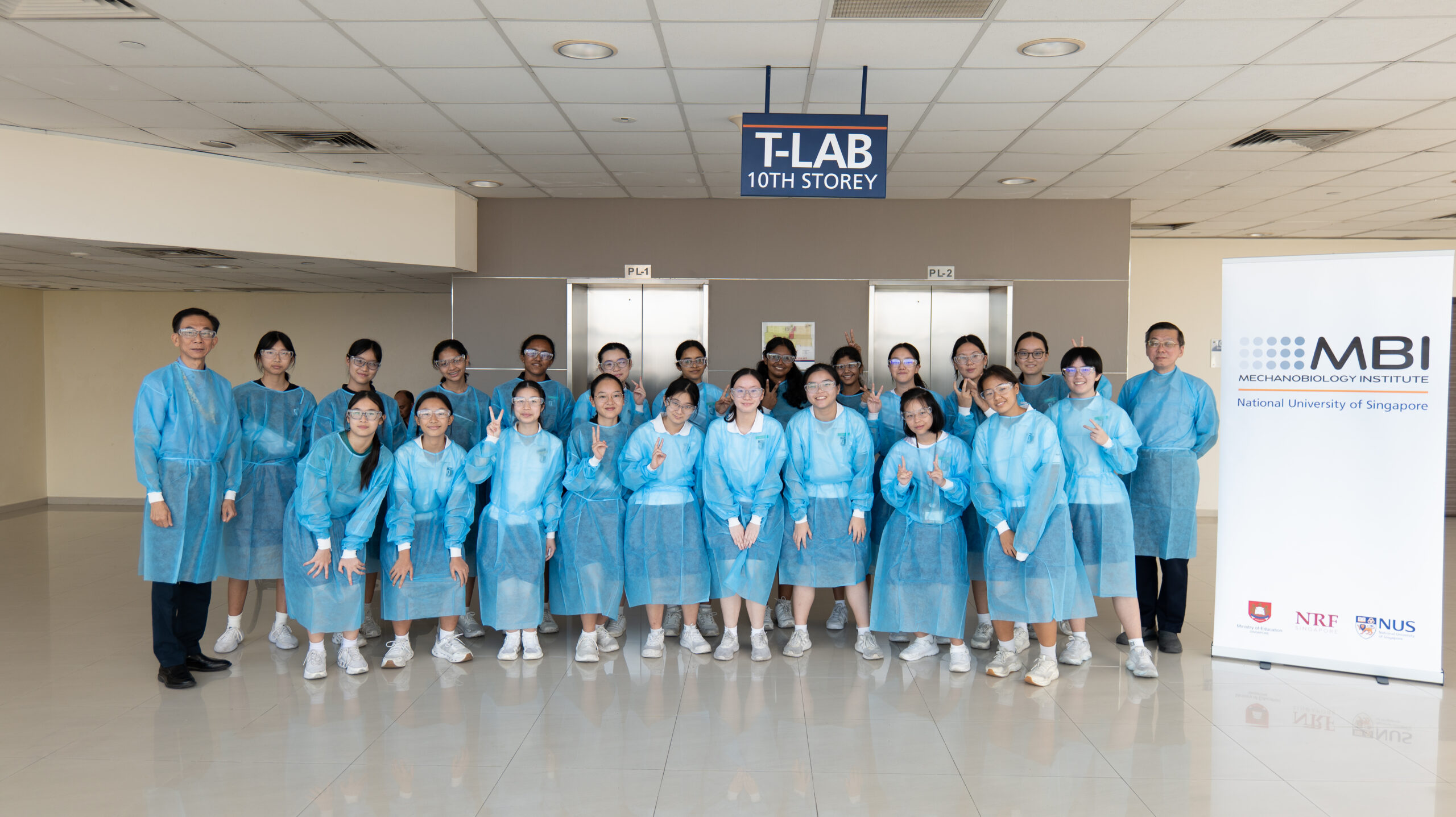
MBI Hosts Students from Raffles Girls School!
MBI hosted students from Raffles Girls School on 28 April 2026, for an outreach session designed to spark curiosity about mechanobiology and research careers.
Farewell Avery, All the Best!
Farewell to Dr. Avery Rui Sun, a former PhD student at the Young Lab from 2021-2026!
Le Shimin
Principal Investigator
Research Interests
Molecular Mechanisms of Mechanobiology
My current research has been focused on the molecular mechanics of cell mechanotransduction studied at a single-molecule level, which forms the foundation to understand the cell migration, tissue formation and maintenance, and the mechanobiology-associated translational biomedical applications.
- Single-molecule mechanobiology and biophysics at cell-ECM adhesion and cell-cell junctions;
- Single-molecule mechanobiology and biophysics at nuclear-cytoskeletal linkages and cell cytoskeleton;
- Biophysical studies of gene regulations, DNA replication and repairs by various single-DNA manipulation assays.
Recent Publications
- Wang Y, Zhang Y, Yu M, Xiu P, Jia Y, Chen H, Le S, Qian J, and Yan J. Salt-bridge mediated cooperativity and mechanical stabilization of tandem spectrin repeats. Nanoscale Horiz 2025;. [PMID: 40492359]
- Le S, Yu M, Fu C, Heier JA, Martin S, Hardin J, and Yan J. Single-molecule force spectroscopy reveals intra- and intermolecular interactions of Caenorhabditis elegans HMP-1 during mechanotransduction. Proc Natl Acad Sci U S A 2024; 121(37):e2400654121. [PMID: 39236238]
- Zhang Y, Du J, Liu X, Shang F, Deng Y, Ye J, Wang Y, Yan J, Chen H, Yu M, and Le S. Multi-domain interaction mediated strength-building in human α-actinin dimers unveiled by direct single-molecule quantification. Nat Commun 2024; 15(1):6151. [PMID: 39034324]
- Sun Y, Liu X, Huang W, Le S, and Yan J. Structural domain in the Titin N2B-us region binds to FHL2 in a force-activation dependent manner. Nat Commun 2024; 15(1):4496. [PMID: 38802383]
- Huang W, Liu J, Le S, Yao M, Shi Y, and Yan J. In situ single-molecule investigations of the impacts of biochemical perturbations on conformational intermediates of monomeric α-synuclein. APL Bioeng 2024; 8(1):016114. [PMID: 38435467]
- Zhou Y, Zhao X, Jiang Y, Lin DJ, Lu C, Wang Y, Le S, Li R, and Yan J. A Mechanical Assay for the Quantification of Anti-RBD IgG Levels in Finger-Prick Whole Blood. ACS Sens 2023;. [PMID: 37582229]
- Liu J, Le S, Yao M, Huang W, Tio Z, Zhou Y, and Yan J. Tension Gauge Tethers as Tension Threshold and Duration Sensors. ACS Sens 2023;. [PMID: 36731861]
- Huang W, Le S, Sun Y, Lin DJ, Yao M, Shi Y, and Yan J. Mechanical Stabilization of a Bacterial Adhesion Complex. J Am Chem Soc 2022;. [PMID: 36070862]
- Wang Y, Yao M, Baker KB, Gough RE, Le S, Goult BT, and Yan J. Force-Dependent Interactions between Talin and Full-Length Vinculin. J Am Chem Soc 2021;. [PMID: 34463480]
- Yu M, Lu J, Le S, and Yan J. Unexpected Low Mechanical Stability of Titin I27 Domain at Physiologically Relevant Temperature. J Phys Chem Lett 2021;:7914-7920. [PMID: 34384021]
Full Publication List