


Bibhas ROY
Visiting Research Fellow, Mechanobiology Institute, National University of Singapore, Post-doctoral Fellow, FIRC Institute of Molecular Oncology (IFOM), Italy
mbibr@nus.edu.sg
Level 10 T-Lab
National University of Singapore
5A Engineering Drive 1
Singapore 117411

Rakesh Das
Research Fellow, Hiraiwa Group, Prost Group

Florian Dilasser
Research Fellow, Viasnoff Group
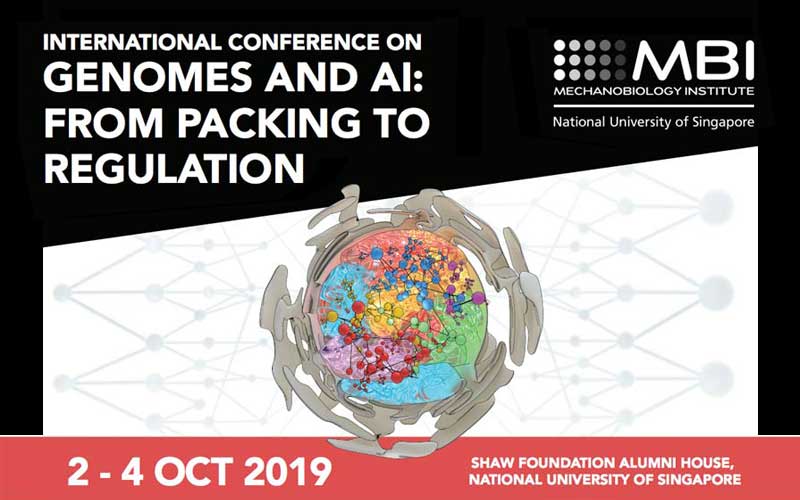
MBI’s International Conference on Genomes and AI: From Packing to Regulation, October 2-4
MBI's upcoming conference will bring together leading international experts, early-career scientists and students at the intersection of genome biology and machine learning to spur new collaborations across disciplinary boundaries. This is critical for uncovering the mechanogenomic codes that link genome architecture, regulation and function, and ultimately for the development of new biomarkers and therapeutic interventions. The International Conference on Genomes and AI: From Packing to Regulation will cover the following three major themes: 1) Single-cell 1D and 3D Genomics: Experiments and Modeling, 2) Networks: From Expression to Regulatory Modules, and 3) Genome Architecture: Regulation and Biomarkers
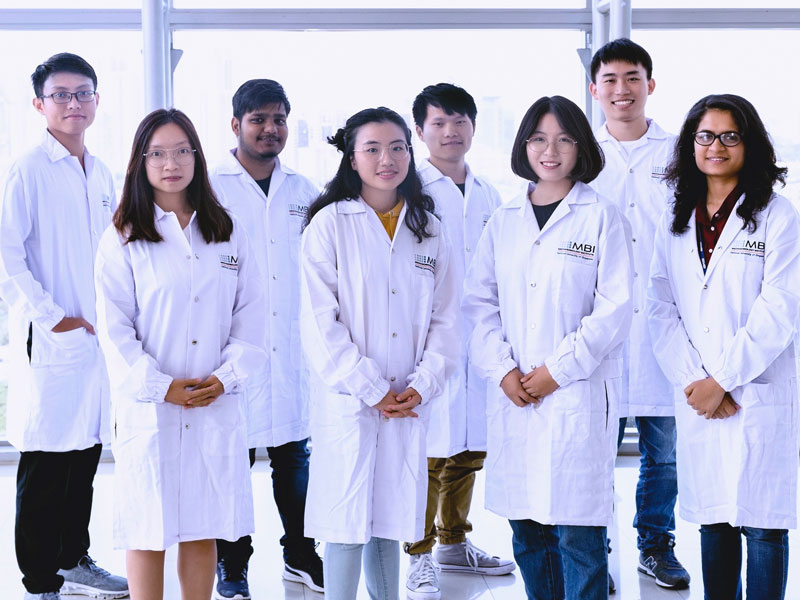
MBI welcomes its incoming class of 2019
Congratulations to our incoming students! We're proud to introduce (l to r): Liang Lanfeng, Yan Wu, Kashish Jain, Ignacius Tay Yan Yun, Hu Jinrong, Liu Jingzhun, Leong Kim Whye and Deepika Singh, the newest additions to the MBI community.
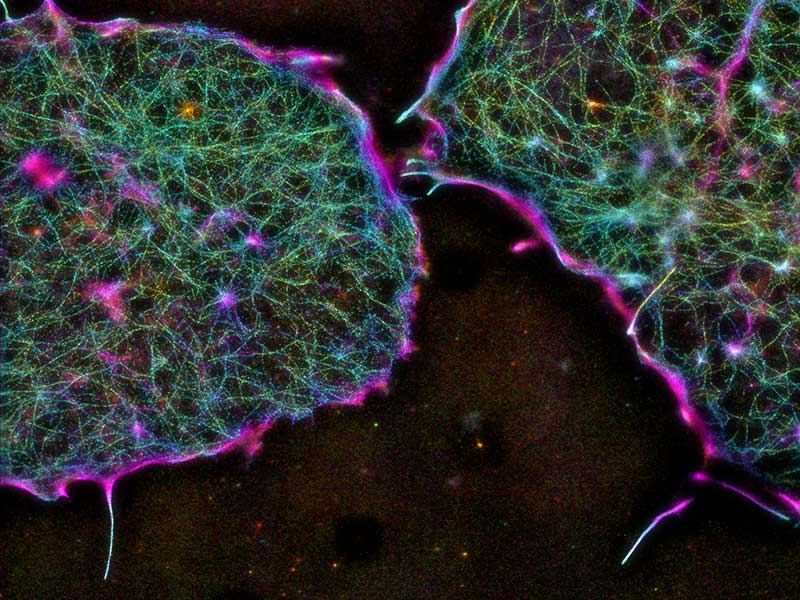
Molecular controllers of stem cell mechanics
Recent study led by MBI graduate student Shumin Xia and Principal Investigator Associate Professor Pakorn Tony Kanchanawong use super resolution imaging techniques to study the nanoscale organization of the cortical actin cytoskeleton in mouse embryonic stem cells and understand the role of molecules such as Arp2/3, formins, and capping protein in coordinating cortical architecture in mESCs.
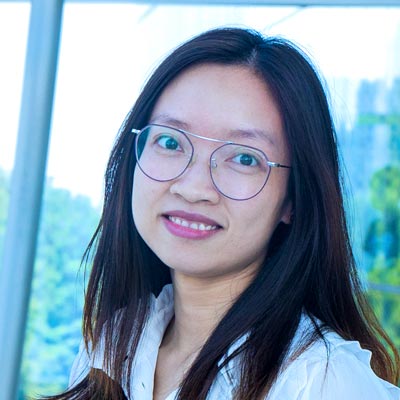
Wu Yan
PhD Student, Class of August 2019, Low Group
Bibhas Roy
Alumni
I am a Research Fellow in Nuclear Mechanics & Genome Regulation Laboratory at MBI. In my doctoral research at Indian Institute of Technology Kharagpur, I have been understanding about the cellular mechanotransduction which specifically deals with cell membrane mechanosensors and consequent downstream cell responses. Eventually I have quite interested on nuclear mechanotransduction because for last two decades several path breaking findings in cellular mechanobiology has gained enormous interest to scientific community, but the nuclear mechanotransduction field remains quite elusive. This drive brought me to Prof Shivashankar’s Lab at MBI.
During differentiation and also reprogramming, cells accumulated multiple epigenetic changes, which leads to differential type of gene expression in different cell types. My current endeavor explores how nuclear geometry driven epigenetic changes leads to different cell type commitment.
Recent Publications
- Yuan L, Roy B, Ratna P, Uhler C, and Shivashankar GV. Lateral confined growth of cells activates Lef1 dependent pathways to regulate cell-state transitions. Sci Rep 2022; 12(1):17318. [PMID: 36243826]
- Roy B, Yuan L, Lee Y, Bharti A, Mitra A, and Shivashankar GV. Fibroblast rejuvenation by mechanical reprogramming and redifferentiation. Proc. Natl. Acad. Sci. U.S.A. 2020;. [PMID: 32350144]
- Banerjee H, Roy B, Chaudhury K, Srinivasan B, Chakraborty S, and Ren H. Frequency-induced morphology alterations in microconfined biological cells. Med Biol Eng Comput 2018;. [PMID: 30415434]
- Roy B, Venkatachalapathy S, Ratna P, Wang Y, Jokhun DS, Nagarajan M, and Shivashankar GV. Laterally confined growth of cells induces nuclear reprogramming in the absence of exogenous biochemical factors. Proc. Natl. Acad. Sci. U.S.A. 2018;. [PMID: 29735717]

