

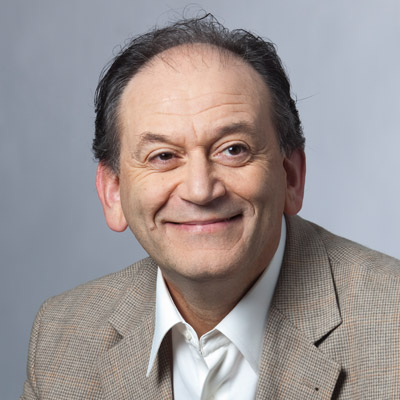
Alexander BERSHADSKY
Professor and Senior Principal Research Scientist, Mechanobiology Institute, National University of Singapore
alexander.bershadsky@weizmann.ac.il
10-03E
Level 10 T-Lab
National University of Singapore
5A Engineering Drive 1
Singapore 117411
Laboratory website
Actin Biomechanics and Cell Dynamics Lab (ABCD)
Research Program
Leader, The Cell-Matrix and Cell-Cell Mechanotransduction Group
Affiliations
Professor, the Joseph Moss Chair of Biomedical Research, Molecular Cell Biology, Weizmann Institute of Science
Derek Yuen Yee Jun
Research Assistant, Bershadsky Group
Srinivas Sheshagiri Prabhu
PhD student, Class of August 2022, Low Group, Bershadsky Group
Julien Aureille
Research Fellow, Bershadsky Group
Alexander Bershadsky
Senior Principal Research Scientist
Research Areas
The Bershadsky Lab studies how cells move, and the physical forces necessary for cells to attach themselves to the substrate and to one another. In exploring the points of contact, which act as mechanical “sensors” that provide the cell with information about its environment and determine its behaviour, they have learned that in cancer cells, the activity of these “sensors” is disrupted, which likely accounts for the cell’s difficulty in adhering to substrates and, consequently, their greater mobility.
Research Interests
Prof Bershadsky’s research interests include the mechanisms of cell motility and intracellular traffic, cytoskeleton dynamics, and the crosstalk between cytoskeleton and cell adhesion. The studies from Bershadsky’s laboratory were among the first in which the phenomenon of adhesion-dependent mechanosensitivity was discovered and demonstrated. These studies showed that focal adhesions function as miniature mechanosensors, because their assembly depends on the application of external or cell-generated pulling forces. The aim of the present studies is to clarify the mechanisms involved in the adhesion dependent mechanosensitivity. Other studies from Bershadsky’s lab address the functions of microtubules in the regulation of cell motility and adhesion. His sphere of interest includes the proteins formins as potent regulators of actin assembly and actin-microtubule crosstalk.
Biography
Prof Bershadsky graduated from Moscow State University, and received his Ph.D. at the Cancer Research Centre of the Russian Academy of Medical Science, under the guidance of Prof Juri Vasiliev. In 1988, together with Prof Vasiliev, he published a book entitled, Cytoskeleton (Plenum Press), which became known as the first textbook in this field of research. Prof Bershadsky moved to Israel in 1992, and since then has worked at the Weizmann Institute of Science, first as Scientist, and subsequently as Senior Scientist, Associate Professor, and Full Professor. He holds the Joseph Moss Professorial Chair in Biomedical Research (2001). Prof Bershadsky worked as a visiting professor at the Curie Institute in Paris in 2005, at the Marine Biological Laboratory Woods Hole, USA, in 2007, and at NUS, in 2008–2010. Since 2001, he is an Editorial Board Member of the international journal of “Cytoskeleton” (formerly “Cell Motility and the Cytoskeleton”).
Education
PhD Cancer Research Centre of the Russian Academy of Medical Science
Recent Publications
- Shi W, Nguyen DTL, Goh WJ, Ong HT, Tan RB, Fu C, Bershadsky AD, Mogilner A, and Tee YH. Actin based cell chirality emerging at the boundary of 2D-microtissue directs chiral multicellular pattern formation. Nat Commun 2026; 17(1). [PMID: 42773128]
- Aureille J, Prabhu SS, Barnett SF, Farrugia AJ, Arnal I, Lafanechère L, Low BC, Kanchanawong P, Mogilner A, and Bershadsky AD. Focal adhesions are controlled by microtubules through local contractility regulation. EMBO J 2024;. [PMID: 38769437]
- Lin S, Changede R, Farrugia AJ, Bershadsky AD, Sheetz MP, Prost J, and Rupprecht J. Membrane Tilt Drives Phase Separation of Adhesion Receptors. Phys Rev Lett 2024; 132(18):188402. [PMID: 38759206]
- Li W, Chung W, Kozlov MM, Medalia O, Geiger B, and Bershadsky AD. Chiral growth of adherent filopodia. Biophys J 2023;. [PMID: 37301982]
- Tee YH, Goh WJ, Yong X, Ong HT, Hu J, Tay IYY, Shi S, Jalal S, Barnett SFH, Kanchanawong P, Huang W, Yan J, Lim YAB, Thiagarajan V, Mogilner A, and Bershadsky AD. Actin polymerisation and crosslinking drive left-right asymmetry in single cell and cell collectives. Nat Commun 2023; 14(1):776. [PMID: 36774346]
- Wang H, Hu J, Yi K, Ma Z, Song X, Lee Y, Kalab P, Bershadsky AD, Miao Y, and Li R. Dual control of formin-nucleated actin assembly by the chromatin and ER in mouse oocytes. Curr Biol 2022;. [PMID: 35981539]
- Efremov AK, Yao M, Sun Y, Tee YH, Sheetz MP, Bershadsky AD, Martinac B, and Yan J. Application of piconewton forces to individual filopodia reveals mechanosensory role of L-type Ca2+ channels. Biomaterials 2022; 284:121477. [PMID: 35395455]
- Nishimura Y, Shi S, Li Q, Bershadsky AD, and Viasnoff V. Crosstalk between myosin II and formin functions in the regulation of force generation and actomyosin dynamics in stress fibers. Cells Dev 2021;:203736. [PMID: 34455135]
- Li W, Sancho A, Chung W, Vinik Y, Groll J, Zick Y, Medalia O, Bershadsky AD, and Geiger B. Differential cellular responses to adhesive interactions with galectin-8 and fibronectin coated substrates. J Cell Sci 2021;. [PMID: 33722978]
- Nishimura Y, Shi S, Zhang F, Liu R, Takagi Y, Bershadsky AD, Viasnoff V, and Sellers JR. The Formin Inhibitor, SMIFH2, Inhibits Members of the Myosin Superfamily. J Cell Sci 2021;. [PMID: 33589498]
Lab Members

Saivishak SAIKUMAR
PhD Student, Class of August 2026

GUO Chongyuan
PhD Student, Class of August 2026

Daniya CHALIL
PhD Student, Class of August 2026

LIU Shuhong
PhD Student, Class of August 2026
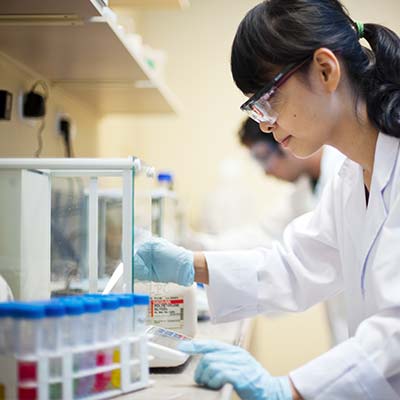
Seeking Research Assistant in the Confinement Mechanobiology Lab at the Mechanobiology Institute, NUS
The Mechanobiology Institute, NUS seeks to recruit a Research Assistant to Asst. Prof. Andrew Holle's Confinement Mechanobiology Lab.

Kishore Babu Naripogu
Research Fellow, Li Group
Um Taejun
Research Assistant, Young Group
Seeking Research Assistant in the Microscopy Core at the Mechanobiology Institute, NUS
The Mechanobiology Institute, NUS seeks to recruit a Research Assistant to join its Microscopy Core.
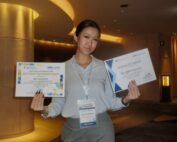
Congratulations to Francesca Teo for winning the Best Poster Presentation Award at the AMGEN Symposium!
Francesca Teo, our AMGEN scholar this summer, took home the Best Poster Presentation Award at the 2026 AMGEN Scholars Asia symposium held at the University of Tokyo!
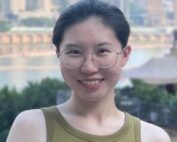
Li Xinmiao
PhD Student (DBS), Low Group
Sun Xiaofan
Research Fellow, Li Group

Ivanna Williantarra
Research Fellow, Young Group
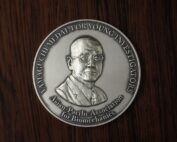
Shailaja Seetharaman awarded the Yamaguchi Medal 2026
Congratulations to MBI Principal Investigator Asst. Prof. Shailaja Seetharaman on receiving the Yamaguchi Medal for Biomechanics (2026).