

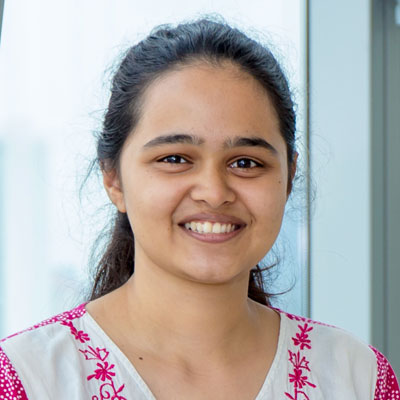
Saradha VENKATACHALAPATHY
PhD Student, Mechanobiology Institute, National University of Singapore
E0018317@u.nus.edu
Level 10 T-Lab
National University of Singapore
5A Engineering Drive 1
Singapore 117411
2021 Bootcamp on Mechanobiology
THIS EVENT HAS BEEN POSTPONED.
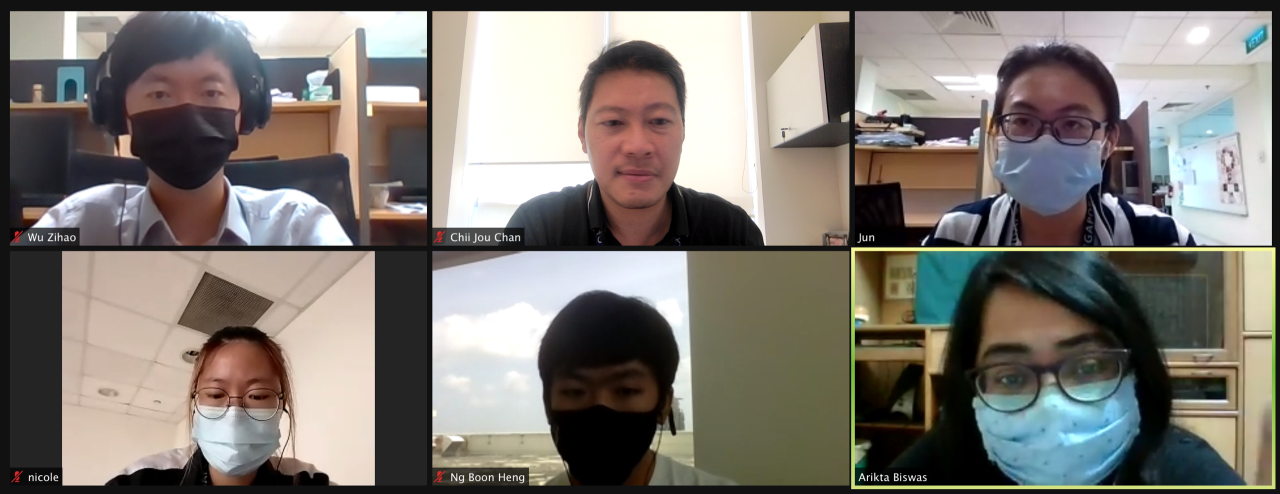
The group is growing!
Warm welcome to the first members of Mammalian Development & Tissue Hydraulics Lab! Fantastic team that helps to build the lab despite the challenges during the pandemic… Kudos to all and looking forward to exciting times ahead!
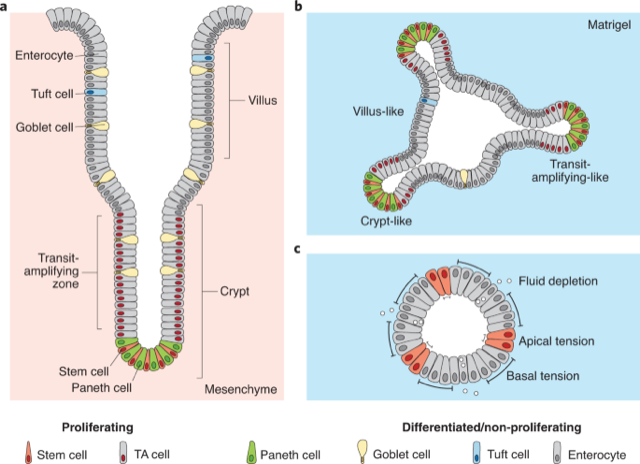
Mechano-osmotic forces shape organoid morphogenesis
Super happy to contribute to this exciting work on the role of lumen/tissue mechanics in organoid development. Beautiful collaboration between biologists and physicists. Also nice views by C. Nelson.

Zihao Wu
Alumni, Chan Group
MBI PIs win MOE AcRF Tier 3 grant to study endomembrane aging
A research team led by Mechanobiology Institute (MBI) Principal Investigators Assoc. Prof. Tony Kanchanawong and Prof. Rong Li was recently awarded a Ministry of Education Academic Research Fund (MOE AcRF) Tier 3 grant.
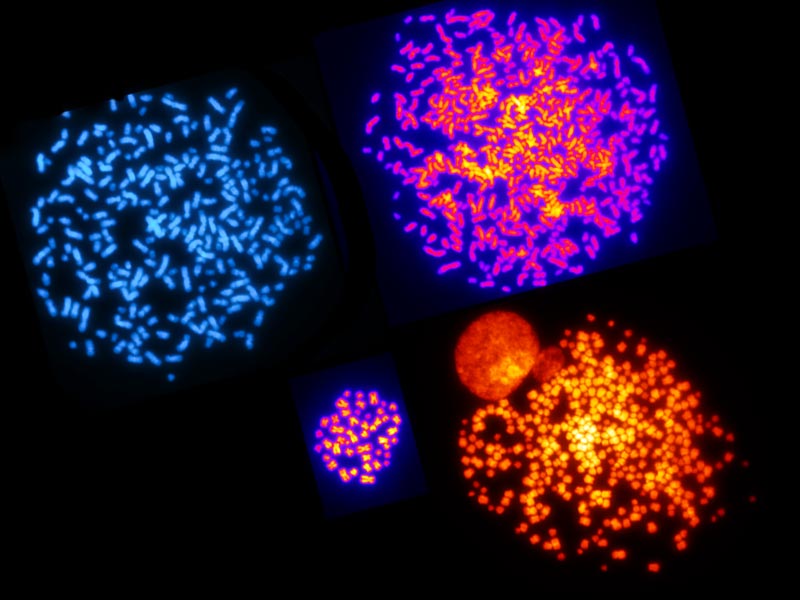
Preventing mistakes in chromosomal segregation
A recent study from the Li Lab at the Mechanobiology Institute, National University of Singapore and Johns Hopkins University, USA has revealed new aspects on the involvement of p53 protein in preventing mistakes in chromosomal segregation. Learn more
Saradha Venkatachalapathy
PhD Student
Recent Publications
- Venkatachalapathy S, Sreekumar D, Ratna P, and Shivashankar GV. Actomyosin contractility as a mechanical checkpoint for cell state transitions. Sci Rep 2022; 12(1):16063. [PMID: 36163393]
- Venkatachalapathy S, Jokhun DS, Andhari M, and Shivashankar GV. Single cell imaging-based chromatin biomarkers for tumor progression. Sci Rep 2021; 11(1):23041. [PMID: 34845273]
- Yang KD, Belyaeva A, Venkatachalapathy S, Damodaran K, Katcoff A, Radhakrishnan A, Shivashankar GV, and Uhler C. Multi-domain translation between single-cell imaging and sequencing data using autoencoders. Nat Commun 2021; 12(1):31. [PMID: 33397893]
- Yang KD, Damodaran K, Venkatachalapathy S, Soylemezoglu AC, Shivashankar GV, and Uhler C. Predicting cell lineages using autoencoders and optimal transport. PLoS Comput. Biol. 2020; 16(4):e1007828. [PMID: 32343706]
- Venkatachalapathy S, Jokhun DS, and Shivashankar GV. Multivariate analysis reveals activation-primed fibroblast geometric states in engineered 3D tumor microenvironments. Mol. Biol. Cell 2020;:mbcE19080420. [PMID: 32023167]
- Damodaran K, Venkatachalapathy S, Alisafaei F, Radhakrishnan AV, Sharma Jokhun D, Shenoy VB, and Shivashankar GV. Compressive force induces reversible chromatin condensation and cell geometry dependent transcriptional response. Mol. Biol. Cell 2018;:mbcE18040256. [PMID: 30256731]
- Roy B, Venkatachalapathy S, Ratna P, Wang Y, Jokhun DS, Nagarajan M, and Shivashankar GV. Laterally confined growth of cells induces nuclear reprogramming in the absence of exogenous biochemical factors. Proc. Natl. Acad. Sci. U.S.A. 2018;. [PMID: 29735717]
- Belyaeva A, Venkatachalapathy S, Nagarajan M, Shivashankar GV, and Uhler C. Network analysis identifies chromosome intermingling regions as regulatory hotspots for transcription. Proc. Natl. Acad. Sci. U.S.A. 2017;. [PMID: 29229825]
- Radhakrishnan AV, Jokhun DS, Venkatachalapathy S, and Shivashankar GV. Nuclear Positioning and Its Translational Dynamics Are Regulated by Cell Geometry. Biophys. J. 2017; 112(9):1920-1928. [PMID: 28494962]
- Mitra A, Venkatachalapathy S, Ratna P, Wang Y, Jokhun DS, and Shivashankar GV. Cell geometry dictates TNFα-induced genome response. Proc. Natl. Acad. Sci. U.S.A. 2017;. [PMID: 28461498]

