

Saradha VENKATACHALAPATHY
PhD Student, Mechanobiology Institute, National University of Singapore
E0018317@u.nus.edu
Level 10 T-Lab
National University of Singapore
5A Engineering Drive 1
Singapore 117411

Disrupted Cell-Matrix Interactions Drives Aging and Reveals New Paths for Skin Regeneration
Researchers from the Li Lab discover how α5-integrin–FN interactions preserve dermal integrity, offering new insights for antiaging strategies targeting ECM organization and fibroblast function.
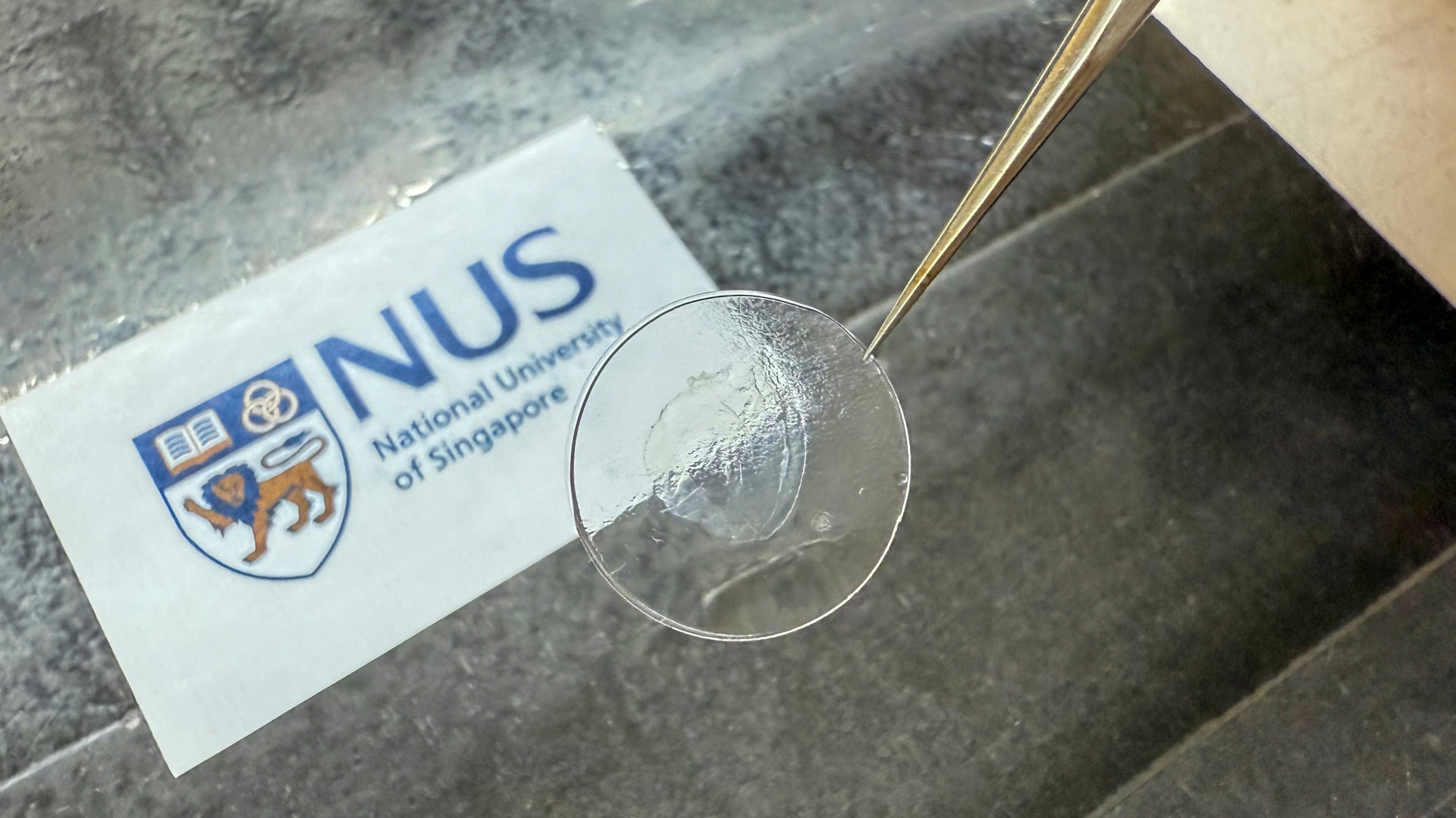
DECIPHERing the Role of Cell-Matrix Interactions in Ageing Heart Health
Researchers from the Soft Nano-Biomaterials Lab at MBI developed a material system to enable precise investigation into how individual ECM properties affect cultured heart cells.
Seeking Postdoctoral Research Fellow in the research group of Dr. Tsuyoshi Hirashima at the Mechanobiology Institute, NUS
We are seeking to recruit a Postdoctoral Research Fellow in the research group of Dr. Tsuyoshi Hirashima at the Mechanobiology Institute, NUS.
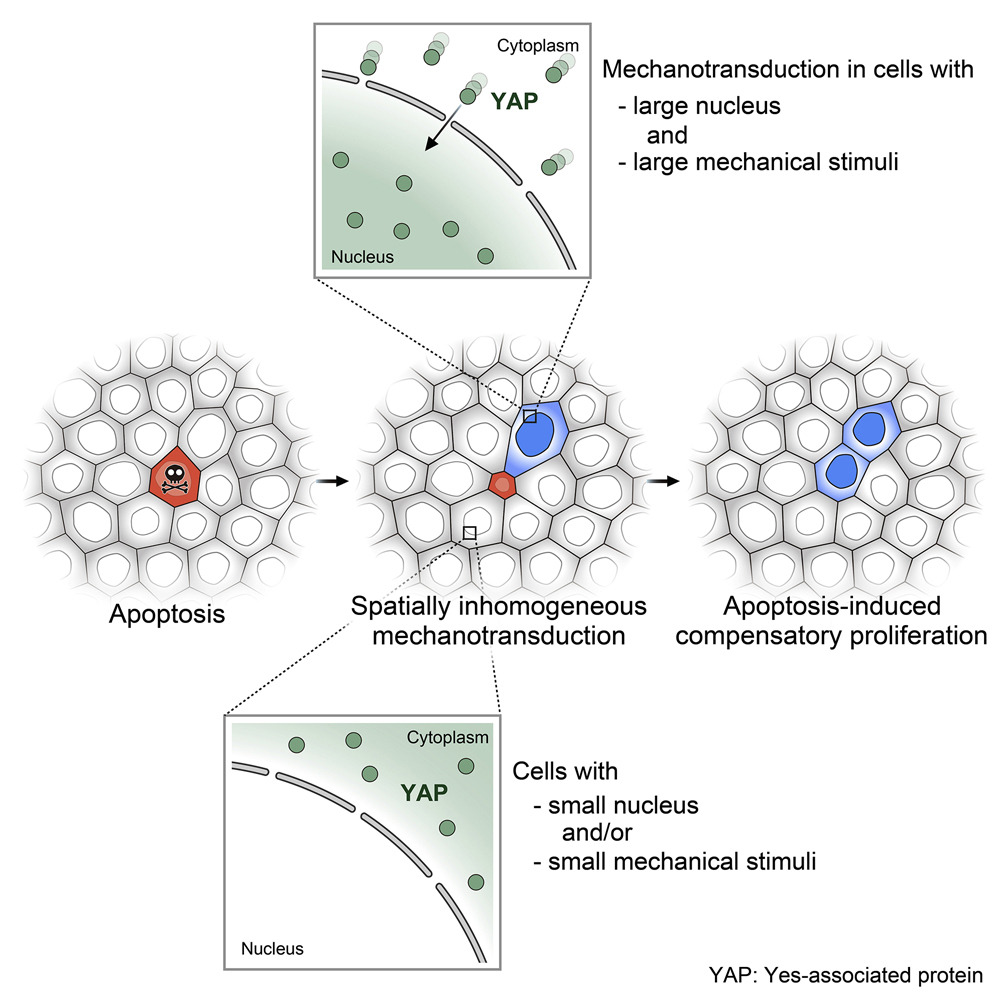
How Dying Cells Signal Growth: Mechanical Forces Drive Targeted Cell Proliferation after Apoptosis
Researchers from the Toyama Lab at MBI reveal how mechanical factors control apoptosis and cell replacement.

Scientists Develop AI-Driven Tool to Map 3D Cellular Landscapes
Researchers from the Beghin Lab at the Mechanobiology Institute, NUS combine DeepStar3D algorithm and 3DCellScope interface to develop an experimental tool for real-time interaction with cell data.
Seeking Research Assistant in Transmission Electron Microscopy at the Mechanobiology Institute, NUS
We are seeking a Research Assistant in Transmission Electron Microscopy (TEM) at the Mechanobiology Institute, NUS
Saradha Venkatachalapathy
PhD Student
Recent Publications
- Venkatachalapathy S, Sreekumar D, Ratna P, and Shivashankar GV. Actomyosin contractility as a mechanical checkpoint for cell state transitions. Sci Rep 2022; 12(1):16063. [PMID: 36163393]
- Venkatachalapathy S, Jokhun DS, Andhari M, and Shivashankar GV. Single cell imaging-based chromatin biomarkers for tumor progression. Sci Rep 2021; 11(1):23041. [PMID: 34845273]
- Yang KD, Belyaeva A, Venkatachalapathy S, Damodaran K, Katcoff A, Radhakrishnan A, Shivashankar GV, and Uhler C. Multi-domain translation between single-cell imaging and sequencing data using autoencoders. Nat Commun 2021; 12(1):31. [PMID: 33397893]
- Yang KD, Damodaran K, Venkatachalapathy S, Soylemezoglu AC, Shivashankar GV, and Uhler C. Predicting cell lineages using autoencoders and optimal transport. PLoS Comput. Biol. 2020; 16(4):e1007828. [PMID: 32343706]
- Venkatachalapathy S, Jokhun DS, and Shivashankar GV. Multivariate analysis reveals activation-primed fibroblast geometric states in engineered 3D tumor microenvironments. Mol. Biol. Cell 2020;:mbcE19080420. [PMID: 32023167]
- Damodaran K, Venkatachalapathy S, Alisafaei F, Radhakrishnan AV, Sharma Jokhun D, Shenoy VB, and Shivashankar GV. Compressive force induces reversible chromatin condensation and cell geometry dependent transcriptional response. Mol. Biol. Cell 2018;:mbcE18040256. [PMID: 30256731]
- Roy B, Venkatachalapathy S, Ratna P, Wang Y, Jokhun DS, Nagarajan M, and Shivashankar GV. Laterally confined growth of cells induces nuclear reprogramming in the absence of exogenous biochemical factors. Proc. Natl. Acad. Sci. U.S.A. 2018;. [PMID: 29735717]
- Belyaeva A, Venkatachalapathy S, Nagarajan M, Shivashankar GV, and Uhler C. Network analysis identifies chromosome intermingling regions as regulatory hotspots for transcription. Proc. Natl. Acad. Sci. U.S.A. 2017;. [PMID: 29229825]
- Radhakrishnan AV, Jokhun DS, Venkatachalapathy S, and Shivashankar GV. Nuclear Positioning and Its Translational Dynamics Are Regulated by Cell Geometry. Biophys. J. 2017; 112(9):1920-1928. [PMID: 28494962]
- Mitra A, Venkatachalapathy S, Ratna P, Wang Y, Jokhun DS, and Shivashankar GV. Cell geometry dictates TNFα-induced genome response. Proc. Natl. Acad. Sci. U.S.A. 2017;. [PMID: 28461498]