


A Cell Never Forgets: How Prior Environments Affect Confined Cell Migration
The findings show that cells retain mechanical memory that influences migration even after various environmental changes.
Researchers from the Holle Lab at MBI reveal how cells integrate mechanical history to adapt to dynamic tissue environments and may have broader implications for understanding wound healing, fibrosis, and cancer metastasis.
Cells migrating through the body are constantly navigating a complex landscape. They encounter tissues of varying stiffness and physical constrains, such as narrow spaces between other cells and extracellular structures. While cells are known to respond acutely to these mechanical cues, it remains unclear whether prior mechanical experiences influence future migratory behaviour after the original cue has been removed. This phenomenon, known as mechanical memory, is an emerging frontier in the field of mechanobiology, but the mechanisms by which it affects cell migration in physiologically relevant environments have remained largely unknown.
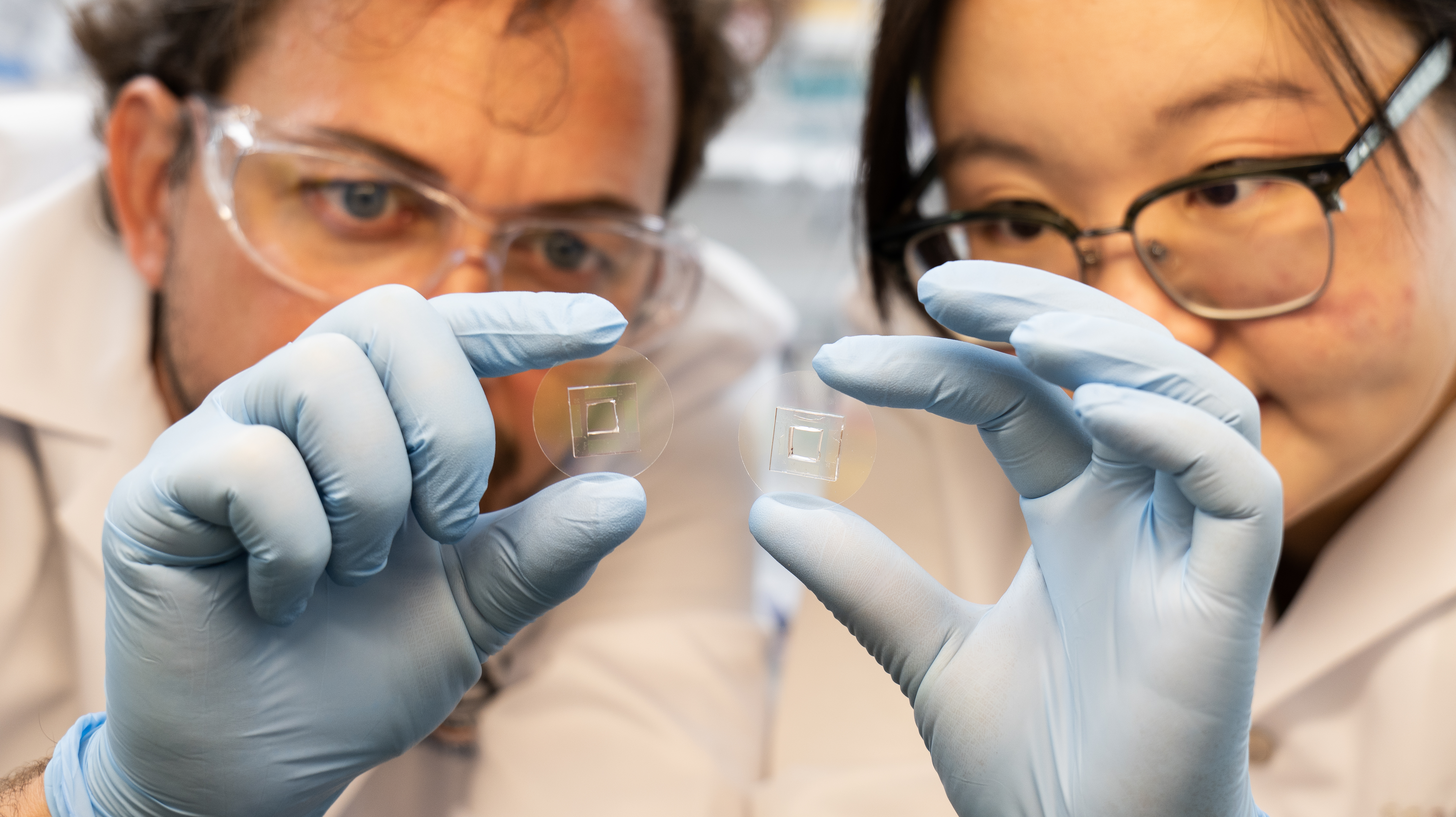
Asst Prof Andrew Holle (L) and PhD student Nicole Lee (R) from the College of Design and Engineering at NUS, investigate how different parameters influence confined migration of cells.
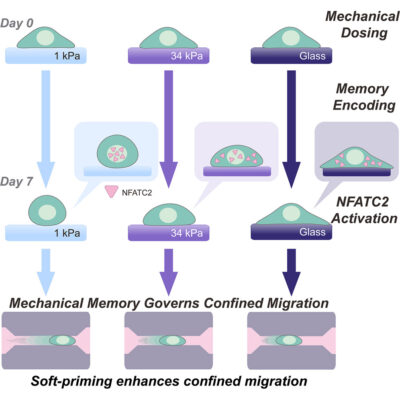
Graphical abstract of the study. 10.1016/j.celrep.2026.117267
A recent study published in Cell Reports led by Nicole Lee Jia Wen, a PhD student at the Holle Lab at the Mechanobiology Institute, NUS, set out to investigate this question. The team explored how a cell’s exposure to tissues of different stiffnesses – known as “substrate stiffness priming” – affects its ability to migrate through confined spaces, and whether these effects differ between healthy and cancerous cells.
To mimic soft and stiff tissue environments, the researchers used polyacrylamide hydrogels. Cells were then mechanically conditioned on these substrates for extended periods, after which they were transferred into microfabricated confinement channels that simulate the narrow interstitial spaces encountered during migration in vivo. By carefully observing cells through a dose-and-passage approach, the team discovered that the effects of the initial mechanical environment could persist even after cells were transferred into a new environment – a clear sign of mechanical memory.
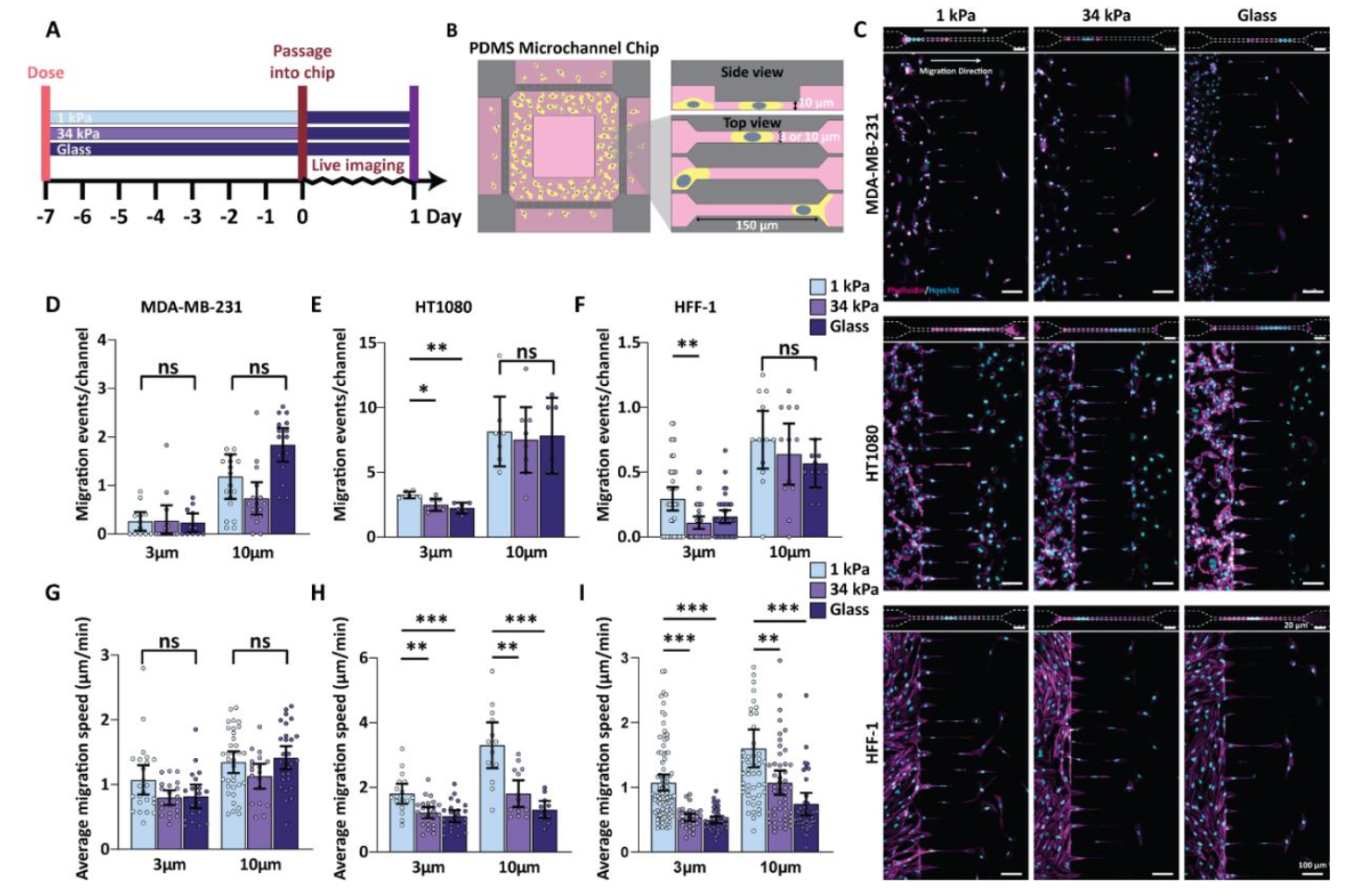
Confined migration as a functional output of cellular mechanical memory. 10.1016/j.celrep.2026.117267
The experiments also revealed differences between cell types. Fibroblasts and fibrosarcoma cells that had been primed on soft substrates migrated more efficiently and at faster speeds through confined microchannels than those primed on stiff substrates, even after removal from their original mechanical environment. In contrast, highly metastatic breast cancer cells failed to retain these mechanically induced phenotypes after the cue was removed, although they still responded to stiffness during the priming phase. These observations suggest that the retention of mechanical memory is strongly cell type-dependent and may differ between healthy, transformed, and metastatic cells.
To identify molecular regulators associated with this phenomenon, the team performed bulk RNA sequencing after mechanical priming. Comparative transcriptomic analysis identified NFATC2 as a candidate regulator , a gene specifically upregulated in cells that retained mechanical memory. Soft mechanical priming not only increased NFATC2 expression but also promoted nuclear localization. When NFATC2 was silenced using through siRNA-mediated knockdown or pharmacological inhibition, the enhanced confined migration was abolished. These findings highlight NFATC2 as a key regulator linking persistent transcriptional regulation to future migratory behaviour in confinement.
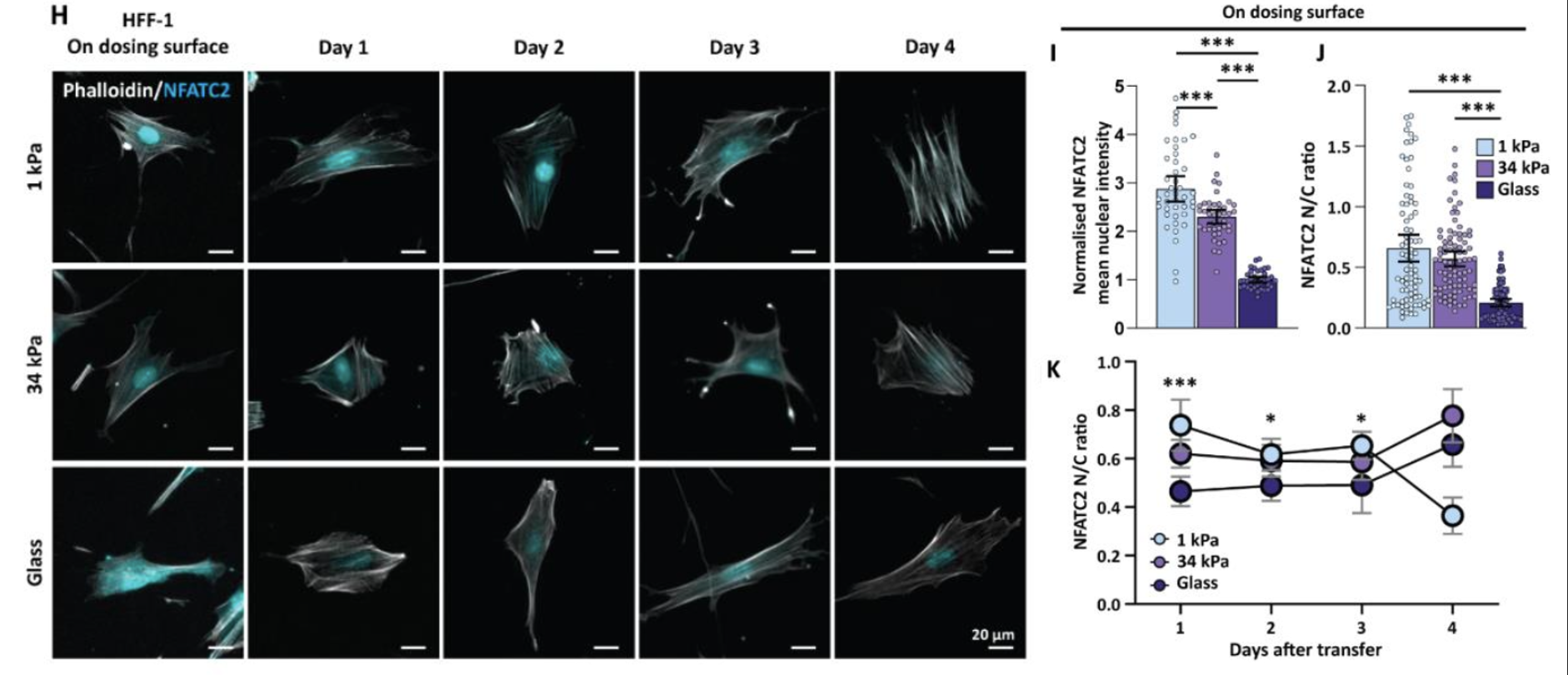
RNA sequencing reveals NFATC2 as a key regulator of mechanical memory. 10.1016/j.celrep.2026.117267
Reflecting on the study, Nicole Lee said, “Overall, our work shows that cells do not simply respond to their current mechanical environment. They can retain a form of mechanical memory that continues to influence how they migrate even after that environment changes.”
Overall, the study demonstrates that prior mechanical environments can shape how cells navigate future physical challenges through persistent transcriptional adaptation. These findings provide new insight into how cells integrate mechanical history to adapt to dynamic tissue environments and may have broader implications for understanding wound healing, fibrosis, and cancer metastasis.

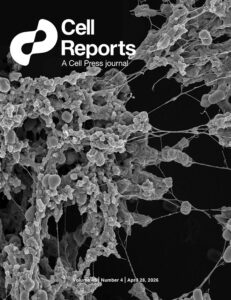
Publication link:
Lee, J. W. N., Chang, Y., Chitnis, M. S., Li, Y., Gao, X., Sun, A. R., Zhu, J., Young, J. L., & Holle, A. W. (2026). Mechanical memory primes cells for confined migration. Cell reports, 45(4), 117267. https://doi.org/10.1016/j.celrep.2026.117267
Nicole Lee Jia Wen

Andrew Holle

A Cell Never Forgets: How Prior Environments Affect Confined Cell Migration
Researchers from the Holle Lab at the Mechanobiology Institute, NUS discover that cells retain mechanical memory that influences subsequent migration despite environmental changes, suggesting broader implications for understanding wound healing, fibrosis and cancer metastasis.
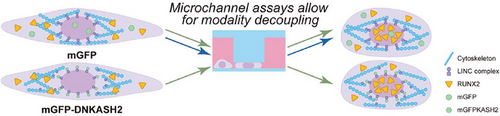
Confined Migration Shapes the Bony Fate of Stem Cells
Researchers from the Holle Lab at the Mechanobiology Institute, NUS discover that migration through confined spaces causes lasting nuclear changes in stem cells, biasing them toward bone formation.