

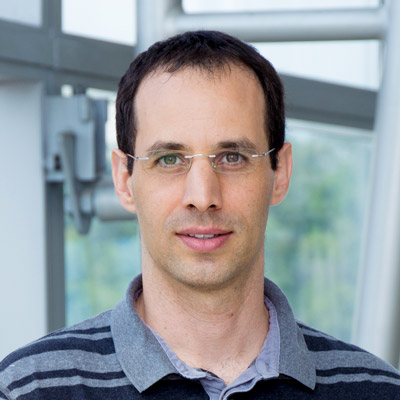
Ronen ZAIDEL-BAR
Department of Cell and Developmental Biology, Sackler Faculty of Medicine, Tel-Aviv University, Israel
Laboratory website
Zaidel-Bar Cell Adhesion Lab
What is Fast Endophilin-Mediated Endocytosis (FEME)?
What is Fast Endophilin-Mediated Endocytosis (FEME)? FEME is a novel clathrin-independent endocytic pathway, regulated by the BAR domain protein endophilin, where tubulo-vesicular carriers form within seconds at the plasma membrane upon activation of specific [...]
What is Rho-dependent IL-2 receptor endocytosis?
What is Rho-dependent IL-2 receptor endocytosis? Internalization of transmembrane receptors was thought to occur exclusively via clathrin-mediated endocytosis (CME). However, the discovery of clathrin-independent endocytic routes, in particular, the pathway that mediates the internalization [...]
What is Arf6-associated endocytosis?
What is Arf6-associated endocytosis? Arf6-associated endocytosis is a clathrin-independent, plasma membrane-endosomal recycling pathway, regulated by the Arf6 protein, which is a member of the Arf family of small GTPases [1]. In this pathway, Arf6 [...]
What is the CLIC/GEEC Endocytosis pathway?
What is the CLIC/GEEC Endocytosis pathway? The CLIC/GEEC (CG) pathway is a clathrin-independent endocytic pathway mediated by uncoated tubulovesicular primary carriers called clathrin-independent carriers (CLICs) which arise directly from the plasma membrane and later [...]
How are clathrin-coated vesicles transported?
How are clathrin-coated vesicles transported? Different cytoskeletal networks have been implicated in the transport of clathrin-coated vesicles (CCVs). In yeast, the actin cytoskeleton traffics dissociated CCVs [1], whilst in mammals the microtubule network transports [...]
How are clathrin-coated vesicles uncoated?
How are clathrin-coated vesicles uncoated? Uncoating is the process by which clathrin is removed from clathrin-coated vesicles (CCVs). In mammals, this ATP dependent process is driven by the 70kDa molecular chaperone ‘Heat shock cognate [...]
Ronen Zaidel-Bar
Visiting Faculty
Currently Visting
6-12 Nov 2018
Office: T-Lab, Level 5
Research Areas
Cell-cell and cell-matrix adhesion, Regulation of actomyosin contractility and dynamics, C. elegans development, mechanics and molecular mechanisms of morphogenesis
Research Interests
- How do specific cytoskeletal proteins contribute to the organization and function of cell adhesion and actomyosin structures?
- How are signals processed within the “adhesome” and “contractome” to arrive at the appropriate cytoskeletal arrangement for a given cell state?
- How do adhesion sites and the cytoskeleton sense and respond to external mechanical forces?
Biography
Dr Zaidel-Bar obtained his Ph.D. working with Prof Benny Geiger (Weizmann Institute of Science) on the role of force in regulating cell-matrix adhesions. Their work first focused on single proteins and evolved to encompass the entire adhesome network. In his Postdoctoral training with Prof Jeff Hardin (University of Wisconsin – Madison) Dr Zaidel-Bar switched from studying cells in culture to employing the genetic model organism C. elegans for the study of cell-cell adhesions during development. Dr Zaidel-Bar was attracted to Singapore by the opening of MBI and was awarded the Singapore National Research Foundation Fellowship for promising young investigators.
Education
PhD Weizmann Institute of Science
Recent Publications
- Bertocchi C, Alegría JJ, Vásquez-Sepúlveda S, Ibanez-Prat R, Srinivasan A, Arrano-Valenzuela I, Castro-Pereira B, Soto-Montandon C, Trujillo-Espergel A, Montenegro-Rojas I, Deguchi S, Owen GI, Kanchanawong P, Cerda M, Motta G, Zaidel-Bar R, and Ravasio A. Systematic AI-assisted screening of the cadhesome to map epithelial monolayer mechanics. Cell Commun Signal 2026;. [PMID: 42399739]
- Ray S, Agarwal P, Nitzan A, Nédélec F, and Zaidel-Bar R. Actin capping protein regulates actomyosin contractility to maintain germline architecture in C. elegans. Development 2023;. [PMID: 36897576]
- Avivi Kela S, Sethi K, Tan PY, Suresh D, Ong HT, Castaneda PG, Amin MR, Laviv T, Cram EJ, Faix J, and Zaidel-Bar R. Tension-dependent RHGF-1 recruitment to stress fibers drives robust spermathecal tissue contraction. J Cell Biol 2022; 222(2). [PMID: 36574264]
- Chen Z, Oh D, Biswas KH, Zaidel-Bar R, and Groves JT. Probing the effect of clustering on EphA2 receptor signaling efficiency by subcellular control of ligand-receptor mobility. Elife 2021; 10. [PMID: 34414885]
- Hu S, Grobe H, Guo Z, Wang Y, Doss BL, Pan M, Ladoux B, Bershadsky AD, and Zaidel-Bar R. Reciprocal regulation of actomyosin organization and contractility in non-muscle cells by tropomyosins and alpha-actinins. Mol. Biol. Cell 2019;:mbcE19020082. [PMID: 31216217]
- Desai SK, Padmanabhan A, Harshe S, Zaidel-Bar R, and Kenney LJ. Salmonella biofilms program innate immunity for persistence in Caenorhabditis elegans. Proc. Natl. Acad. Sci. U.S.A. 2019;. [PMID: 31160462]
- Bouffard J, Cecchetelli AD, Clifford C, Sethi K, Zaidel-Bar R, and Cram EJ. The RhoGAP SPV-1 regulates calcium signaling to control the contractility of the C. elegans spermatheca during embryo transits. Mol. Biol. Cell 2019;:mbcE18100633. [PMID: 30726159]
- Priti A, Ong HT, Toyama Y, Padmanabhan A, Dasgupta S, Krajnc M, and Zaidel-Bar R. Syncytial germline architecture is actively maintained by contraction of an internal actomyosin corset. Nat Commun 2018; 9(1):4694. [PMID: 30410005]
- Agarwal P, and Zaidel-Bar R. Principles of Actomyosin Regulation In Vivo. Trends Cell Biol. 2018;. [PMID: 30385150]
- Chen Z, Oh D, Biswas KH, Yu C, Zaidel-Bar R, and Groves JT. Spatially modulated ephrinA1:EphA2 signaling increases local contractility and global focal adhesion dynamics to promote cell motility. Proc. Natl. Acad. Sci. U.S.A. 2018;. [PMID: 29866846]
Lab Members

Pulling biomolecular complexes
MBI scientists demonstrate how the phenomenon of force-induced stabilization of biomolecular complexes can be explained on a one-dimensional energy landscape by incorporating defined transition coordinates.
Huang Cheng Kuang
Research Fellow, Lim Group

More twists to the tale: Varied actin patterns in epithelial cells
A recent study led by MBI graduate student Salma Jalal and Senior Research Fellow Tee Yee Han reveals differences in actin organization patterns observed in fibroblasts and epithelial cell subtypes.
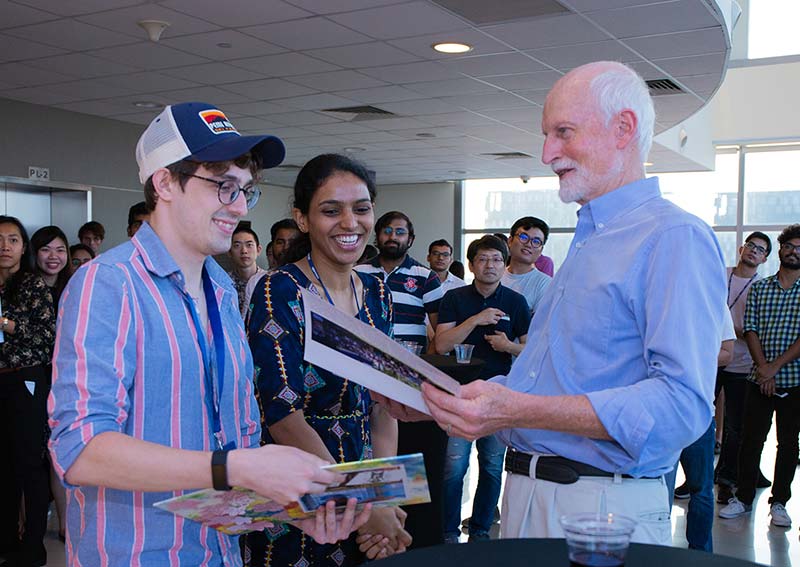
Appreciation evening for MBI’s Founding Director
On Friday 28 June 2019, MBI held an appreciation dinner for Prof. Michael Sheetz to mark his time as Director of MBI. Prof. Sheetz has been MBI Director since its inception, having been recruited by Prof. Hew Choy Leong to lead a new RCE in Mechanobiology in 2008.
Cell polarity: Aurora over the pole
A recent study led by the Motegi Lab has identified the master switch that triggers the symmetry breaking process in the zygotes of the nematode worm, Caenorhabditis elegans. Learn more
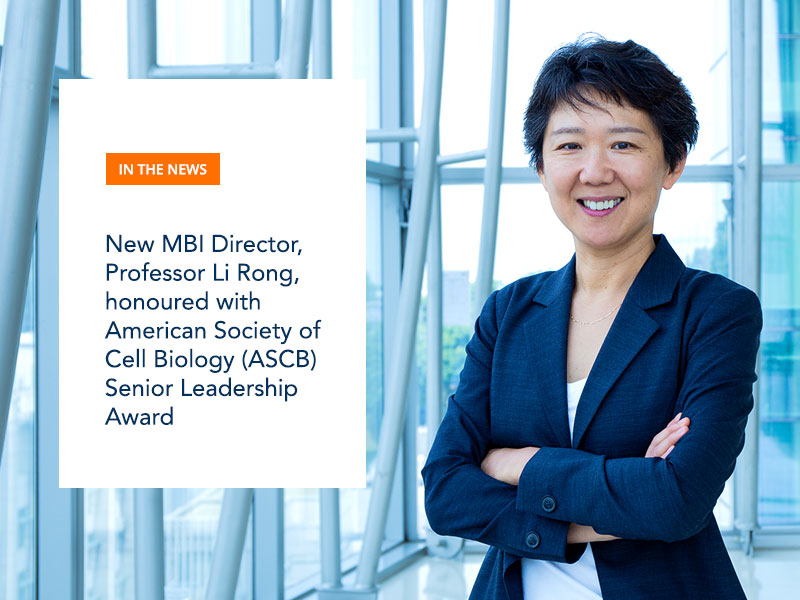
MBI Director honoured with ASCB Senior Leadership Award
MBI Director Prof. Li Rong has been awarded the 2019 Sandra K. Masur Senior Leadership Award from the American Society of Cell Biology (ASCB). This award recognizes cell biology researchers whose “outstanding scientific achievements are coupled with a record of active leadership in mentoring both men and women in scientific careers.”
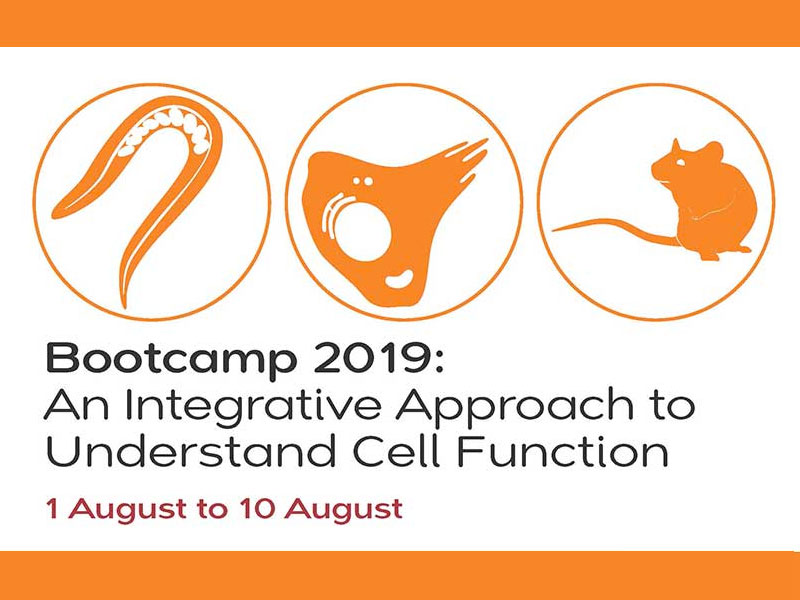
2019 Bootcamp in Mechanobiology: An Integrative Approach to Understand Cell Function
MBI's 10-day "bootcamp" style course covers fundamental concepts and practical approaches in understanding cellular functions. The Bootcamp lectures are open to all interested graduate students and post-docs.

Kedsarin Fong Ngern
Research Fellow, Kanchanawong Group
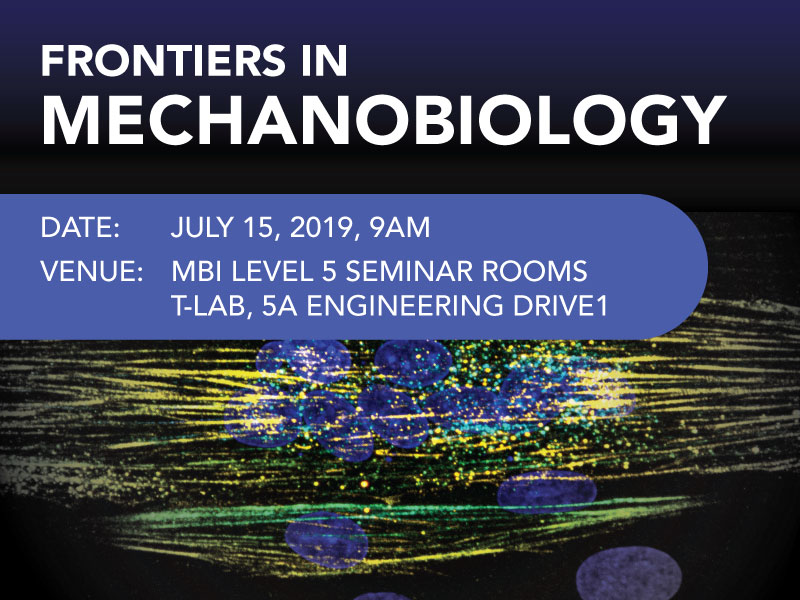
2019 Frontiers in Mechanobiology
MBI is hosting a one day symposium, Frontiers in Mechanobiology, on July 15th, 2019. The symposium will feature nine speakers and a full schedule of talks of interest to those on the cutting edge of mechanobiology. The event is free and open to all interested, there is no registration required.
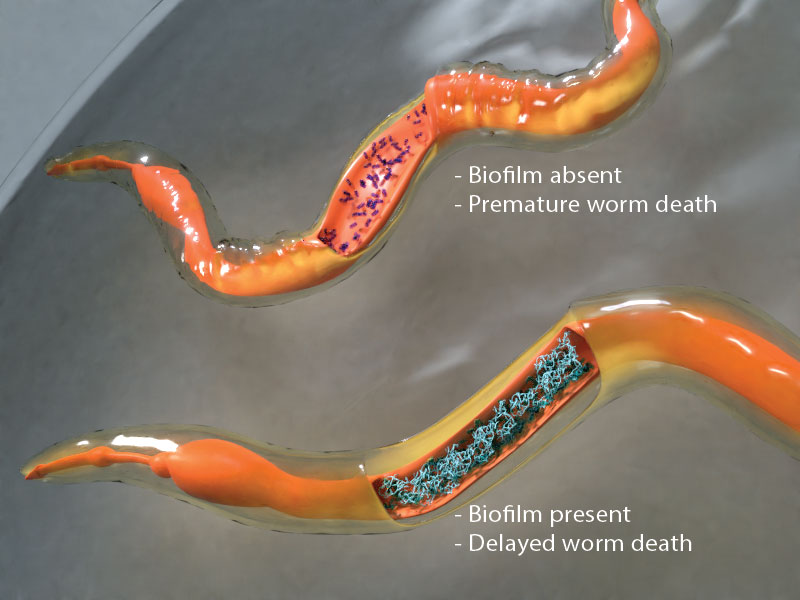
Why Salmonella decide to lay low
Studying dormant biofilms in live worm hosts
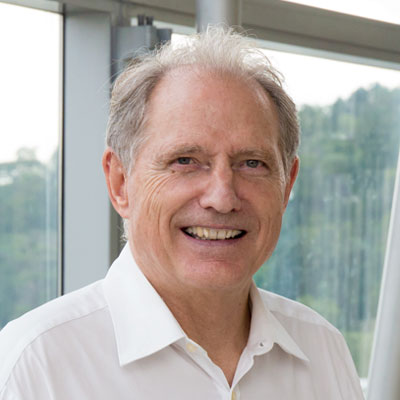
Prof Jacques Prost visiting from Institut Curie
Jacques Prost, Emeritus Research Director, Institut Curie, Département de Physicochimie du Vivant, visiting 16 Jul - 20 Aug 2019.
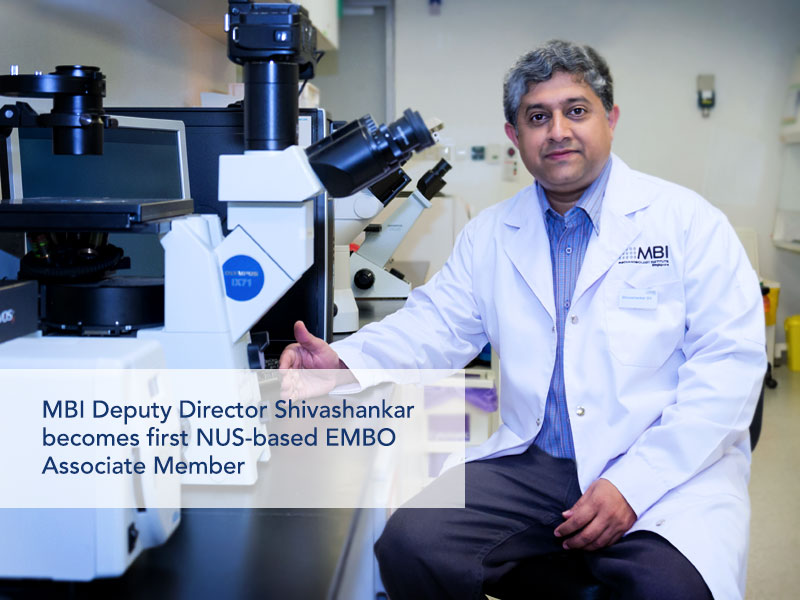
MBI Deputy Director becomes the first NUS-based EMBO Associate Member
MBI Deputy Director Professor GV Shivashankar has been elected as an Associate Member of EMBO (the European Molecular Biology Organization) making him the first scientist from NUS, and only the third Singapore-based Scientist, to be elected to the prestigious EMBO membership.