

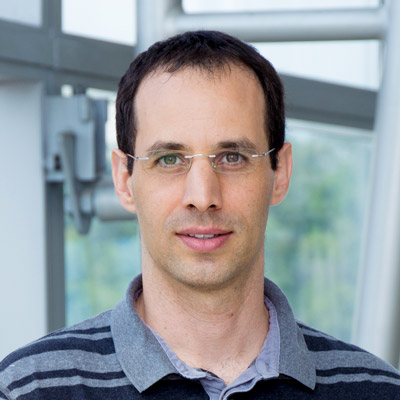
Ronen ZAIDEL-BAR
Department of Cell and Developmental Biology, Sackler Faculty of Medicine, Tel-Aviv University, Israel
Laboratory website
Zaidel-Bar Cell Adhesion Lab
What steps are involved in the myosin powerstroke?
What steps are involved in the myosin powerstroke? Each myosin motor protein possesses ATPase activity and functions in a cyclical manner that couples ATP binding and hydrolysis to a conformational change in the protein. [...]
What is Myosin Light Chain Kinase?
What is Myosin Light Chain Kinase? Myosin light chain kinase (MLCK) is a calcium/calmodulin-dependent serine/threonine kinase, belonging to the immunoglobulin superfamily. It phosphorylates the regulatory myosin light chains of myosin II, in order to [...]
What are cytoskeletal cages?
What are cytoskeletal cages? Cytoskeletal components can assemble into cage-like structures within the cell. These cages serve to segregate intracellular regions or organelles, and can protect their contents from mechanical stress. At the level [...]
What is the plasma membrane?
What is the plasma membrane? Plasma membranes are subcellular structures, approximately 10nm thick, that form a protective boundary around the cell as well as the cell’s organelles. They serve to both impede foreign material [...]
How do mechanically-gated ion channels facilitate mechanotransduction?
How do mechanically-gated ion channels facilitate mechanotransduction? Mechanotransduction relies on the ability of cells to convert mechanical cues, such as stretch or compression, to biochemical signals. One way this occurs is through the activity [...]
How do lipid bilayer components move?
How do lipid bilayer components move? One of the tenets of the Fluid-Mosaic membrane model is that the components of the bilayers are free to move. Before describing the differences between lipid and protein [...]
Ronen Zaidel-Bar
Visiting Faculty
Currently Visting
6-12 Nov 2018
Office: T-Lab, Level 5
Research Areas
Cell-cell and cell-matrix adhesion, Regulation of actomyosin contractility and dynamics, C. elegans development, mechanics and molecular mechanisms of morphogenesis
Research Interests
- How do specific cytoskeletal proteins contribute to the organization and function of cell adhesion and actomyosin structures?
- How are signals processed within the “adhesome” and “contractome” to arrive at the appropriate cytoskeletal arrangement for a given cell state?
- How do adhesion sites and the cytoskeleton sense and respond to external mechanical forces?
Biography
Dr Zaidel-Bar obtained his Ph.D. working with Prof Benny Geiger (Weizmann Institute of Science) on the role of force in regulating cell-matrix adhesions. Their work first focused on single proteins and evolved to encompass the entire adhesome network. In his Postdoctoral training with Prof Jeff Hardin (University of Wisconsin – Madison) Dr Zaidel-Bar switched from studying cells in culture to employing the genetic model organism C. elegans for the study of cell-cell adhesions during development. Dr Zaidel-Bar was attracted to Singapore by the opening of MBI and was awarded the Singapore National Research Foundation Fellowship for promising young investigators.
Education
PhD Weizmann Institute of Science
Recent Publications
- Bertocchi C, Alegría JJ, Vásquez-Sepúlveda S, Ibanez-Prat R, Srinivasan A, Arrano-Valenzuela I, Castro-Pereira B, Soto-Montandon C, Trujillo-Espergel A, Montenegro-Rojas I, Deguchi S, Owen GI, Kanchanawong P, Cerda M, Motta G, Zaidel-Bar R, and Ravasio A. Systematic AI-assisted screening of the cadhesome to map epithelial monolayer mechanics. Cell Commun Signal 2026;. [PMID: 42399739]
- Ray S, Agarwal P, Nitzan A, Nédélec F, and Zaidel-Bar R. Actin capping protein regulates actomyosin contractility to maintain germline architecture in C. elegans. Development 2023;. [PMID: 36897576]
- Avivi Kela S, Sethi K, Tan PY, Suresh D, Ong HT, Castaneda PG, Amin MR, Laviv T, Cram EJ, Faix J, and Zaidel-Bar R. Tension-dependent RHGF-1 recruitment to stress fibers drives robust spermathecal tissue contraction. J Cell Biol 2022; 222(2). [PMID: 36574264]
- Chen Z, Oh D, Biswas KH, Zaidel-Bar R, and Groves JT. Probing the effect of clustering on EphA2 receptor signaling efficiency by subcellular control of ligand-receptor mobility. Elife 2021; 10. [PMID: 34414885]
- Hu S, Grobe H, Guo Z, Wang Y, Doss BL, Pan M, Ladoux B, Bershadsky AD, and Zaidel-Bar R. Reciprocal regulation of actomyosin organization and contractility in non-muscle cells by tropomyosins and alpha-actinins. Mol. Biol. Cell 2019;:mbcE19020082. [PMID: 31216217]
- Desai SK, Padmanabhan A, Harshe S, Zaidel-Bar R, and Kenney LJ. Salmonella biofilms program innate immunity for persistence in Caenorhabditis elegans. Proc. Natl. Acad. Sci. U.S.A. 2019;. [PMID: 31160462]
- Bouffard J, Cecchetelli AD, Clifford C, Sethi K, Zaidel-Bar R, and Cram EJ. The RhoGAP SPV-1 regulates calcium signaling to control the contractility of the C. elegans spermatheca during embryo transits. Mol. Biol. Cell 2019;:mbcE18100633. [PMID: 30726159]
- Priti A, Ong HT, Toyama Y, Padmanabhan A, Dasgupta S, Krajnc M, and Zaidel-Bar R. Syncytial germline architecture is actively maintained by contraction of an internal actomyosin corset. Nat Commun 2018; 9(1):4694. [PMID: 30410005]
- Agarwal P, and Zaidel-Bar R. Principles of Actomyosin Regulation In Vivo. Trends Cell Biol. 2018;. [PMID: 30385150]
- Chen Z, Oh D, Biswas KH, Yu C, Zaidel-Bar R, and Groves JT. Spatially modulated ephrinA1:EphA2 signaling increases local contractility and global focal adhesion dynamics to promote cell motility. Proc. Natl. Acad. Sci. U.S.A. 2018;. [PMID: 29866846]
Lab Members

Muhammad Faris Hazwan Bin Ramli
PhD Student, Class of August 2021, Young Group

Guo Su
Research Fellow, Viasnoff Group
Julien Aureille
Research Fellow, Bershadsky Group
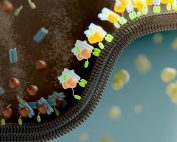
Random control of biological signalling
A collaboration between scientists from MBI and the Institute of Science and Technology (IST) Austria has revealed how Rab proteins act as molecular switches inside the cell to regulate signalling during intracellular trafficking. Learn more

Roshni Gupta
Research Assistant, Li Group

Lou Yuting
Research Fellow, Chan Group
Wong Bin Sheng
Research Fellow, Li Group
Wong Liting
Research Assistant, Lim Group

MBI PI Timothy Saunders selected as EMBO Global Investigator
Asst. Prof. Timothy Saunders, MBI Principal Investigator and Department of Biological Sciences, NUS has been selected to join the European Molecular Biology Organisation (EMBO) Global Investigator Network.
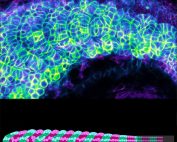
How fish get their shape
By investigating how chevron patterns form in embryonic fish muscle, a team from the Saunders Lab has revealed how physical forces are essential for correct formation of complex organ shapes. Learn more
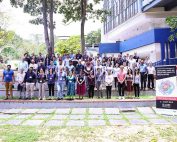
International Conference on Genomes and AI: Post-event report
This 3-day event created a common platform for scientists, industry experts, and students to share ideas and innovations, and to facilitate fruitful discussions on how AI-based tools could be used to spur research in biological sciences.
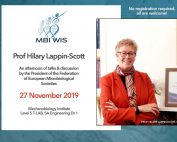
Hilary Lappin-Scott visiting from Cardiff
Prof. Hilary Lappin-Scottvisiting MBI on 27th November, 2019, for an afternoon of talks, discussion and networking opportunities.