

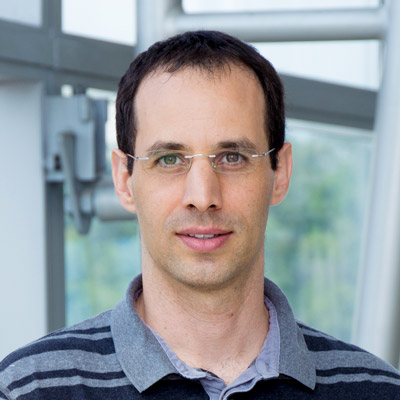
Ronen ZAIDEL-BAR
Department of Cell and Developmental Biology, Sackler Faculty of Medicine, Tel-Aviv University, Israel
Laboratory website
Zaidel-Bar Cell Adhesion Lab
How does the tubulin complex assemble?
How does the tubulin complex assemble? Microtubules are made up of repeating units of α/β- tubulin heterodimers, which are assembled on a γ-tubulin ring complex (a complex of γ-tubulin and other protein components), during [...]
How is microtubule assembly/disassembly regulated?
How is microtubule assembly/disassembly regulated? GTP hydrolysis has been shown to be a key regulator of microtubule polymerization dynamics. Although the exact mechanisms are poorly understood, two opposing models have been proposed to describe [...]
What is microtubule dynamic instability?
What is microtubule dynamic instability? In most cell types, thirteen protofilaments associate laterally to form a microtubule. In a few cases microtubules contain more or fewer protofilaments [1]. Numerous interactions between the subunits give [...]
What are Contractile Fibers?
What are Contractile Fibers? Certain myosin isoforms (i.e. myosin II) form bipolar assemblies via the extended coiled-coil domains in the heavy chains (see also “thick filaments”). Actin “thin filaments” with opposite polarity associate with [...]
What is Actomyosin?
What is Actomyosin? Actomyosin refers to the actin-myosin complex that forms within the cytoskeleton. Actomyosin is inherently contractile, with the myosin motor protein able to pull on actin filaments. This property gives rise to [...]
What are Blebs?
What are Blebs? Blebs are blister-like protrusions that occur at the cell surface (reviewed in [1]). Blebs form, and function, in a series of defined steps. They typically grow to a length of around [...]
Ronen Zaidel-Bar
Visiting Faculty
Currently Visting
6-12 Nov 2018
Office: T-Lab, Level 5
Research Areas
Cell-cell and cell-matrix adhesion, Regulation of actomyosin contractility and dynamics, C. elegans development, mechanics and molecular mechanisms of morphogenesis
Research Interests
- How do specific cytoskeletal proteins contribute to the organization and function of cell adhesion and actomyosin structures?
- How are signals processed within the “adhesome” and “contractome” to arrive at the appropriate cytoskeletal arrangement for a given cell state?
- How do adhesion sites and the cytoskeleton sense and respond to external mechanical forces?
Biography
Dr Zaidel-Bar obtained his Ph.D. working with Prof Benny Geiger (Weizmann Institute of Science) on the role of force in regulating cell-matrix adhesions. Their work first focused on single proteins and evolved to encompass the entire adhesome network. In his Postdoctoral training with Prof Jeff Hardin (University of Wisconsin – Madison) Dr Zaidel-Bar switched from studying cells in culture to employing the genetic model organism C. elegans for the study of cell-cell adhesions during development. Dr Zaidel-Bar was attracted to Singapore by the opening of MBI and was awarded the Singapore National Research Foundation Fellowship for promising young investigators.
Education
PhD Weizmann Institute of Science
Recent Publications
- Bertocchi C, Alegría JJ, Vásquez-Sepúlveda S, Ibanez-Prat R, Srinivasan A, Arrano-Valenzuela I, Castro-Pereira B, Soto-Montandon C, Trujillo-Espergel A, Montenegro-Rojas I, Deguchi S, Owen GI, Kanchanawong P, Cerda M, Motta G, Zaidel-Bar R, and Ravasio A. Systematic AI-assisted screening of the cadhesome to map epithelial monolayer mechanics. Cell Commun Signal 2026;. [PMID: 42399739]
- Ray S, Agarwal P, Nitzan A, Nédélec F, and Zaidel-Bar R. Actin capping protein regulates actomyosin contractility to maintain germline architecture in C. elegans. Development 2023;. [PMID: 36897576]
- Avivi Kela S, Sethi K, Tan PY, Suresh D, Ong HT, Castaneda PG, Amin MR, Laviv T, Cram EJ, Faix J, and Zaidel-Bar R. Tension-dependent RHGF-1 recruitment to stress fibers drives robust spermathecal tissue contraction. J Cell Biol 2022; 222(2). [PMID: 36574264]
- Chen Z, Oh D, Biswas KH, Zaidel-Bar R, and Groves JT. Probing the effect of clustering on EphA2 receptor signaling efficiency by subcellular control of ligand-receptor mobility. Elife 2021; 10. [PMID: 34414885]
- Hu S, Grobe H, Guo Z, Wang Y, Doss BL, Pan M, Ladoux B, Bershadsky AD, and Zaidel-Bar R. Reciprocal regulation of actomyosin organization and contractility in non-muscle cells by tropomyosins and alpha-actinins. Mol. Biol. Cell 2019;:mbcE19020082. [PMID: 31216217]
- Desai SK, Padmanabhan A, Harshe S, Zaidel-Bar R, and Kenney LJ. Salmonella biofilms program innate immunity for persistence in Caenorhabditis elegans. Proc. Natl. Acad. Sci. U.S.A. 2019;. [PMID: 31160462]
- Bouffard J, Cecchetelli AD, Clifford C, Sethi K, Zaidel-Bar R, and Cram EJ. The RhoGAP SPV-1 regulates calcium signaling to control the contractility of the C. elegans spermatheca during embryo transits. Mol. Biol. Cell 2019;:mbcE18100633. [PMID: 30726159]
- Priti A, Ong HT, Toyama Y, Padmanabhan A, Dasgupta S, Krajnc M, and Zaidel-Bar R. Syncytial germline architecture is actively maintained by contraction of an internal actomyosin corset. Nat Commun 2018; 9(1):4694. [PMID: 30410005]
- Agarwal P, and Zaidel-Bar R. Principles of Actomyosin Regulation In Vivo. Trends Cell Biol. 2018;. [PMID: 30385150]
- Chen Z, Oh D, Biswas KH, Yu C, Zaidel-Bar R, and Groves JT. Spatially modulated ephrinA1:EphA2 signaling increases local contractility and global focal adhesion dynamics to promote cell motility. Proc. Natl. Acad. Sci. U.S.A. 2018;. [PMID: 29866846]
Lab Members
MBI welcomes new PI Tsuyoshi Hirashima
MBI is pleased to receive Dr. Tsuyoshi Hirashima as a new Principal Investigator, with a joint-appointment as a Research Assistant Professor in the Department of Physiology, NUS School of Medicine.
Chan Lab dinner and welcoming interns!
Finally, the lab dinner that is long overdue :) And a warm welcome to the summer interns!
MBI welcomes MUST 2022 Interns
MBI hosts 12 new interns for the MBI Undergraduate Summer Training (MUST) Programme, a 2-month internship exploring mechanobiology.
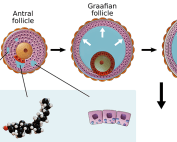
Latest publication on tissue hydraulics in reproduction is out!
Joe and Tsuyoshi Hirashima (incoming PI) reviewed recent advances in our understanding on how fluid dynamics shape mammalian oogenesis and spermatogenesis.
Talk at EMBO/EMBL Symposium on Mechanobiology in development and disease
Joe shares the latest finding on theca cell mechanosensing and their function in controlling follicle growth at the 2022 EMBO/EMBL symposium on mechanobiology in development and disease.

Modhura Ganguly
PhD Student, Class of January 2022, Toyama Group

Martin Kiwanuka
PhD Student, Class of January 2022, Young Group
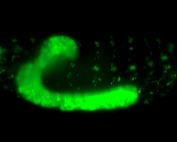
A Nervous Contraction
A collaborative study from the Saunders Lab and the Martin-Blanco Lab at the Molecular Biology Institute Barcelona, Spain, demonstrates how the contraction of a Drosophila's ventral nerve cord during development is oscillatory and driven by the combined contractile efforts of individual cells. Learn more
MBI welcomes NUS High School for a Learning Journey into Mechanobiology
MBI opened its doors to the students of NUS High School of Mathematics and Science for a half-day visit around the institute.

Stefan Mueller
Research Fellow, Li Group

Hepi Hari Susapto
Research Fellow, Young Group

Choosing Sides
The Scientist magazine features the work of Prof Alexander Bershadsky and Senior Research Fellow Dr Yee Han Tee in their February 2022 TS:Digest cover story on cell chirality