

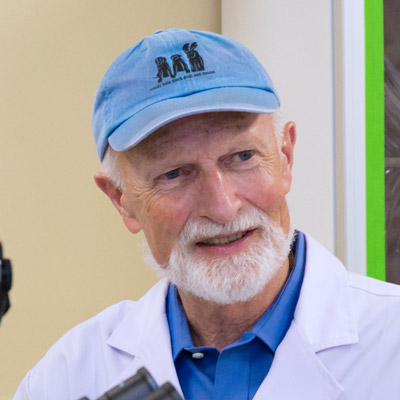
Michael SHEETZ
Founding Director and Collaborator, Mechanobiology Institute, National University of Singapore
Affiliations
Professor, Department of Biochemistry & Molecular Biology, UTMB Health
How do filopodia pull on a substrate?
How do filopodia pull on a substrate? Although a reterograde motion of actin filaments is intrinsic in the formation of filopodia, the forces generated by actin treadmilling are too weak to facilitate the “pulling” [...]
What are lamellipodia and lamella?
What are lamellipodia and lamella? The lamellipodia and lamella are plate-like extensions of the cell that play crucial roles in both cell motility and migration, and mechanosensing. These structures form and function over distinct [...]
How do filopodia move dynamically?
What causes filopodia retraction and collapse? Binding of filopodia to certain ligands or substratum may hinder filament assembly, thereby leading to changes that promote retraction, collapse or growth cone turning [1][2]. For example, substrate [...]
What mechanisms drive retraction of the trailing edge?
What mechanisms drive retraction of the trailing edge? Protrusion at the front and retraction at the rear are key force-generating processes at the cell periphery that culminate in the translocation of the cell. For [...]
How do focal adhesions act as molecular clutches in lamellipodia?
How do focal adhesions act as molecular clutches in lamellipodia? Once formed, focal adhesions essentially act as “molecular clutches”, promoting protrusion at the leading edge whilst suppressing membrane contraction (reviewed in [1] [2][3]). Adhesions [...]
Michael Sheetz
Collaborator
Research Areas
Cell migration, cell-cell and cell-substrate interaction
Research Interests
The morphology of cells, organs and whole organisms is determined by the generation of forces on the immediate environment, which is either extracellular matrix or adjacent cells. We are currently engaged in studies to understand the detailed molecular mechanisms involved in a variety of phenomena from cancer metastasis to brain function. Further, we are developing several new tools and protocols for measuring cell forces at the molecular level, which are revealing many new aspects of how cells can both generate and respond to external forces. We have an effort underway to define quantitatively the steps involved in cell adhesion to and spreading on a matrix-coated surface. Using a variety of cell lines that are missing proteins in various motility pathways, we are determining the quantitative changes in the spreading process. This will enable us to generate a detailed model of the process of spreading that will be a model for further studies of how cells differentiate, regenerate tissues or metastasize.
Biography
Hailing from Columbia University, Prof Michael Sheetz has more than 40 years’ experience in the biomedical field. Introduced to Singapore by Prof Hew Choy Leong of the National University of Singapore’s Department of Biological Sciences, Prof Sheetz was sought to lead an RCE project. This resulted in a two-year effort to organise and submit a proposal on Mechanobiology where Prof Sheetz set the theme and direction of the Mechanobiology Institute (MBI). As Founding Director of the MBI, he led the institute for 10 years and built it into a world-leading research centre in the field of mechanobiology.
Education
PhD California Institute of Technology
Recent Publications
- Jain K, Kishan K, Minhaj RF, Kanchanawong P, Sheetz MP, and Changede R. Immobile Integrin Signaling Transit and Relay Nodes Organize Mechanosignaling through Force-Dependent Phosphorylation in Focal Adhesions. ACS Nano 2025;. [PMID: 39760672]
- Lin S, Changede R, Farrugia AJ, Bershadsky AD, Sheetz MP, Prost J, and Rupprecht J. Membrane Tilt Drives Phase Separation of Adhesion Receptors. Phys Rev Lett 2024; 132(18):188402. [PMID: 38759206]
- Jain K, Minhaj RF, Kanchanawong P, Sheetz MP, and Changede R. Nano-clusters of ligand-activated integrins organize immobile, signalling active, nano-clusters of phosphorylated FAK required for mechanosignaling in focal adhesions. bioRxiv 2024;. [PMID: 38464288]
- Jain K, Pandey A, Wang H, Chung T, Nemati A, Kanchanawong P, Sheetz MP, Cai H, and Changede R. TiO2 Nano-Biopatterning Reveals Optimal Ligand Presentation for Cell-Matrix Adhesion Formation. Adv Mater 2024;:e2309284. [PMID: 38340044]
- Jain K, Lim KYE, Sheetz MP, Kanchanawong P, and Changede R. Intrinsic self-organization of integrin nanoclusters within focal adhesions is required for cellular mechanotransduction. bioRxiv 2023;. [PMID: 38045378]
- Oh D, Liu X, Sheetz MP, and Kenney LJ. Small, Dynamic Clusters of Tir-Intimin Seed Actin Polymerization. Small 2023;:e2302580. [PMID: 37649226]
- Qin R, Melamed S, Yang B, Saxena M, Sheetz MP, and Wolfenson H. Tumor Suppressor DAPK1 Catalyzes Adhesion Assembly on Rigid but Anoikis on Soft Matrices. Front Cell Dev Biol 2022; 10:959521. [PMID: 35927990]
- Jain K, Kanchanawong P, Sheetz MP, Zhou X, Cai H, and Changede R. Ligand functionalization of titanium nanopattern enables the analysis of cell-ligand interactions by super-resolution microscopy. Nat Protoc 2022;. [PMID: 35896742]
- Toh PJY, Lai JKH, Hermann A, Destaing O, Sheetz MP, Sudol M, and Saunders TE. Optogenetic control of YAP cellular localisation and function. EMBO Rep 2022;:e54401. [PMID: 35876586]
- Oh D, Chen Z, Biswas KH, Bai F, Ong HT, Sheetz MP, and Groves JT. Competition for shared downstream signaling molecules establishes indirect negative feedback between EGFR and EphA2. Biophys J 2022;. [PMID: 35430415]
Lab Members
2019 Bootcamp in Mechanobiology: An Integrative Approach to Understand Cell Function
MBI's 10-day "bootcamp" style course covers fundamental concepts and practical approaches in understanding cellular functions. The Bootcamp lectures are open to all interested graduate students and post-docs.
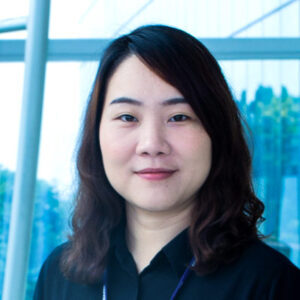
Kedsarin Fong Ngern
Research Fellow, Kanchanawong Group
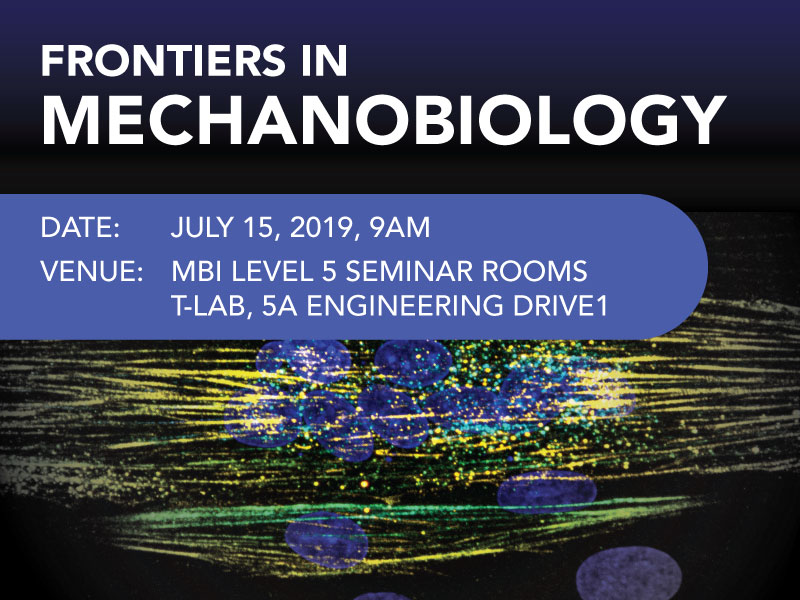
2019 Frontiers in Mechanobiology
MBI is hosting a one day symposium, Frontiers in Mechanobiology, on July 15th, 2019. The symposium will feature nine speakers and a full schedule of talks of interest to those on the cutting edge of mechanobiology. The event is free and open to all interested, there is no registration required.
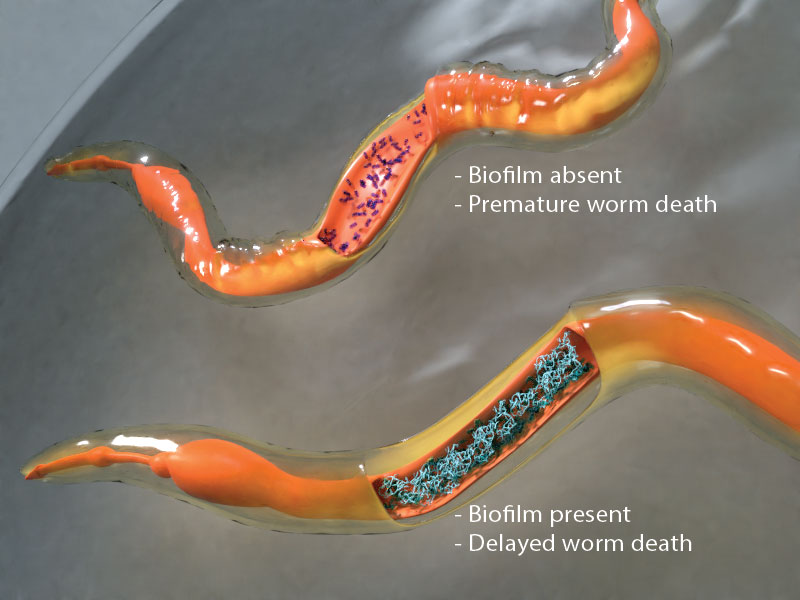
Why Salmonella decide to lay low
Studying dormant biofilms in live worm hosts
Prof Jacques Prost visiting from Institut Curie
Jacques Prost, Emeritus Research Director, Institut Curie, Département de Physicochimie du Vivant, visiting 16 Jul - 20 Aug 2019.
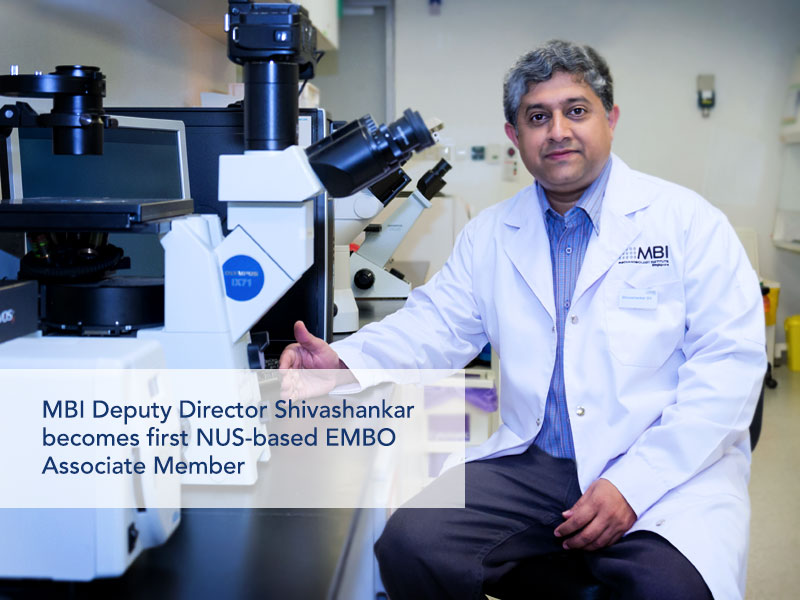
MBI Deputy Director becomes the first NUS-based EMBO Associate Member
MBI Deputy Director Professor GV Shivashankar has been elected as an Associate Member of EMBO (the European Molecular Biology Organization) making him the first scientist from NUS, and only the third Singapore-based Scientist, to be elected to the prestigious EMBO membership.
Goh Wei Jia
Alumni, Tee YH Group
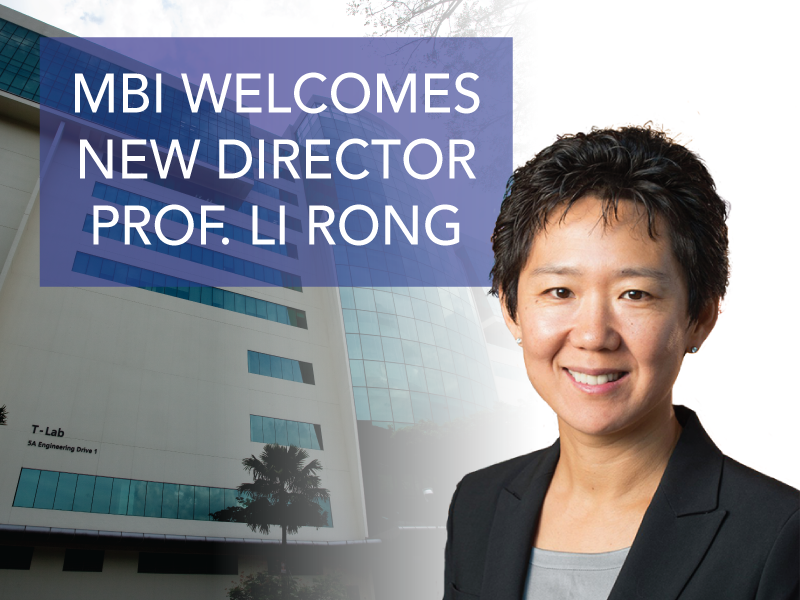
Mechanobiology Institute, National University of Singapore, has a new director
MBI welcomes Professor Li Rong, as MBI's new director. Professor Li joins us from Johns Hopkins University, where she has been a Bloomberg Distinguished Professor at the School of Medicine and the Whiting School of Engineering since 2015. Professor Li is also the director of the Center for Cell Dynamics at the School of Medicine’s Institute for Basic Biomedical Sciences.
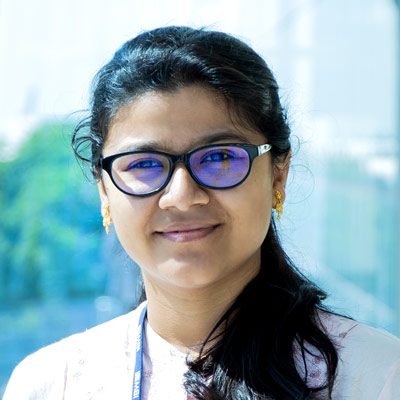
Swati Sen
Alumni, Viasnoff Group
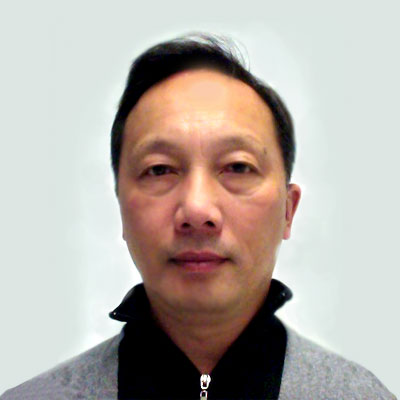
Guy Tran Van Nhieu visiting from Center for Interdisciplinary Research in Biology, Collège de France
Guy Tran Van Nhieu from the Center for Interdisciplinary Research in Biology, Collège de France is visiting from 6 May - 30 July.
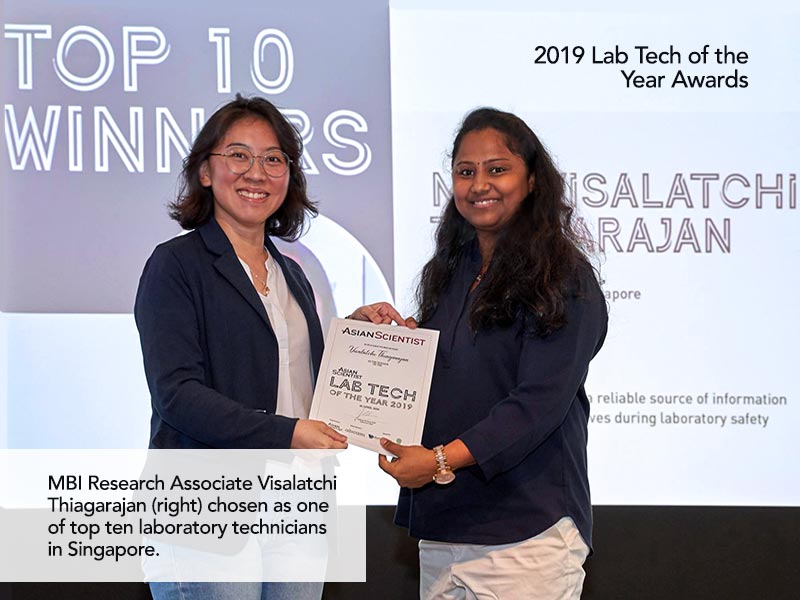
MBI Research Associate Visalatchi Thiagarajan chosen one of Singapore’s top ten techs
MBI Research Associate Visalatchi Thiagarajan has been chosen as one of the top ten laboratory technicians in Singapore, in the inaugural Lab Tech of the Year 2019 awards given out by Asian Scientist Magazine.
Somsubhro Mukherjee
Alumni, Low Group