


Linda J KENNEY
Alumni, Mechanobiology Institute, National University of Singapore
What are microtubules?
What are microtubules? Microtubules are hollow cylinders [1] that are approximately 25nm in diameter [2] and vary in length from 200 nm to 25 μm. They are formed by the lateral association of between [...]
What are intermediate filaments?
What are intermediate filaments? Intermediate filaments are a primary component of the cytoskeleton, although they are not found in all eukaryotes, and are absent in fungi and plants [1]. These filaments, which extend throughout [...]
What is capping protein?
What is capping protein? Capping protein is involved in actin filament assembly and disassembly Capping proteins control access to the free barbed ends of actin filaments and is therefore a major factor affecting actin [...]
I-BAR and Other Proteins/Factors
I-BAR and Other Proteins/Factors Proteins containing I-BAR (inverted Bin/amphiphysin/Rvs i.e. IRSp53 Missing-in-metastasis homology Domain or IMD) cooperate with various components of actin filament assembly, to promote filopodia protrusion, via several mechanisms including the stimulation [...]
Linda J Kenney
Alumni
Research Areas
Signal transduction in bacteria; Bacterial Pathogenesis; Mechanotransduction and osmotic signaling in E. coli; Mechanisms of anti-silencing of virulence genes in Salmonella
Research Interests
Our laboratory is interested in signal transduction and the regulation of gene expression in prokaryotes. In particular, we are studying the two-component regulatory system EnvZ/OmpR that regulates the expression of outer membrane proteins as well as many other genes. Our present work focuses on how OmpR activates genes required for systemic infection (located on Salmonella pathogenicity island 2) in Salmonella enterica.
The Kenney Lab’s research was recently featured in an article exploring the bacterial molecular switch between virulence or dormancy, Salmonella Lifestyle Choices. Members of her lab have discovered that the bacterial protein SsrB is the molecular switch for determining whether Salmonella infections become acute and virulent, or remain in a dormant carrier state.
The study is published in eLife (Desai et al., The horizontally-acquired response regulator SsrB drives a Salmonella lifestyle switch by relieving biofilm silencing, February 2, 2016, eLife 2016; 5: e10747, doi: 10.7554/eLife.10747). Read full article.
Biography
Dr Kenney is a Professor of Microbiology at the University of Illinois-Chicago. Her laboratory studies two-component systems in bacteria that control gene expression at a single cell and nanometer level.

Professor Linda J Kenney and Professor Michael Sheetz interviewed by the Washington Post at the April 2017 March for Science.
Education
PhD University of Pennsylvania
Recent Publications
- Fernandez M, Yamanaka Y, Zangoui P, White MA, and Kenney LJ. The sulfur assimilation pathway mitigates redox stress from acidic pH in Salmonella Typhi H58. mBio 2025;:e0046725. [PMID: 40422406]
- Shetty D, and Kenney LJ. A pH-sensitive switch activates virulence in Salmonella. Elife 2023; 12. [PMID: 37706506]
- Oh D, Liu X, Sheetz MP, and Kenney LJ. Small, Dynamic Clusters of Tir-Intimin Seed Actin Polymerization. Small 2023;:e2302580. [PMID: 37649226]
- Mon KKZ, Si Z, Chan-Park MB, and Kenney LJ. Polyimidazolium Protects against an Invasive Clinical Isolate of Salmonella Typhimurium. Antimicrob Agents Chemother 2022;:e0059722. [PMID: 36094258]
- Jacob H, Geng H, Shetty D, Halow N, Kenney LJ, and Nakano MM. Distinct Interaction Mechanism of RNAP and ResD and Distal Subsites for Transcription Activation of Nitrite Reductase in Bacillus subtilisψ. J Bacteriol 2021;:JB0043221. [PMID: 34898263]
- Singh MK, Zangoui P, Yamanaka Y, and Kenney LJ. Genetic code expansion enables visualization of Salmonella type three secretion system components and secreted effectors. Elife 2021; 10. [PMID: 34061032]
- Kenney LJ, and Anand GS. EnvZ/OmpR Two-Component Signaling: An Archetype System That Can Function Noncanonically. EcoSal Plus 2020; 9(1). [PMID: 32003321]
- Desai SK, and Kenney LJ. Switching Lifestyles Is an in vivo Adaptive Strategy of Bacterial Pathogens. Front Cell Infect Microbiol 2019; 9:421. [PMID: 31921700]
- Desai SK, Padmanabhan A, Harshe S, Zaidel-Bar R, and Kenney LJ. Salmonella biofilms program innate immunity for persistence in Caenorhabditis elegans. Proc. Natl. Acad. Sci. U.S.A. 2019;. [PMID: 31160462]
- Ottemann KM, and Kenney LJ. Editorial overview: Host-pathogen interactions: bacteria. Curr. Opin. Microbiol. 2019; 47:iii-v. [PMID: 31138403]
Lab Members
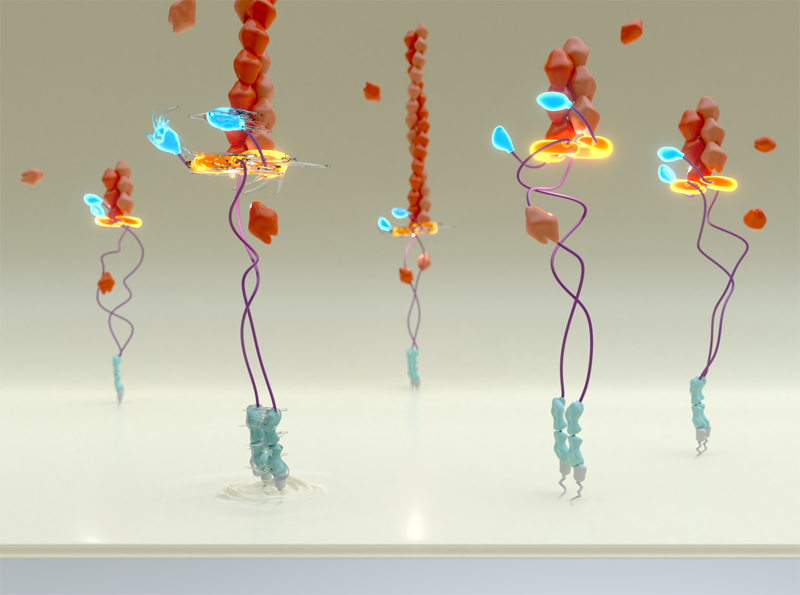
Sensing Force and Torque
Mechanical regulation of actin polymerization by formins
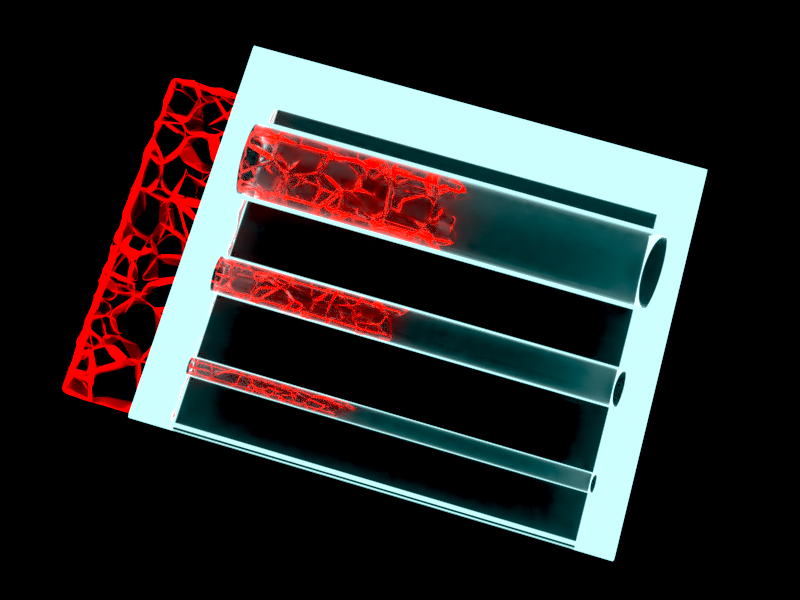
Confined movements
How cells form tubes in confined spaces

2017 National Day Honours: MBI staff member Tan Bee Lay awarded Long Service Medal
Congratulations to MBI’s own Tan Bee Lay for her award of the Long Service Medal by the President of the Republic of Singapore in recognition of her contributions to the University.

Defects in Epithelial Tissue Organization
A question of life and death

Development in Time and Space
Shedding light on the importance of time in embryo development

The (BP)GAP Between Signaling Pathways
To grow or not to grow?
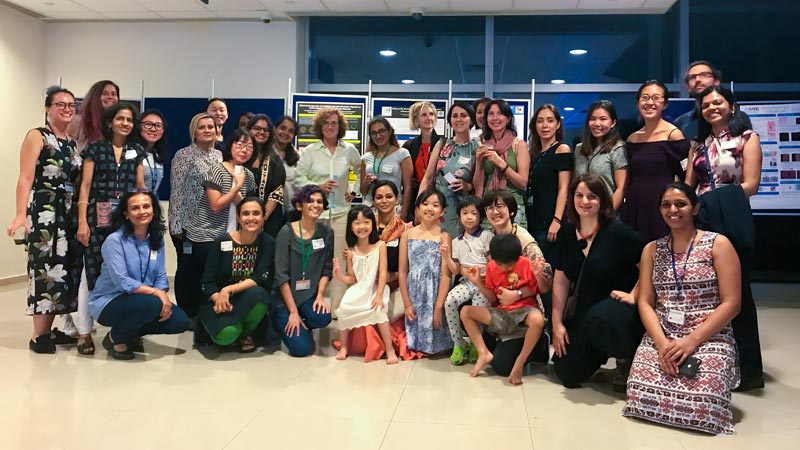
Gender Gaps in Science: BIOS 2017 Panel Discussion on Women in Science
MBI hosted BIOS2017 on Friday, the 15th of September. The scientific talks were followed by an hour-long panel discussion that was aimed at bringing out the various contributing factors towards gender gaps at work place.
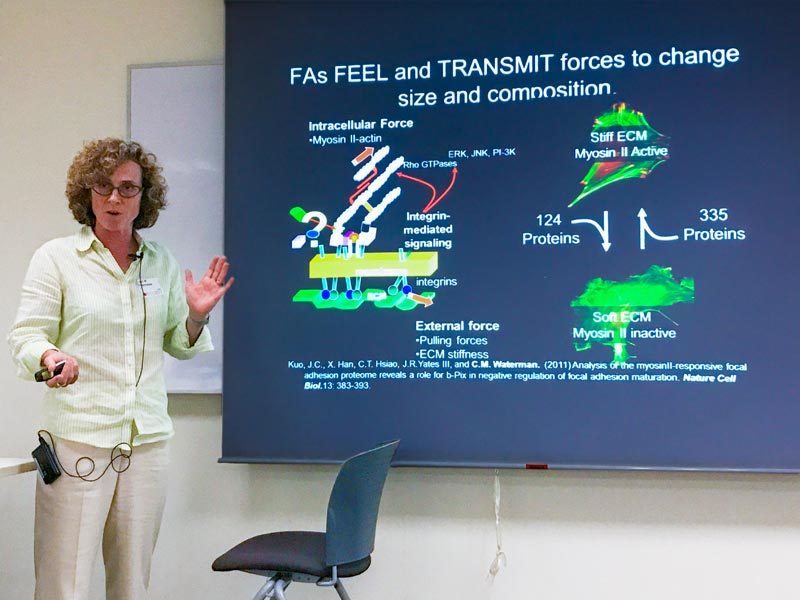
BIOS 2017: Post-event report
MBI NUS hosted BIOS2017 on 15th of September. BIOS, a MBI Women in Science initiative, is a unique national-level biology symposium that aims to bring together women researchers in Singapore from diverse realms of life sciences research.
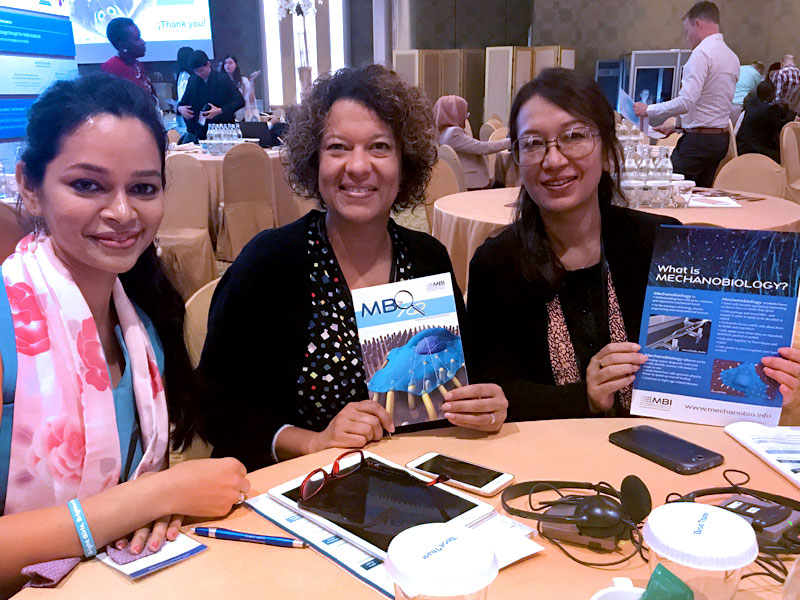
2017 UNESCO Symposium: Cracking the Code: Girls Education in STEM, a report
The symposium explored multi-pronged approaches to tackle gender gaps in STEM education at the individual, family & peers, schools/educational institutions, society and government levels.

Sree Vaishnavi Sundararajan
Alumni, Grenci Group

Mona Suryana
Research Associate, Grenci Group

Jegan Vishnuwardhana Shanmugarajah
Research Assistant, Grenci Group

