

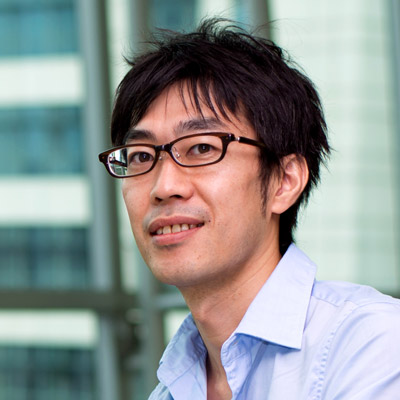
Fumio MOTEGI
Assistant Professor, Mechanobiology Institute, National University of Singapore
fmotegi@tll.org.sg
Level 10 T-Lab
National University of Singapore
5A Engineering Drive 1
Singapore 117411
Research Program
Mechanotransduction in Tissues Group
Affiliations
Principal Investigator, Temasek Lifesciences Laboratory
Assistant Professor, Department of Biological Sciences, National University of Singapore
Kyle David Buchan
Alumni, Kenney Group

Anne Beghin
Research Assistant Professor, Facility Manager, Microscopy Core
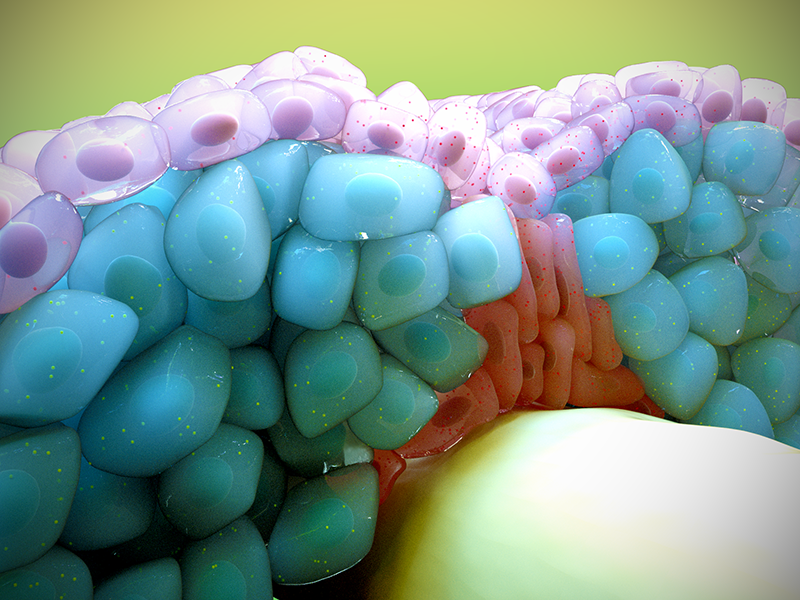
Signaling in cell fate specifcation
Both when and where matter

MBI 10th Anniversary Celebration: 6-12 NOV 2018
One of five Research Centres of Excellence established by the NRF and MOE, the Mechanobiology Institute, National University of Singapore, was created 10 years ago. This November MBI will celebrate its 10th with the following events: Women in Science Satellite Meeting on the 6th, MBI's 10th Anniversary Conference from the 7th to 11th, and our Graduate Student Congress from the 11th to the 12th.

Taking pole positions
How polarity proteins localize at opposite poles during symmetry breaking
MBI Roadshow in China
The MBI Roadshow in China will take place in Guangzhou at the South China University of Technology, and in Shenzhen at the Southern University of Science & Technology, from 12 to 15 October, 2018.
Fumio Motegi
Principal Investigator (2013-2021)
Research Areas
Mechanobiology of 1) cell polarity establishment and 2) soma-germline fate determination
Research Interests
Cell polarity, establishment of spatial asymmetry within a cell, is necessary for diverse processes in living organisms. Dedicated polarity proteins generate and maintain cellular asymmetry, leading to establishment of functional architecture in many types of cells. Despite the conserved role of polarity proteins, a fundamental question remains unanswered: How do developmental cues break cellular symmetry along the body axis during embryogenesis?
Movie 1: Breaking symmetry of embryonic polarity
Our group is interested in understanding the mechanics of 1) initiation of cell polarization and 2) spatial patterning of cellular asymmetry. A simple model system, C. elegans zygote, provides the unique opportunity to explore such initial procedures in cell polarization, as the zygotes do not rely on pre-localized proteins/RNAs or extrinsic cues to trigger asymmetry but instead undergo “de novo” polarization (Movie 1). By taking multi-disciplinary approach with genetics, biochemistry, and modern imaging technology, our group aims to:
- Define the nature of the cue that initiates polarization
- Assess the mechanics of spatial patterning of cellular asymmetry
- Understand the role of polarity kinases in germ-soma dichotomy
These views will delve into the basic principles of cell polarity and yield insights into how a developing embryo commits to somatic or germline cell fates with precision and accuracy. The molecular similarity of C. elegans to other systems makes it very likely that this project will highlight highly conserved mechanisms and lead to insights into asymmetric division in stem cells, prevention of cancer, and tissue regeneration.
Symmetry breaking is the process by which cellular uniformity is broken to generate asymmetry in space. The cue that triggers symmetry breaking leads to the modulation of cell cortex to generate two distinct domains. The C. elegans zygote becomes polarized after fertilization by generating distinct domains: the anterior domain contains a complex of PAR-3, PAR-6, and atypical protein kinase C/aPKC (shown in magenta), and the posterior domain includes PAR-1 kinase and the RING protein PAR-2 (shown in green). Segregation of two sets of PAR proteins is critical for decision whether to become somatic cells or germ cells.
Biography
Fumio Motegi obtained his university diploma at Tokyo University of Science and completed his Master’s study and doctoral degree at the University of Tokyo. He did his postdoctoral work with Prof. Asako Sugimoto at RIKEN Center for Developmental Biology and with Prof. Geraldine Seydoux at Johns Hopkins University. He joined MBI and Temasek Lifesciences Laboratory as a Principal Investigator in August 2012 and holds a joint appointment as an Assistant Professor at Department of Biological Sciences at National University of Singapore.
Education
PhD University of Tokyo
Recent Publications
Server Error
Your request could not be processed due to a problem on our Web server. This could be a transient problem, please try the query again. If it doesn't clear up within a reasonable period of time, e-mail a short description of your query and the diagnostic information shown below to:
pubmed@nlm.nih.gov - for problems with PubMed
webadmin@ncbi.nlm.nih.gov - for problems with other services
Thank you for your assistance. We will try to fix the problem as soon as possible.
Diagnostic Information:
NOTE: The above is an internal URL which may differ from the one you used to address the page.
Rev. 01/04/08