


Gianluca GRENCI
Research Assistant Professor, Department of Biomedical Engineering, National University of Singapore
Facility Manager, Nano and Microfabrication Core
mbigg@nus.edu.sg
Level 10 T-Lab
National University of Singapore
5A Engineering Drive 1
Singapore 117411
How is hematopoiesis regulated by mechanics?
How is hematopoiesis regulated by mechanics? Once blood circulation is established during the earliest stages of hematopoiesis, the pulsatile nature of blood flow within the aorta generates a range of biomechanical forces, such as [...]
How are adherens junctions assembled?
How are adherens junctions assembled? Introduction to the Assembly of Adherens Junctions In situations where migrating cells first encounter each other to form junctions, changes in cellular morphology have been observed and correlated with [...]
How are tight junctions assembled?
How are tight junctions assembled? The epithelial tissue is held intact by the formation of tight junctions between cells. The basic functional units that form adhesive contacts across cells are the tight junction strands, [...]
What are tight junctions?
What are tight junctions? Tight junctions, also known as Zonula Occludens, are cell-cell adhesion complexes that play a role in the organization of epithelial tissue. By forming a meshwork of membrane contacts around the [...]
What are anchoring junctions?
What are anchoring junctions? Cells adhere to the ECM, or to other cells, via complexes that can collectively be called anchoring junctions (reviewed in [1][2]). These multiprotein complexes are found in all cell types [...]
How do post-translational modifications of cell-cell adhesions impact their stability?
How do post-translational modifications of cell-cell adhesions impact their stability? Post-translational modification of adhesion complex components is one of the most complicated aspects in the regulation of cell-cell adhesions. It involves an array of [...]
Gianluca Grenci
Research Assistant Professor, Facility Manager
Research Interests
Microfluidics, Micro-optical systems for live cell imaging
Our laboratory is primarily interested in the application of micro/nano fabrication technology to biological science. We exploit standard and advanced micro-fabrication tools in order to design and produce systems and devices for cell culturing and imaging. Examples of such devices are: topographically and/or chemically micro-textured environments, microfluidic devices, micro-optical systems and more.
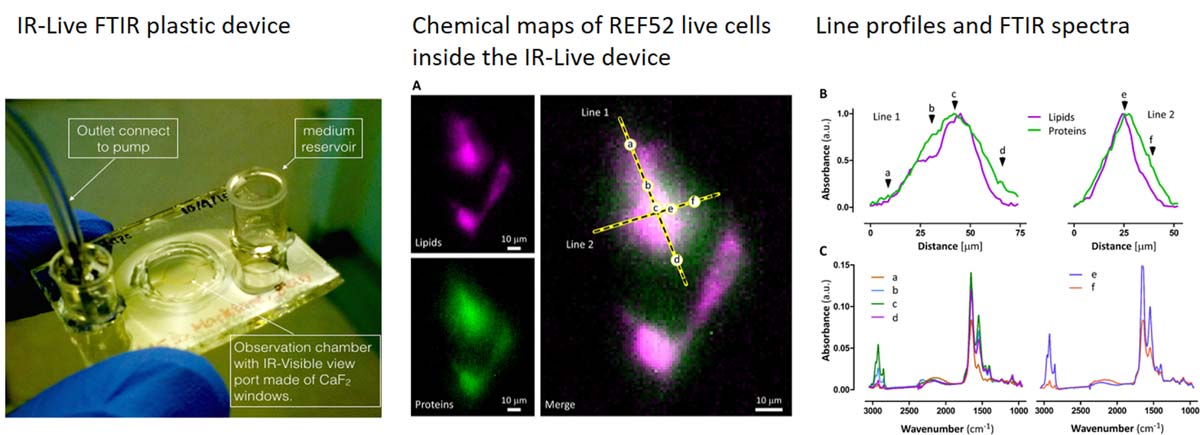
We are also interested in developing microfluidic devices for FTIR spectromicroscopy of living cells. FTIR is an imaging technique that is intrinsically label-free and requires minimal sample preparation; when coupled with microscopy and high brilliance IR sources it allows the acquisition of chemical maps at a resolution which is diffraction limited. Absorption of IR photons induces very low or no damage at all, therefore it is in principle possible to observe for prolonged time the behaviour of living cells. Our research activity is intended to develope microfludic platforms suitable for FTIR (key parameters are optical transparency and low IR absorption) while keeping cells alive and healthy; a beneficial feature provided by micro-fabrication approach is the possibility to control of the chemical environment at the micro-scale.
Research Areas
Micro/nano engineering, microfluidic, FTIR
Biography
Dr Gianluca Grenci joined MBI in 2012 as a research fellow and head of the Micro Fabrication Core facility. Previously he was employed at the LILIT micro/nano fabrication group (IOM-CNR, Trieste, IT) for a total of 6 years, during which he was mainly involved in the design and fabrication of microfluidic devices for synchrotron-light related spectroscopic techniques, such as SAXS and FTIR. He thus developed extensive practical knowledge on all the major lithographic technologies (UV and EB lithography, wet/dry etching, soft-lithography, thin films deposition), plus some less usual and/or more advanced technique, such as X-ray Lithography and LIGA.
He did his PhD in the field of applied superconductivity, in a project aimed to develop a current cryo-comparator (CCC) using high critical temperature superconductors of the cuprate family (YBCO) in the form of a thick film deposited onto a large area, complex shaped silver substrate.
Education
PhD Polytechnic of Torino, DISPEA
Recent Publications
- Zhang Z, Canela A, Kurisu J, Zou P, Kawaue T, Nakazawa N, Takeda N, Saeki M, Utsunomiya M, Bilgic M, Ishidate F, Grenci G, Furuta T, Kishi Y, Sasanuma H, and Kengaku M. Confined migration induces non-lethal DNA damage in developing neurons. Nature 2026;. [PMID: 42310452]
- Gandin A, Torresan V, Panciera T, Grenci G, Vanni G, Citron A, Marchionni M, Battilana G, Pelosin M, Busetto R, Piccolo S, and Brusatin G. Flexible high-resolution ECM micropatterning. Nat Protoc 2026;. [PMID: 42129485]
- Dunsing-Eichenauer V, Hummert J, Chardès C, Schönau T, Guignard L, Galland R, Grenci G, Tillmann M, Koberling F, Nock C, Sibarita J, Viasnoff V, Antolovic IM, Erdmann R, and Lenne P. Fast volumetric fluorescence lifetime imaging of multicellular systems using single-objective light-sheet microscopy. Commun Biol 2025;. [PMID: 41315677]
- Jiang X, Xu P, Feng F, Grenci G, and Saw TB. Revealing Electromechanical Control of Tissue Homeostasis Using a Two-Layer Microfluidic Device. J Vis Exp 2025;(223). [PMID: 41052031]
- Cabillic M, Forriere H, Bettarel L, Butler C, Neuhaus A, Idrissi I, Sambrano-Lopez ME, Rossbroich J, Müller L, Ries J, Grenci G, Viasnoff V, Levet F, Sibarita J, and Galland R. In-depth single molecule localization microscopy using adaptive optics and single objective light-sheet microscopy. Nat Commun 2025; 16(1):8362. [PMID: 40993142]
- Mu B, Rutkowski DM, Grenci G, Vavylonis D, and Zhang D. Ca2+-dependent vesicular and non-vesicular lipid transfer controls hypoosmotic plasma membrane expansion. BMC Biol 2025; 23(1):207. [PMID: 40629316]
- Ong HT, Karatas E, Poquillon T, Grenci G, Furlan A, Dilasser F, Mohamad Raffi SB, Blanc D, Drimaracci E, Mikec D, Galisot G, Johnson BA, Liu AZ, Thiel C, Ullrich O, , Racine V, and Beghin A. Digitalized organoids: integrated pipeline for high-speed 3D analysis of organoid structures using multilevel segmentation and cellular topology. Nat Methods 2025;. [PMID: 40369245]
- Arora A, Rizvi MS, Grenci G, Dilasser F, Fu C, Ganguly M, Vaishnavi S, Paramsivam K, Budnar S, Noordstra I, Yap AS, and Viasnoff V. Viscous dissipation in the rupture of cell-cell contacts. Nat Mater 2025;. [PMID: 40355570]
- Nakazawa N, Grenci G, Kameo Y, Takeda N, Sawada T, Kurisu J, Zhang Z, Toma K, Adachi T, Nonomura K, and Kengaku M. PIEZO1-dependent mode switch of neuronal migration in heterogeneous microenvironments in the developing brain. Cell Rep 2025; 44(3):115405. [PMID: 40053456]
- Suryana M, Produit T, Yang H, Birarda G, Shanmugar JV, Krivitsky L, Paterova A, and Grenci G. Infrared imaging with visible light in microfluidic devices: the water absorption barrier. Analyst 2024;. [PMID: 39692693]
Selected Publications
- Mona Suryana, Jegan V. Shanmugarajah, Sivakumar M. Maniam, Gianluca Grenci. Soft Lithographic Procedure for Producing Plastic Microfluidic Devices with View-ports Transparent to Visible and Infrared Light
- Mohammed Ashraf, Sree V. Sundararajan, Gianluca Grenci. Low-power, low-pressure reactive-ion etching process for silicon etching with vertical and smooth walls for mechanobiology application
Lab Members

2017 National Day Honours: MBI staff member Tan Bee Lay awarded Long Service Medal
Congratulations to MBI’s own Tan Bee Lay for her award of the Long Service Medal by the President of the Republic of Singapore in recognition of her contributions to the University.
Defects in Epithelial Tissue Organization
A question of life and death

Development in Time and Space
Shedding light on the importance of time in embryo development

The (BP)GAP Between Signaling Pathways
To grow or not to grow?
Gender Gaps in Science: BIOS 2017 Panel Discussion on Women in Science
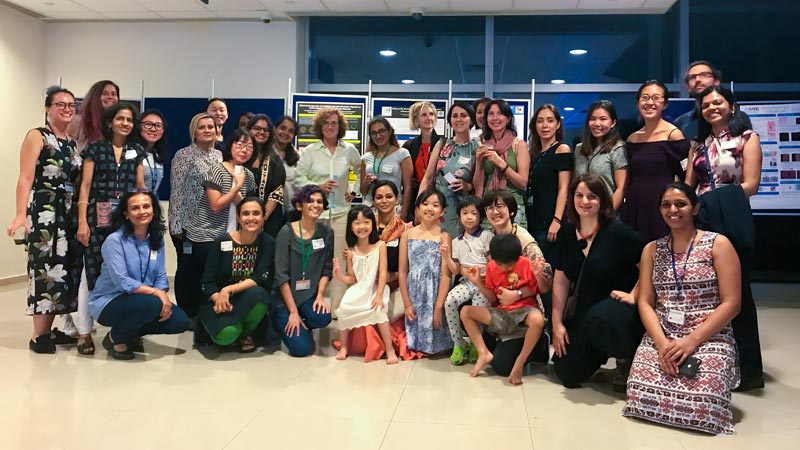
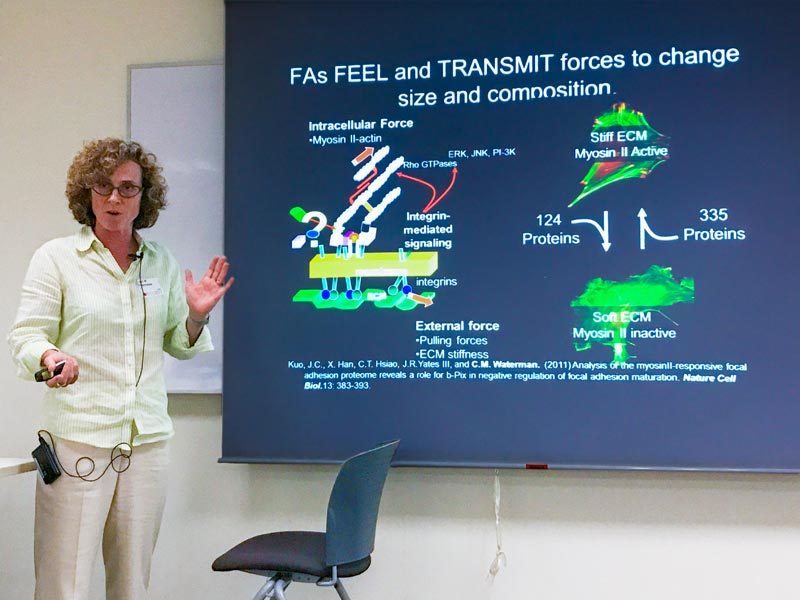
MBI hosted BIOS2017 on Friday, the 15th of September. The scientific talks were followed by an hour-long panel discussion that was aimed at bringing out the various contributing factors towards gender gaps at work place.
BIOS 2017: Post-event report
MBI NUS hosted BIOS2017 on 15th of September. BIOS, a MBI Women in Science initiative, is a unique national-level biology symposium that aims to bring together women researchers in Singapore from diverse realms of life sciences research.
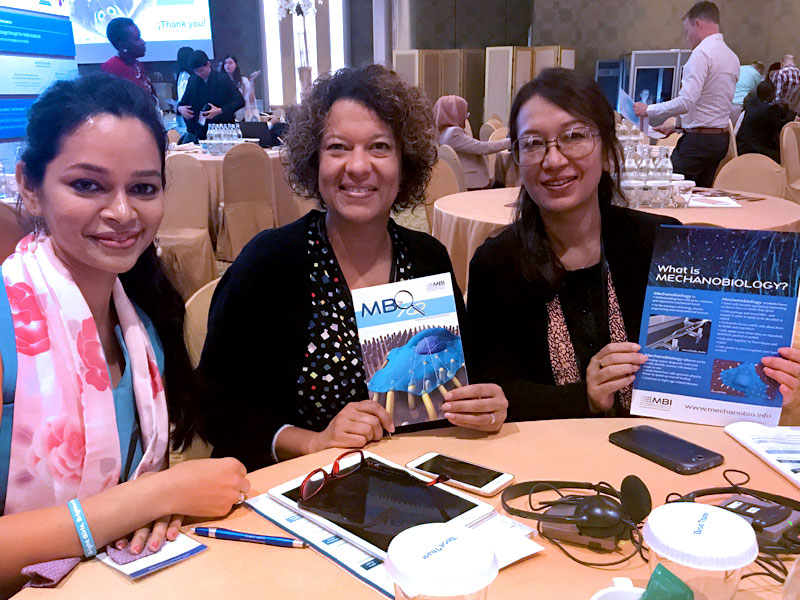
2017 UNESCO Symposium: Cracking the Code: Girls Education in STEM, a report
The symposium explored multi-pronged approaches to tackle gender gaps in STEM education at the individual, family & peers, schools/educational institutions, society and government levels.

Sree Vaishnavi Sundararajan
Alumni, Grenci Group

Mona Suryana
Research Associate, Grenci Group

Jegan Vishnuwardhana Shanmugarajah
Research Assistant, Grenci Group
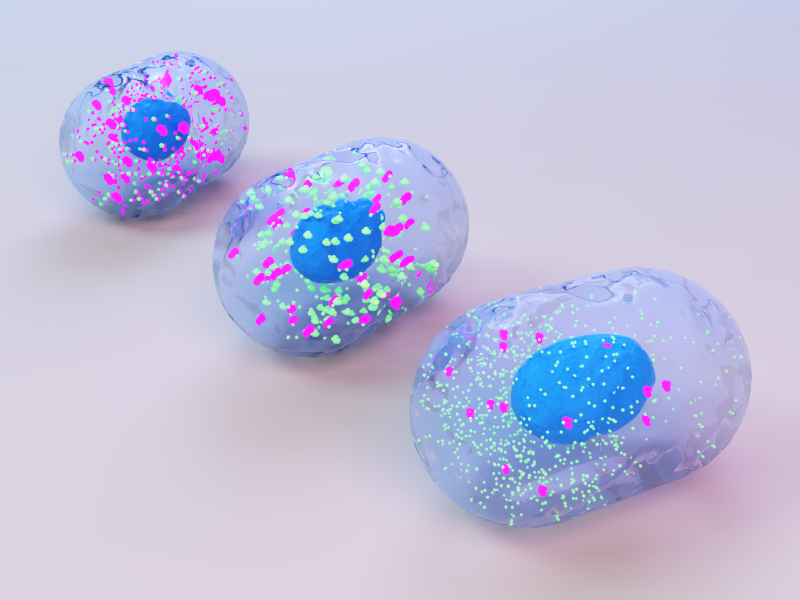
Breaking cell symmetry
A force driven mechanism for establishing cell polarity
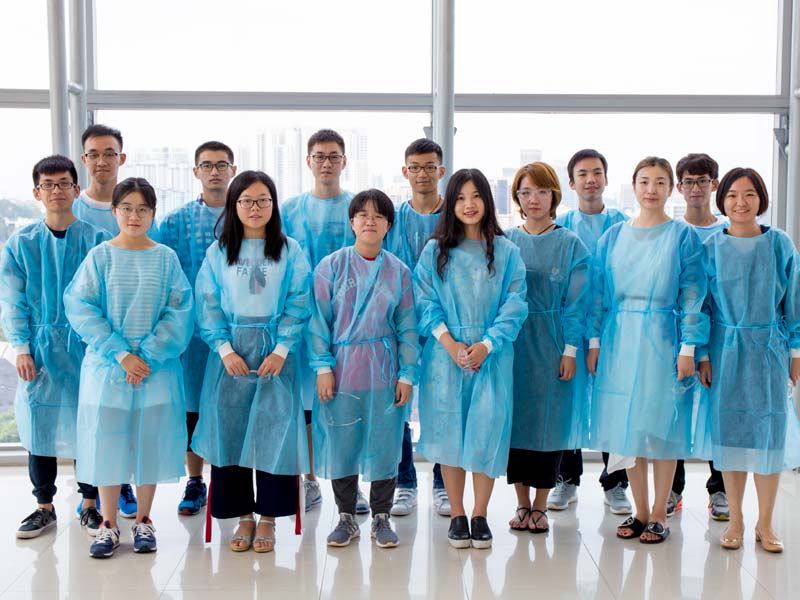
MBI welcomes students from Huazhong University of Science and Technology, China
On August 16th, a group of 13 students from the Huazhong University of Science and Technology (HUST), China visited the Mechanobiology Institute (MBI), National University of Singapore to learn more about scientific research in Singapore.
Former Lab Members
2017 National Day Honours: MBI staff member Tan Bee Lay awarded Long Service Medal
Congratulations to MBI’s own Tan Bee Lay for her award of the Long Service Medal by the President of the Republic of Singapore in recognition of her contributions to the University.
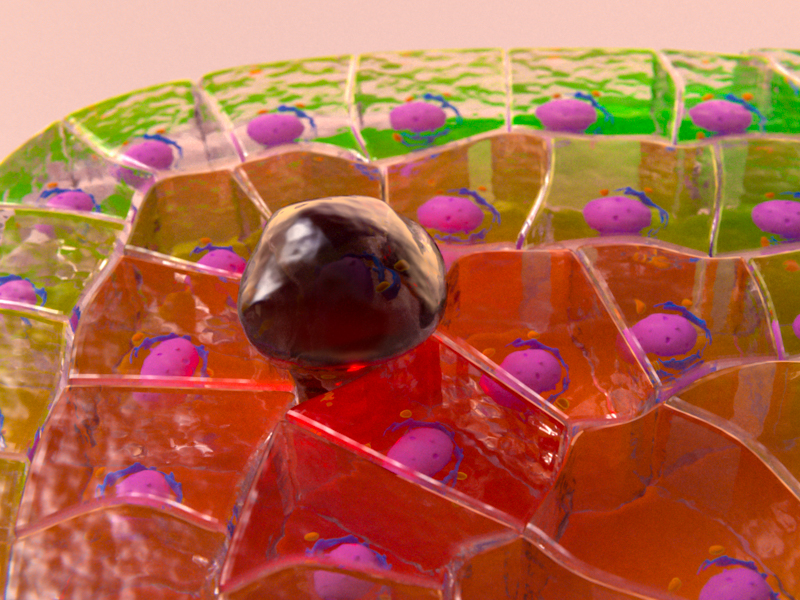
Defects in Epithelial Tissue Organization
A question of life and death
Development in Time and Space
Shedding light on the importance of time in embryo development
The (BP)GAP Between Signaling Pathways
To grow or not to grow?
Gender Gaps in Science: BIOS 2017 Panel Discussion on Women in Science
MBI hosted BIOS2017 on Friday, the 15th of September. The scientific talks were followed by an hour-long panel discussion that was aimed at bringing out the various contributing factors towards gender gaps at work place.
BIOS 2017: Post-event report
MBI NUS hosted BIOS2017 on 15th of September. BIOS, a MBI Women in Science initiative, is a unique national-level biology symposium that aims to bring together women researchers in Singapore from diverse realms of life sciences research.
2017 UNESCO Symposium: Cracking the Code: Girls Education in STEM, a report
The symposium explored multi-pronged approaches to tackle gender gaps in STEM education at the individual, family & peers, schools/educational institutions, society and government levels.
Sree Vaishnavi Sundararajan
Alumni, Grenci Group
Mona Suryana
Research Associate, Grenci Group
Jegan Vishnuwardhana Shanmugarajah
Research Assistant, Grenci Group
Breaking cell symmetry
A force driven mechanism for establishing cell polarity
MBI welcomes students from Huazhong University of Science and Technology, China
On August 16th, a group of 13 students from the Huazhong University of Science and Technology (HUST), China visited the Mechanobiology Institute (MBI), National University of Singapore to learn more about scientific research in Singapore.