

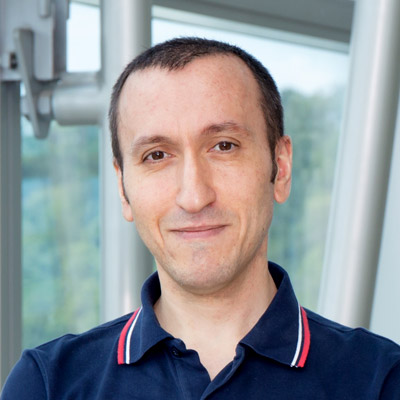
Gianluca GRENCI
Research Assistant Professor, Department of Biomedical Engineering, National University of Singapore
Facility Manager, Nano and Microfabrication Core
mbigg@nus.edu.sg
Level 10 T-Lab
National University of Singapore
5A Engineering Drive 1
Singapore 117411
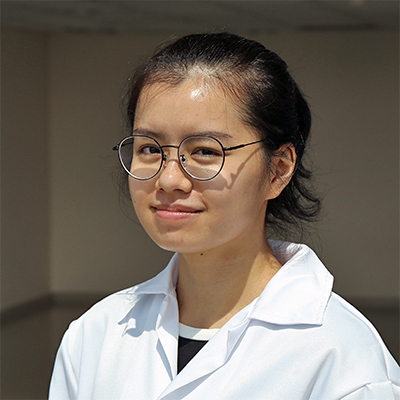
Tan Jue Yu Kelly
PhD Student, Class of August 2024, Chan Group

Shelly Anne Gnapragasan
PhD Student, Class of August 2024, Michelot Group

Mariana Barrera Velazquez
PhD Student, Class of August 2024, Dye Group
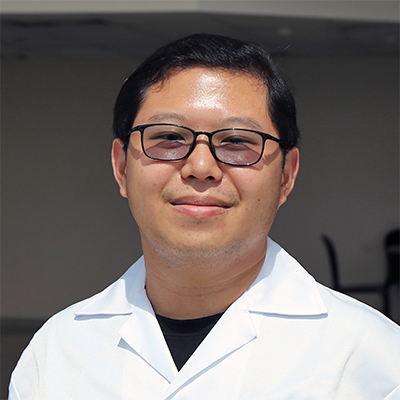
Lee Yuan Zhe
PhD Student, Class of August 2024, Hirashima Group
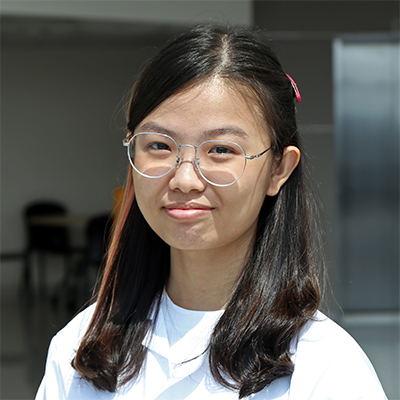
Le Thuy Truc Anh
PhD Student, Class of August 2024, Toyama Group

Kottpalli Vidhipriya
PhD Student, Class of August 2024, Young Group
Gianluca Grenci
Research Assistant Professor, Facility Manager
Research Interests
Microfluidics, Micro-optical systems for live cell imaging
Our laboratory is primarily interested in the application of micro/nano fabrication technology to biological science. We exploit standard and advanced micro-fabrication tools in order to design and produce systems and devices for cell culturing and imaging. Examples of such devices are: topographically and/or chemically micro-textured environments, microfluidic devices, micro-optical systems and more.
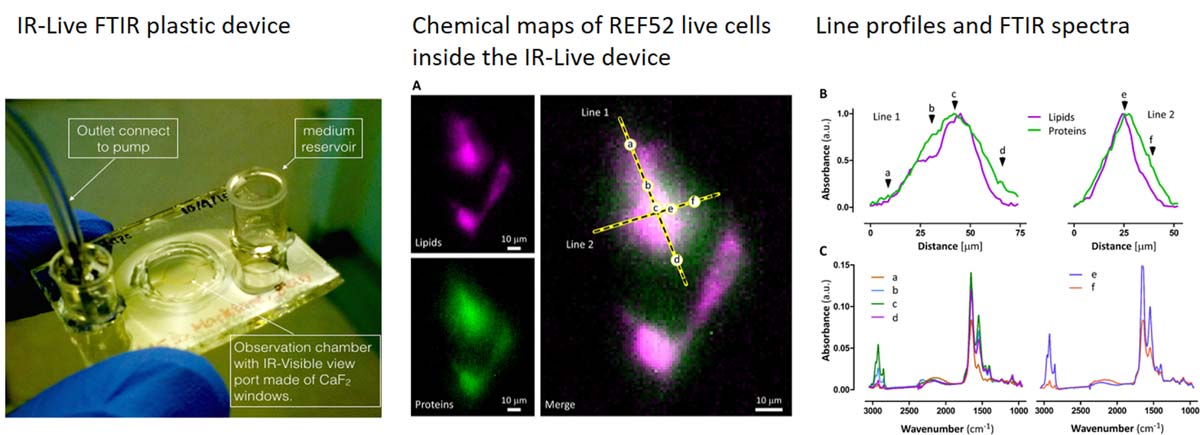
We are also interested in developing microfluidic devices for FTIR spectromicroscopy of living cells. FTIR is an imaging technique that is intrinsically label-free and requires minimal sample preparation; when coupled with microscopy and high brilliance IR sources it allows the acquisition of chemical maps at a resolution which is diffraction limited. Absorption of IR photons induces very low or no damage at all, therefore it is in principle possible to observe for prolonged time the behaviour of living cells. Our research activity is intended to develope microfludic platforms suitable for FTIR (key parameters are optical transparency and low IR absorption) while keeping cells alive and healthy; a beneficial feature provided by micro-fabrication approach is the possibility to control of the chemical environment at the micro-scale.
Research Areas
Micro/nano engineering, microfluidic, FTIR
Biography
Dr Gianluca Grenci joined MBI in 2012 as a research fellow and head of the Micro Fabrication Core facility. Previously he was employed at the LILIT micro/nano fabrication group (IOM-CNR, Trieste, IT) for a total of 6 years, during which he was mainly involved in the design and fabrication of microfluidic devices for synchrotron-light related spectroscopic techniques, such as SAXS and FTIR. He thus developed extensive practical knowledge on all the major lithographic technologies (UV and EB lithography, wet/dry etching, soft-lithography, thin films deposition), plus some less usual and/or more advanced technique, such as X-ray Lithography and LIGA.
He did his PhD in the field of applied superconductivity, in a project aimed to develop a current cryo-comparator (CCC) using high critical temperature superconductors of the cuprate family (YBCO) in the form of a thick film deposited onto a large area, complex shaped silver substrate.
Education
PhD Polytechnic of Torino, DISPEA
Recent Publications
- Zhang Z, Canela A, Kurisu J, Zou P, Kawaue T, Nakazawa N, Takeda N, Saeki M, Utsunomiya M, Bilgic M, Ishidate F, Grenci G, Furuta T, Kishi Y, Sasanuma H, and Kengaku M. Confined migration induces non-lethal DNA damage in developing neurons. Nature 2026;. [PMID: 42310452]
- Gandin A, Torresan V, Panciera T, Grenci G, Vanni G, Citron A, Marchionni M, Battilana G, Pelosin M, Busetto R, Piccolo S, and Brusatin G. Flexible high-resolution ECM micropatterning. Nat Protoc 2026;. [PMID: 42129485]
- Dunsing-Eichenauer V, Hummert J, Chardès C, Schönau T, Guignard L, Galland R, Grenci G, Tillmann M, Koberling F, Nock C, Sibarita J, Viasnoff V, Antolovic IM, Erdmann R, and Lenne P. Fast volumetric fluorescence lifetime imaging of multicellular systems using single-objective light-sheet microscopy. Commun Biol 2025;. [PMID: 41315677]
- Jiang X, Xu P, Feng F, Grenci G, and Saw TB. Revealing Electromechanical Control of Tissue Homeostasis Using a Two-Layer Microfluidic Device. J Vis Exp 2025;(223). [PMID: 41052031]
- Cabillic M, Forriere H, Bettarel L, Butler C, Neuhaus A, Idrissi I, Sambrano-Lopez ME, Rossbroich J, Müller L, Ries J, Grenci G, Viasnoff V, Levet F, Sibarita J, and Galland R. In-depth single molecule localization microscopy using adaptive optics and single objective light-sheet microscopy. Nat Commun 2025; 16(1):8362. [PMID: 40993142]
- Mu B, Rutkowski DM, Grenci G, Vavylonis D, and Zhang D. Ca2+-dependent vesicular and non-vesicular lipid transfer controls hypoosmotic plasma membrane expansion. BMC Biol 2025; 23(1):207. [PMID: 40629316]
- Ong HT, Karatas E, Poquillon T, Grenci G, Furlan A, Dilasser F, Mohamad Raffi SB, Blanc D, Drimaracci E, Mikec D, Galisot G, Johnson BA, Liu AZ, Thiel C, Ullrich O, , Racine V, and Beghin A. Digitalized organoids: integrated pipeline for high-speed 3D analysis of organoid structures using multilevel segmentation and cellular topology. Nat Methods 2025;. [PMID: 40369245]
- Arora A, Rizvi MS, Grenci G, Dilasser F, Fu C, Ganguly M, Vaishnavi S, Paramsivam K, Budnar S, Noordstra I, Yap AS, and Viasnoff V. Viscous dissipation in the rupture of cell-cell contacts. Nat Mater 2025;. [PMID: 40355570]
- Nakazawa N, Grenci G, Kameo Y, Takeda N, Sawada T, Kurisu J, Zhang Z, Toma K, Adachi T, Nonomura K, and Kengaku M. PIEZO1-dependent mode switch of neuronal migration in heterogeneous microenvironments in the developing brain. Cell Rep 2025; 44(3):115405. [PMID: 40053456]
- Suryana M, Produit T, Yang H, Birarda G, Shanmugar JV, Krivitsky L, Paterova A, and Grenci G. Infrared imaging with visible light in microfluidic devices: the water absorption barrier. Analyst 2024;. [PMID: 39692693]
Selected Publications
- Mona Suryana, Jegan V. Shanmugarajah, Sivakumar M. Maniam, Gianluca Grenci. Soft Lithographic Procedure for Producing Plastic Microfluidic Devices with View-ports Transparent to Visible and Infrared Light
- Mohammed Ashraf, Sree V. Sundararajan, Gianluca Grenci. Low-power, low-pressure reactive-ion etching process for silicon etching with vertical and smooth walls for mechanobiology application
Lab Members
How is DNA replicated?
How is DNA replicated? Cells must replicate their DNA before they can divide. This ensures that each daughter cell gets a copy of the genome, and therefore, successful inheritance of genetic traits. DNA replication [...]
What is translation?
What is translation? Translation is a process that involves the synthesis of an amino acid chain from an mRNA blueprint. These polypeptide chains fold into functional proteins. Translation occurs outside the nucleus once nuclear [...]
How does chromatin condensation keep the nucleus compact?
How does chromatin condensation keep the nucleus compact? Packaging of approximately a meter-long DNA duplex within the elastic nucleus determines its spatial 3D architecture and the genomic accessibility of tissue-specific transcriptional programs. Apart from [...]
Development
Development Development in higher order organisms commences at conception and continues into old age. With every stage of development, changes in the physical properties of cells and tissues takes place. In some cases these [...]
What are septins?
What are septins? Septins are highly conserved small GTP binding proteins of 30-65 kDa, recognized as a unique component of the cytoskeleton {reviewed in [1]}. Septin monomers assemble into hetero oligomeric complexes and polymerize [...]
What are telomeres?
What are telomeres? Telomeres are short nucleotide sequences found at the end of linear chromosomes which protect the genetic information. In vertebrates, telomeres have the hexameric sequence TTAGGG. During DNA replication, the double stranded [...]
What are septins?
What is the role of septins in infection? Host (human) septins play a role in bacterial pathogenesis [1] and in host defense mechanisms, mainly, autophagy [2]. Although actin is the most commonly exploited cytoskeletal [...]
How do bacteria modulate the host cytoskeleton?
How do bacteria modulate the host cytoskeleton? Some bacterial pathogens gain entry and subvert immune detection by surviving intracellularly. Others remain extracellular, but manipulate host pathways from outside. A common strategy employed by both [...]
What are actin comet tails?
What are actin comet tails? Actin comet tails are actin structures formed by the dynamic polymerization of actin beneath some species of intracellular bacteria belonging to the genus Listeria, Shigella, Ricketssia, Mycobacterium and Burkholderia. [...]
Mechanobiology of bacterial pathogenesis
Bacterial Pathogenesis Pathogenesis is defined as the origination and development of a disease. Insights into disease etiology and progression, the two major aspects of pathogenesis, are paramount in the prevention, management and treatment of [...]
How does the heart form?
How does the heart form? The heart is derived from the splanchnic lateral mesoderm and initially forms as two crescent-shaped endocardial plates inside the evolving pericardial cavity. As the embryo undergoes lateral and cranial [...]
What are actin pedestals?
What are actin pedestals? Actin pedestals are raised actin structures formed by the dynamic polymerization of host actin, induced by effector proteins secreted by extracellular pathogens like Enteropathogenic Escherichia coli (EPEC) and Enterohaemorrhagic Escherichia [...]
Former Lab Members
How is DNA replicated?
How is DNA replicated? Cells must replicate their DNA before they can divide. This ensures that each daughter cell gets a copy of the genome, and therefore, successful inheritance of genetic traits. DNA replication [...]
What is translation?
What is translation? Translation is a process that involves the synthesis of an amino acid chain from an mRNA blueprint. These polypeptide chains fold into functional proteins. Translation occurs outside the nucleus once nuclear [...]
How does chromatin condensation keep the nucleus compact?
How does chromatin condensation keep the nucleus compact? Packaging of approximately a meter-long DNA duplex within the elastic nucleus determines its spatial 3D architecture and the genomic accessibility of tissue-specific transcriptional programs. Apart from [...]
Development
Development Development in higher order organisms commences at conception and continues into old age. With every stage of development, changes in the physical properties of cells and tissues takes place. In some cases these [...]
What are septins?
What are septins? Septins are highly conserved small GTP binding proteins of 30-65 kDa, recognized as a unique component of the cytoskeleton {reviewed in [1]}. Septin monomers assemble into hetero oligomeric complexes and polymerize [...]
What are telomeres?
What are telomeres? Telomeres are short nucleotide sequences found at the end of linear chromosomes which protect the genetic information. In vertebrates, telomeres have the hexameric sequence TTAGGG. During DNA replication, the double stranded [...]
What are septins?
What is the role of septins in infection? Host (human) septins play a role in bacterial pathogenesis [1] and in host defense mechanisms, mainly, autophagy [2]. Although actin is the most commonly exploited cytoskeletal [...]
How do bacteria modulate the host cytoskeleton?
How do bacteria modulate the host cytoskeleton? Some bacterial pathogens gain entry and subvert immune detection by surviving intracellularly. Others remain extracellular, but manipulate host pathways from outside. A common strategy employed by both [...]
What are actin comet tails?
What are actin comet tails? Actin comet tails are actin structures formed by the dynamic polymerization of actin beneath some species of intracellular bacteria belonging to the genus Listeria, Shigella, Ricketssia, Mycobacterium and Burkholderia. [...]
Mechanobiology of bacterial pathogenesis
Bacterial Pathogenesis Pathogenesis is defined as the origination and development of a disease. Insights into disease etiology and progression, the two major aspects of pathogenesis, are paramount in the prevention, management and treatment of [...]
How does the heart form?
How does the heart form? The heart is derived from the splanchnic lateral mesoderm and initially forms as two crescent-shaped endocardial plates inside the evolving pericardial cavity. As the embryo undergoes lateral and cranial [...]
What are actin pedestals?
What are actin pedestals? Actin pedestals are raised actin structures formed by the dynamic polymerization of host actin, induced by effector proteins secreted by extracellular pathogens like Enteropathogenic Escherichia coli (EPEC) and Enterohaemorrhagic Escherichia [...]