

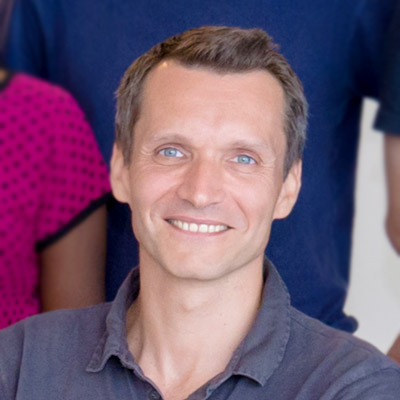
Benoit LADOUX
Visiting Faculty, Mechanobiology Institute, National University of Singapore, Research Director, Université Paris Diderot & Centre National de la Recherche Scientifique (CNRS)
Laboratory website
Cell Adhesion and Mechanics Lab
Research Program
Mechanotransduction in Tissues Group
Affiliations
Research Director, Université Paris Diderot & Centre National de la Recherche Scientifique (CNRS)
Seeking Postdoctoral Research Fellow in the Chan Laboratory, Mechanobiology Institute, NUS
We are seeking to recruit a Postdoctoral Research Fellow in the Chan Laboratory at the Mechanobiology Institute, NUS.
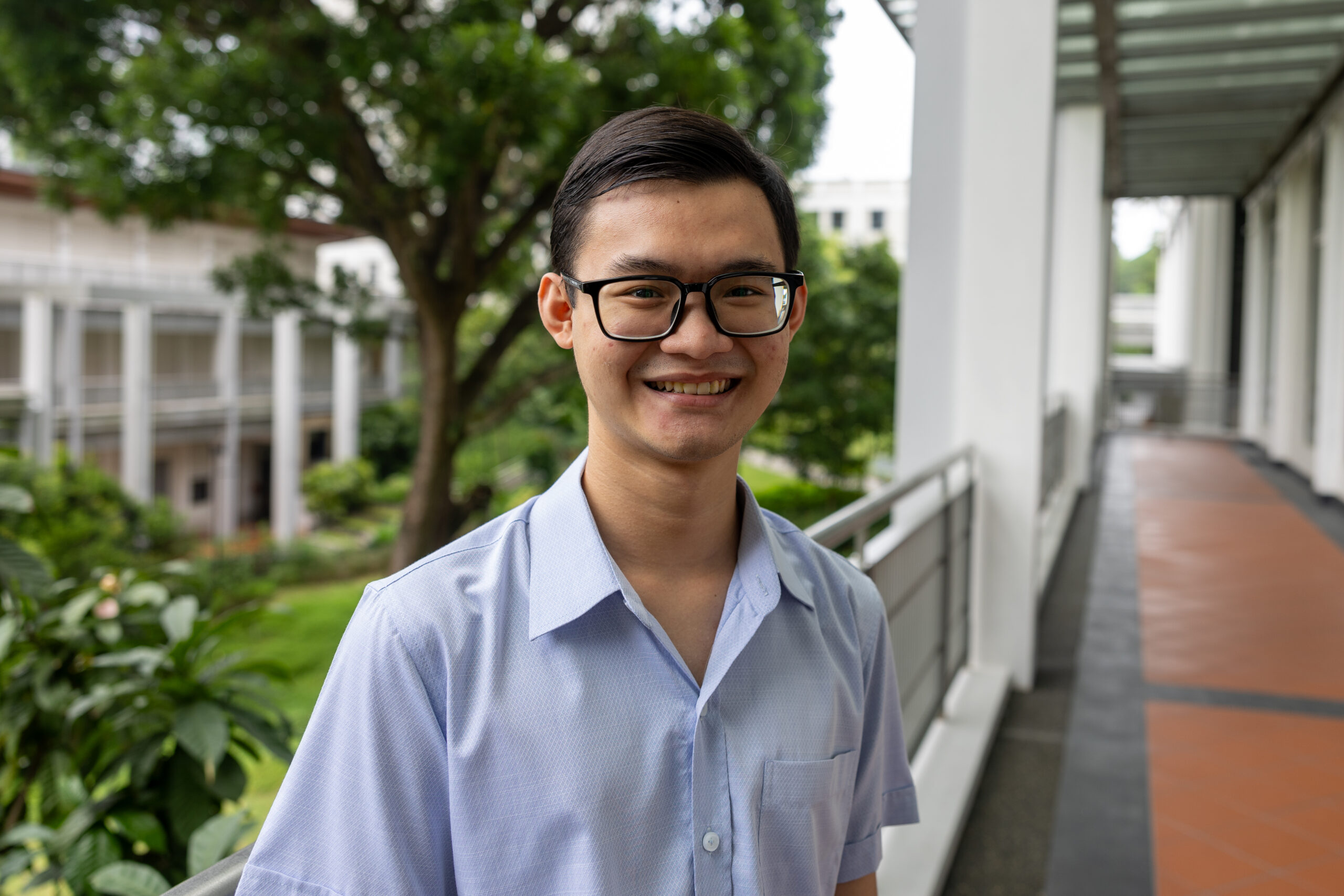
Welcome to Daniel!
Daniel is a UROP intern who will be applying a machine learning approach to study follicle development.
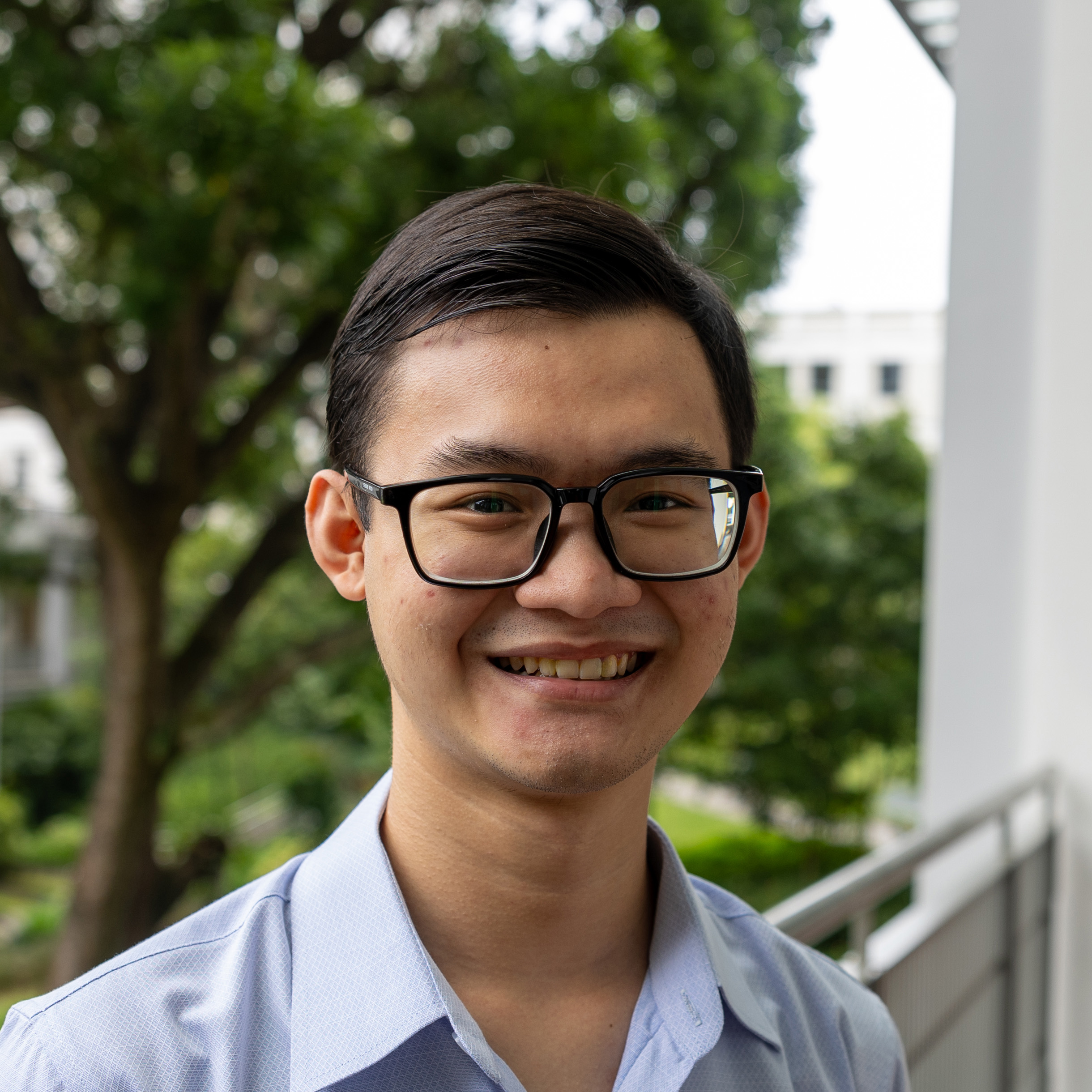
Le Mai Tan Dat (Daniel)
UROPS Intern, Chan Group
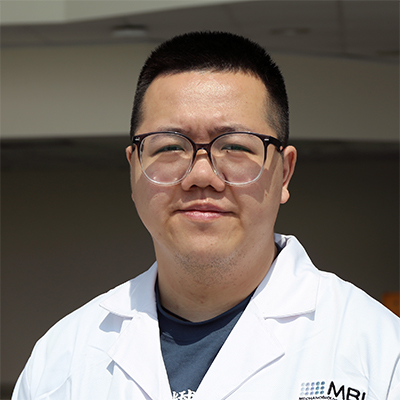
Wang Shida
PhD Student, Class of August 2024, Lim Group
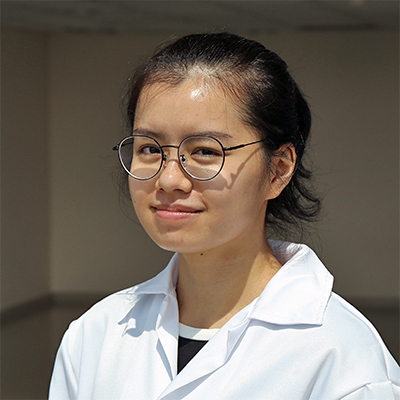
Tan Jue Yu Kelly
PhD Student, Class of August 2024, Chan Group

Shelly Anne Gnapragasan
PhD Student, Class of August 2024, Michelot Group
Benoit Ladoux
Visiting Faculty
Research Areas
Epithelial cell migration; microfabrication for cell mechanics; influence of the mechanical environments on cell functions; mechanotransduction
Research Interests
Our research aims at understanding how living organisms interact with their environment. In particular, we are studying the cooperation between adhesion, biomechanical and biochemical signaling for the adaptation of living organisms to changes in their environment. To probe these questions, our laboratory has developed a repertoire of micro- and nano-fabrication tools to control and measure the chemical and mechanical environment of cells. Our research programme thus focuses on the integration of novel microfabricated devices for the quantitative imaging of living organisms.
Biography
With a background in Physics, Prof Ladoux started his career at Curie Institute working on single molecule biophysics. He worked on two main problems combining statistical physics, microfabrication and molecular biology: 1) chromatin condensation in real time; 2) fluctuations of a single polymer under shear flows. After a post-doc on cell mechanics, he used his knowledge in biophysics and microfabrication to start a new subject on mechanical studies of cell migration and adhesion at the University Paris Diderot. He developed microsystems to characterise the mechanical interactions of cells with their migration support. He is currently working on rigidity sensing, collective cell migration and tissue homeostasis.
Recent Publications
- Shiratsuchi N, Fujita Y, Simon de Beco , Daubech C, Ladoux B, Grata A, Levayer R, Magny E, O'Brien LE, Priya R, Mitchell SJ, Rosenblatt J, Rupprecht J, Stockmann L, Sedzinski J, Roquin L, Suzanne M, Toyama Y, Matekcic M, Trepat X, Vinzens S, Wickström SA, Lwin AKO, and Yap AS. Meeting report - CellExIt#1, the first international symposium on cell extrusion. J Cell Sci 2026; 139(14). [PMID: 42504880]
- Balasubramaniam L, Monfared S, Ardaševa A, Rosse C, Schoenit A, Dang T, Maric C, Hautefeuille M, Kocgozlu L, Chilupuri R, Dubey S, Marangoni E, L Doss B, Chavrier P, Mège R, Doostmohammadi A, and Ladoux B. Dynamic forces shape the survival fate of eliminated cells. Nat Phys 2025;. [PMID: 40636322]
- Kawaue T, Yow I, Pan Y, Le AP, Lou Y, Loberas M, Shagirov M, Teng X, Prost J, Hiraiwa T, Ladoux B, and Toyama Y. Inhomogeneous mechanotransduction defines the spatial pattern of apoptosis-induced compensatory proliferation. Dev Cell 2023;. [PMID: 36800994]
- Sonam S, Balasubramaniam L, Lin S, Ivan YMY, Jaumà IP, Jebane C, Karnat M, Toyama Y, Marcq P, Prost J, Mège R, Rupprecht J, and Ladoux B. Mechanical stress driven by rigidity sensing governs epithelial stability. Nat Phys 2022; 19:132-141. [PMID: 36686215]
- Rose N, Estrada Chavez B, Sonam S, Nguyen T, Grenci G, Bigot A, Muchir A, Ladoux B, Cadot B, Le Grand F, and Trichet L. Bioengineering a miniaturized in vitro 3D myotube contraction monitoring chip to model muscular dystrophies. Biomaterials 2022; 293:121935. [PMID: 36584444]
- . https://www.ncbi.nlm.nih.gov/pubmed/36103541
- Yang Y, Nguyen E, Sankara Narayana GHN, Heuzé M, Fu C, Yu H, Mège R, Ladoux B, and Sheetz MP. Local contractions regulate E-cadherin rigidity sensing. Sci Adv 2022; 8(4):eabk0387. [PMID: 35089785]
- . https://www.ncbi.nlm.nih.gov/pubmed/33850145
- Latorre E, Kale S, Casares L, Gómez-González M, Uroz M, Valon L, Nair RV, Garreta E, Montserrat N, Del Campo A, Ladoux B, Arroyo M, and Trepat X. Addendum: Active superelasticity in three-dimensional epithelia of controlled shape. Nature 2021;. [PMID: 33846613]
- Balasubramaniam L, Doostmohammadi A, Saw TB, Narayana GHNS, Mueller R, Dang T, Thomas M, Gupta S, Sonam S, Yap AS, Toyama Y, Mège R, Yeomans JM, and Ladoux B. Author Correction: Investigating the nature of active forces in tissues reveals how contractile cells can form extensile monolayers. Nat Mater 2021;. [PMID: 33750921]
Lab Members
What is autophagy?
What is autophagy? Autophagy, meaning self-eating, is an intracellular degradation system wherein unwanted cargo, such as old or damaged organelles, unneeded proteins, as well as pathogenic agents, are digested and the macromolecular contents from [...]
What is caveolar endocytosis?
What is caveolar endocytosis? Macropinocytosis or ‘cell drinking’ is a type of endocytosis that involves the nonspecific uptake of extracellular material, such as soluble molecules, nutrients, and antigens. First observed in 1931 by Warren [...]
Genome Regulation
Genome Regulation Genome regulation encompasses all facets of gene expression, from the biochemical modifications of DNA, to the physical arrangement of chromosomes and the activity of the transcription machinery. The genome regulation programs that [...]
What is phagocytosis?
What is phagocytosis? Phagocytosis is a process by which cells ingest large particles (> 0.5 micrometers) into membrane-bound vesicles called phagosomes, which are then targeted to the lysosomes for enzymatic degradation. The internalization of [...]
What is the nucleus?
What is the nucleus? The nucleus is an organelle found in most eukaryotic cells, the exception being red blood cells. In animal cells it is both the largest and stiffest organelle and is easily [...]
How does the nucleus facilitate mechanotransduction?
What properties of the nucleus facilitate mechanotransduction? Similar to the concept of long distance force propagation along the cytoskeleton, the prestressed nuclear state, which counterbalances intracellular forces from the cytoskeleton, enables mechanotransduction [1][2]. Both [...]
How is nuclear “prestress” maintained?
How is nuclear “prestress” maintained? As an integral part of cellular behavior, cells are sensitive to matrix rigidity, local geometry and stress or strain applied by external factors [1]. In recent years, it has [...]
How is the nucleus coupled to the cytoskeleton?
How is the nucleus coupled to the cytoskeleton? Cytoskeletal filaments bridge the nucleus to the plasma membrane, which in turn is anchored at sub-cellular sites to extracellular substrates via a plethora of proteins that [...]
What are chromatin, heterochromatin and euchromatin?
What is chromatin, heterochromatin and euchromatin? The human genome contains over 3 billion base pairs or nucleotides. These nucleotides, which are arranged in a linear sequence along DNA (deoxyribonucleic acid), encode every protein and [...]
What are chromosomes and chromosome territories?
What are chromosomes and chromosome territories? While metaphase chromosomes can be depicted as distinct bodies with well-defined shapes and sizes, interphase chromosomes are less uniform and, by filling the nuclear space, difficult to distinguish. [...]
What are nucleosomes?
What are nucleosomes? In order to fit DNA into the nucleus, it must be packaged into a highly compacted structure known as chromatin. In the first step of this process DNA is condensed into [...]
What is translation?
What is translation? Translation is a process that involves the synthesis of an amino acid chain from an mRNA blueprint. These polypeptide chains fold into functional proteins. Translation occurs outside the nucleus once nuclear [...]