

How are proteins sequentially recruited to focal adhesion sites?
How are proteins recruited to focal adhesion sites? The chronological order of protein recruitment into focal adhesions leads to the concept of sequential assembly. Accordingly, the exact composition of each elongating adhesions is dependent [...]
How do focal adhesions disassemble?
How do focal adhesions disassemble? Disassembly is critical during cell spreading and forward movement to allow FAs to extend outwards towards the cell periphery [1]. Disassembly of adhesions can take place as a result [...]
How do focal adhesions mature?
How do focal adhesions mature? Adhesions that manage to grow beyond the transient phase further undergo qualitative changes in a phase described as maturation. This transformation of adhesion sites into stress-fiber bound focal adhesions [...]
What is the first step in focal adhesion assembly?
What is the first step in focal adhesion assembly? Focal adhesion formation is initiated upon the binding of adhesion receptors to extracellular matrix (ECM) ligands (e.g. fibronectin, vitronectin, collagen) along the cell periphery usually [...]
What is the role of integrin clustering in focal adhesion assembly?
What is the role of integrin clustering in focal adhesion assembly? There is still much debate over the mechanisms of signal transduction following integrin-ligand binding, however recent studies reveal that irrespective of the global [...]
What is the role of Rho GTPases in the regulation of focal adhesion assembly?
What is the role of Rho GTPases in the regulation of focal adhesion assembly? Synergistic integrin-syndecan signaling The rate and extent of focal adhesion formation and maturation are regulated by factors such as synergistic [...]
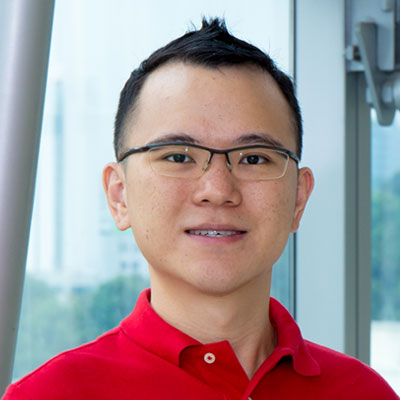
Ding Wei Yung
Alumni
Principal Investigator
Research Interests
Cell-Matrix and Cell-Cell Mechanotransduction, Molecular Mechanisms of Mechanobiology
Wei Yung’s interest lies in understanding the sophistication of cells as robust machines. Using C. elegans, a 1mm nematode, as a model system, he investigates the cellular machinery underlying newly fertilized zygotes that drives critical force-dependent processes such as polarization and cytokinesis.
Biography
Wei Yung completed his Bachelor’s degree in Bioengineering (Second Class Upper) from the National University of Singapore in 2012. In his honors dissertation under the co-supervision of Professor James Goh and Professor Wong Hee Kit, he optimized the conditions required for the construction of interbody spinal fusion device using primary adipose stem cells seeded in a biodegradable polycaprolactone/tricalcium sulphate (PCL/TCP) scaffold. The work was presented in the Bioengineering Showcase 2012 and he was awarded the Best Poster Award. After he was enrolled in the Mechanobiology Graduate Program, he joined Dr. Zaidel-Bar’s Cell Adhesion and Morphogenesis Lab and is currently searching for novel genes involved in regulating C. elegans early embryogenesis.

