
What are Ras GTPases?
What are Ras GTPases? The Ras family of small GTPases were originally discovered during a search for oncogenic retroviruses. Named for their ability to cause rat sarcomas, human RAS genes were identified in 1982 [...]
What are focal adhesions?
What are focal adhesions? Focal adhesions are integrin-containing, multi-protein structures that form mechanical links between intracellular actin bundles and the extracellular matrix or substrate in many cell types [1]. The formation and function of [...]
Are focal adhesions dynamic?
Are focal adhesion dynamic? In migrating cells, turnover of adhesion components happens throughout the adhesion life cycle, with a shift in equilibrium between rates of recruitment and removal during the various stages. At the [...]
Are focal adhesions dynamic?
Are focal adhesion dynamic? In migrating cells, turnover of adhesion components happens throughout the adhesion life cycle, with a shift in equilibrium between rates of recruitment and removal during the various stages. At the [...]
How are focal adhesion dynamics regulated?
How are focal adhesion dynamics regulated? The highly dynamic and complex molecular composition of focal adhesions is regulated by a number of physico-chemical signals arising from its surroundings, such as extracellular matrix stiffness, topography, [...]
What are Rho GTPases?
What are Rho GTPases? The Ras homologous (Rho) protein family is a member of the Ras superfamily of small GTPases. Small GTPases are monomeric proteins and function as molecular switches that turn “on” or [...]
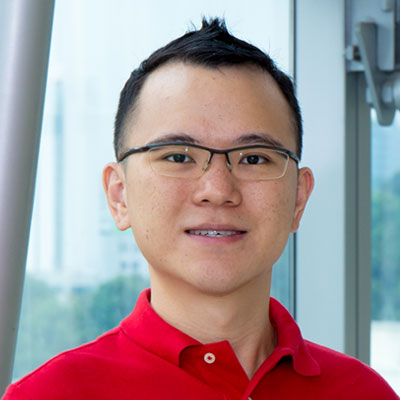
Ding Wei Yung
Alumni
Principal Investigator
Research Interests
Cell-Matrix and Cell-Cell Mechanotransduction, Molecular Mechanisms of Mechanobiology
Wei Yung’s interest lies in understanding the sophistication of cells as robust machines. Using C. elegans, a 1mm nematode, as a model system, he investigates the cellular machinery underlying newly fertilized zygotes that drives critical force-dependent processes such as polarization and cytokinesis.
Biography
Wei Yung completed his Bachelor’s degree in Bioengineering (Second Class Upper) from the National University of Singapore in 2012. In his honors dissertation under the co-supervision of Professor James Goh and Professor Wong Hee Kit, he optimized the conditions required for the construction of interbody spinal fusion device using primary adipose stem cells seeded in a biodegradable polycaprolactone/tricalcium sulphate (PCL/TCP) scaffold. The work was presented in the Bioengineering Showcase 2012 and he was awarded the Best Poster Award. After he was enrolled in the Mechanobiology Graduate Program, he joined Dr. Zaidel-Bar’s Cell Adhesion and Morphogenesis Lab and is currently searching for novel genes involved in regulating C. elegans early embryogenesis.