
What is Fast Endophilin-Mediated Endocytosis (FEME)?
What is Fast Endophilin-Mediated Endocytosis (FEME)? FEME is a novel clathrin-independent endocytic pathway, regulated by the BAR domain protein endophilin, where tubulo-vesicular carriers form within seconds at the plasma membrane upon activation of specific [...]
What is flotillin-associated endocytosis?
What is flotillin-associated endocytosis? Flotillins, which are proteins that localize to specific microdomains or lipid rafts in the plasma membrane, mediate a clathrin-independent endocytosis pathway that is regulated by the Src family tyrosine kinase [...]
What is exocytosis?
What is exocytosis? Exocytosis is defined as the transport and fusion of secretory vesicles with the plasma membrane and the extracellular space. There are three exocytosis pathways that deliver vesicles to the plasma membrane. [...]
What is autophagy?
What is autophagy? Autophagy, meaning self-eating, is an intracellular degradation system wherein unwanted cargo, such as old or damaged organelles, unneeded proteins, as well as pathogenic agents, are digested and the macromolecular contents from [...]
What is phagocytosis?
What is phagocytosis? Phagocytosis is a process by which cells ingest large particles (> 0.5 micrometers) into membrane-bound vesicles called phagosomes, which are then targeted to the lysosomes for enzymatic degradation. The internalization of [...]
What is caveolar endocytosis?
What is caveolar endocytosis? Macropinocytosis or ‘cell drinking’ is a type of endocytosis that involves the nonspecific uptake of extracellular material, such as soluble molecules, nutrients, and antigens. First observed in 1931 by Warren [...]
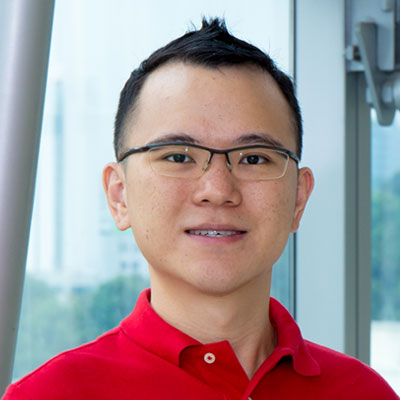
Ding Wei Yung
Alumni
Principal Investigator
Research Interests
Cell-Matrix and Cell-Cell Mechanotransduction, Molecular Mechanisms of Mechanobiology
Wei Yung’s interest lies in understanding the sophistication of cells as robust machines. Using C. elegans, a 1mm nematode, as a model system, he investigates the cellular machinery underlying newly fertilized zygotes that drives critical force-dependent processes such as polarization and cytokinesis.
Biography
Wei Yung completed his Bachelor’s degree in Bioengineering (Second Class Upper) from the National University of Singapore in 2012. In his honors dissertation under the co-supervision of Professor James Goh and Professor Wong Hee Kit, he optimized the conditions required for the construction of interbody spinal fusion device using primary adipose stem cells seeded in a biodegradable polycaprolactone/tricalcium sulphate (PCL/TCP) scaffold. The work was presented in the Bioengineering Showcase 2012 and he was awarded the Best Poster Award. After he was enrolled in the Mechanobiology Graduate Program, he joined Dr. Zaidel-Bar’s Cell Adhesion and Morphogenesis Lab and is currently searching for novel genes involved in regulating C. elegans early embryogenesis.