
What is caveolar endocytosis?
What is caveolar endocytosis? Macropinocytosis or ‘cell drinking’ is a type of endocytosis that involves the nonspecific uptake of extracellular material, such as soluble molecules, nutrients, and antigens. First observed in 1931 by Warren [...]
What is the nucleus?
What is the nucleus? The nucleus is an organelle found in most eukaryotic cells, the exception being red blood cells. In animal cells it is both the largest and stiffest organelle and is easily [...]
How does the nucleus facilitate mechanotransduction?
What properties of the nucleus facilitate mechanotransduction? Similar to the concept of long distance force propagation along the cytoskeleton, the prestressed nuclear state, which counterbalances intracellular forces from the cytoskeleton, enables mechanotransduction [1][2]. Both [...]
How is nuclear “prestress” maintained?
How is nuclear “prestress” maintained? As an integral part of cellular behavior, cells are sensitive to matrix rigidity, local geometry and stress or strain applied by external factors [1]. In recent years, it has [...]
How is the nucleus coupled to the cytoskeleton?
How is the nucleus coupled to the cytoskeleton? Cytoskeletal filaments bridge the nucleus to the plasma membrane, which in turn is anchored at sub-cellular sites to extracellular substrates via a plethora of proteins that [...]
What are chromatin, heterochromatin and euchromatin?
What is chromatin, heterochromatin and euchromatin? The human genome contains over 3 billion base pairs or nucleotides. These nucleotides, which are arranged in a linear sequence along DNA (deoxyribonucleic acid), encode every protein and [...]
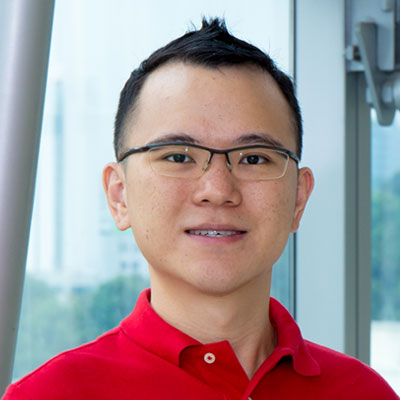
Ding Wei Yung
Alumni
Principal Investigator
Research Interests
Cell-Matrix and Cell-Cell Mechanotransduction, Molecular Mechanisms of Mechanobiology
Wei Yung’s interest lies in understanding the sophistication of cells as robust machines. Using C. elegans, a 1mm nematode, as a model system, he investigates the cellular machinery underlying newly fertilized zygotes that drives critical force-dependent processes such as polarization and cytokinesis.
Biography
Wei Yung completed his Bachelor’s degree in Bioengineering (Second Class Upper) from the National University of Singapore in 2012. In his honors dissertation under the co-supervision of Professor James Goh and Professor Wong Hee Kit, he optimized the conditions required for the construction of interbody spinal fusion device using primary adipose stem cells seeded in a biodegradable polycaprolactone/tricalcium sulphate (PCL/TCP) scaffold. The work was presented in the Bioengineering Showcase 2012 and he was awarded the Best Poster Award. After he was enrolled in the Mechanobiology Graduate Program, he joined Dr. Zaidel-Bar’s Cell Adhesion and Morphogenesis Lab and is currently searching for novel genes involved in regulating C. elegans early embryogenesis.