
What is the role of cortactin in actin polymerization?
What is the role of cortactin in actin polymerization? Cortactin is a class II nucleation promoting factor (NPF) that binds to actin filaments and influences their stability. Cortactin specifically stabilizes Arp2/3-mediated branch points along [...]
What is the role of formin in actin polymerization?
What is the role of formin in actin polymerization? Formins promote the elongation of pre-existing filaments by removing barbed end capping proteins and forming a sleeve around the actin subunits. Formins are also capable [...]
What is the steady state phase of actin polymerization?
What is the steady state phase of actin polymerization? In the steady state phase, the filament dynamics enter a state of equilibrium where monomer disassembly from the (-) end and polymerization at the (+) [...]
What factors regulate actin filament polymerization?
What factors regulate actin filament polymerization? Nucleation Promoting Factors (NPFs) (e.g. WASP, Scar/WAVE) modulate actin filament nucleation by bringing together actin monomers and pre-existing actin filaments, for example, during filopodial initiation where they recruit [...]
What factors influence actin filament length and treadmilling?
What factors influence actin filament length and treadmilling? Several factors influence actin filament length and treadmilling. ATP binding on G-actin and free ATP-G-actin concentration ATP-binding on actin subunits modulates the dynamics of filament assembly, [...]
I-BAR and Other Proteins/Factors
I-BAR and Other Proteins/Factors Proteins containing I-BAR (inverted Bin/amphiphysin/Rvs i.e. IRSp53 Missing-in-metastasis homology Domain or IMD) cooperate with various components of actin filament assembly, to promote filopodia protrusion, via several mechanisms including the stimulation [...]
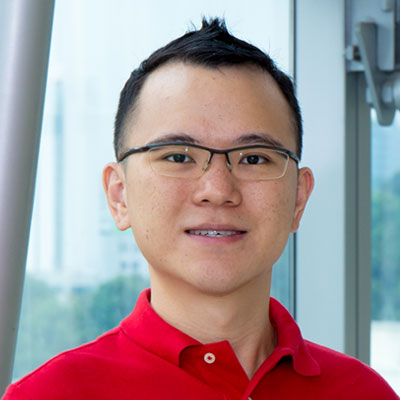
Ding Wei Yung
Alumni
Principal Investigator
Research Interests
Cell-Matrix and Cell-Cell Mechanotransduction, Molecular Mechanisms of Mechanobiology
Wei Yung’s interest lies in understanding the sophistication of cells as robust machines. Using C. elegans, a 1mm nematode, as a model system, he investigates the cellular machinery underlying newly fertilized zygotes that drives critical force-dependent processes such as polarization and cytokinesis.
Biography
Wei Yung completed his Bachelor’s degree in Bioengineering (Second Class Upper) from the National University of Singapore in 2012. In his honors dissertation under the co-supervision of Professor James Goh and Professor Wong Hee Kit, he optimized the conditions required for the construction of interbody spinal fusion device using primary adipose stem cells seeded in a biodegradable polycaprolactone/tricalcium sulphate (PCL/TCP) scaffold. The work was presented in the Bioengineering Showcase 2012 and he was awarded the Best Poster Award. After he was enrolled in the Mechanobiology Graduate Program, he joined Dr. Zaidel-Bar’s Cell Adhesion and Morphogenesis Lab and is currently searching for novel genes involved in regulating C. elegans early embryogenesis.