
What is actin nucleation?
What is actin nucleation? The first step in actin polymerization is known as ‘nucleation’. This step sees the formation of an actin nucleus, which is essentially a complex of three actin monomers, from which [...]
How does Arp2/3-mediate the nucleation of branched filaments?
How does Arp2/3-mediate the nucleation of branched filaments? The Arp2/3 complex is composed of 7 evolutionarily conserved subunits (Arp2, Arp3, ARPC1-C5) that are structurally similar to the barbed end of actin [1]. The complex [...]
How are actin filaments distributed in cells and tissues?
How are actin filaments distributed in cells and tissues? Actin filaments are widely distributed throughout cells, forming a range of cytoskeletal structures and contributing to an even broader range of processes. Some of the [...]
How do actin filaments grow?
How do actin filaments grow? Actin Filaments (F-actin) grow from the polymerization of G-actin monomers Actin is a highly abundant (10-100 micromolar on average),~42 kDa structural protein found in all eukaryotic cells (except for [...]
What are the functions of actin filaments?
What are the functions of actin filaments? Several biological processes related to cell shape and movement depend on actin filaments (reviewed in [1]). Some keys functions are: To form the dynamic cytoskeleton, which gives [...]
What factors influence actin filament length and treadmilling?
What factors influence actin filament length and treadmilling? Several factors influence actin filament length and treadmilling. ATP binding on G-actin and free ATP-G-actin concentration ATP-binding on actin subunits modulates the dynamics of filament assembly, [...]
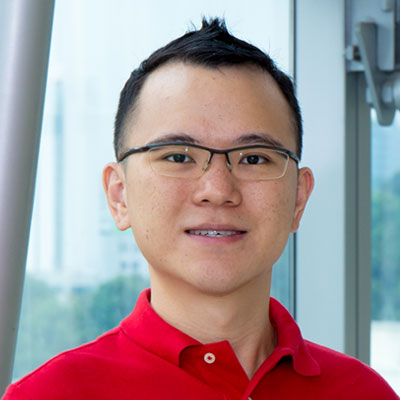
Ding Wei Yung
Alumni
Principal Investigator
Research Interests
Cell-Matrix and Cell-Cell Mechanotransduction, Molecular Mechanisms of Mechanobiology
Wei Yung’s interest lies in understanding the sophistication of cells as robust machines. Using C. elegans, a 1mm nematode, as a model system, he investigates the cellular machinery underlying newly fertilized zygotes that drives critical force-dependent processes such as polarization and cytokinesis.
Biography
Wei Yung completed his Bachelor’s degree in Bioengineering (Second Class Upper) from the National University of Singapore in 2012. In his honors dissertation under the co-supervision of Professor James Goh and Professor Wong Hee Kit, he optimized the conditions required for the construction of interbody spinal fusion device using primary adipose stem cells seeded in a biodegradable polycaprolactone/tricalcium sulphate (PCL/TCP) scaffold. The work was presented in the Bioengineering Showcase 2012 and he was awarded the Best Poster Award. After he was enrolled in the Mechanobiology Graduate Program, he joined Dr. Zaidel-Bar’s Cell Adhesion and Morphogenesis Lab and is currently searching for novel genes involved in regulating C. elegans early embryogenesis.