

Fascin
Fascin Fascin is the major actin crosslinking protein found in a wide range of filopodia [1][2][3]. This protein has been shown to work in concert with other cross linkers such as α-actinin to produce [...]
Filamin
Filamin The filamin family of proteins bind to both actin and a number of signaling molecules including Rho GTPases. Evidence for this was shown with the loss of Filamin-A in M2 Melanoma cells, which [...]
Fimbrin
Fimbrin Fimbrin (aka plastin homologue, accumentin) is an actin binding protein that was originally identified in microvilli [1][2]. This schematic diagram illustrates the molecular organization of fimbrin as depicted in this resource, and [...]
I-BAR and Other Proteins/Factors
I-BAR and Other Proteins/Factors Proteins containing I-BAR (inverted Bin/amphiphysin/Rvs i.e. IRSp53 Missing-in-metastasis homology Domain or IMD) cooperate with various components of actin filament assembly, to promote filopodia protrusion, via several mechanisms including the stimulation [...]
What is capping protein?
What is capping protein? Capping protein is involved in actin filament assembly and disassembly Capping proteins control access to the free barbed ends of actin filaments and is therefore a major factor affecting actin [...]
What are intermediate filaments?
What are intermediate filaments? Intermediate filaments are a primary component of the cytoskeleton, although they are not found in all eukaryotes, and are absent in fungi and plants [1]. These filaments, which extend throughout [...]
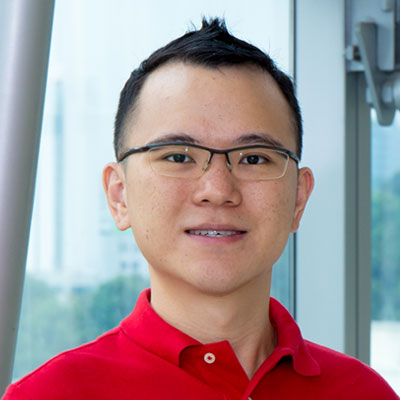
Ding Wei Yung
Alumni
Principal Investigator
Research Interests
Cell-Matrix and Cell-Cell Mechanotransduction, Molecular Mechanisms of Mechanobiology
Wei Yung’s interest lies in understanding the sophistication of cells as robust machines. Using C. elegans, a 1mm nematode, as a model system, he investigates the cellular machinery underlying newly fertilized zygotes that drives critical force-dependent processes such as polarization and cytokinesis.
Biography
Wei Yung completed his Bachelor’s degree in Bioengineering (Second Class Upper) from the National University of Singapore in 2012. In his honors dissertation under the co-supervision of Professor James Goh and Professor Wong Hee Kit, he optimized the conditions required for the construction of interbody spinal fusion device using primary adipose stem cells seeded in a biodegradable polycaprolactone/tricalcium sulphate (PCL/TCP) scaffold. The work was presented in the Bioengineering Showcase 2012 and he was awarded the Best Poster Award. After he was enrolled in the Mechanobiology Graduate Program, he joined Dr. Zaidel-Bar’s Cell Adhesion and Morphogenesis Lab and is currently searching for novel genes involved in regulating C. elegans early embryogenesis.