


Bibhas ROY
Visiting Research Fellow, Mechanobiology Institute, National University of Singapore, Post-doctoral Fellow, FIRC Institute of Molecular Oncology (IFOM), Italy
mbibr@nus.edu.sg
Level 10 T-Lab
National University of Singapore
5A Engineering Drive 1
Singapore 117411
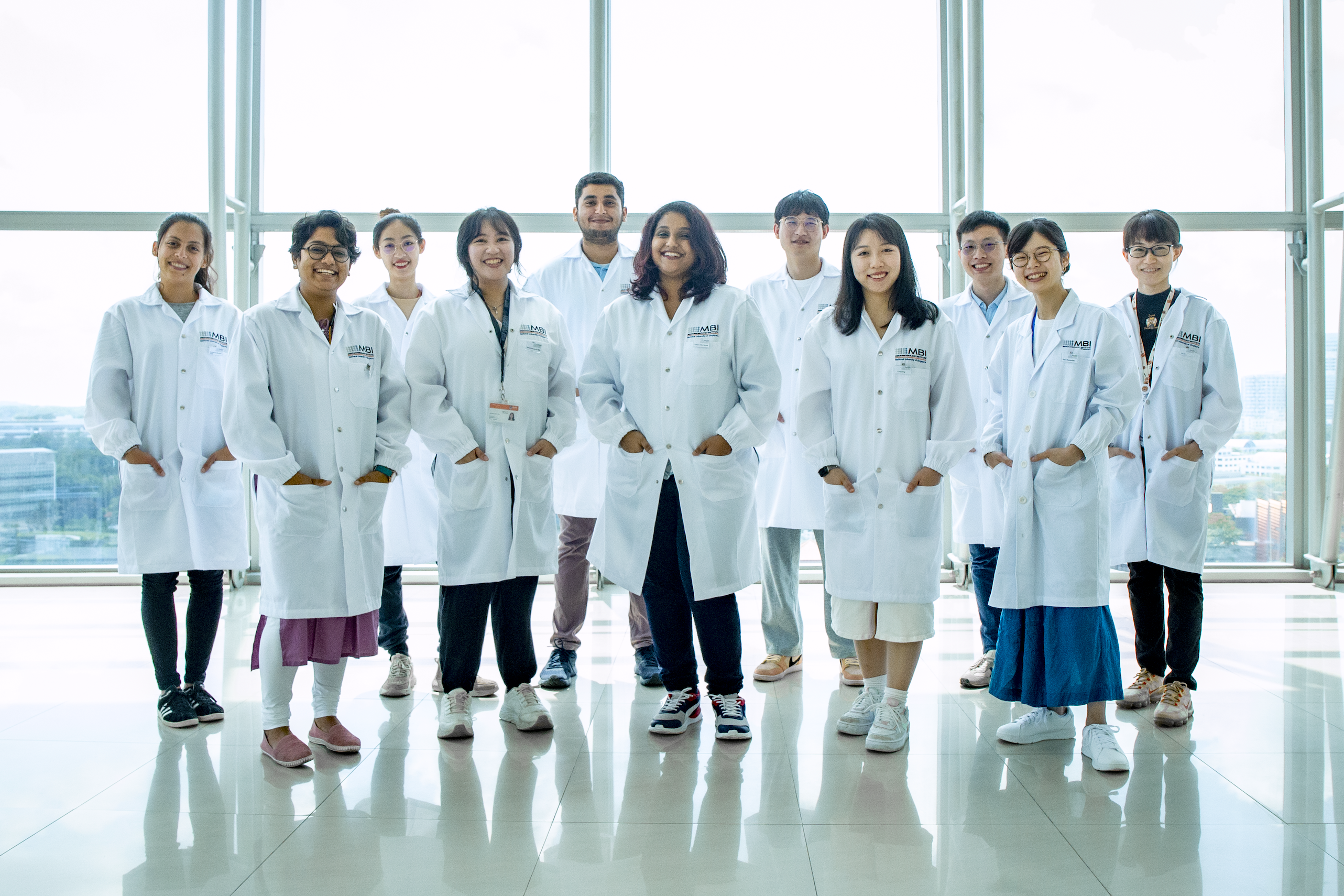
MBI welcomes August 2022 Ph.D. Students
MBI receives 11 new Ph.D. students for the MBI Programme in Mechanobiology, a rigorous four-year graduate programme focused on mechanobiology, biophysics and bioengineering.

Farewell to Hugo Raveton
It’s been a great privilege to have Hugo Raveton with us from Jan - July 2022. All the best to your future endeavour!
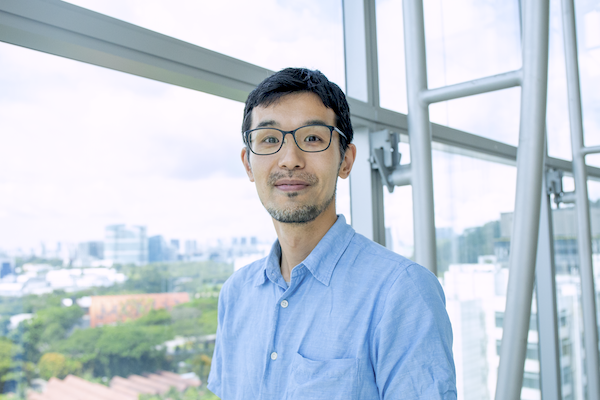
MBI welcomes new PI Tsuyoshi Hirashima
MBI is pleased to receive Dr. Tsuyoshi Hirashima as a new Principal Investigator, with a joint-appointment as a Research Assistant Professor in the Department of Physiology, NUS School of Medicine.
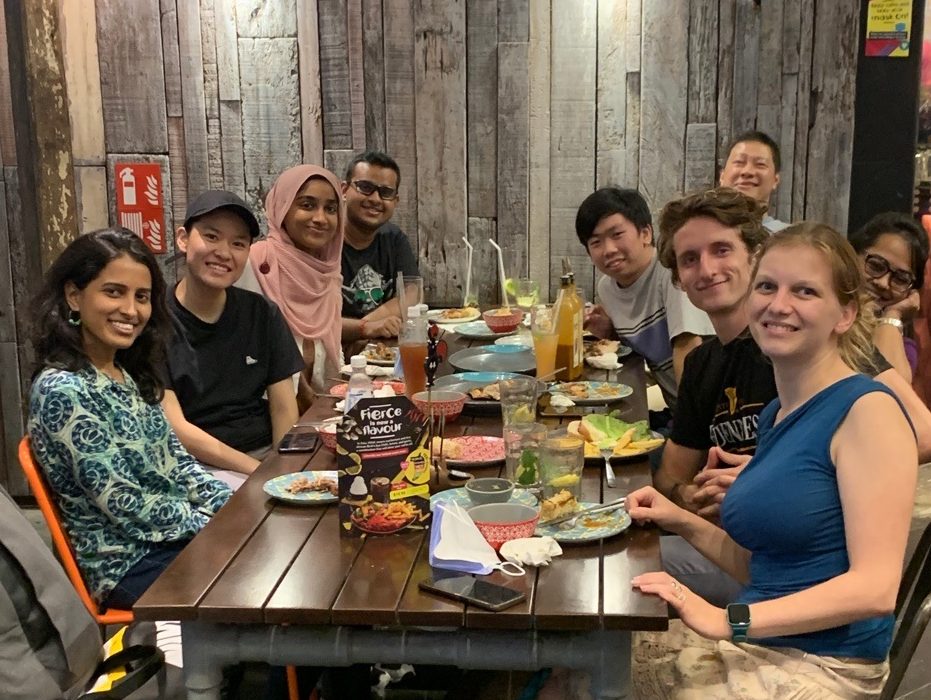
Chan Lab dinner and welcoming interns!
Finally, the lab dinner that is long overdue :) And a warm welcome to the summer interns!
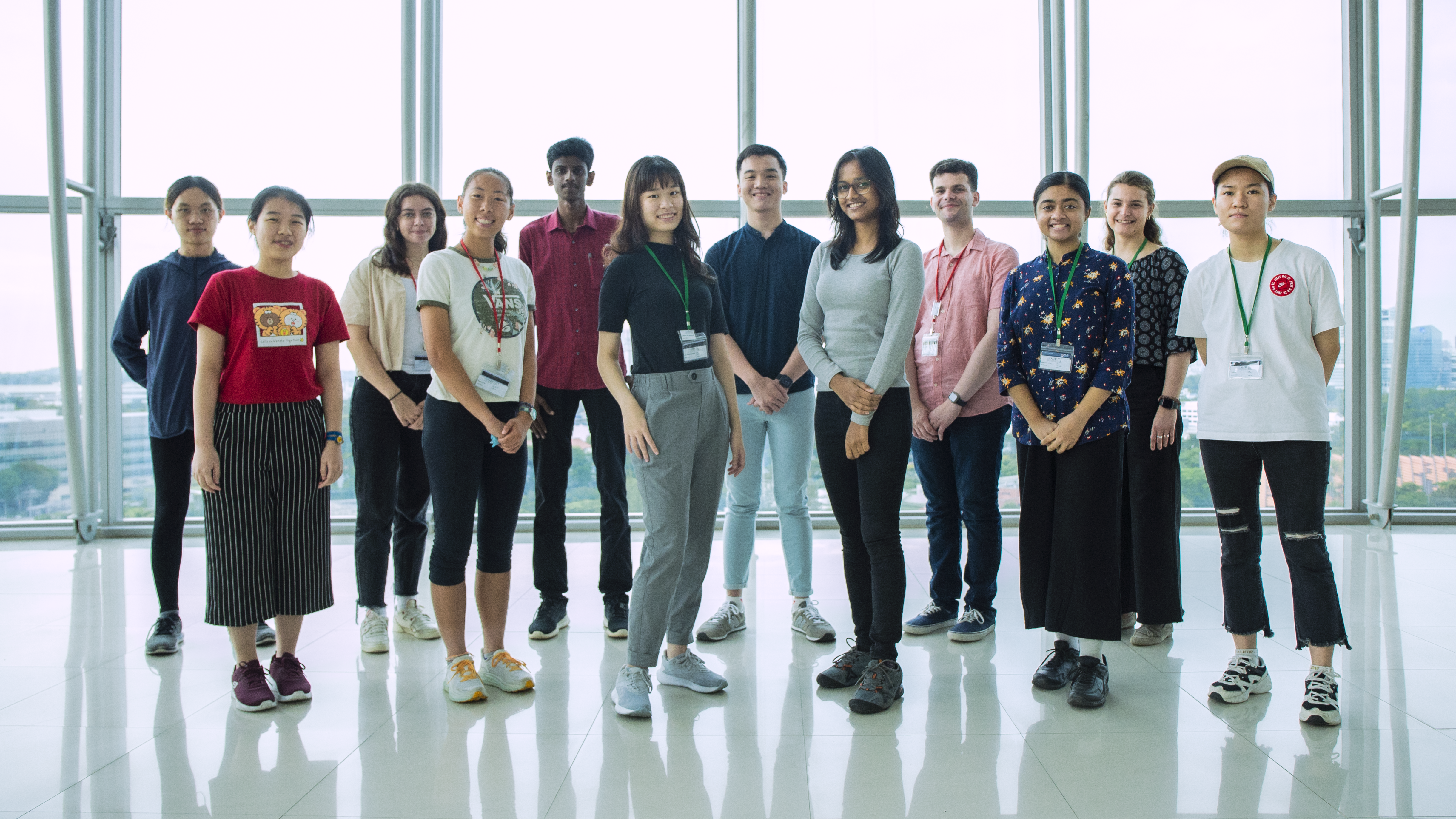
MBI welcomes MUST 2022 Interns
MBI hosts 12 new interns for the MBI Undergraduate Summer Training (MUST) Programme, a 2-month internship exploring mechanobiology.
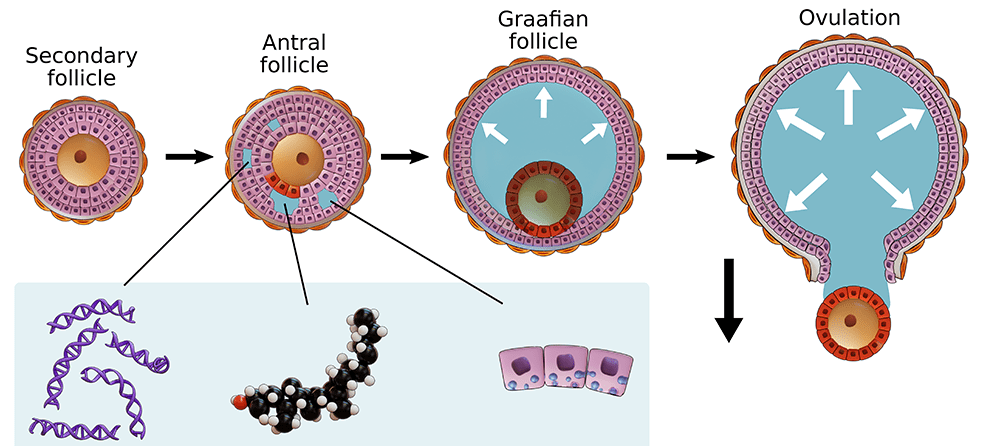
Latest publication on tissue hydraulics in reproduction is out!
Joe and Tsuyoshi Hirashima (incoming PI) reviewed recent advances in our understanding on how fluid dynamics shape mammalian oogenesis and spermatogenesis.
Bibhas Roy
Alumni
I am a Research Fellow in Nuclear Mechanics & Genome Regulation Laboratory at MBI. In my doctoral research at Indian Institute of Technology Kharagpur, I have been understanding about the cellular mechanotransduction which specifically deals with cell membrane mechanosensors and consequent downstream cell responses. Eventually I have quite interested on nuclear mechanotransduction because for last two decades several path breaking findings in cellular mechanobiology has gained enormous interest to scientific community, but the nuclear mechanotransduction field remains quite elusive. This drive brought me to Prof Shivashankar’s Lab at MBI.
During differentiation and also reprogramming, cells accumulated multiple epigenetic changes, which leads to differential type of gene expression in different cell types. My current endeavor explores how nuclear geometry driven epigenetic changes leads to different cell type commitment.
Recent Publications
- Yuan L, Roy B, Ratna P, Uhler C, and Shivashankar GV. Lateral confined growth of cells activates Lef1 dependent pathways to regulate cell-state transitions. Sci Rep 2022; 12(1):17318. [PMID: 36243826]
- Roy B, Yuan L, Lee Y, Bharti A, Mitra A, and Shivashankar GV. Fibroblast rejuvenation by mechanical reprogramming and redifferentiation. Proc. Natl. Acad. Sci. U.S.A. 2020;. [PMID: 32350144]
- Banerjee H, Roy B, Chaudhury K, Srinivasan B, Chakraborty S, and Ren H. Frequency-induced morphology alterations in microconfined biological cells. Med Biol Eng Comput 2018;. [PMID: 30415434]
- Roy B, Venkatachalapathy S, Ratna P, Wang Y, Jokhun DS, Nagarajan M, and Shivashankar GV. Laterally confined growth of cells induces nuclear reprogramming in the absence of exogenous biochemical factors. Proc. Natl. Acad. Sci. U.S.A. 2018;. [PMID: 29735717]