


Bibhas ROY
Visiting Research Fellow, Mechanobiology Institute, National University of Singapore, Post-doctoral Fellow, FIRC Institute of Molecular Oncology (IFOM), Italy
mbibr@nus.edu.sg
Level 10 T-Lab
National University of Singapore
5A Engineering Drive 1
Singapore 117411
Ge Zhixing
Research Fellow, Lim Group
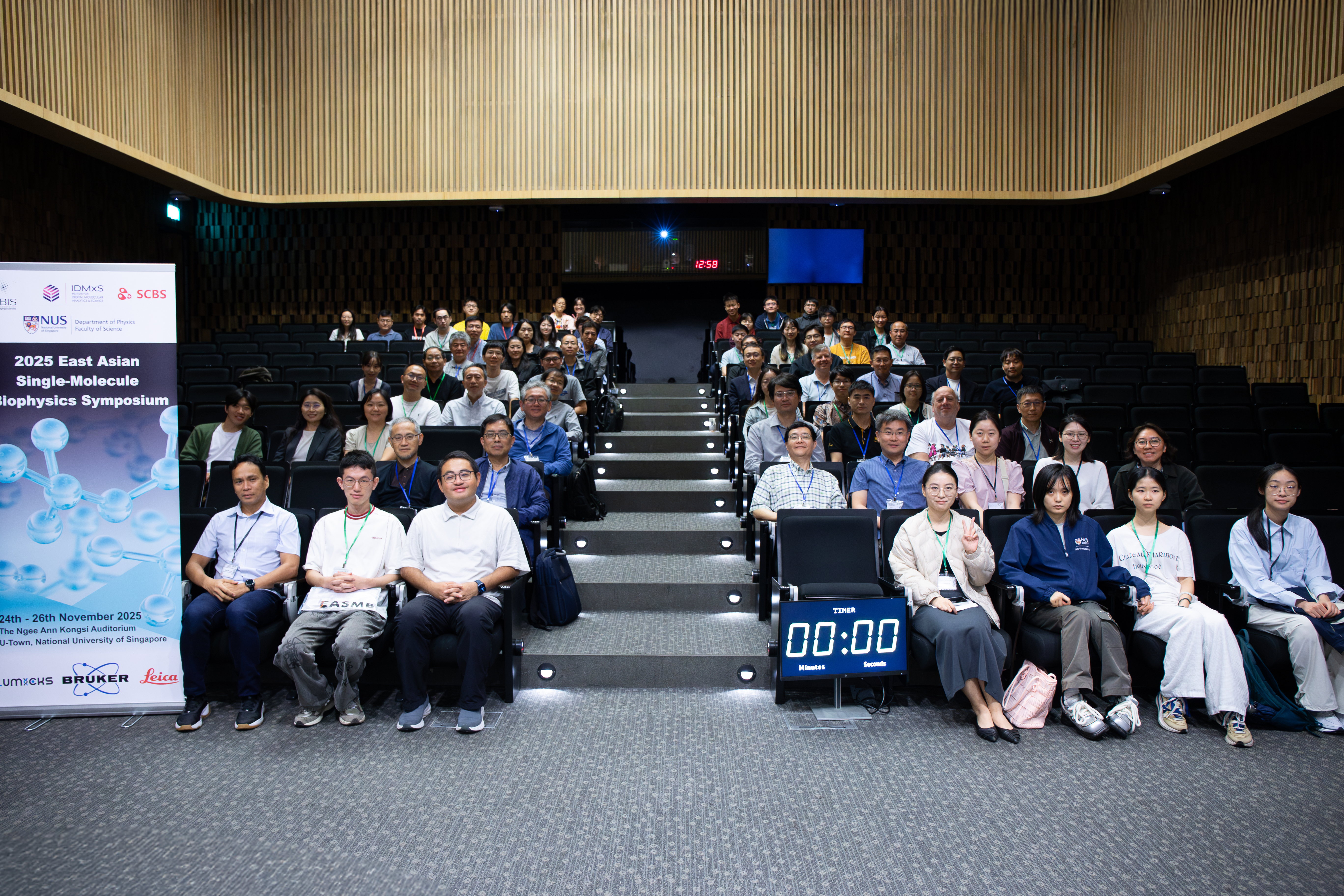
EASMB Symposium 2025 Showcases Global Participation and Relevance
The East Asian Single-Molecule Biophysics Symposium 2025 (EASMB2025) held from 24 to 26 November at the Ngee Ann Kongsi Auditorium in the Education Resource Centre, UTown, National University of Singapore showcased global participation and relevance.
Ng Inn Chuan
Research Associate, Yu Group

Byun Young Seo Christina
Research Assistant, Tee Group
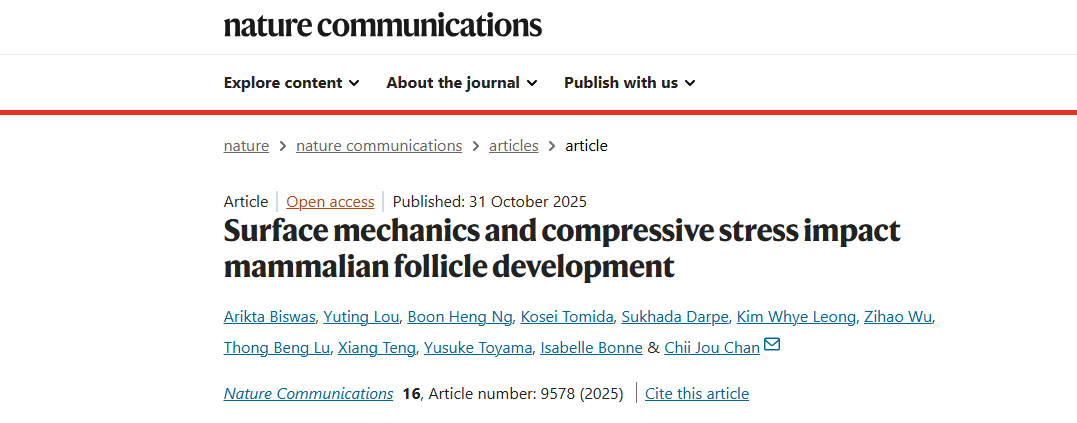
Super proud of Arikta Biswas, whose work on theca cell mechanics and compressive stress is now published in Nature Communications!
A huge thanks to our collaborators and reviewers for offering their invaluable feedback as well! Read the article here.
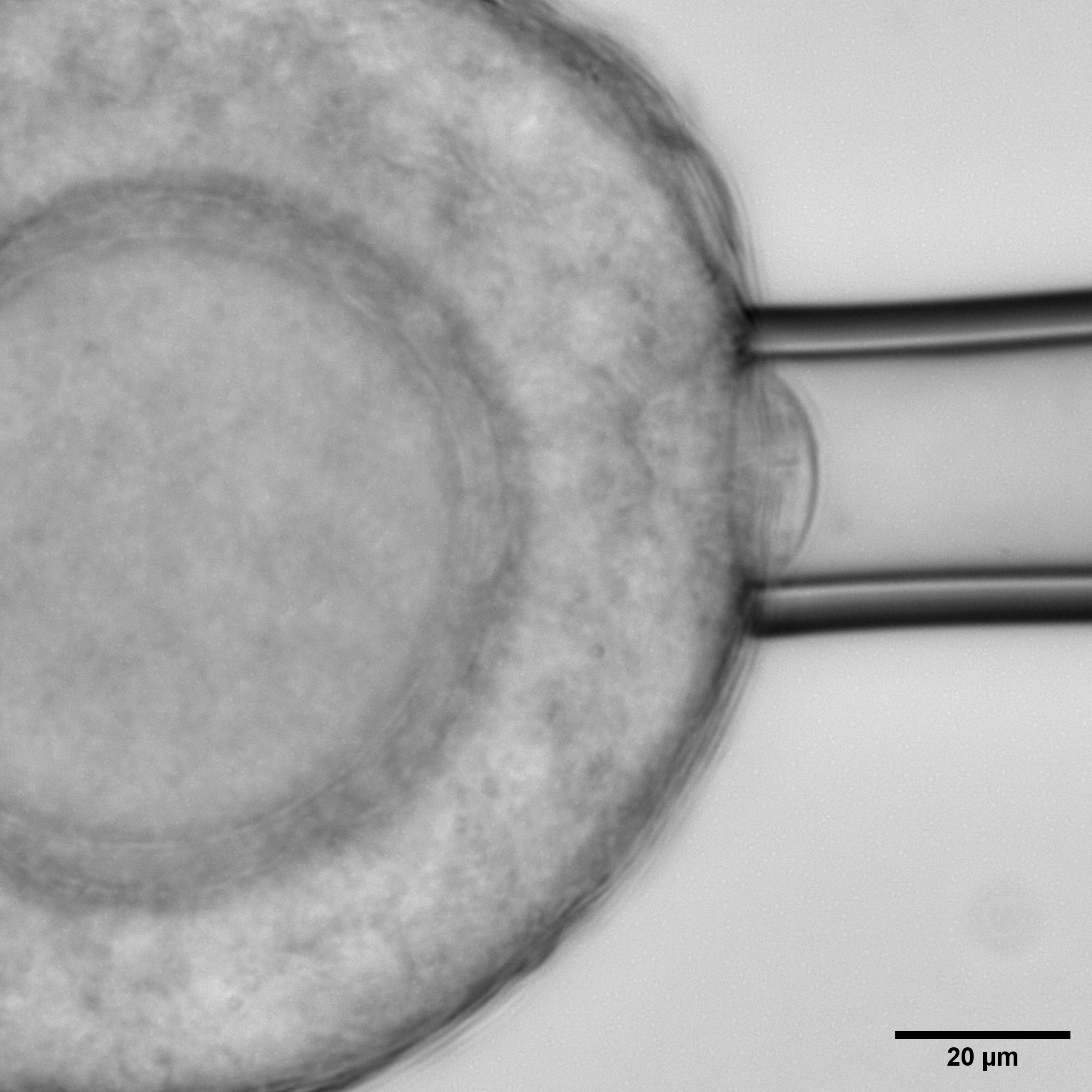
The Pressure That Shapes Life: Mechanical Forces Behind Egg Maturation
Researchers from the Chan Lab at MBI demonstrate the importance of compressive stress exhibited by theca cells in healthy follicle maturation and surrounding support cells, suggesting a new perspective in understanding infertility.
Bibhas Roy
Alumni
I am a Research Fellow in Nuclear Mechanics & Genome Regulation Laboratory at MBI. In my doctoral research at Indian Institute of Technology Kharagpur, I have been understanding about the cellular mechanotransduction which specifically deals with cell membrane mechanosensors and consequent downstream cell responses. Eventually I have quite interested on nuclear mechanotransduction because for last two decades several path breaking findings in cellular mechanobiology has gained enormous interest to scientific community, but the nuclear mechanotransduction field remains quite elusive. This drive brought me to Prof Shivashankar’s Lab at MBI.
During differentiation and also reprogramming, cells accumulated multiple epigenetic changes, which leads to differential type of gene expression in different cell types. My current endeavor explores how nuclear geometry driven epigenetic changes leads to different cell type commitment.
Recent Publications
- Yuan L, Roy B, Ratna P, Uhler C, and Shivashankar GV. Lateral confined growth of cells activates Lef1 dependent pathways to regulate cell-state transitions. Sci Rep 2022; 12(1):17318. [PMID: 36243826]
- Roy B, Yuan L, Lee Y, Bharti A, Mitra A, and Shivashankar GV. Fibroblast rejuvenation by mechanical reprogramming and redifferentiation. Proc. Natl. Acad. Sci. U.S.A. 2020;. [PMID: 32350144]
- Banerjee H, Roy B, Chaudhury K, Srinivasan B, Chakraborty S, and Ren H. Frequency-induced morphology alterations in microconfined biological cells. Med Biol Eng Comput 2018;. [PMID: 30415434]
- Roy B, Venkatachalapathy S, Ratna P, Wang Y, Jokhun DS, Nagarajan M, and Shivashankar GV. Laterally confined growth of cells induces nuclear reprogramming in the absence of exogenous biochemical factors. Proc. Natl. Acad. Sci. U.S.A. 2018;. [PMID: 29735717]