

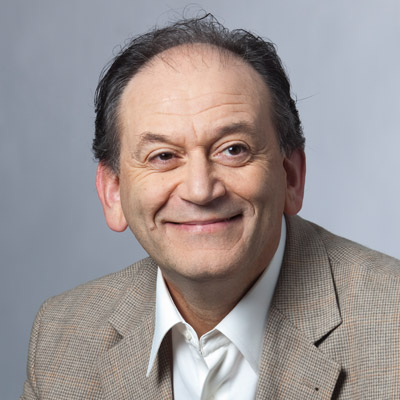
Alexander BERSHADSKY
Professor and Senior Principal Research Scientist, Mechanobiology Institute, National University of Singapore
alexander.bershadsky@weizmann.ac.il
10-03E
Level 10 T-Lab
National University of Singapore
5A Engineering Drive 1
Singapore 117411
Laboratory website
Actin Biomechanics and Cell Dynamics Lab (ABCD)
Research Program
Leader, The Cell-Matrix and Cell-Cell Mechanotransduction Group
Affiliations
Professor, the Joseph Moss Chair of Biomedical Research, Molecular Cell Biology, Weizmann Institute of Science
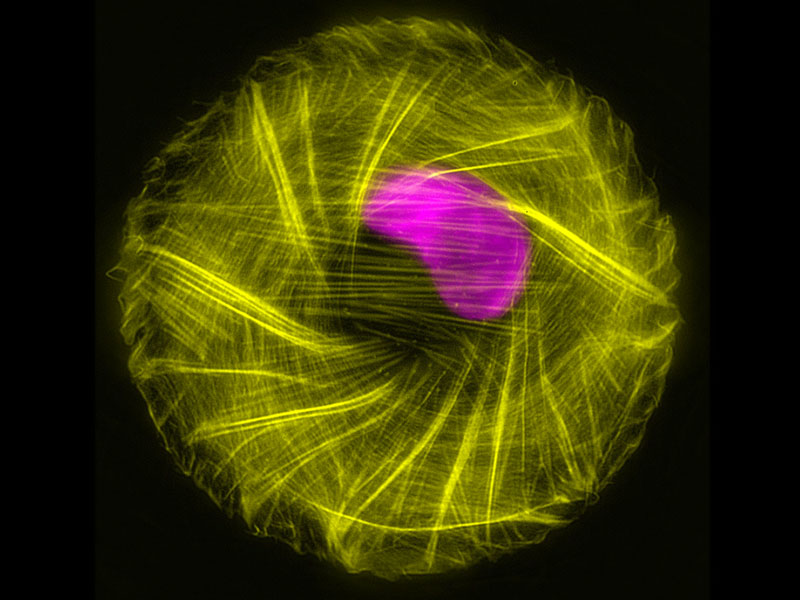
Biology in a Twist
Deciphering the origins of cell behavior
Alexander Bershadsky
Senior Principal Research Scientist
Research Areas
The Bershadsky Lab studies how cells move, and the physical forces necessary for cells to attach themselves to the substrate and to one another. In exploring the points of contact, which act as mechanical “sensors” that provide the cell with information about its environment and determine its behaviour, they have learned that in cancer cells, the activity of these “sensors” is disrupted, which likely accounts for the cell’s difficulty in adhering to substrates and, consequently, their greater mobility.
Research Interests
Prof Bershadsky’s research interests include the mechanisms of cell motility and intracellular traffic, cytoskeleton dynamics, and the crosstalk between cytoskeleton and cell adhesion. The studies from Bershadsky’s laboratory were among the first in which the phenomenon of adhesion-dependent mechanosensitivity was discovered and demonstrated. These studies showed that focal adhesions function as miniature mechanosensors, because their assembly depends on the application of external or cell-generated pulling forces. The aim of the present studies is to clarify the mechanisms involved in the adhesion dependent mechanosensitivity. Other studies from Bershadsky’s lab address the functions of microtubules in the regulation of cell motility and adhesion. His sphere of interest includes the proteins formins as potent regulators of actin assembly and actin-microtubule crosstalk.
Biography
Prof Bershadsky graduated from Moscow State University, and received his Ph.D. at the Cancer Research Centre of the Russian Academy of Medical Science, under the guidance of Prof Juri Vasiliev. In 1988, together with Prof Vasiliev, he published a book entitled, Cytoskeleton (Plenum Press), which became known as the first textbook in this field of research. Prof Bershadsky moved to Israel in 1992, and since then has worked at the Weizmann Institute of Science, first as Scientist, and subsequently as Senior Scientist, Associate Professor, and Full Professor. He holds the Joseph Moss Professorial Chair in Biomedical Research (2001). Prof Bershadsky worked as a visiting professor at the Curie Institute in Paris in 2005, at the Marine Biological Laboratory Woods Hole, USA, in 2007, and at NUS, in 2008–2010. Since 2001, he is an Editorial Board Member of the international journal of “Cytoskeleton” (formerly “Cell Motility and the Cytoskeleton”).
Education
PhD Cancer Research Centre of the Russian Academy of Medical Science
Recent Publications
- Aureille J, Prabhu SS, Barnett SF, Farrugia AJ, Arnal I, Lafanechère L, Low BC, Kanchanawong P, Mogilner A, and Bershadsky AD. Focal adhesions are controlled by microtubules through local contractility regulation. EMBO J 2024;. [PMID: 38769437]
- Lin S, Changede R, Farrugia AJ, Bershadsky AD, Sheetz MP, Prost J, and Rupprecht J. Membrane Tilt Drives Phase Separation of Adhesion Receptors. Phys Rev Lett 2024; 132(18):188402. [PMID: 38759206]
- Li W, Chung W, Kozlov MM, Medalia O, Geiger B, and Bershadsky AD. Chiral growth of adherent filopodia. Biophys J 2023;. [PMID: 37301982]
- Tee YH, Goh WJ, Yong X, Ong HT, Hu J, Tay IYY, Shi S, Jalal S, Barnett SFH, Kanchanawong P, Huang W, Yan J, Lim YAB, Thiagarajan V, Mogilner A, and Bershadsky AD. Actin polymerisation and crosslinking drive left-right asymmetry in single cell and cell collectives. Nat Commun 2023; 14(1):776. [PMID: 36774346]
- Wang H, Hu J, Yi K, Ma Z, Song X, Lee Y, Kalab P, Bershadsky AD, Miao Y, and Li R. Dual control of formin-nucleated actin assembly by the chromatin and ER in mouse oocytes. Curr Biol 2022;. [PMID: 35981539]
- Efremov AK, Yao M, Sun Y, Tee YH, Sheetz MP, Bershadsky AD, Martinac B, and Yan J. Application of piconewton forces to individual filopodia reveals mechanosensory role of L-type Ca2+ channels. Biomaterials 2022; 284:121477. [PMID: 35395455]
- Nishimura Y, Shi S, Li Q, Bershadsky AD, and Viasnoff V. Crosstalk between myosin II and formin functions in the regulation of force generation and actomyosin dynamics in stress fibers. Cells Dev 2021;:203736. [PMID: 34455135]
- Li W, Sancho A, Chung W, Vinik Y, Groll J, Zick Y, Medalia O, Bershadsky AD, and Geiger B. Differential cellular responses to adhesive interactions with galectin-8 and fibronectin coated substrates. J Cell Sci 2021;. [PMID: 33722978]
- Nishimura Y, Shi S, Zhang F, Liu R, Takagi Y, Bershadsky AD, Viasnoff V, and Sellers JR. The Formin Inhibitor, SMIFH2, Inhibits Members of the Myosin Superfamily. J Cell Sci 2021;. [PMID: 33589498]
- Rafiq NBM, Grenci G, Lim CK, Kozlov MM, Jones GE, Viasnoff V, and Bershadsky AD. Forces and constraints controlling podosome assembly and disassembly. Philos. Trans. R. Soc. Lond., B, Biol. Sci. 2019; 374(1779):20180228. [PMID: 31431172]
Lab Members

Luo Xujie
Research Assistant, Lim Group
Prof. Lim Chwee Teck elected as an FREng, and received the Otto Schmitt Award
Professor Lim Chwee Teck elected as an International Fellow of the Royal Academy of Engineering and received the Otto Schmitt Award from IFMBE
Yee Zhuangli
Research Fellow, Low Group
Quantitative Micro-Elastography: New Imaging Tool Uncovers Age-Dependent Mechanical Changes in Ovarian Tissue
Researchers from the Chan Lab at MBI develop a a novel method called quantitative micro-elastography to create detailed 3D maps of ovarian stiffness in mice—revealing crucial insights that could lead to new infertility treatments.

Jie Zhang
Research Fellow, Lim Group

Sui Mingyu
Research Fellow, Yan Jie Group
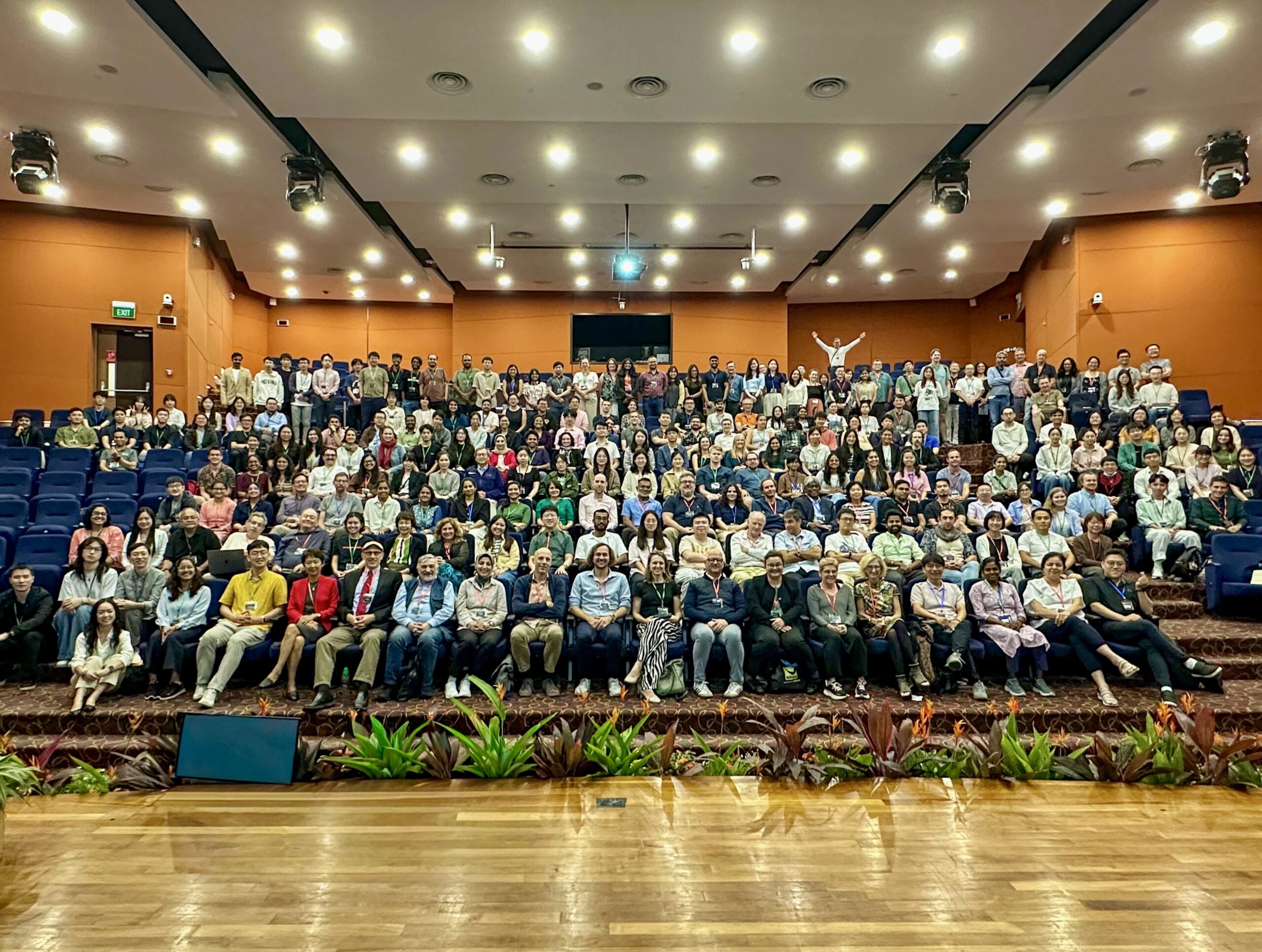
MBI-MPG Conference 2025: Mechanobiology in Space and Time
The MBI-MPG Conference 2025 was held from 9-12th September at the Mechanobiology Institute, National University of Singapore.
MBI-MPG Conference 2025: Mechanobiology in Space and Time.
The MBI-MPG Conference 2025 was held from 9-12th September at the Mechanobiology Institute, National University of Singapore.
Seeking Postdoctoral Fellow in Asst. Prof. Natalie Dye’s Laboratory at the Mechanobiology Institute, NUS
We are seeking to recruit a Postdoctoral Research Fellow in the Dye Laboratory at the Mechanobiology Institute, NUS.
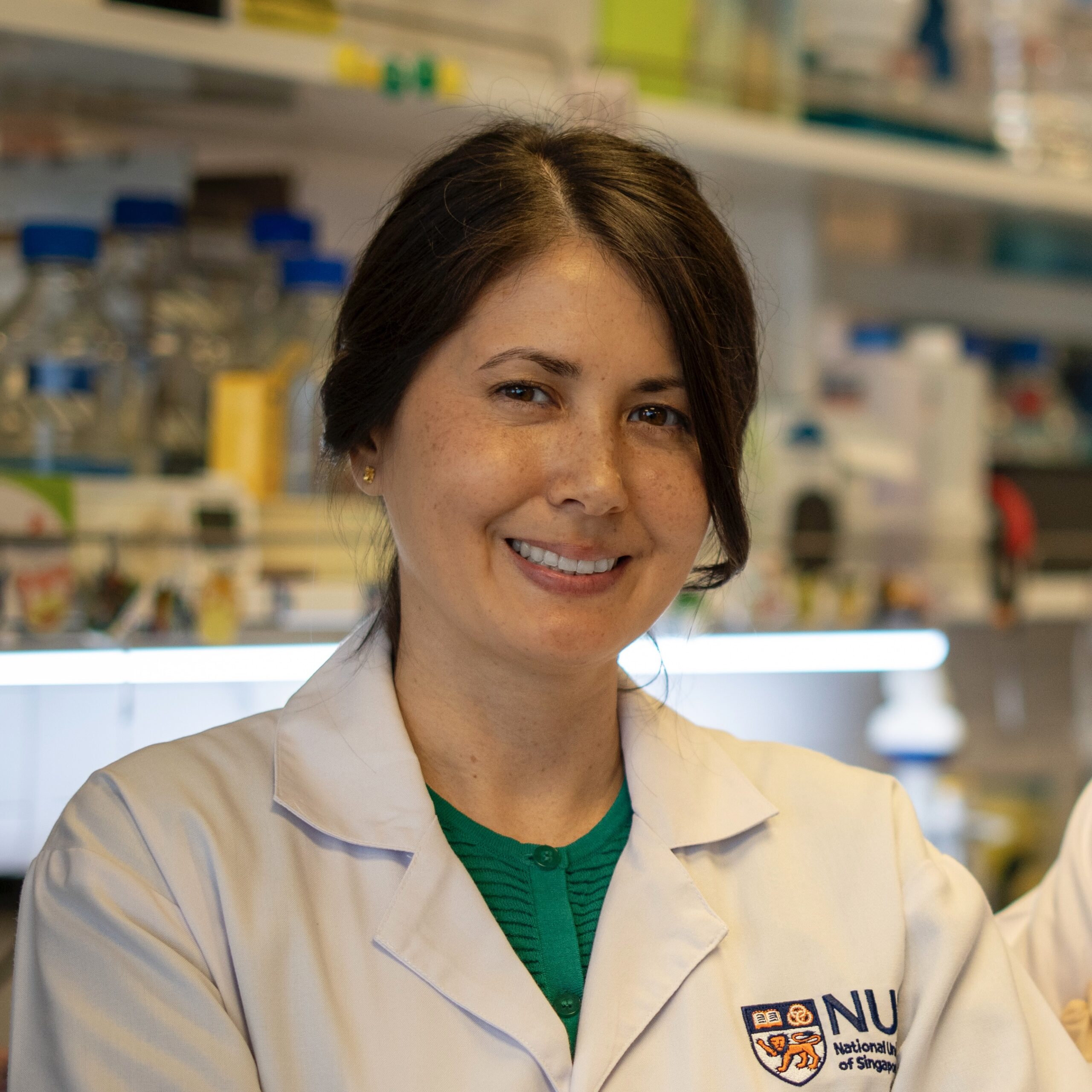
Dr. Jennifer Young Awarded Robert Brown Promising Researcher Award for MOE AcRF Tier 2 Grant
Dr. Jennifer Young received the Robert Brown Promising Researcher Award for her MOE AcRF Tier 2 Grant
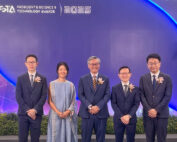
Prof Lim Chwee Teck received the 2025 President’s Science Award
Prof. Lim Chwee Teck was awarded the 2025 President’s Science Award (PSA) for his pioneering contributions to cancer research through innovative mechanobiology approaches, successfully bridging engineering, biological sciences and medicine to foster a deeper understanding of cancer metastasis.

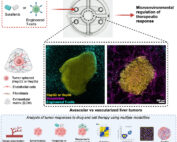
Tumor-on-a-chip Shows How Microenvironment Architecture Affects Liver Cancer Therapies
Researchers from the Pavesi Group at the Mechanobiology Institute, NUS develops in vitro models of liver tumors to study how the presence of vasculature networks affect cancer therapies.

Liu Shutong
Research Assistant, Hirashima Group