


TEE Yee Han
MBI Fellow, Mechanobiology Institute, National University of Singapore
mbityh@nus.edu.sg
Level 10 T-Lab
National University of Singapore
5A Engineering Drive 1
Singapore 117411
Seeking Research Fellow in the Confinement Mechanobiology group at the Mechanobiology Institute, NUS
We are seeking to fill a Research Fellow (Postdoctoral Fellow) position in nanobiotechnology.
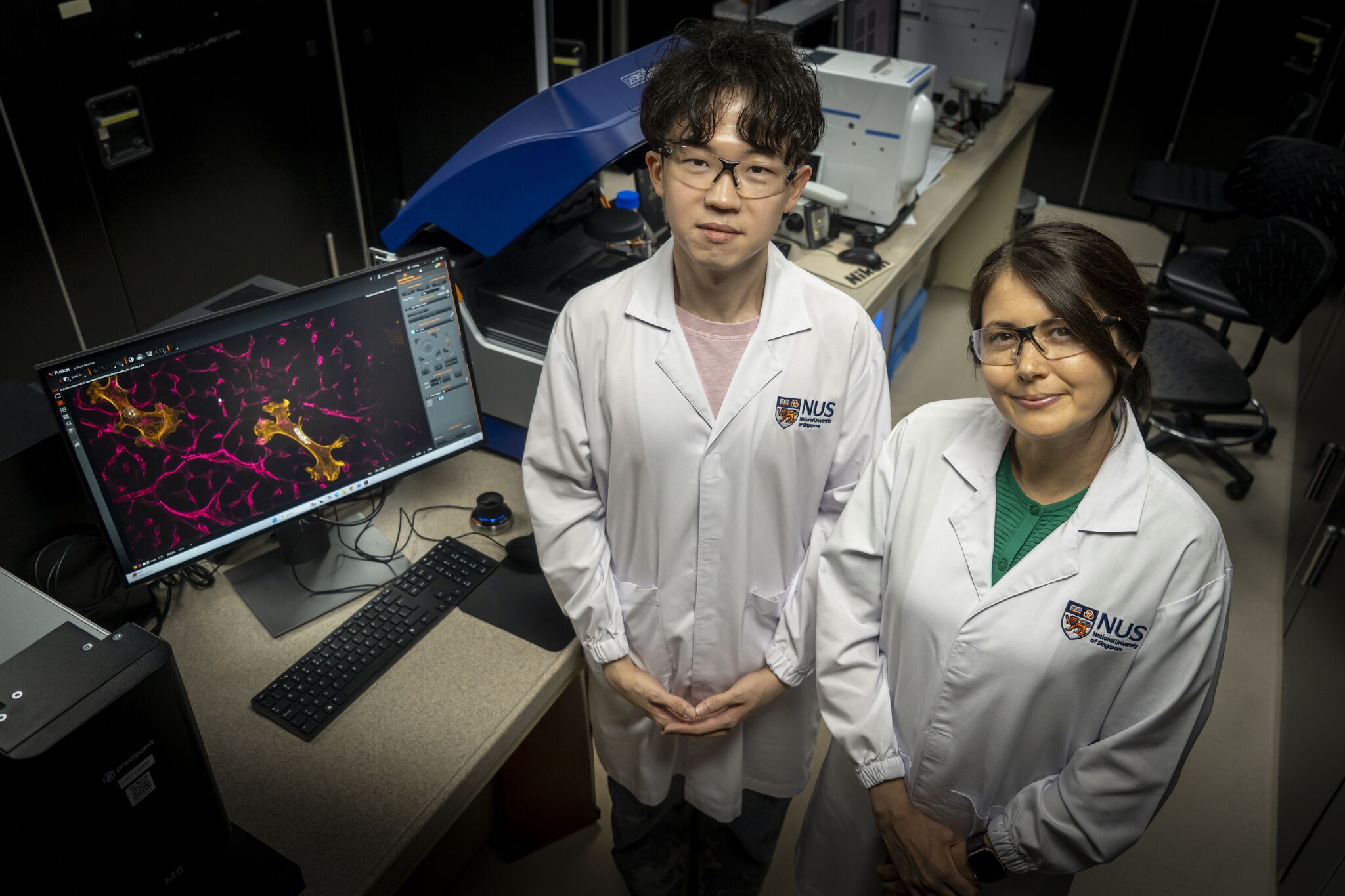
Biomaterial shows how ageing in the heart could be reversed
A new lab-grown material has revealed that some of the effects of ageing in the heart may be slowed and even reversed. The discovery could open the door to therapies that rejuvenate the heart by changing its cellular environment, rather than focusing on the heart cells themselves.Learn more
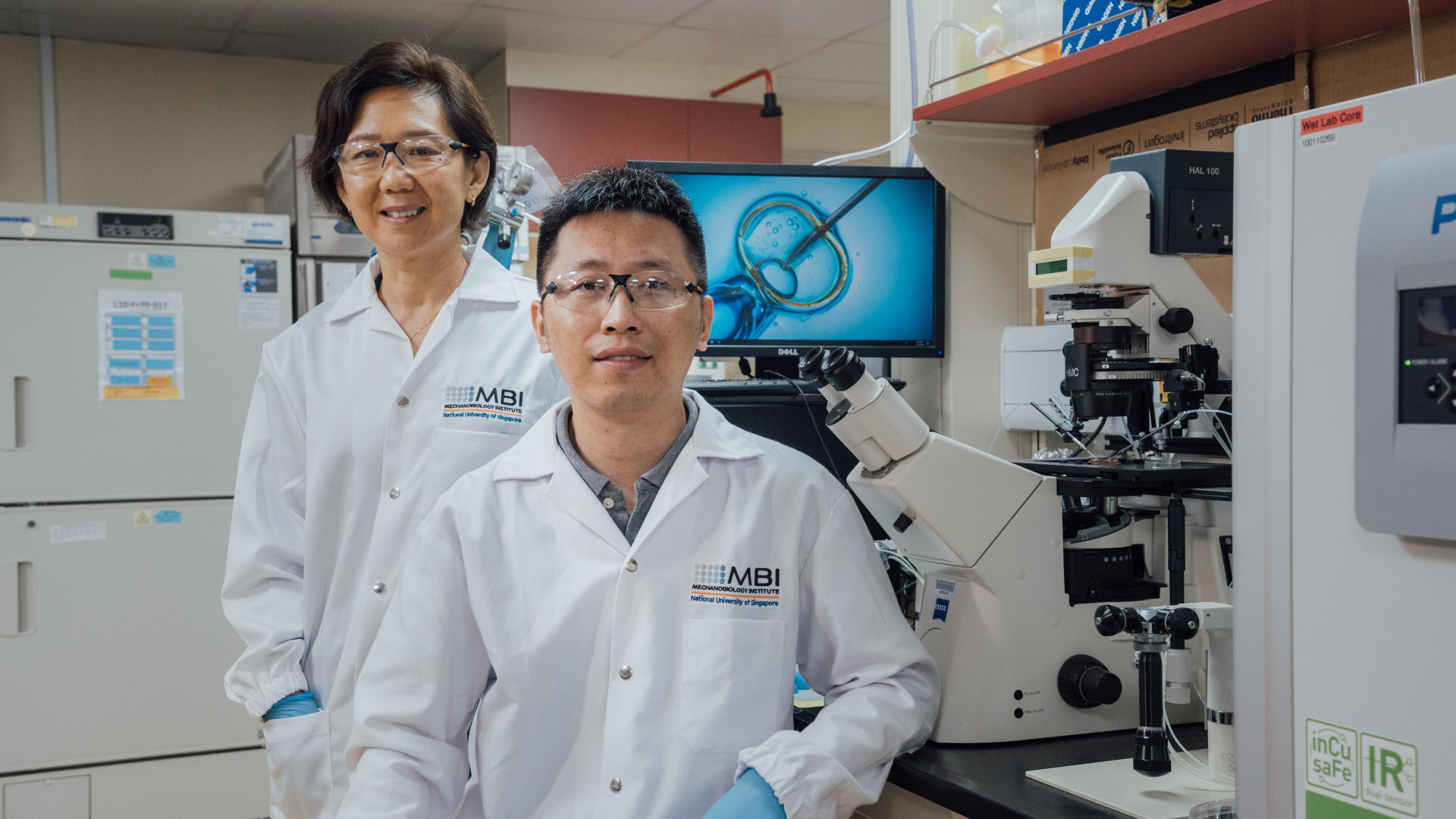
Rejuvenation of aged egg cells
MBI researchers collaborated with NUS Bia-Echo Asia Centre for Reproductive Longevity and Equality, based at the NUS Yong Loo Lin School of Medicine, to develop an innovative technique to significantly enhance the reproductive potential of aged oocytes, or immature egg cells, potentially paving the way for better outcomes of assisted reproductive technologies, such as in-vitro fertilisation (IVF), for older females. Learn more
Seeking Research Assistant in Cell Mechanics and Mechanobiology at the Mechanobiology Institute, NUS
We are seeking a Research Assistant in Cell Mechanics and Mechanobiology in the lab of Prof. Lim Chwee Teck at the Mechanobiology Institute, NUS.
Tee Yee Han
MBI Fellow
Principal Investigator
Research Interests
Recent Publications
- Naripogu KB, Tee YH, Senju Y, Bershadsky A, and Robinson RC. Localization of Asgard archaeal ESCRT proteins to eukaryotic cellular structures. Biochem Biophys Res Commun 2026; 802:153301. [PMID: 41576632]
- Tsikolia N, Nguyen DTL, and Tee YH. Mechanisms of left-right symmetry breaking across scales. Curr Opin Cell Biol 2025; 95:102564. [PMID: 40544609]
- Glazenburg MM, Hettema NM, Laan L, Remy O, Laloux G, Brunet T, Chen X, Tee YH, Wen W, Rizvi MS, Jolly MK, and Riddell M. Perspectives on polarity - exploring biological asymmetry across scales. J Cell Sci 2024; 137(5). [PMID: 38441500]
- Tee YH, Goh WJ, Yong X, Ong HT, Hu J, Tay IYY, Shi S, Jalal S, Barnett SFH, Kanchanawong P, Huang W, Yan J, Lim YAB, Thiagarajan V, Mogilner A, and Bershadsky AD. Actin polymerisation and crosslinking drive left-right asymmetry in single cell and cell collectives. Nat Commun 2023; 14(1):776. [PMID: 36774346]
- Efremov AK, Yao M, Sun Y, Tee YH, Sheetz MP, Bershadsky AD, Martinac B, and Yan J. Application of piconewton forces to individual filopodia reveals mechanosensory role of L-type Ca2+ channels. Biomaterials 2022; 284:121477. [PMID: 35395455]
- Jalal S, Shi S, Acharya V, Huang RY, Viasnoff V, Bershadsky A, and Tee YH. Actin cytoskeleton self-organization in single epithelial cells and fibroblasts under isotropic confinement. J. Cell. Sci. 2019;. [PMID: 30787030]
- Lou Y, Toh TC, Tee YH, and Yu H. 25-Hydroxyvitamin D3 induces osteogenic differentiation of human mesenchymal stem cells. Sci Rep 2017; 7:42816. [PMID: 28211493]
- Hu S, Dasbiswas K, Guo Z, Tee Y, Thiagarajan V, Hersen P, Chew T, Safran SA, Zaidel-Bar R, and Bershadsky AD. Long-range self-organization of cytoskeletal myosin II filament stacks. Nat. Cell Biol. 2017;. [PMID: 28114270]
- Tee YH, and Bershadsky AD. Actin Retrograde Flow in Permeabilized Cells: Myosin-II Driven Centripetal Movement of Transverse Arcs. Bio Protoc 2016; 6(5):e1743. [PMID: 40656211]
- Hu S, Tee Y, Kabla A, Zaidel-Bar R, Bershadsky A, and Hersen P. Structured illumination microscopy reveals focal adhesions are composed of linear subunits. Cytoskeleton (Hoboken) 2015; 72(5):235-45. [PMID: 26012525]
Lab Members