

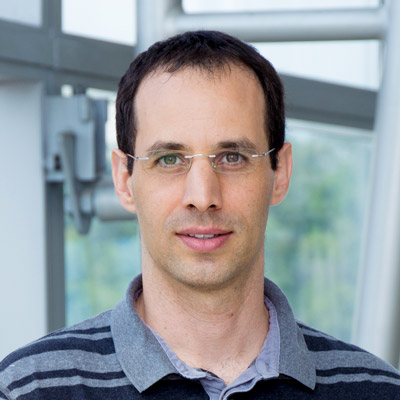
Ronen ZAIDEL-BAR
Department of Cell and Developmental Biology, Sackler Faculty of Medicine, Tel-Aviv University, Israel
Laboratory website
Zaidel-Bar Cell Adhesion Lab
What is the role of cadherin and nectin recruitment in adherens junction assembly?
What is the role of cadherin and nectin recruitment in adherens junction assembly? Cadherin Recruitment Type I cadherins, also known as classical cadherins, are commonly found in adherens junctions (AJs) and desmosomes. They are [...]
What is the role of plaque proteins in adherens junction assembly?
What is the role of plaque proteins in adherens junction assembly? Cytoplasmic plaque of adherens junctions One of the primary roles of cell-cell adhesion complexes is to connect the actomyosin network of one cell [...]
What is the role of adaptor proteins in the stabilization and function of core adherens junction components?
What is the role of adaptor proteins in the stabilization and function of core adherens junction components? Recruitment of plaque proteins to adherens junctions The difficulties in establishing a direct link between the α-catenin–β-catenin [...]
What are some alternative mechanisms in the regulation of adherens junctions?
What are some alternative mechanisms in the regulation of adherens junctions? Alternative mechanisms also exist to regulate AJ formation and function. For example, the membrane trafficking system plays a significant role by facilitating the [...]
What is vinculin?
What is Vinculin? Vinculin is a protein that couples, transmits, transduces, and regulates mechanical force between the cytoskeleton and adhesion receptors (reviewed in [1]). Vinculin frequently links adhesion receptors (e.g. integrins) to the contractile [...]
What is tensin?
What is tensin? Tensin is a cytoskeleton scaffolding protein that was named for its ability to form a bridge that maintains tension between the actin filaments and cell-matrix adhesion sites (reviewed in [1]). A [...]
Ronen Zaidel-Bar
Visiting Faculty
Currently Visting
6-12 Nov 2018
Office: T-Lab, Level 5
Research Areas
Cell-cell and cell-matrix adhesion, Regulation of actomyosin contractility and dynamics, C. elegans development, mechanics and molecular mechanisms of morphogenesis
Research Interests
- How do specific cytoskeletal proteins contribute to the organization and function of cell adhesion and actomyosin structures?
- How are signals processed within the “adhesome” and “contractome” to arrive at the appropriate cytoskeletal arrangement for a given cell state?
- How do adhesion sites and the cytoskeleton sense and respond to external mechanical forces?
Biography
Dr Zaidel-Bar obtained his Ph.D. working with Prof Benny Geiger (Weizmann Institute of Science) on the role of force in regulating cell-matrix adhesions. Their work first focused on single proteins and evolved to encompass the entire adhesome network. In his Postdoctoral training with Prof Jeff Hardin (University of Wisconsin – Madison) Dr Zaidel-Bar switched from studying cells in culture to employing the genetic model organism C. elegans for the study of cell-cell adhesions during development. Dr Zaidel-Bar was attracted to Singapore by the opening of MBI and was awarded the Singapore National Research Foundation Fellowship for promising young investigators.
Education
PhD Weizmann Institute of Science
Recent Publications
- Bertocchi C, Alegría JJ, Vásquez-Sepúlveda S, Ibanez-Prat R, Srinivasan A, Arrano-Valenzuela I, Castro-Pereira B, Soto-Montandon C, Trujillo-Espergel A, Montenegro-Rojas I, Deguchi S, Owen GI, Kanchanawong P, Cerda M, Motta G, Zaidel-Bar R, and Ravasio A. Systematic AI-assisted screening of the cadhesome to map epithelial monolayer mechanics. Cell Commun Signal 2026;. [PMID: 42399739]
- Ray S, Agarwal P, Nitzan A, Nédélec F, and Zaidel-Bar R. Actin capping protein regulates actomyosin contractility to maintain germline architecture in C. elegans. Development 2023;. [PMID: 36897576]
- Avivi Kela S, Sethi K, Tan PY, Suresh D, Ong HT, Castaneda PG, Amin MR, Laviv T, Cram EJ, Faix J, and Zaidel-Bar R. Tension-dependent RHGF-1 recruitment to stress fibers drives robust spermathecal tissue contraction. J Cell Biol 2022; 222(2). [PMID: 36574264]
- Chen Z, Oh D, Biswas KH, Zaidel-Bar R, and Groves JT. Probing the effect of clustering on EphA2 receptor signaling efficiency by subcellular control of ligand-receptor mobility. Elife 2021; 10. [PMID: 34414885]
- Hu S, Grobe H, Guo Z, Wang Y, Doss BL, Pan M, Ladoux B, Bershadsky AD, and Zaidel-Bar R. Reciprocal regulation of actomyosin organization and contractility in non-muscle cells by tropomyosins and alpha-actinins. Mol. Biol. Cell 2019;:mbcE19020082. [PMID: 31216217]
- Desai SK, Padmanabhan A, Harshe S, Zaidel-Bar R, and Kenney LJ. Salmonella biofilms program innate immunity for persistence in Caenorhabditis elegans. Proc. Natl. Acad. Sci. U.S.A. 2019;. [PMID: 31160462]
- Bouffard J, Cecchetelli AD, Clifford C, Sethi K, Zaidel-Bar R, and Cram EJ. The RhoGAP SPV-1 regulates calcium signaling to control the contractility of the C. elegans spermatheca during embryo transits. Mol. Biol. Cell 2019;:mbcE18100633. [PMID: 30726159]
- Priti A, Ong HT, Toyama Y, Padmanabhan A, Dasgupta S, Krajnc M, and Zaidel-Bar R. Syncytial germline architecture is actively maintained by contraction of an internal actomyosin corset. Nat Commun 2018; 9(1):4694. [PMID: 30410005]
- Agarwal P, and Zaidel-Bar R. Principles of Actomyosin Regulation In Vivo. Trends Cell Biol. 2018;. [PMID: 30385150]
- Chen Z, Oh D, Biswas KH, Yu C, Zaidel-Bar R, and Groves JT. Spatially modulated ephrinA1:EphA2 signaling increases local contractility and global focal adhesion dynamics to promote cell motility. Proc. Natl. Acad. Sci. U.S.A. 2018;. [PMID: 29866846]
Lab Members
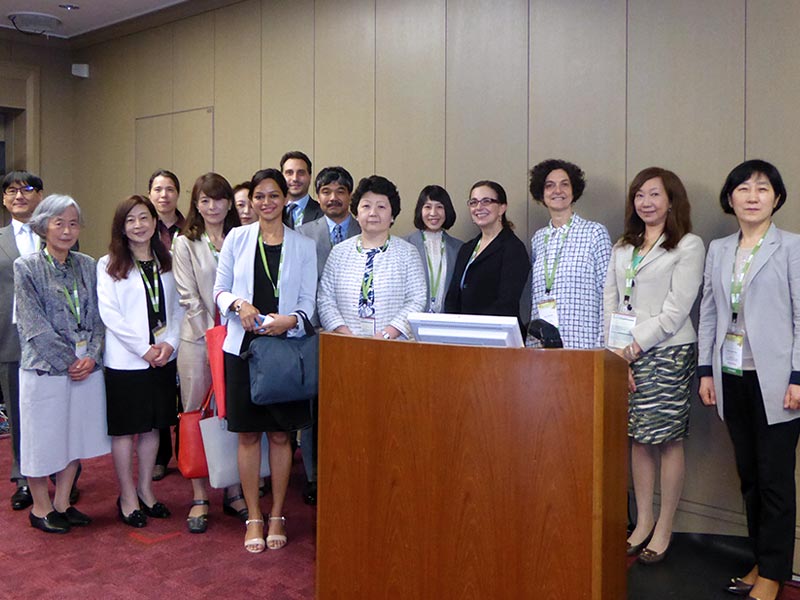
Small Steps to Big Changes: Towards Gender Equality in Science
MBI Science Communications editor Laskhmi Ramachandran represented the MBI Women in Science Initiative at 2017's Gender Summit 10.

Vaishali Yadav
PhD Student, Class of August 2016, Saunders Group
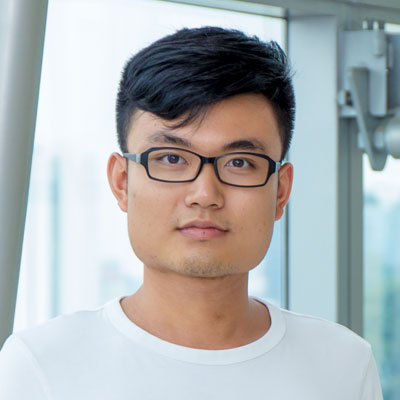
Jiang Kuan
PhD Student, Class of August 2016, CT Lim Group

Fu Chaoyu
Research Fellow, Yan Jie Group

Saradha Venkatachalapathy
PhD Student, Class of August 2016, Shivashankar Group

Aninda Mitra
Alumni, Shivashankar Group

Yow Ying Ming Ivan
Schimdt AI in Science Postdoctoral Fellow, Low Group

Saw Thuan Beng
Alumni, Research Assoicate, Lim Group, Ladoux Group

Le Anh Phuong
Alumni, Research Assistant, Toyama Group

Sivakumar s/o Maniam
Alumni, Research Associate, Grenci Group
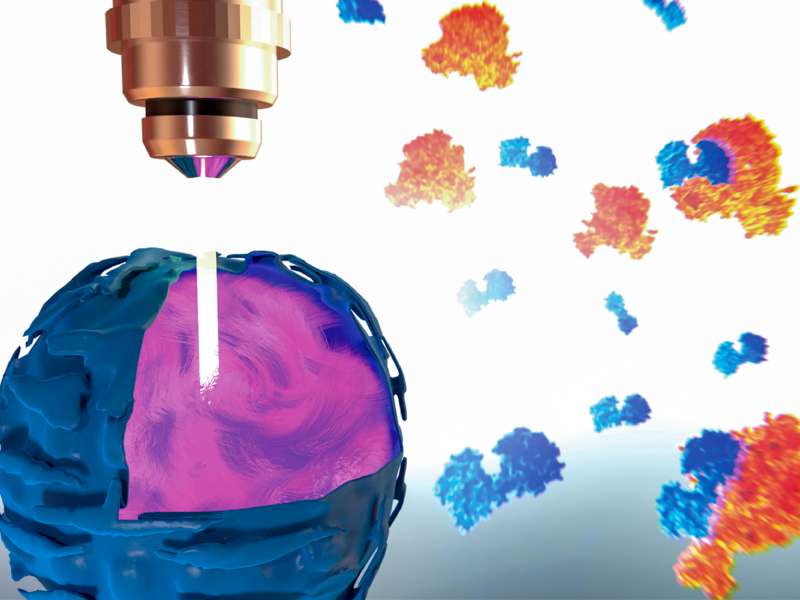
So-SPIM-FCS
A novel tool for imaging nuclear protein dynamics
Signaling in 3D
MBI Scientists reveal a spatial dimension to cell signaling