


She is Becoming: Curiosity, Comparison and the Making of a Scientist
February 11th celebrates The International Day of Women and Girls in Science to promote full, equal access and participation in STEM fields.
Today we talk to two PhD students, Ankita Nayak (Hirashima Lab) and Mariana Barrera Velazquez (Dye Lab) about their journey of becoming a scientist.
Every year on 11 February, the world celebrates women and girls in science for their contributions and the paths they carve in fields where they are still too often the minority – in 2025, UNESCO reports that women make up only one in three scientists globally. This year’s theme, “From Vision to Impact: Redefining STEM by Closing the Gender Gap,” calls attention to the urgent need for inclusive scientific communities — not only in the interest of equality, but also to enhance the quality and impact of science, technology and innovation.
-
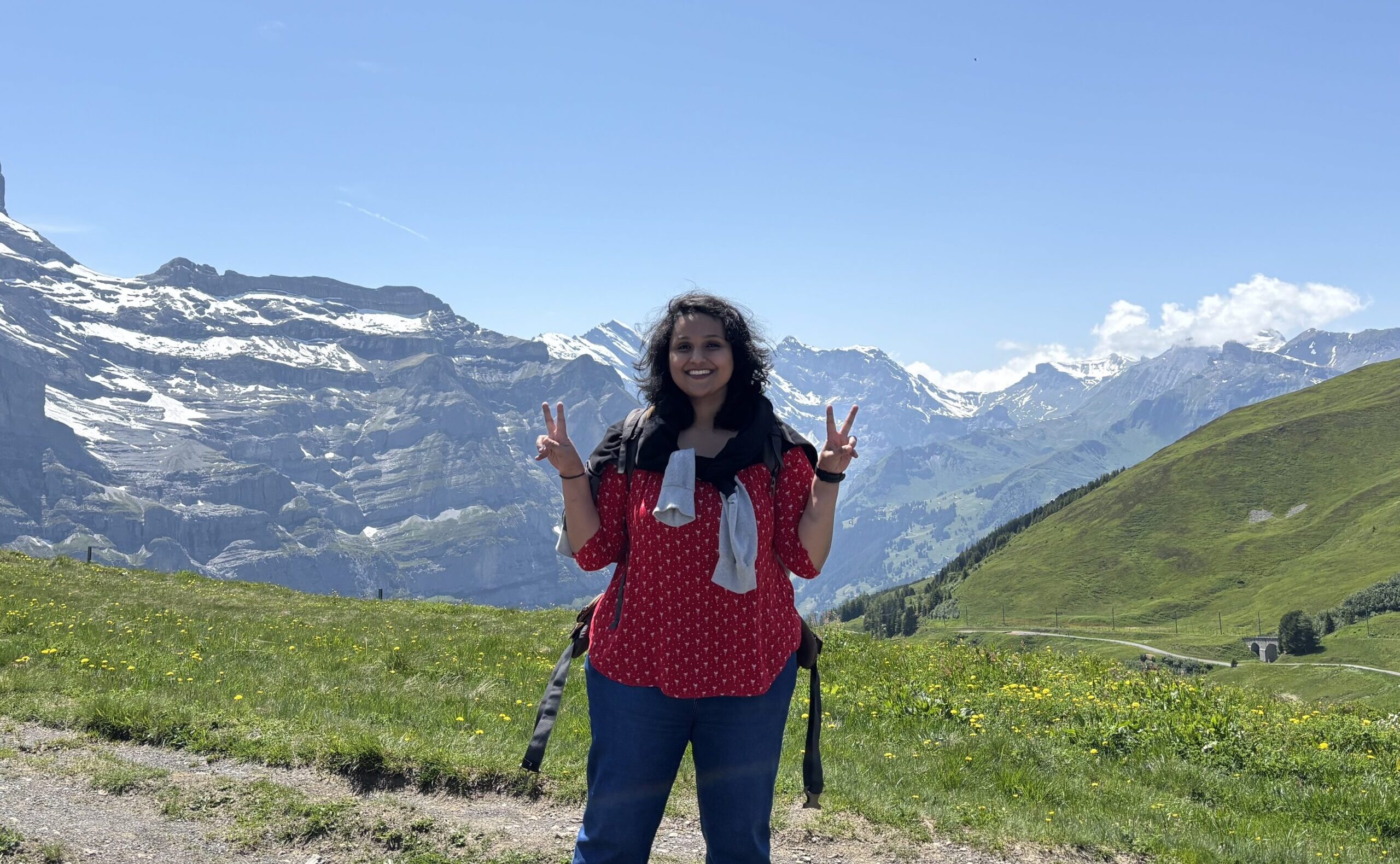
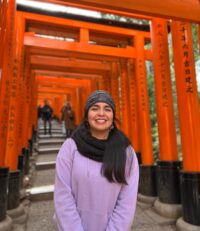
- Ankita Nayak, PhD Student, Hirashima Lab
-
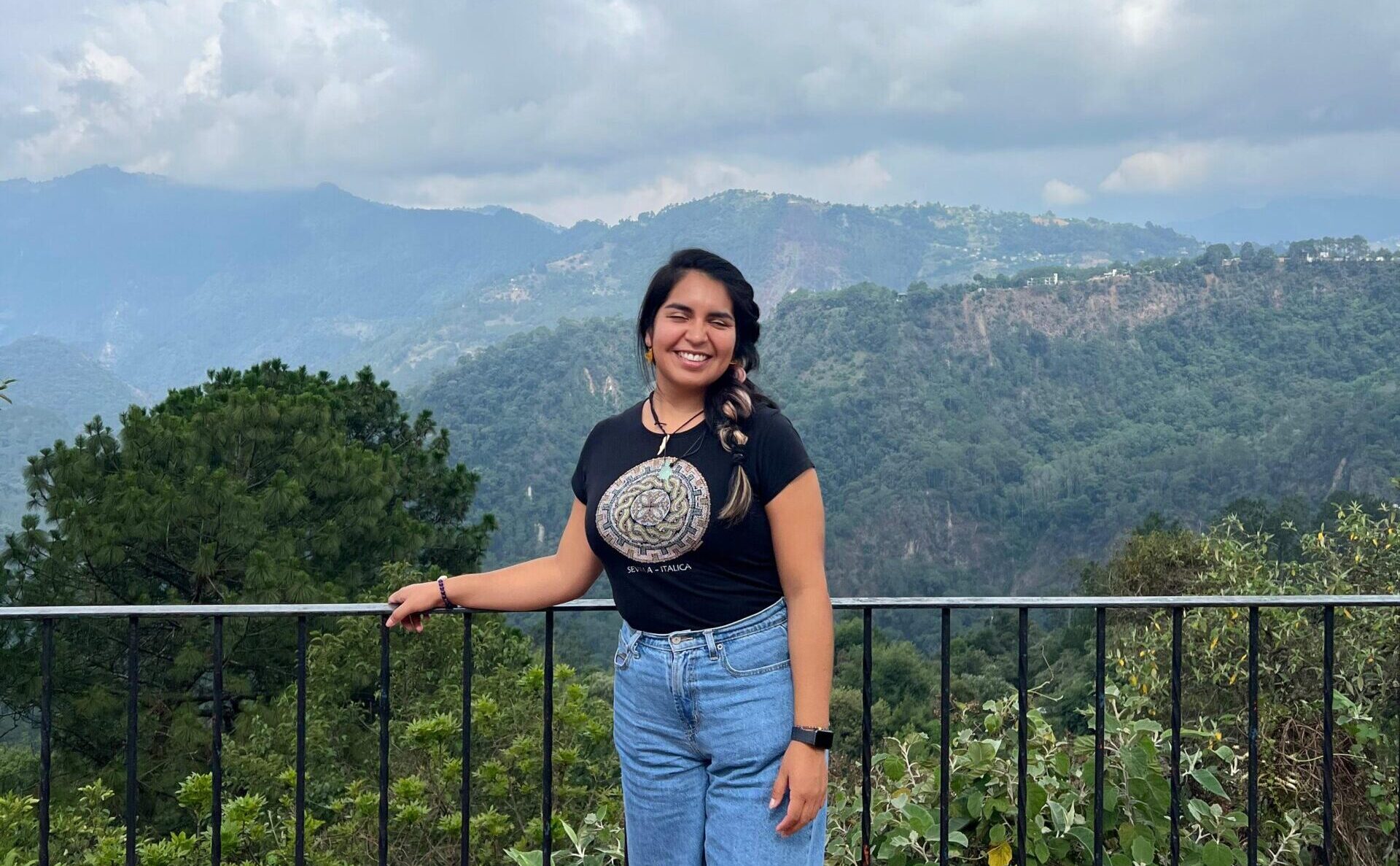
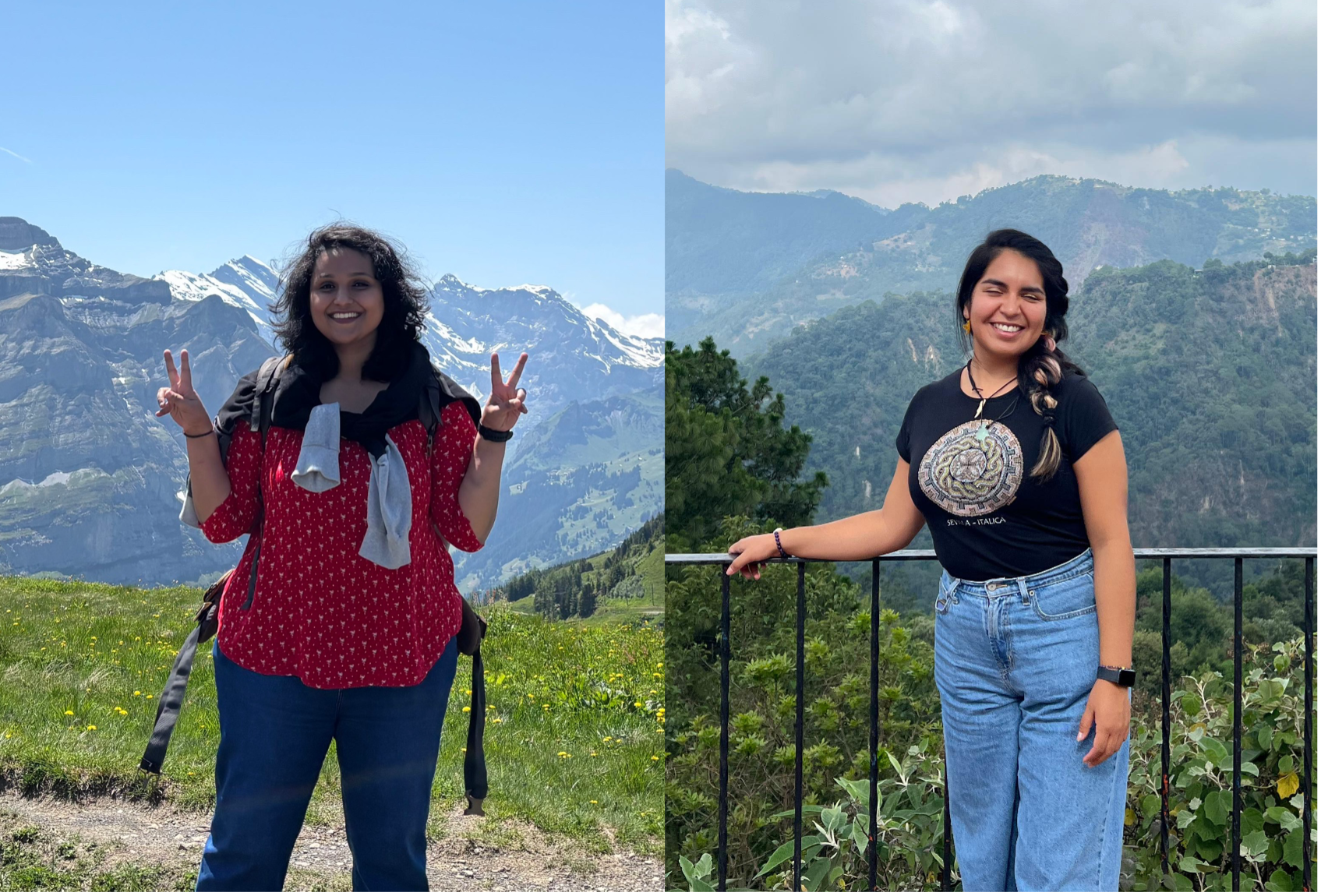
- Mariana Barrera Velazquez, PhD Student, Dye Lab
Today, we talk to Ankita Nayak and Mariana Barrera Velazquez, PhD students at MBI, about their journey on becoming a scientist. On paper, the journey looks linear: undergraduate degree, PhD, publications, conferences. In reality, it is a quieter and far more personal — shaped by curiosity, comparison, self-doubt, and the slow process of learning to belong.
For both, the journey into science did not begin with certainty, it began with questions.
Ankita admits she once disliked biology – the memorisation frustrated her. What shifted her perspective was seeing the real-world impact of biology on health and disease. In a family dominated by engineers, choosing science was also her way of carving out something distinct for herself. Mariana’s turning point occurred in high school as CRISPR-Cas9 reshaped conversations around genetic engineering. The idea that genomes could be edited precisely and deliberately, made science feel urgent and transformative. She didn’t just want to learn it; she pursued Genomic Sciences to be part of it.
Persevering through circumstances and naysayers
Today, their research is intricate and invisible to the naked eye.
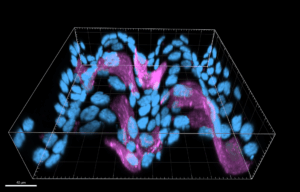
Ankita studies how tissue curvature influences the removal of DNA-damaged cells under Tsuyoshi Hirashima at MBI.
Ankita studies how tissue curvature influences the removal of DNA-damaged cells. To explain it, she reaches for an analogy where an obviously stronger army in war has to fight uphill, through mud, slipping on banana peels. What excites her most is the moment cells light up under the microscope. “There is something so deeply satisfying about cells dancing in all colours of the rainbow,” she says.
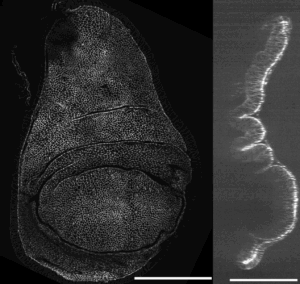
Mariana Barrera Velazquez investigates the unfolding of drosophila wings under Natalie Dye at MBI.
Mariana, meanwhile, investigates how fruit fly wings form, specifically how the wing discs that forms a transient folding pattern guide growth into an adult wing. The work is precise and requires patience, the kind that rewards attention.
But neither story unfolds without strain.
During the pandemic, Ankita found herself nearly 3,000 kilometres from home, newly arrived in a lab operating in shifts, navigating supply shortages and isolation with risk of infection. There was a point when leaving science felt like the sensible choice. What changed was not a dramatic breakthrough, but improving circumstances of the pandemic and familial proximity. “Ultimately, what made me stay was a combination of circumstances improving as the pandemic eased and the opportunity to move closer to my family. That change gave me the space to reset and decide to give research another chance,” she says.
For Mariana, doubt emerged earlier. As part of a highly selective undergraduate programme, her confidence was constantly tested in her first year. “When someone is part of a reduced and selected, but elitist, group of future academics, some professors always compared our progress with others to the point that some of us lost our confidence,” she recalls. It took rediscovering her passion in Developmental Biology and building friendships rooted in mutual support rather than competition to quiet the noise.
For both Ankita and Mariana, their strongest support came from women who made science feel possible. Ankita remembers her high school teacher, Ms. Meenakshi Shrivastava, who first made biology feel joyful and introduced research as a viable path – beyond medicine or engineering. Mariana names celebrated scientists like Christiane Nüsslein-Volhard and Lynn Margulis,dedicated college lecturers Daniela Ledezma Tejeida and Leonor Perez Martinez who transmitted their love of science, and even a fictional character, Dana Scully from The X-Files.
Looking within themselves
If there is one thread that binds their stories, it is that much of becoming a scientist happens internally.
A CV documents the techniques mastered and papers published, it will not show the emotional recalibration that happens along the way. Ankita describes arriving at “a suspiciously calm middle ground,” where failed experiments are no longer tragic and successes no longer euphoric. Survival in research requires perspectives. It will also not show the quiet generosity Mariana describes: her willingness to help peers grow, to be part of a supportive community rather than a competition.
When asked what they would tell their younger selves, their advice converges. Be patient. Don’t compare yourself. Trust your own pace.
And if you feel like you don’t belong?
“That’s just impostor syndrome,” Ankita says.
Belonging, it turns out, is something you grow into — one experiment at a time.
Ankita Nayak
 Ankita is a former avid reader who is still negotiating with her attention span in the age of short-form content. Outside the lab, she is an amateur singer learning Hindustani classical music, an experience that has been both rewarding and humbling. She enjoys food and travel, although her travel plans have a habit of remaining aspirational.
Mariana Barrera Velazquez
 Mariana is a 2nd year PhD student from Dr. Natalie Dye’s Lab who enjoys exploring places in and out of her home country, trying new and tasty food, and admiring sunsets (if you know a nice spot to watch them in Singapore without tons of buildings, let her know!)
She is Becoming: Curiosity, Comparison and the Making of a Scientist
February 11th celebrates The International Day of Women and Girls in Science to promote full, equal access and participation in STEM fields. MBI talks to two of our PhD students about their journey in becoming a scientist as women.