


She is a Scientist: Confidence Formed by Curiosity Over Time
February 11th celebrates The International Day of Women and Girls in Science to promote full, equal access and participation in STEM fields.
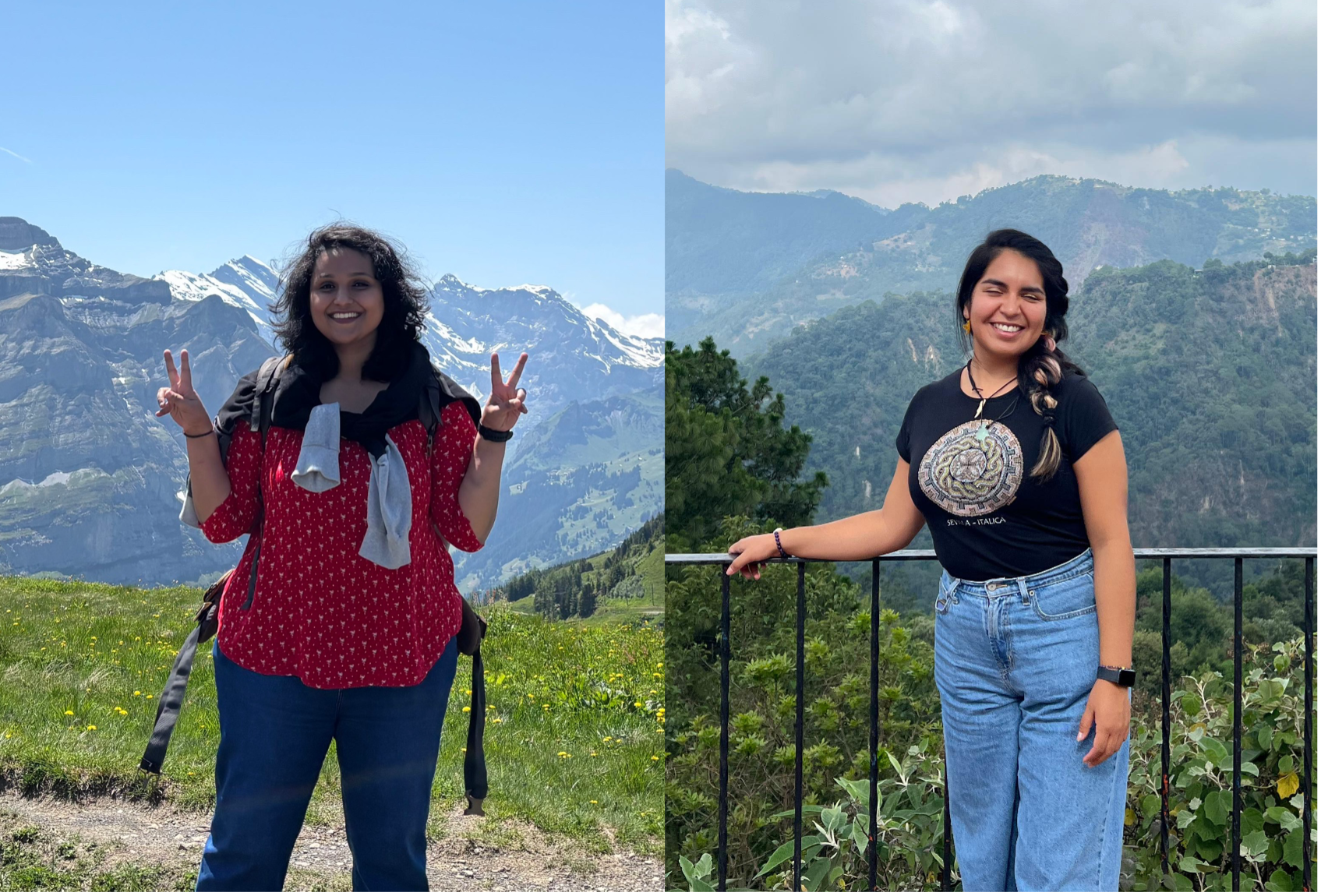
Today we talk to two postdoctoral research fellows, Arikta Biswas (Chan Lab) and Kedsarin Fong (Kanchanawong Lab) about their journey of as a scientist at MBI.
Every year on 11 February, the world celebrates women and girls in science for their contributions and the paths they carve in fields where they are still too often the minority – in 2025, UNESCO reports that women make up only one in three scientists globally. This year’s theme, “From Vision to Impact: Redefining STEM by Closing the Gender Gap,” calls attention to the urgent need for inclusive scientific communities — not only in the interest of equality, but also to enhance the quality and impact of science, technology and innovation.
Today, we talk to Arikta Biswas and Kedsarin Fong, research fellows at MBI, about their finding their confidence and deciding what kind of scientists they want to be— through asking questions, taking risks, changing directions, and defending ideas.
The never-ending “why?”
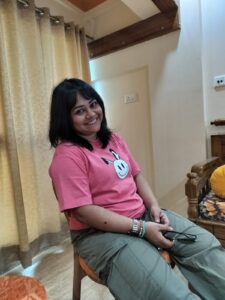
Arikta Biswas, a postdoctoral research fellow at the Chan Lab, MBI.
Arikta, a Research Fellow in the Chan Lab at MBI, describes herself as being fuelled by “curiosity, chaos, and caffeine.” On any given day, she is either at the laboratory bench, the microscope facility or “typing furiously on the laptop”. Outside the lab, she devours fiction “because reality needs editing”, binge-watches dramas in any language with subtitles, solves Sudoku for fun, and “will absolutely” challenge friends to Harry Potter trivia.
The humour is unmistakable. Beneath it sits an intentional mind.
Arikta’s route into science was not automatic. After her undergraduate degree, she stepped into the corporate world beforemade a conscious decision to leave it. She realized science was the only career that rewarded relentless questioning.
“Science is basically detective work with cooler techniques,” she says. It offers something rare, a chance to challenge existing answers and discover something no one else has noticed. “Besides, not many professions would pay me to prove or disprove my ideas…would they?”
Today, her focus is ovarian biomechanics — understanding how ovarian cells and follicles stretch, stiffen, and respond to forces within the organ. The work sits at the intersection of physics and biology, asking questions like “What do the cells within an ovary feel under pressure? How does tissue mechanics influence function? And how can something so small be so mechanically complicated?”
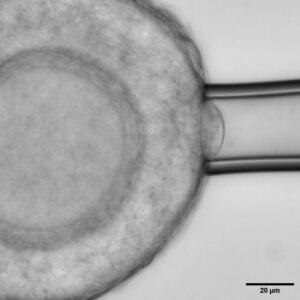
Arikta recently published a paper on how surface mechanics and compressive stress impact mammalian follicle development.
There is no instant gratification nor serendipity in finding these answers, but for Arikta, that is part of the appeal. The intellectual satisfaction lies in pushing against the unknown — refining hypotheses, analysing images, interpreting graphs that only “a handful of people in the world find thrilling.”
“My friends think I wear a white coat at all times, press buttons on complicated machines until something important happens, and occasionally cure diseases by accident,” she says.
Postdoctoral research often occupies a distinctive space, where one has enough experience to see patterns, yet enough freedom to ask sharper questions. Arikta speaks about growth not as accumulation of techniques, but as sharpening of perspective.
There are moments, she admits, when experiments fail repeatedly or results refuse to align. “Am I bad at this… or just stubborn?” she jokes. But even that question represents momentum and a refusal to disengage. “Progress,” she reflects, “sometimes means understanding why something failed. Regardless of how small the problem was, the depth of the learning mattered.”
What sustains that momentum, she emphasises, is community. “Science is teamwork.” Behind every independent project is a network of mentors, collaborators, friends, and family who form the scaffolding behind individual achievement.
Cultivating early curiosity

Kedsarin developed the habit of observing life closely early on.
If Arikta’s science is powered by an irrepressible “why?”, Kedsarin’s is guided by a quieter, equally steady clarity.
Growing up surrounded by animals — dogs, chickens, birds and cats — Kedsarin developed the habit of observing life closely early on. “I spent a lot of time caring for them and watching how they behaved,” she says. “That curiosity and joy in discovery stayed with me.”
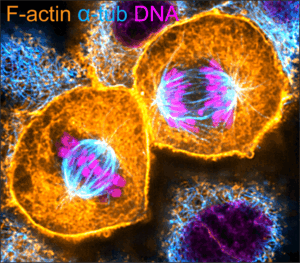
Kedsarin studies how the actin cytoskeleton reorganises during cell division at Pakorn Kanchanawong’s lab at MBI.
Today, that instinct plays out at the cellular level. Her research focuses on one of biology’s most fundamental processes: how cells divide accurately. She studies how the actin cytoskeleton — the cell’s internal scaffolding — reorganises during division, and how proteins best known for cell–cell adhesion unexpectedly help regulate this process.
“What excites me most is uncovering these surprising roles of familiar proteins and understanding how their misregulation can contribute to diseases such as cancer.”
There was a period when research began to feel routine and new discoveries felt distant. “It made me feel bored, frustrated, and less motivated to learn,” she shares. Instead of stepping away, she chose to change her research direction. What ultimately kept her in science were the unanswered questions. “The experience of encountering unexpected findings without clear explanations—those moments of mystery and discovery are what I find impossible to walk away from.”
Both women speak about mentorship with deep respect. Arikta credits her PhD supervisor, Dr. Bidisha Sinha, for shaping not only her research but her confidence. “There is no journal of common sense!” her mentor would say — a reminder to think independently and trust her own reasoning.

Kedsarin’s mentor whose high standards shaped the foundation of how she approaches research with critical thinking and discipline.
Kedsarin recalls a final-year project mentor whose high standards pushed her to think critically and approach research with discipline and independence. Through that experience, she gained not just technical skill, but the confidence to ask questions when confronted with new findings.
Their journeys have taught them that confidence in science is not magically granted— it grows through curiosity, persistence, and the willingness to try. When asked what they would tell girls considering science, their advice is practical and encouraging.
“Say yes to opportunities before you feel ready,” Arikta says. Growth, she suggests, rarely waits for complete confidence.
Kedsarin offers her own clarity: “Science is not about having all the answers, but about being comfortable with uncertainty.”
Curiosity may begin as a spark. It is over time, that it becomes a way of thinking, approaching complexity, and seeing the world. And for scientists like Arikta and Kedsarin, it becomes something more powerful: the confidence not only to ask questions, but to shape the ones that matter.
Arikta Biswas

Arikta is currently a postdoctoral research fellow at the Mechanobiology Institute in NUS, which means she spends her days either at the laboratory bench, at the microscope facility or typing furiously on the laptop. When she’s not doing that, she’s buried in fiction (because reality needs editing), binge-watching dramas in any language with subtitles on or hunting down good food as a full-time hobby… despite being a terrible cook.
She’s fuelled by curiosity, chaos, and caffeine. She loves dogs more than people, bookstores more than malls, and exploring new places…even if it’s just getting lost. Sudoku is her idea of fun, and she will absolutely challenge you to Harry Potter trivia (even if she probably wouldn’t win).
Kedsarin Fong
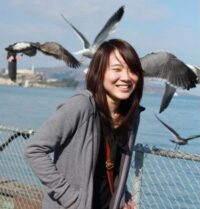
Kedsarin is a postdoc at MBI who studies how actin helps cells divide. She grew up with lots of pets, which probably explains why she became a biologist. Outside the lab, she’s constantly trying (and often failing) to stop myself from shopping and coming home with way too many things.
She is Becoming: Curiosity, Comparison and the Making of a Scientist
February 11th celebrates The International Day of Women and Girls in Science to promote full, equal access and participation in STEM fields. MBI talks to two of our PhD students about their journey in becoming a scientist as women.