

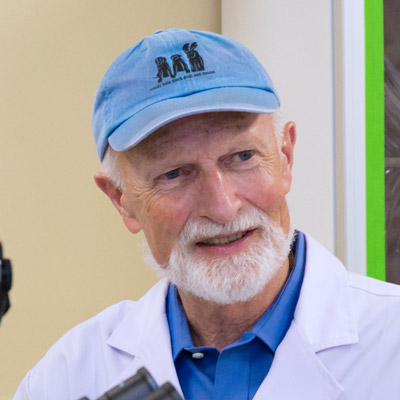
Michael SHEETZ
Founding Director and Collaborator, Mechanobiology Institute, National University of Singapore
Affiliations
Professor, Department of Biochemistry & Molecular Biology, UTMB Health
What are adherens junctions?
What are adherens junctions? Adherens junctions (AJs) are cell-cell adhesion complexes that are continuously assembled and disassembled, allowing cells within a tissue to respond to forces, biochemical signals and structural changes in their microenvironment. [...]
What are tight junctions?
What are tight junctions? Tight junctions, also known as Zonula Occludens, are cell-cell adhesion complexes that play a role in the organization of epithelial tissue. By forming a meshwork of membrane contacts around the [...]
What are selectins?
What are selectins? Members of the selectin family, E-selectin (endothelial), L-selectin (leukocyte) and P-selectin (platelet), all of which bind to fucosylated carbohydrates [1]. For example P-selectin on leukocytes binds PSGL-1 (P-selectin glycoprotein ligand-1) on [...]
What are anchoring junctions?
What are anchoring junctions? Cells adhere to the ECM, or to other cells, via complexes that can collectively be called anchoring junctions (reviewed in [1][2]). These multiprotein complexes are found in all cell types [...]
How do post-translational modifications of cell-cell adhesions impact their stability?
How do post-translational modifications of cell-cell adhesions impact their stability? Post-translational modification of adhesion complex components is one of the most complicated aspects in the regulation of cell-cell adhesions. It involves an array of [...]
Michael Sheetz
Collaborator
Research Areas
Cell migration, cell-cell and cell-substrate interaction
Research Interests
The morphology of cells, organs and whole organisms is determined by the generation of forces on the immediate environment, which is either extracellular matrix or adjacent cells. We are currently engaged in studies to understand the detailed molecular mechanisms involved in a variety of phenomena from cancer metastasis to brain function. Further, we are developing several new tools and protocols for measuring cell forces at the molecular level, which are revealing many new aspects of how cells can both generate and respond to external forces. We have an effort underway to define quantitatively the steps involved in cell adhesion to and spreading on a matrix-coated surface. Using a variety of cell lines that are missing proteins in various motility pathways, we are determining the quantitative changes in the spreading process. This will enable us to generate a detailed model of the process of spreading that will be a model for further studies of how cells differentiate, regenerate tissues or metastasize.
Biography
Hailing from Columbia University, Prof Michael Sheetz has more than 40 years’ experience in the biomedical field. Introduced to Singapore by Prof Hew Choy Leong of the National University of Singapore’s Department of Biological Sciences, Prof Sheetz was sought to lead an RCE project. This resulted in a two-year effort to organise and submit a proposal on Mechanobiology where Prof Sheetz set the theme and direction of the Mechanobiology Institute (MBI). As Founding Director of the MBI, he led the institute for 10 years and built it into a world-leading research centre in the field of mechanobiology.
Education
PhD California Institute of Technology
Recent Publications
- Jain K, Kishan K, Minhaj RF, Kanchanawong P, Sheetz MP, and Changede R. Immobile Integrin Signaling Transit and Relay Nodes Organize Mechanosignaling through Force-Dependent Phosphorylation in Focal Adhesions. ACS Nano 2025;. [PMID: 39760672]
- Lin S, Changede R, Farrugia AJ, Bershadsky AD, Sheetz MP, Prost J, and Rupprecht J. Membrane Tilt Drives Phase Separation of Adhesion Receptors. Phys Rev Lett 2024; 132(18):188402. [PMID: 38759206]
- Jain K, Minhaj RF, Kanchanawong P, Sheetz MP, and Changede R. Nano-clusters of ligand-activated integrins organize immobile, signalling active, nano-clusters of phosphorylated FAK required for mechanosignaling in focal adhesions. bioRxiv 2024;. [PMID: 38464288]
- Jain K, Pandey A, Wang H, Chung T, Nemati A, Kanchanawong P, Sheetz MP, Cai H, and Changede R. TiO2 Nano-Biopatterning Reveals Optimal Ligand Presentation for Cell-Matrix Adhesion Formation. Adv Mater 2024;:e2309284. [PMID: 38340044]
- Jain K, Lim KYE, Sheetz MP, Kanchanawong P, and Changede R. Intrinsic self-organization of integrin nanoclusters within focal adhesions is required for cellular mechanotransduction. bioRxiv 2023;. [PMID: 38045378]
- Oh D, Liu X, Sheetz MP, and Kenney LJ. Small, Dynamic Clusters of Tir-Intimin Seed Actin Polymerization. Small 2023;:e2302580. [PMID: 37649226]
- Qin R, Melamed S, Yang B, Saxena M, Sheetz MP, and Wolfenson H. Tumor Suppressor DAPK1 Catalyzes Adhesion Assembly on Rigid but Anoikis on Soft Matrices. Front Cell Dev Biol 2022; 10:959521. [PMID: 35927990]
- Jain K, Kanchanawong P, Sheetz MP, Zhou X, Cai H, and Changede R. Ligand functionalization of titanium nanopattern enables the analysis of cell-ligand interactions by super-resolution microscopy. Nat Protoc 2022;. [PMID: 35896742]
- Toh PJY, Lai JKH, Hermann A, Destaing O, Sheetz MP, Sudol M, and Saunders TE. Optogenetic control of YAP cellular localisation and function. EMBO Rep 2022;:e54401. [PMID: 35876586]
- Oh D, Chen Z, Biswas KH, Bai F, Ong HT, Sheetz MP, and Groves JT. Competition for shared downstream signaling molecules establishes indirect negative feedback between EGFR and EphA2. Biophys J 2022;. [PMID: 35430415]
Lab Members

Shang Yuqing
Alumni, Shivashankar Group
temp
fooooo Register fooooo
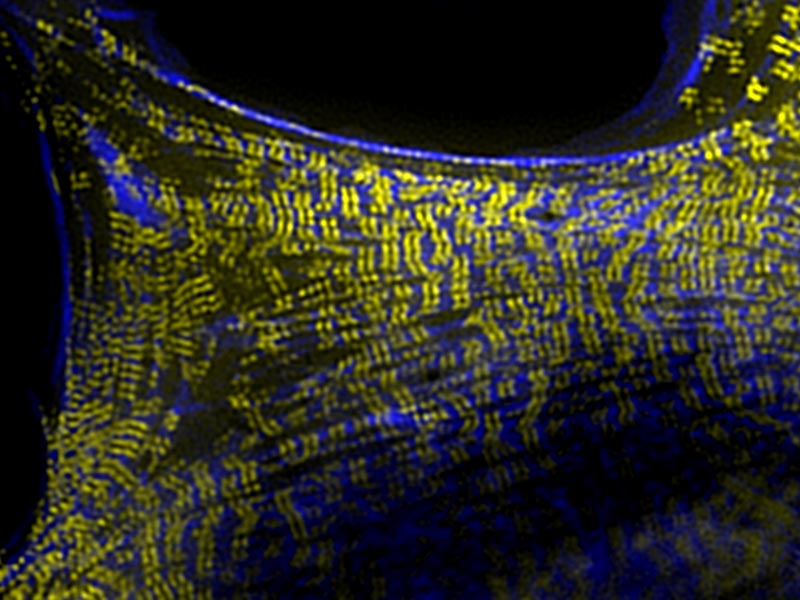
Microscopic Muscles
How non-muscle cells find the strength to move
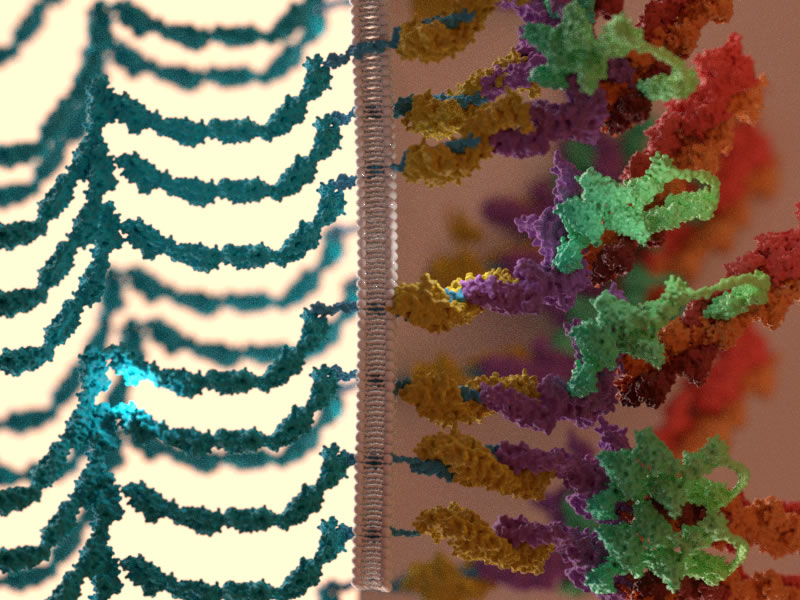
Illuminating the Contacts
Using superresolution imagining to map adherens junction machinery
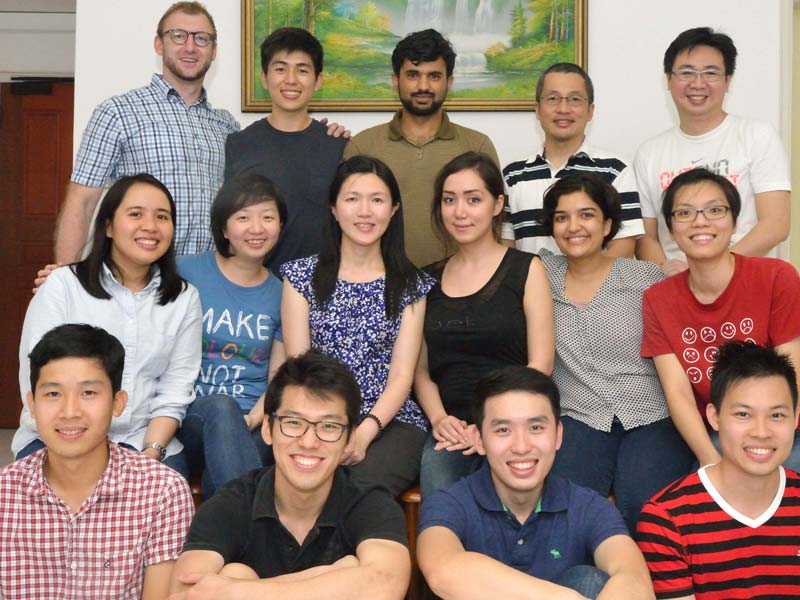
Assoc Prof Evelyn Yim visiting from the University of Waterloo
Assoc Prof Evelyn Yim is visiting from the Chemical Engineering Department from the University of Waterloo, 18-28 February, 2017
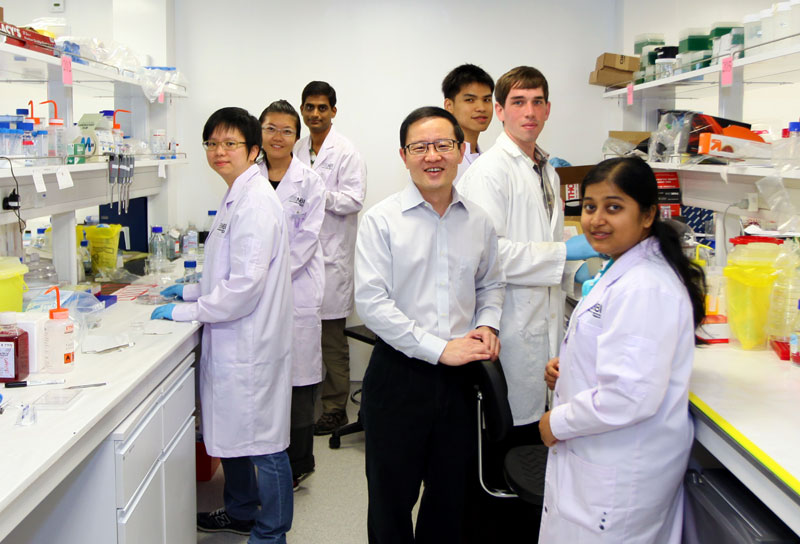
MBI PI Lim Chwee Teck honoured with appointment to AIMBE
Prof Lim elected to American Institute for Medical and Biological Engineering (AIMBE) College of Fellows
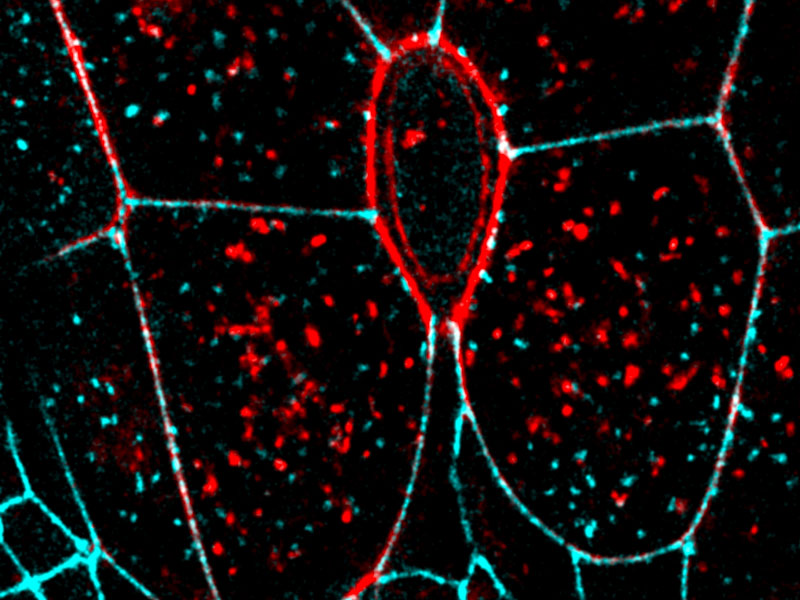
Letting Go
How dying cells detach from their neighbors
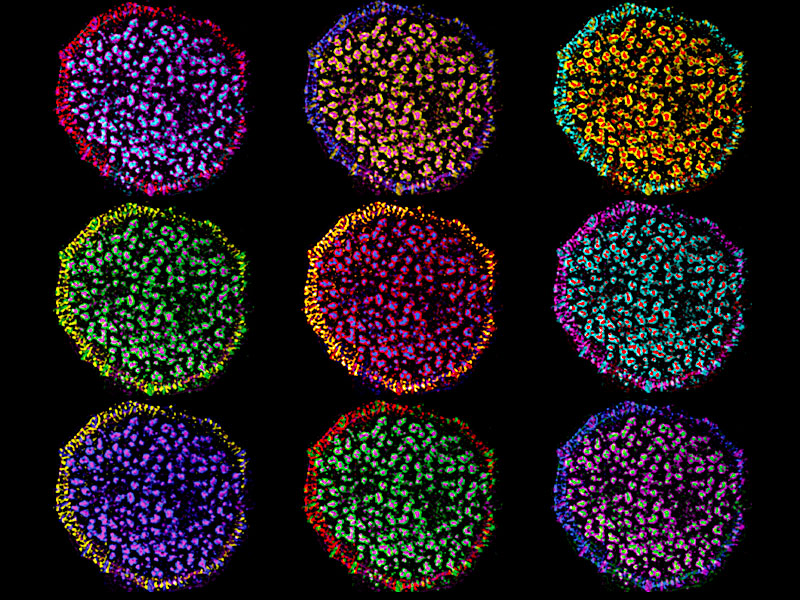
Cellular Podiatry
Understanding how cells form feet

Shinjini Ray
PhD Student, Class of August 2016, Toyama Group, Zaidel-Bar Group
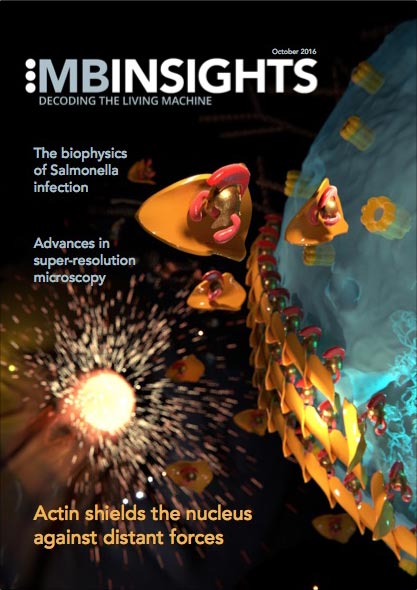
MBInsights Annual 2016
MBInsights Home Science Features News Awards Outreach Events MBInsights Annual MBInsights Annual 2016 Edition MBI Science Communications | OCT 2016 An annual summary of research at [...]

Stability Without Junctions
Cadherin prevents cortical deformation
Yunfeng Gao
Alumni, Research Associate, Yan Jie Group