

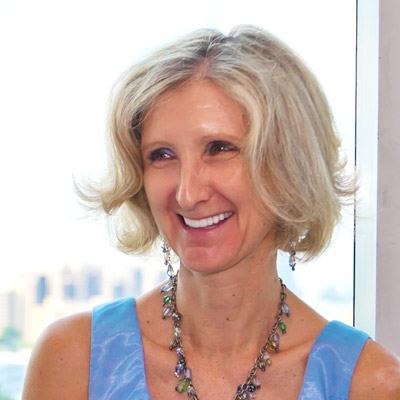
Linda J KENNEY
Alumni, Mechanobiology Institute, National University of Singapore
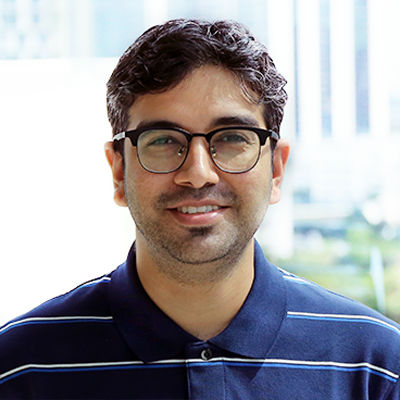
Nishanth Venugopal Menon
Senior Research Fellow, Lim Group
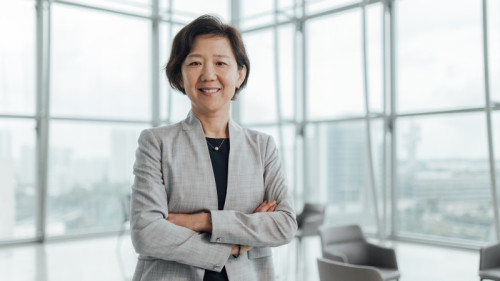
Prof Rong Li elected President of the American Society for Cell Biology for 2026
MBI Director Professor Rong Li, has been elected by members of the American Society for Cell Biology (ASCB) to serve as President of the Society in 2026. She will serve as President-Elect on the ASCB Executive Committee beginning 1 January 2025, before starting her term as President on 1 January 2026.
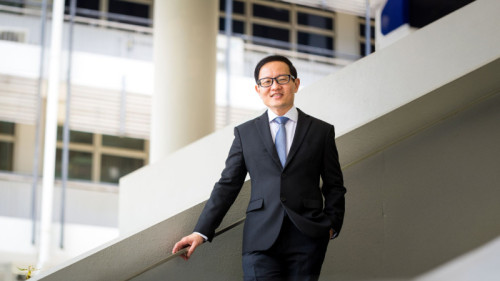
Prof Lim Chwee Teck elected Fellow of the Royal Society
MBI Principal Investigator Professor Lim Chwee Teck, Director of the Institute for Health Innovation & Technology at the National University of Singapore (NUS iHealthtech) and NUSS Professor, has been elected to the prestigious Fellowship of the Royal Society
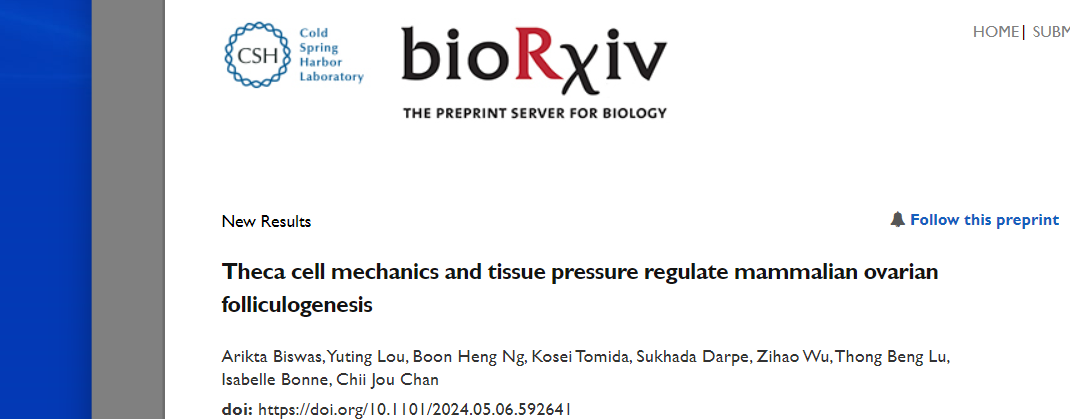
The first research article from the Chan Lab is up on bioRxiv now
Congratulations to Arikta for driving this project!
Linda J Kenney
Alumni
Research Areas
Signal transduction in bacteria; Bacterial Pathogenesis; Mechanotransduction and osmotic signaling in E. coli; Mechanisms of anti-silencing of virulence genes in Salmonella
Research Interests
Our laboratory is interested in signal transduction and the regulation of gene expression in prokaryotes. In particular, we are studying the two-component regulatory system EnvZ/OmpR that regulates the expression of outer membrane proteins as well as many other genes. Our present work focuses on how OmpR activates genes required for systemic infection (located on Salmonella pathogenicity island 2) in Salmonella enterica.
The Kenney Lab’s research was recently featured in an article exploring the bacterial molecular switch between virulence or dormancy, Salmonella Lifestyle Choices. Members of her lab have discovered that the bacterial protein SsrB is the molecular switch for determining whether Salmonella infections become acute and virulent, or remain in a dormant carrier state.
The study is published in eLife (Desai et al., The horizontally-acquired response regulator SsrB drives a Salmonella lifestyle switch by relieving biofilm silencing, February 2, 2016, eLife 2016; 5: e10747, doi: 10.7554/eLife.10747). Read full article.
Biography
Dr Kenney is a Professor of Microbiology at the University of Illinois-Chicago. Her laboratory studies two-component systems in bacteria that control gene expression at a single cell and nanometer level.

Professor Linda J Kenney and Professor Michael Sheetz interviewed by the Washington Post at the April 2017 March for Science.
Education
PhD University of Pennsylvania
Recent Publications
- Fernandez M, Yamanaka Y, Zangoui P, White MA, and Kenney LJ. The sulfur assimilation pathway mitigates redox stress from acidic pH in Salmonella Typhi H58. mBio 2025;:e0046725. [PMID: 40422406]
- Shetty D, and Kenney LJ. A pH-sensitive switch activates virulence in Salmonella. Elife 2023; 12. [PMID: 37706506]
- Oh D, Liu X, Sheetz MP, and Kenney LJ. Small, Dynamic Clusters of Tir-Intimin Seed Actin Polymerization. Small 2023;:e2302580. [PMID: 37649226]
- Mon KKZ, Si Z, Chan-Park MB, and Kenney LJ. Polyimidazolium Protects against an Invasive Clinical Isolate of Salmonella Typhimurium. Antimicrob Agents Chemother 2022;:e0059722. [PMID: 36094258]
- Jacob H, Geng H, Shetty D, Halow N, Kenney LJ, and Nakano MM. Distinct Interaction Mechanism of RNAP and ResD and Distal Subsites for Transcription Activation of Nitrite Reductase in Bacillus subtilisψ. J Bacteriol 2021;:JB0043221. [PMID: 34898263]
- Singh MK, Zangoui P, Yamanaka Y, and Kenney LJ. Genetic code expansion enables visualization of Salmonella type three secretion system components and secreted effectors. Elife 2021; 10. [PMID: 34061032]
- Kenney LJ, and Anand GS. EnvZ/OmpR Two-Component Signaling: An Archetype System That Can Function Noncanonically. EcoSal Plus 2020; 9(1). [PMID: 32003321]
- Desai SK, and Kenney LJ. Switching Lifestyles Is an in vivo Adaptive Strategy of Bacterial Pathogens. Front Cell Infect Microbiol 2019; 9:421. [PMID: 31921700]
- Desai SK, Padmanabhan A, Harshe S, Zaidel-Bar R, and Kenney LJ. Salmonella biofilms program innate immunity for persistence in Caenorhabditis elegans. Proc. Natl. Acad. Sci. U.S.A. 2019;. [PMID: 31160462]
- Ottemann KM, and Kenney LJ. Editorial overview: Host-pathogen interactions: bacteria. Curr. Opin. Microbiol. 2019; 47:iii-v. [PMID: 31138403]
Lab Members
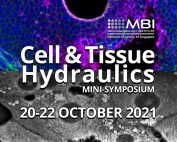
2021 Cell & Tissue Hydraulics: Virtual interactive symposium
REGISTRATION NOW OPEN. The Cell & Tissue Hydraulics Mini-Symposium will present three days of pre-recorded lectures, live talks from invited speakers and pre-recorded short talks and poster presentations.
Spotlight on MBI Prof Low Boon Chuan: Unravelling the chemistry of life
A recent NUS News article features Assoc Prof Low, who leads a dynamic team at MBI focusing on how cells signal – the way they communicate with one another and within themselves.
2021 Bootcamp on Mechanobiology
THIS EVENT HAS BEEN POSTPONED.
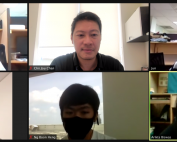
The group is growing!
Warm welcome to the first members of Mammalian Development & Tissue Hydraulics Lab! Fantastic team that helps to build the lab despite the challenges during the pandemic… Kudos to all and looking forward to exciting times ahead!
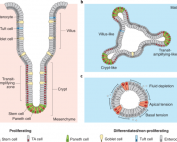
Mechano-osmotic forces shape organoid morphogenesis
Super happy to contribute to this exciting work on the role of lumen/tissue mechanics in organoid development. Beautiful collaboration between biologists and physicists. Also nice views by C. Nelson.
Zihao Wu
Alumni, Chan Group
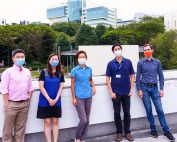
MBI PIs win MOE AcRF Tier 3 grant to study endomembrane aging
A research team led by Mechanobiology Institute (MBI) Principal Investigators Assoc. Prof. Tony Kanchanawong and Prof. Rong Li was recently awarded a Ministry of Education Academic Research Fund (MOE AcRF) Tier 3 grant.
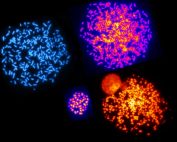
Preventing mistakes in chromosomal segregation
A recent study from the Li Lab at the Mechanobiology Institute, National University of Singapore and Johns Hopkins University, USA has revealed new aspects on the involvement of p53 protein in preventing mistakes in chromosomal segregation. Learn more
Jin Zhu
Senior Research Fellow, Facility Manager
Wan Jun Gan
Research Fellow, Chan Group

Meng Yue
Research Assistant, Class of January 2021, Kanchanawong Group
Pan Yuping
Research Assistant, Class of January 2021, Toyama Group