

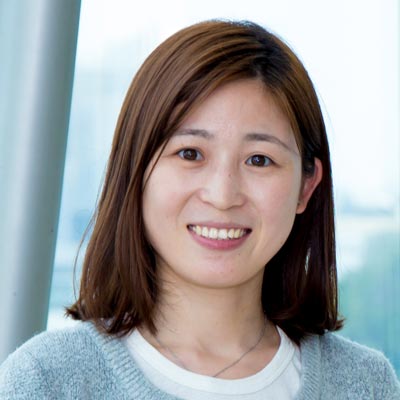
WANG Yejun
Alumni, Mechanobiology Institute, National University of Singapore
mbiwye@nus.edu.sg
Level 10 T-Lab
National University of Singapore
5A Engineering Drive 1
Singapore 117411

Chang Ye Ji
PhD Student, Biomedical Engineering Dept, Holle Group
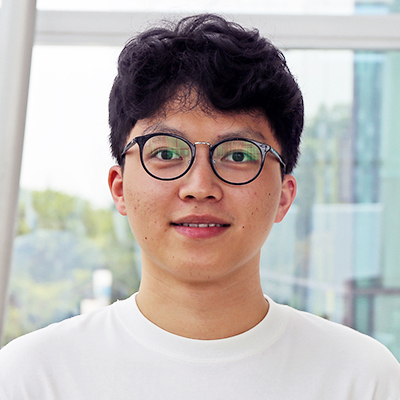
Gao Xu
PhD Student, Biomedical Engineering Dept, Holle Group

Raageshwari D/O Arulselvam
PhD Student, Biomedical Engineering Dept, Young Group
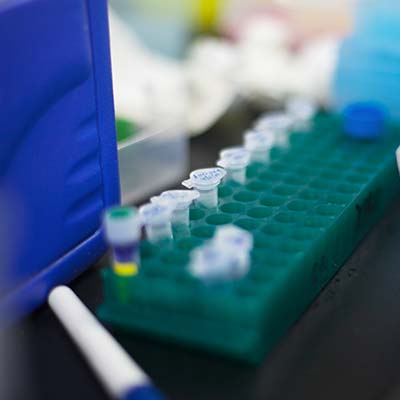
Seeking Postdoctoral Fellow in the Young & Thibault Laboratories at the Mechanobiology Institute, NUS
The Mechanobiology Institute, NUS seeks to recruit a Postdoctoral Research Fellow to Asst. Prof. Jennifer Young's lab.
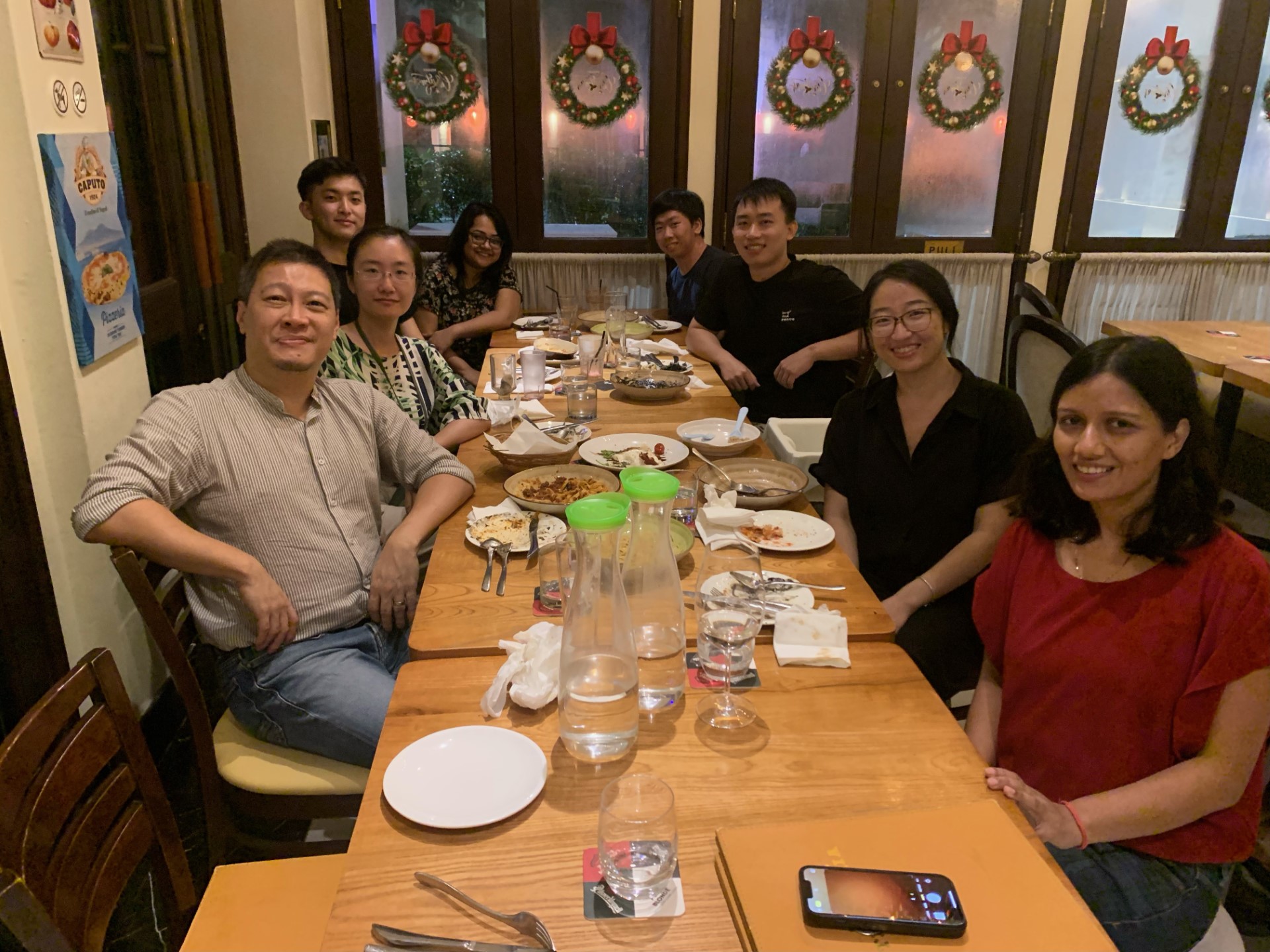
An early Christmas dinner to celebrate Chan Lab’s accomplishments in 2023!
As the year draws to a close, the Chan Lab celebrated the achievements and contributions by everyone (including many new faces!) in 2023 with an early Christmas dinner, and to thank them for their hard work this busy year. The Lab looks forward to more wonderful things to come in 2024!
How is Energy Transferred Across the Cellular System?
How is Energy Transferred Across the Cellular System?Cellular systems function at a nanometer level and use a highly dynamic set of components. Both of these factors act as primary constraints that prevent the generation of [...]
Wang Yejun
Alumni
I decided to switch into the world of biology after I received my BS in chemistry from Zhejiang University. With the interest in things happening inside nucleus, I joined Prof. Shiva’s lab as a graduate student, to study the role of external mechanical signals on gene regulation in eukaryotic cells. During my first one and a half years I developed a method to visualize active transcription sites on open chromatin spreads using super-resolution microscopy. Presently I’m studying the role of cell geometric constraints on 3D organization of chromosomes by using multiple techniques such as fluorescence in situ hybridization (FISH), confocal imaging, and super-resolution imaging.
Recent Publications
- Wang Y, Li X, Xia R, Wan Y, Lu J, Zhao Z, Zhang W, Wang Q, Saunders TE, and Yin J. Hedgehog-driven adaxial cell constriction patterns slow muscle fate and somite boundary remodeling in the presomitic mesoderm. Cell Rep 2026; 45(5):117319. [PMID: 42065961]
- Yang J, Guan Z, Zeng D, Qin Y, Zhao C, Wang S, Wu Q, Wang Q, Li H, Wu J, Huang H, Wang Y, Wu E, Thalmann NM, Lim CT, Wong TY, Jia W, Li H, Fregni F, and Sheng B. Extended reality in clinical neurology: From interdisciplinary innovations to clinical practice. Cell Rep Med 2026;:102696. [PMID: 41903546]
- Yang B, Li B, Zhu Y, Zhao M, Cheng Y, Zhao X, En-Jie DT, Wang Y, Zhang M, Tang X, Jin S, Sun Y, Zhang X, Xue B, Yan J, Wu G, Lin Z, Luo M, Yu H, Zhang L, Chen X, and Ni Q. Rational design of rigid mRNA folding architecture to enhance intracellular processing and protein production. Nat Nanotechnol 2026;. [PMID: 41772191]
- Liu X, Liu J, Wang Y, Yao M, Baker KB, Klapholz B, Brown NH, Goult BT, and Yan J. The mechanical response of vinculin. Sci Adv 2025; 11(44):eady6949. [PMID: 41171905]
- Wang Y, Zhang Y, Yu M, Xiu P, Jia Y, Chen H, Le S, Qian J, and Yan J. Salt-bridge mediated cooperativity and mechanical stabilization of tandem spectrin repeats. Nanoscale Horiz 2025;. [PMID: 40492359]
- Wang W, Huang Z, Wang Y, Li H, and Kanchanawong P. Vortex Interference Enables Optimal 3D Interferometric Nanoscopy. Phys Rev Lett 2025; 134(7):073802. [PMID: 40053988]
- Wang Y, Wang Y, Zhu Y, Yu P, Zhou F, Zhang A, Gu Y, Jin R, Li J, Zheng F, Yu A, Ye D, Xu Y, Liu Y, Saw TB, Hu G, Lim CT, and Yu F. Angiomotin cleavage promotes leader formation and collective cell migration. Dev Cell 2024;. [PMID: 39389053]
- Zhang Y, Du J, Liu X, Shang F, Deng Y, Ye J, Wang Y, Yan J, Chen H, Yu M, and Le S. Multi-domain interaction mediated strength-building in human α-actinin dimers unveiled by direct single-molecule quantification. Nat Commun 2024; 15(1):6151. [PMID: 39034324]
- Morales-Camilo N, Liu J, Ramírez MJ, Canales-Salgado P, Alegría JJ, Liu X, Ong HT, Barrera NP, Fierro A, Toyama Y, Goult BT, Wang Y, Meng Y, Nishimura R, Fong-Ngern K, Low CSL, Kanchanawong P, Yan J, Ravasio A, and Bertocchi C. Alternative molecular mechanisms for force transmission at adherens junctions via β-catenin-vinculin interaction. Nat Commun 2024; 15(1):5608. [PMID: 38969637]
- Zhang X, Ruan L, Wang H, Zhu J, Li T, Sun G, Dong Y, Wang Y, Berreby G, Shay A, Chen R, Ramachandran S, Dawson VL, Dawson TM, and Li R. Enhancing mitochondrial proteolysis alleviates alpha-synuclein-mediated cellular toxicity. NPJ Parkinsons Dis 2024; 10(1):120. [PMID: 38906862]