


Stuti K DESAI
Alumni, Mechanobiology Institute, National University of Singapore
How do neurotrophins, collapsin, and ephrins, serve as guidance cues?
How do neurotrophins, collapsin, and ephrins, serve as guidance cues? Neurotrophins Stimulating filopodia formation A secreted guidance cue which stimulates filopodia formation in growth cones. Two examples of secreted neurotrophins, brain-derived neurotrophic factor (BDNF) [...]
What is the NF-κB pathway?
What is the NF-κB pathway? NF-κB (nuclear factor kappa light chain enhancer of activated B cells) is a family of highly conserved transcription factors that regulate many important cellular behaviours, in particular, inflammatory responses, [...]
What is the Canonical Wnt Receptor Signaling Pathway?
What is the Canonical Wnt Receptor Signaling Pathway? The canonical Wnt receptor signaling pathway is a series of molecular events that are initiated by the binding of Wnt proteins to the frizzled family of [...]
How is SRF signaling activated?
How is SRF signaling activated? Myocardin, MAL (or MRTF-A) and MRTF-B are the best-studied examples of MRTFs. In the cytoplasm, MRTFs exist in a stable complex with monomeric G-actin via RPEL domains, which exist [...]
What is the Hippo-YAP/TAZ tumor-suppressor pathway?
What is the Hippo-YAP/TAZ tumor-suppressor pathway? Mechanical cues control Hippo-YAP/TAZ tumor-suppressor pathway The Hippo signaling pathway is a complex network of proteins that controls organ size via regulation of cellular proliferation, survival and differentiation. [...]
Which biochemical pathways are regulated by mechanical signals?
Which biochemical pathways are regulated by mechanical signals? Biochemical Mechanotransduction Cells are capable of relaying mechanical stimuli from their physical environment all the way down to the nucleus through electrochemical, biochemical or mechanical pathways. [...]
Stuti K Desai
Alumni 2020
Principal Investigator
Research Interests
Molecular Mechanisms of Mechanobiology
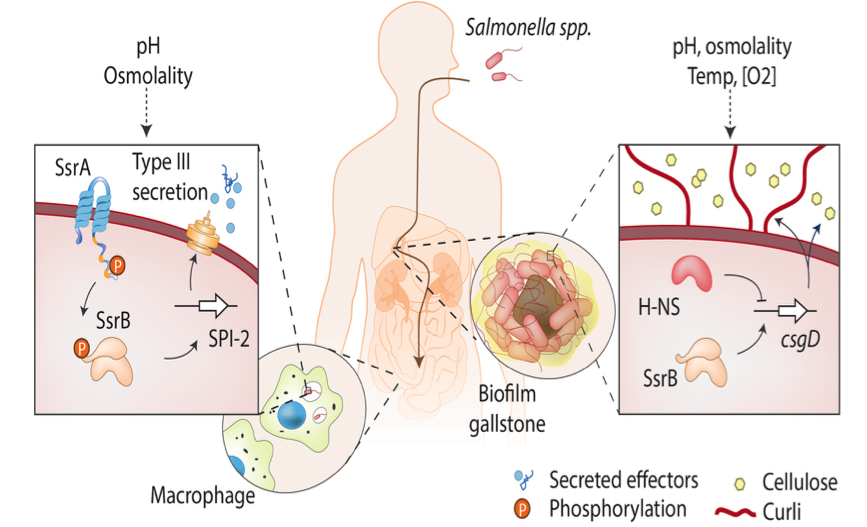
A fundamental trait shared amongst many mammalian pathogens is their ability to exist in different forms in order to survive and replicate in often fluctuating host and non-host environments. Two important gut pathogens, Salmonella Typhimurium and Salmonella Typhi, which cause gastroenteritis and typhoid fever, respectively, survive inside host cells by activation of a specific class of virulence genes. Salmonellae also develop to form hardy multi-cellular communities, called biofilms, on host tissues for successful survival and persistence in asymptomatic carriers. An active area of research focuses on understanding how the genetic program is regulated in coordination with environmental changes to evoke lifestyle changes. We recently discovered that SsrB, the transcriptional regulator of virulence genes, has the additional function of inducing biofilm formation by activating expression of the central biofilm regulator, CsgD. Generally, specific environmental changes activate a membrane-bound kinase, which in turn transfers the phosphoryl group to a transcriptional regulator in order to regulate virulence gene transcription. But, we discovered that even without phosphorylation, SsrB retains the ability to bind DNA and relieve the H-NS-mediated repressive effect on csgD transcription. SsrB is thus a molecular switch which drives the twin lifestyles of Salmonella Typhimurium; as SsrB~P, when phosphorylated by an actived SsrA kinase, it activates around 30 virulence genes required for survival within the host; and as SsrB, in the case when SsrA is inactive or absent, it counters transcriptional silencing at csgD to form biofilms.
For this study, we utilized the highly collaborative atmosphere at MBI and studied the behavior of the activator, SsrB, and the repressor, H-NS, at the csgD regulatory site using single molecule approaches with Prof. Yan Jie’s group. Going forward, I want to build on the diverse expertise at MBI and other groups in the region to extend these findings and study the specific mechanisms of lifestyle changes in more aggressive strains of Salmonella and validate the underlying signaling pathways in heterologous hosts as model systems.
Research Areas
Bacterial gene regulation, Biofilms, Host-pathogen interactions and Virulence strategies of Salmonellae
Biography
Dr. Stuti Desai joined the group of Prof. Linda Kenney at the Mechanobiology Institute, in 2012, after obtaining her doctorate from the Indian Institute of Science, Bangalore, India, under the guidance of Prof. Subramony Mahadevan. Her graduate studies involved deciphering the regulatory mechanisms that maintain the beta-glucoside utilization systems in a silent state in commensal as well as pathogenic gut bacteria. Prior to that, she studied Biochemistry for her Masters degree at the Maharaja Sayajirao University of Baroda, Baroda, India.
Recent Publications
- Desai SK, and Kenney LJ. Switching Lifestyles Is an in vivo Adaptive Strategy of Bacterial Pathogens. Front Cell Infect Microbiol 2019; 9:421. [PMID: 31921700]
- Desai SK, Padmanabhan A, Harshe S, Zaidel-Bar R, and Kenney LJ. Salmonella biofilms program innate immunity for persistence in Caenorhabditis elegans. Proc. Natl. Acad. Sci. U.S.A. 2019;. [PMID: 31160462]
- Dykas MM, Desai SK, Patra A, Motapothula MR, Poddar K, Kenney LJ, and Venkatesan T. Identification of Biofilm Inhibitors by Screening Combinatorial Libraries of Metal Oxide Thin Films. ACS Appl Mater Interfaces 2018;. [PMID: 29553712]
- Desai SK, and Kenney LJ. To ∼P or Not to ∼P? Non-canonical Activation by Two-Component Response Regulators. Mol. Microbiol. 2016;. [PMID: 27656860]
- Desai SK, Winardhi RS, Periasamy S, Dykas MM, Jie Y, and Kenney LJ. The horizontally-acquired response regulator SsrB drives a Salmonella lifestyle switch by relieving biofilm silencing. Elife 2016; 5. [PMID: 26880544]