

Seeking Postdoctoral Fellow in Dr. Anne Beghin’s Group at MBI, NUS
The Mechanobiology Institute, NUS seeks to recruit a Postdoctoral Research Fellow to Dr. Anne Beghin's lab.
Seeking Postdoctoral Fellow in the Young Laboratory at the Mechanobiology Institute, NUS
The Mechanobiology Institute, NUS seeks to recruit a Postdoctoral Research Fellow to Asst. Prof. Jennifer Young's lab.
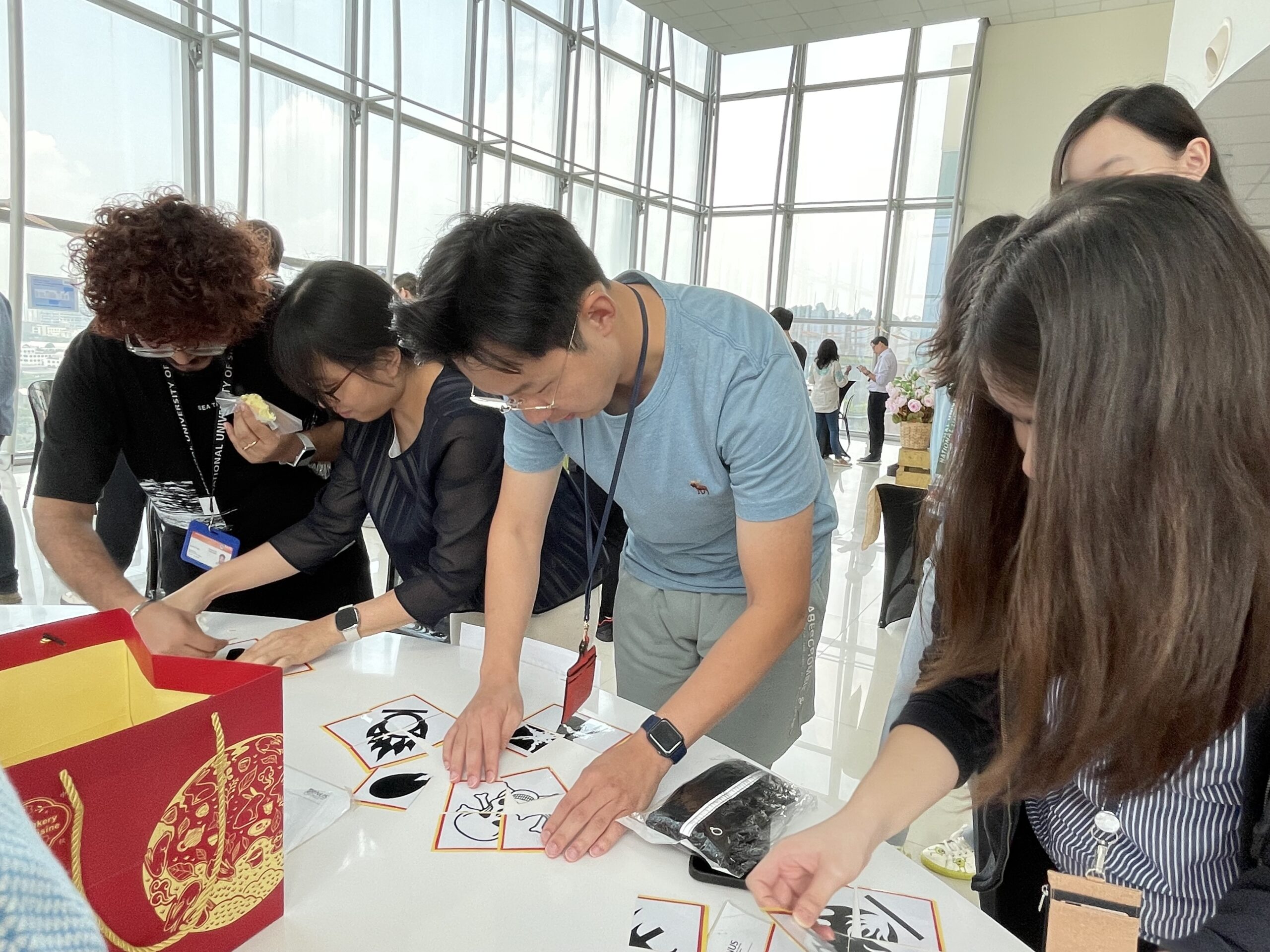
Know You Foe, Work Safely: MBI Safety Day and Safety & Health Management Awards
Through useful talks, fun games and good food, MBI learnt about the dangers in the lab/workplace, and celebrated the good work MBI has done in securing a safe and healthy work environment for all
MBI Conference 2023: Mechanobiology in Health and Disease
MBI's biggest in-person conference and event-of-the-year saw the convergence more than 250 enthusiastic researchers from 21 countries and their exciting discoveries from years of research in mechanobiology
Faculty Recruitment 2023/24
The Mechanobiology Institute (MBI) at the National University of Singapore (NUS) invites applications from outstanding candidates for faculty positions at all levels.
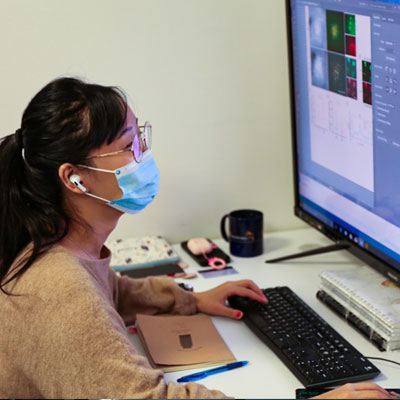
Seeking Research Fellow in the Theory Collaborator team at MBI, NUS
We seek to recruit a Research Fellow in the Theory Collaborator at the Mechanobiology Institute, NUS.
Jokhun Doorgesh Sharma
Alumni
Whether it was because of my rich ‘scientific’ sachildhood or my unflinching preference for science in high school, I had known for a long time that I was to work in a scientific field. But when I started to apply for undergraduate programs, it was really hard to choose between Life Sciences, Physics or engineering. I eventually ended up doing Life Sciences at the National University of Singapore (NUS); but my soft spot for physical sciences persisted and I registered for quite a few random physics and engineering courses along the way.
My first encounter with formal research was during a summer internship at the Institute of Molecular and Cell Biology (IMCB), A*STAR. Following that I embarked on a one year undergraduate research project at NUS in which I helped set up an autogenic platform for differentiation of human embryonic stem cells (hESCs). I was really fascinated by the whole experience and decided to undertake my Final Year Project in the same lab.
In my final semester, I enrolled for the undergraduate Mechanobiology course (LSM4234) and learned about the MechanoBiology Institute (MBI), where so much exciting biological research is being conducted using truly multi-disciplinary approaches. I was really excited by the prospect of working in Biology while still being in touch with Physics. Thus I joined Prof. Shivashankar’s lab as a Research Assistant in 2013 and after one year, I was very convinced this is where I want to be. The atmosphere is very conducive, members of Shiva’s lab are truly amazing people :-D and I am addressing questions which are intellectually very stimulating to me. Hence in Aug 2014 I joined Prof. Shivashankar’s group under the PhD program in Mechanobiology.
I have been studying how different extracellular matrix (ECM) constraints impinge on the stability of telomeres inside the nucleus. I observed that under certain matrix constraints, the telomeres can become very dynamic. Now I am interested in understanding the mechanism and biological significance of this instability, especially in the context of epigenetic reprogramming. Further, since telomeres are known to be hotspots for DNA damage, I want to study DNA damage and repair on highly dynamic telomeres. One question which has been bothering me for some time now is how most DNA damages (several tens of thousands per cell per day) are properly taken care of by intrinsic mechanisms, whereas once in a while, a cell will acquire damage in an irreparable manner and turn tumorous. Does mechanics play a role in that?