

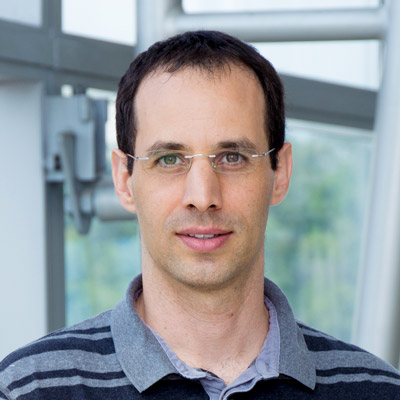
Ronen ZAIDEL-BAR
Department of Cell and Developmental Biology, Sackler Faculty of Medicine, Tel-Aviv University, Israel
Laboratory website
Zaidel-Bar Cell Adhesion Lab
What are stress fibers?
What are stress fibers? Stress fibers are higher order cytoskeletal structures composed of cross-linked actin filament bundles, and in many cases, myosin motor proteins, that span a length of 1-2 micrometers [1]. At least [...]
What is the first step in podosome assembly?
What is the first step in podosome assembly? Podosome initiation and assembly is highly regulated, both spatially and temporally. Dendritic cells best exemplify the temporal regulation of podosome formation. Following activation by an antigen [...]
What are podosomes?
What are podosomes? Podosomes are actin-rich, adhesive structures that are present at the ventral surface of cells of the monocytic myeloid lineage, stimulated endothelial cells [1] and cultured Src-transformed cancer cells. These structures are [...]
What are the first steps in invadopodia assembly and disassembly?
What is the first step in invadopodia assembly? Initiation of invadopdia formation is highly complex, being influenced by various signalling cascades and phosphorylation events that occur following detection of a stimulant. For example, activation [...]
How do invadopodia degrade the extracellular matrix?
How do invadopodia degrade the extracellular matrix? The main function attributed to invadopodia is that of extracellular matrix (ECM) degradation, facilitated by the secretion of proteases. Maintenance of this process requires the delivery of [...]
What mechanisms drive invadopodia extension?
What mechanisms drive invadopodia extension? Following initiation by an appropriate signal, the actin cytoskeleton is reorganized to facilitate invadopodia formation. Although several kinases and GTPases are known to influence the transduction of extracellular signaling [...]
Ronen Zaidel-Bar
Visiting Faculty
Currently Visting
6-12 Nov 2018
Office: T-Lab, Level 5
Research Areas
Cell-cell and cell-matrix adhesion, Regulation of actomyosin contractility and dynamics, C. elegans development, mechanics and molecular mechanisms of morphogenesis
Research Interests
- How do specific cytoskeletal proteins contribute to the organization and function of cell adhesion and actomyosin structures?
- How are signals processed within the “adhesome” and “contractome” to arrive at the appropriate cytoskeletal arrangement for a given cell state?
- How do adhesion sites and the cytoskeleton sense and respond to external mechanical forces?
Biography
Dr Zaidel-Bar obtained his Ph.D. working with Prof Benny Geiger (Weizmann Institute of Science) on the role of force in regulating cell-matrix adhesions. Their work first focused on single proteins and evolved to encompass the entire adhesome network. In his Postdoctoral training with Prof Jeff Hardin (University of Wisconsin – Madison) Dr Zaidel-Bar switched from studying cells in culture to employing the genetic model organism C. elegans for the study of cell-cell adhesions during development. Dr Zaidel-Bar was attracted to Singapore by the opening of MBI and was awarded the Singapore National Research Foundation Fellowship for promising young investigators.
Education
PhD Weizmann Institute of Science
Recent Publications
- Bertocchi C, Alegría JJ, Vásquez-Sepúlveda S, Ibanez-Prat R, Srinivasan A, Arrano-Valenzuela I, Castro-Pereira B, Soto-Montandon C, Trujillo-Espergel A, Montenegro-Rojas I, Deguchi S, Owen GI, Kanchanawong P, Cerda M, Motta G, Zaidel-Bar R, and Ravasio A. Systematic AI-assisted screening of the cadhesome to map epithelial monolayer mechanics. Cell Commun Signal 2026;. [PMID: 42399739]
- Ray S, Agarwal P, Nitzan A, Nédélec F, and Zaidel-Bar R. Actin capping protein regulates actomyosin contractility to maintain germline architecture in C. elegans. Development 2023;. [PMID: 36897576]
- Avivi Kela S, Sethi K, Tan PY, Suresh D, Ong HT, Castaneda PG, Amin MR, Laviv T, Cram EJ, Faix J, and Zaidel-Bar R. Tension-dependent RHGF-1 recruitment to stress fibers drives robust spermathecal tissue contraction. J Cell Biol 2022; 222(2). [PMID: 36574264]
- Chen Z, Oh D, Biswas KH, Zaidel-Bar R, and Groves JT. Probing the effect of clustering on EphA2 receptor signaling efficiency by subcellular control of ligand-receptor mobility. Elife 2021; 10. [PMID: 34414885]
- Hu S, Grobe H, Guo Z, Wang Y, Doss BL, Pan M, Ladoux B, Bershadsky AD, and Zaidel-Bar R. Reciprocal regulation of actomyosin organization and contractility in non-muscle cells by tropomyosins and alpha-actinins. Mol. Biol. Cell 2019;:mbcE19020082. [PMID: 31216217]
- Desai SK, Padmanabhan A, Harshe S, Zaidel-Bar R, and Kenney LJ. Salmonella biofilms program innate immunity for persistence in Caenorhabditis elegans. Proc. Natl. Acad. Sci. U.S.A. 2019;. [PMID: 31160462]
- Bouffard J, Cecchetelli AD, Clifford C, Sethi K, Zaidel-Bar R, and Cram EJ. The RhoGAP SPV-1 regulates calcium signaling to control the contractility of the C. elegans spermatheca during embryo transits. Mol. Biol. Cell 2019;:mbcE18100633. [PMID: 30726159]
- Priti A, Ong HT, Toyama Y, Padmanabhan A, Dasgupta S, Krajnc M, and Zaidel-Bar R. Syncytial germline architecture is actively maintained by contraction of an internal actomyosin corset. Nat Commun 2018; 9(1):4694. [PMID: 30410005]
- Agarwal P, and Zaidel-Bar R. Principles of Actomyosin Regulation In Vivo. Trends Cell Biol. 2018;. [PMID: 30385150]
- Chen Z, Oh D, Biswas KH, Yu C, Zaidel-Bar R, and Groves JT. Spatially modulated ephrinA1:EphA2 signaling increases local contractility and global focal adhesion dynamics to promote cell motility. Proc. Natl. Acad. Sci. U.S.A. 2018;. [PMID: 29866846]
Lab Members

Lu Jung Hsuan
Research Assistant, Yan Jie Group

Lim Yong Ann Ben
Research Assistant, Han Group

Jennifer Marlena
Research Assistant, Young Group

Seah Kwi Shan
Research Fellow, Li Group

Ng Pei Ying
Research Fellow, Holle Group
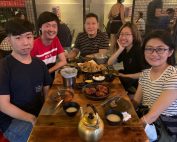
Welcome aboard, Boon Heng!
The Chan Lab welcomes Boon Heng, the first PhD student to the lab. Looking forward to exciting times ahead!
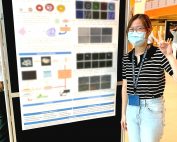
Farewell to Nicole, our first summer intern in the Lab!
Congrats to Nicole for winning the best video presentation in the MBI MUST program. We are lucky to have you! Thank you for bringing so much energy and joy to the lab. Hope to see you soon!
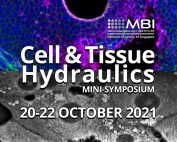
2021 Cell & Tissue Hydraulics: Virtual interactive symposium
REGISTRATION NOW OPEN. The Cell & Tissue Hydraulics Mini-Symposium will present three days of pre-recorded lectures, live talks from invited speakers and pre-recorded short talks and poster presentations.
Spotlight on MBI Prof Low Boon Chuan: Unravelling the chemistry of life
A recent NUS News article features Assoc Prof Low, who leads a dynamic team at MBI focusing on how cells signal – the way they communicate with one another and within themselves.
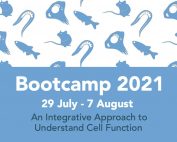
2021 Bootcamp on Mechanobiology
THIS EVENT HAS BEEN POSTPONED.
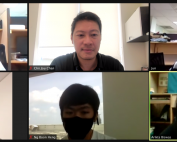
The group is growing!
Warm welcome to the first members of Mammalian Development & Tissue Hydraulics Lab! Fantastic team that helps to build the lab despite the challenges during the pandemic… Kudos to all and looking forward to exciting times ahead!
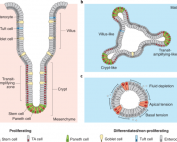
Mechano-osmotic forces shape organoid morphogenesis
Super happy to contribute to this exciting work on the role of lumen/tissue mechanics in organoid development. Beautiful collaboration between biologists and physicists. Also nice views by C. Nelson.