

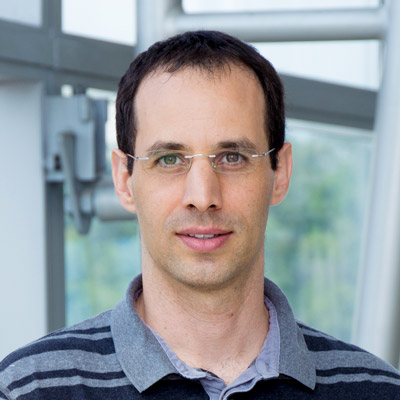
Ronen ZAIDEL-BAR
Department of Cell and Developmental Biology, Sackler Faculty of Medicine, Tel-Aviv University, Israel
Laboratory website
Zaidel-Bar Cell Adhesion Lab
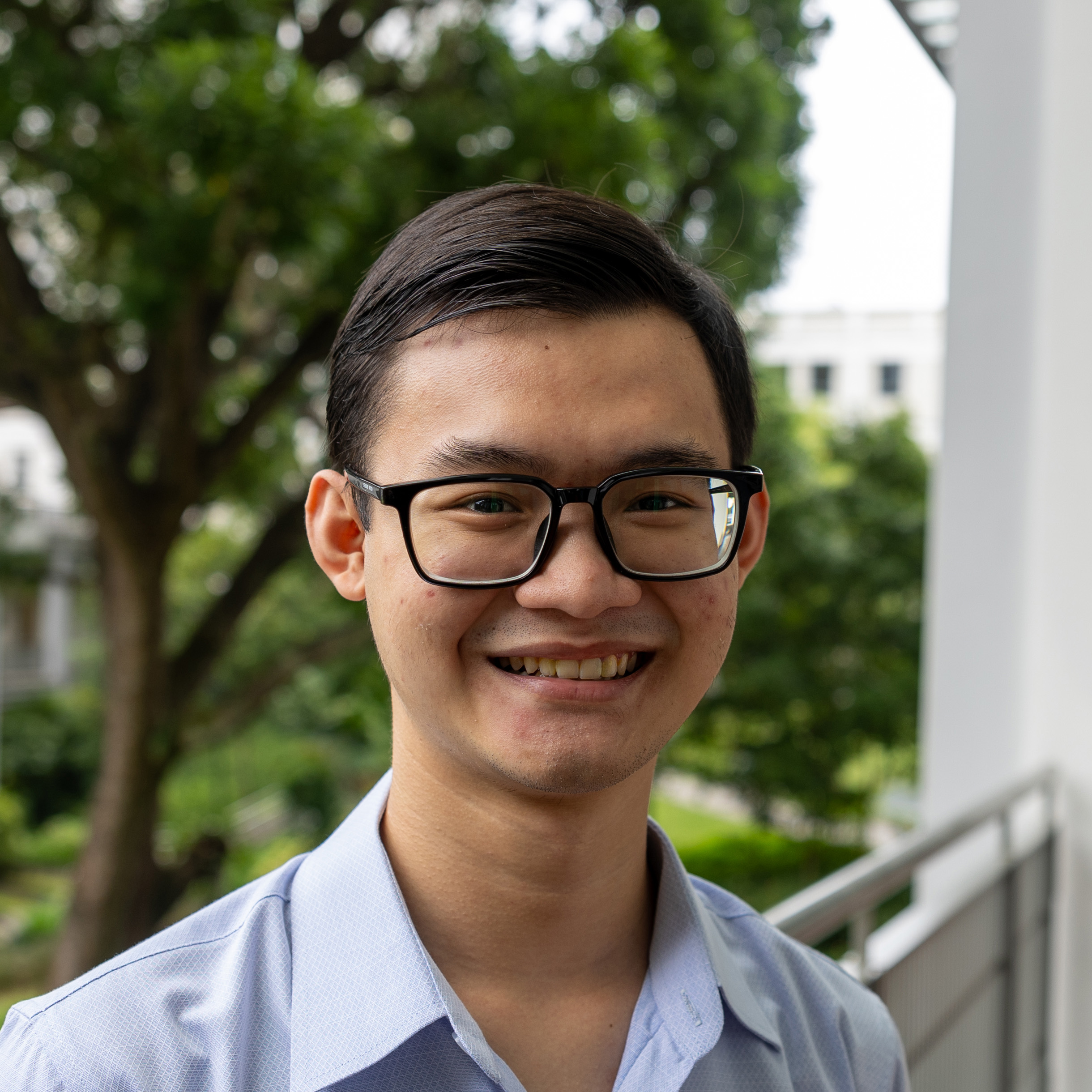
Le Mai Tan Dat (Daniel)
UROPS Intern, Chan Group
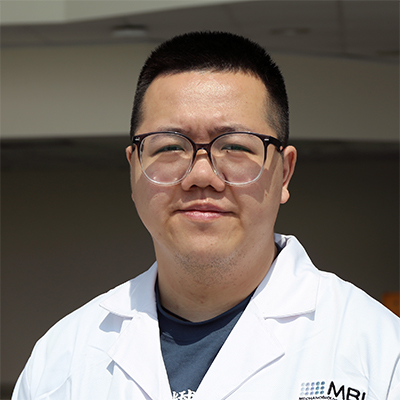
Wang Shida
PhD Student, Class of August 2024, Lim Group
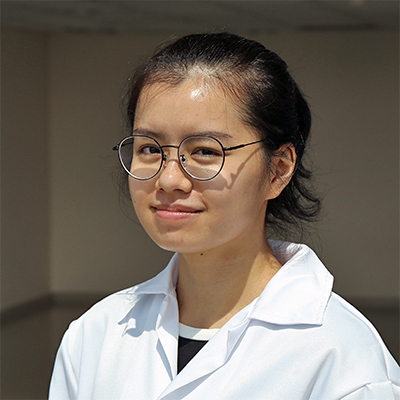
Tan Jue Yu Kelly
PhD Student, Class of August 2024, Chan Group
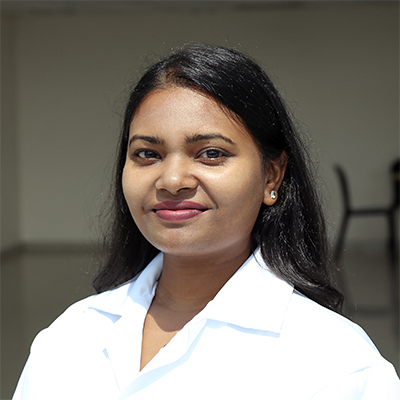
Shelly Anne Gnapragasan
PhD Student, Class of August 2024, Michelot Group
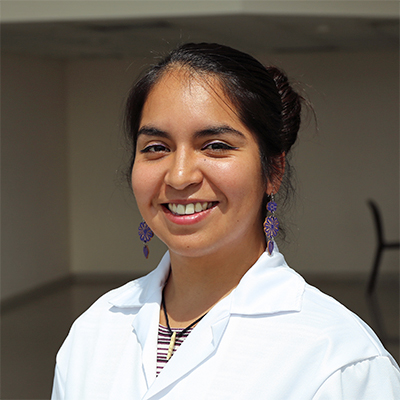
Mariana Barrera Velazquez
PhD Student, Class of August 2024, Dye Group
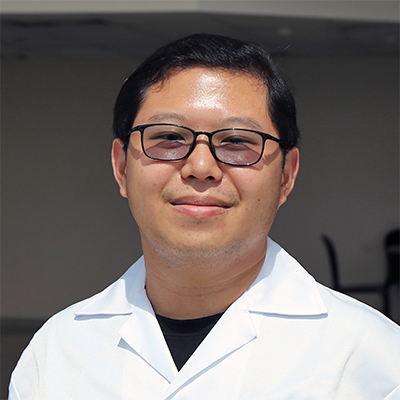
Lee Yuan Zhe
PhD Student, Class of August 2024, Hirashima Group
Ronen Zaidel-Bar
Visiting Faculty
Currently Visting
6-12 Nov 2018
Office: T-Lab, Level 5
Research Areas
Cell-cell and cell-matrix adhesion, Regulation of actomyosin contractility and dynamics, C. elegans development, mechanics and molecular mechanisms of morphogenesis
Research Interests
- How do specific cytoskeletal proteins contribute to the organization and function of cell adhesion and actomyosin structures?
- How are signals processed within the “adhesome” and “contractome” to arrive at the appropriate cytoskeletal arrangement for a given cell state?
- How do adhesion sites and the cytoskeleton sense and respond to external mechanical forces?
Biography
Dr Zaidel-Bar obtained his Ph.D. working with Prof Benny Geiger (Weizmann Institute of Science) on the role of force in regulating cell-matrix adhesions. Their work first focused on single proteins and evolved to encompass the entire adhesome network. In his Postdoctoral training with Prof Jeff Hardin (University of Wisconsin – Madison) Dr Zaidel-Bar switched from studying cells in culture to employing the genetic model organism C. elegans for the study of cell-cell adhesions during development. Dr Zaidel-Bar was attracted to Singapore by the opening of MBI and was awarded the Singapore National Research Foundation Fellowship for promising young investigators.
Education
PhD Weizmann Institute of Science
Recent Publications
- Bertocchi C, Alegría JJ, Vásquez-Sepúlveda S, Ibanez-Prat R, Srinivasan A, Arrano-Valenzuela I, Castro-Pereira B, Soto-Montandon C, Trujillo-Espergel A, Montenegro-Rojas I, Deguchi S, Owen GI, Kanchanawong P, Cerda M, Motta G, Zaidel-Bar R, and Ravasio A. Systematic AI-assisted screening of the cadhesome to map epithelial monolayer mechanics. Cell Commun Signal 2026;. [PMID: 42399739]
- Ray S, Agarwal P, Nitzan A, Nédélec F, and Zaidel-Bar R. Actin capping protein regulates actomyosin contractility to maintain germline architecture in C. elegans. Development 2023;. [PMID: 36897576]
- Avivi Kela S, Sethi K, Tan PY, Suresh D, Ong HT, Castaneda PG, Amin MR, Laviv T, Cram EJ, Faix J, and Zaidel-Bar R. Tension-dependent RHGF-1 recruitment to stress fibers drives robust spermathecal tissue contraction. J Cell Biol 2022; 222(2). [PMID: 36574264]
- Chen Z, Oh D, Biswas KH, Zaidel-Bar R, and Groves JT. Probing the effect of clustering on EphA2 receptor signaling efficiency by subcellular control of ligand-receptor mobility. Elife 2021; 10. [PMID: 34414885]
- Hu S, Grobe H, Guo Z, Wang Y, Doss BL, Pan M, Ladoux B, Bershadsky AD, and Zaidel-Bar R. Reciprocal regulation of actomyosin organization and contractility in non-muscle cells by tropomyosins and alpha-actinins. Mol. Biol. Cell 2019;:mbcE19020082. [PMID: 31216217]
- Desai SK, Padmanabhan A, Harshe S, Zaidel-Bar R, and Kenney LJ. Salmonella biofilms program innate immunity for persistence in Caenorhabditis elegans. Proc. Natl. Acad. Sci. U.S.A. 2019;. [PMID: 31160462]
- Bouffard J, Cecchetelli AD, Clifford C, Sethi K, Zaidel-Bar R, and Cram EJ. The RhoGAP SPV-1 regulates calcium signaling to control the contractility of the C. elegans spermatheca during embryo transits. Mol. Biol. Cell 2019;:mbcE18100633. [PMID: 30726159]
- Priti A, Ong HT, Toyama Y, Padmanabhan A, Dasgupta S, Krajnc M, and Zaidel-Bar R. Syncytial germline architecture is actively maintained by contraction of an internal actomyosin corset. Nat Commun 2018; 9(1):4694. [PMID: 30410005]
- Agarwal P, and Zaidel-Bar R. Principles of Actomyosin Regulation In Vivo. Trends Cell Biol. 2018;. [PMID: 30385150]
- Chen Z, Oh D, Biswas KH, Yu C, Zaidel-Bar R, and Groves JT. Spatially modulated ephrinA1:EphA2 signaling increases local contractility and global focal adhesion dynamics to promote cell motility. Proc. Natl. Acad. Sci. U.S.A. 2018;. [PMID: 29866846]
Lab Members
How is nuclear “prestress” maintained?
How is nuclear “prestress” maintained? As an integral part of cellular behavior, cells are sensitive to matrix rigidity, local geometry and stress or strain applied by external factors [1]. In recent years, it has [...]
What are chromosomes and chromosome territories?
What are chromosomes and chromosome territories? While metaphase chromosomes can be depicted as distinct bodies with well-defined shapes and sizes, interphase chromosomes are less uniform and, by filling the nuclear space, difficult to distinguish. [...]
How is the nucleus coupled to the cytoskeleton?
How is the nucleus coupled to the cytoskeleton? Cytoskeletal filaments bridge the nucleus to the plasma membrane, which in turn is anchored at sub-cellular sites to extracellular substrates via a plethora of proteins that [...]
What are nucleosomes?
What are nucleosomes? In order to fit DNA into the nucleus, it must be packaged into a highly compacted structure known as chromatin. In the first step of this process DNA is condensed into [...]
How does chromatin condensation keep the nucleus compact?
How does chromatin condensation keep the nucleus compact? Packaging of approximately a meter-long DNA duplex within the elastic nucleus determines its spatial 3D architecture and the genomic accessibility of tissue-specific transcriptional programs. Apart from [...]
How do chromosome territory dynamics affect gene redistribution?
How do chromosome territory dynamics affect gene redistribution? The spatial organization of chromatin within the 3-dimensional space of a chromosome territory enables the co-localization of co-transcribed genes and their transcriptional foci. Many gene positioning [...]
What are transcription factories?
What are transcription factories? The primary role of chromatin assembly is the compaction of an otherwise very long DNA molecule into discrete structures that fit into the nucleus. However, this compaction cannot be achieved [...]
How does chromatin remodeling impact gene transcription?
How does chromatin remodeling impact gene transcription? While chromosome territory dynamics is believed to regulate gene expression through the redistribution of genes and the subsequent co-localization of these genes with transcription machinery, changes are [...]
How is transcription regulated in stem cells?
How is transcription regulated in stem cells? Pluripotent stem cells can potentially differentiate into any given cell type. They commonly exhibit mechanically softer nuclei [1], lack type-A lamins [2] and have a poorly defined [...]
How is DNA replicated?
How is DNA replicated? Cells must replicate their DNA before they can divide. This ensures that each daughter cell gets a copy of the genome, and therefore, successful inheritance of genetic traits. DNA replication [...]
What is translation?
What is translation? Translation is a process that involves the synthesis of an amino acid chain from an mRNA blueprint. These polypeptide chains fold into functional proteins. Translation occurs outside the nucleus once nuclear [...]
How does the heart form?
How does the heart form? The heart is derived from the splanchnic lateral mesoderm and initially forms as two crescent-shaped endocardial plates inside the evolving pericardial cavity. As the embryo undergoes lateral and cranial [...]