


Linda J KENNEY
Alumni, Mechanobiology Institute, National University of Singapore

CHEAM Mei Shan
PhD Student, Class of August 2025, Toyama Group
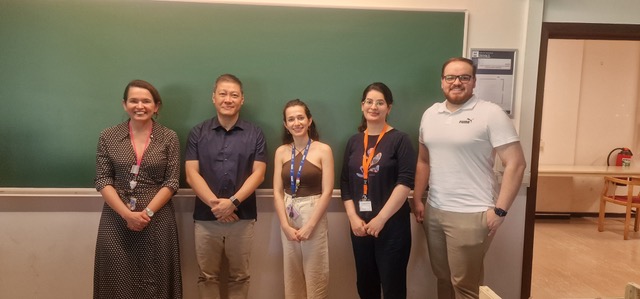
Thanks to Christiani Amorim at UC Louvain, for the kind invitation
Looking forward to new collaborations in the future!
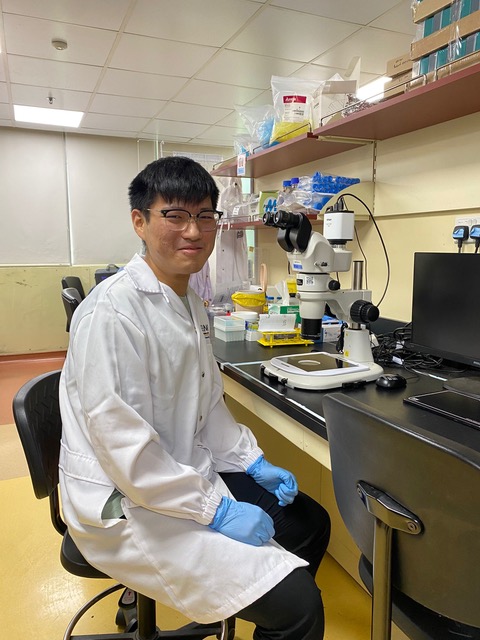
Congratulations to Wee Juin Shin for being selected to present his work at the Amgen Scholars Asia Symposium!
Our Amgen scholar, Wee Juin Shin, has been selected to present his work on ‘the Influence of substrate curvature on theca cell nematic flow’, at the Amgen Scholar Asia Symposium in Kyoto!

Geetika Chouhan
Research Fellow, Dye Group
Linda J Kenney
Alumni
Research Areas
Signal transduction in bacteria; Bacterial Pathogenesis; Mechanotransduction and osmotic signaling in E. coli; Mechanisms of anti-silencing of virulence genes in Salmonella
Research Interests
Our laboratory is interested in signal transduction and the regulation of gene expression in prokaryotes. In particular, we are studying the two-component regulatory system EnvZ/OmpR that regulates the expression of outer membrane proteins as well as many other genes. Our present work focuses on how OmpR activates genes required for systemic infection (located on Salmonella pathogenicity island 2) in Salmonella enterica.
The Kenney Lab’s research was recently featured in an article exploring the bacterial molecular switch between virulence or dormancy, Salmonella Lifestyle Choices. Members of her lab have discovered that the bacterial protein SsrB is the molecular switch for determining whether Salmonella infections become acute and virulent, or remain in a dormant carrier state.
The study is published in eLife (Desai et al., The horizontally-acquired response regulator SsrB drives a Salmonella lifestyle switch by relieving biofilm silencing, February 2, 2016, eLife 2016; 5: e10747, doi: 10.7554/eLife.10747). Read full article.
Biography
Dr Kenney is a Professor of Microbiology at the University of Illinois-Chicago. Her laboratory studies two-component systems in bacteria that control gene expression at a single cell and nanometer level.

Professor Linda J Kenney and Professor Michael Sheetz interviewed by the Washington Post at the April 2017 March for Science.
Education
PhD University of Pennsylvania
Recent Publications
- Fernandez M, Yamanaka Y, Zangoui P, White MA, and Kenney LJ. The sulfur assimilation pathway mitigates redox stress from acidic pH in Salmonella Typhi H58. mBio 2025;:e0046725. [PMID: 40422406]
- Shetty D, and Kenney LJ. A pH-sensitive switch activates virulence in Salmonella. Elife 2023; 12. [PMID: 37706506]
- Oh D, Liu X, Sheetz MP, and Kenney LJ. Small, Dynamic Clusters of Tir-Intimin Seed Actin Polymerization. Small 2023;:e2302580. [PMID: 37649226]
- Mon KKZ, Si Z, Chan-Park MB, and Kenney LJ. Polyimidazolium Protects against an Invasive Clinical Isolate of Salmonella Typhimurium. Antimicrob Agents Chemother 2022;:e0059722. [PMID: 36094258]
- Jacob H, Geng H, Shetty D, Halow N, Kenney LJ, and Nakano MM. Distinct Interaction Mechanism of RNAP and ResD and Distal Subsites for Transcription Activation of Nitrite Reductase in Bacillus subtilisψ. J Bacteriol 2021;:JB0043221. [PMID: 34898263]
- Singh MK, Zangoui P, Yamanaka Y, and Kenney LJ. Genetic code expansion enables visualization of Salmonella type three secretion system components and secreted effectors. Elife 2021; 10. [PMID: 34061032]
- Kenney LJ, and Anand GS. EnvZ/OmpR Two-Component Signaling: An Archetype System That Can Function Noncanonically. EcoSal Plus 2020; 9(1). [PMID: 32003321]
- Desai SK, and Kenney LJ. Switching Lifestyles Is an in vivo Adaptive Strategy of Bacterial Pathogens. Front Cell Infect Microbiol 2019; 9:421. [PMID: 31921700]
- Desai SK, Padmanabhan A, Harshe S, Zaidel-Bar R, and Kenney LJ. Salmonella biofilms program innate immunity for persistence in Caenorhabditis elegans. Proc. Natl. Acad. Sci. U.S.A. 2019;. [PMID: 31160462]
- Ottemann KM, and Kenney LJ. Editorial overview: Host-pathogen interactions: bacteria. Curr. Opin. Microbiol. 2019; 47:iii-v. [PMID: 31138403]
Lab Members
How do focal adhesions disassemble?
How do focal adhesions disassemble? Disassembly is critical during cell spreading and forward movement to allow FAs to extend outwards towards the cell periphery [1]. Disassembly of adhesions can take place as a result [...]
How do focal adhesions mature?
How do focal adhesions mature? Adhesions that manage to grow beyond the transient phase further undergo qualitative changes in a phase described as maturation. This transformation of adhesion sites into stress-fiber bound focal adhesions [...]
What are mature focal adhesions composed of?
What are mature focal adhesions composed of? Mature FAs vary in size between 1 to 5 µm and to date, more than 80 types of proteins (~150 proteins) have been located in the FA [...]
What is the first step in focal adhesion assembly?
What is the first step in focal adhesion assembly? Focal adhesion formation is initiated upon the binding of adhesion receptors to extracellular matrix (ECM) ligands (e.g. fibronectin, vitronectin, collagen) along the cell periphery usually [...]
What is the role of integrin clustering in focal adhesion assembly?
What is the role of integrin clustering in focal adhesion assembly? There is still much debate over the mechanisms of signal transduction following integrin-ligand binding, however recent studies reveal that irrespective of the global [...]
What is the role of Rho GTPases in the regulation of focal adhesion assembly?
What is the role of Rho GTPases in the regulation of focal adhesion assembly? Synergistic integrin-syndecan signaling The rate and extent of focal adhesion formation and maturation are regulated by factors such as synergistic [...]
How do nascent adhesions grow into mature focal adhesions?
How do nascent adhesions grow into mature focal adhesions? Nascent adhesions undergo a transient phase of rapid assembly and disassembly through which a fraction of adhesions survive to evolve into more stable and larger [...]
What steps are involved in the formation of focal adhesions?
What steps are involved in the formation of focal adhesions? The assembly of focal adhesions is highly regulated, with protein recruitment occurring in a sequential manner [1], and resulting in structures that are organized [...]
What are actin filaments?
What are actin filaments? Actin filaments (F-actin) are linear polymers of globular actin (G-actin) subunits and occur as microfilaments in the cytoskeleton and as thin filaments, which are part of the contractile apparatus, in [...]
What is the cytoskeleton?
What is the Cytoskeleton? The eukaryotic cytoskeleton is a network of three long filament systems, made from the repetitive assembly and disassembly of dynamic protein components. The primary filament systems comprising the cytoskeleton are [...]
Arikta and Yuting shared their research as speakers at the MBI Conference 2023
Congratulations to Arikta and Yuting for being selected as speakers and sharing their latest research on ovarian folliculogenesis in MBI Conference 2023: Mechanobiology in Health and Disease. Thanks to various feedback following the talks!
Seeking Postdoctoral Fellow in Dr. Anne Beghin’s Group at MBI, NUS
The Mechanobiology Institute, NUS seeks to recruit a Postdoctoral Research Fellow to Dr. Anne Beghin's lab.