


KOH Cheng Gee
Collaborator, Mechanobiology Institute, National University of Singapore
Associate Chair (Faculty), School of Biological Sciences, Nanyang Technological University
cgkoh@ntu.edu.sg
+65 6316 2854
SBS-03n-38
Nanyang Technological University
50 Nanyang Avenue
Singapore 639798
Research Program
The Cell-Matrix and Cell-Cell Mechanotransduction Group
Koh Cheng Gee
Collaborator
Research Areas
Cell signalling; Regulation of actin cytoskeleton; Rho GTPases, their effectors and regulators
Research Interests
Our laboratory is interested in the signal transduction events involving small GTPases of the Rho family, their regulators and effectors. These proteins play key roles in transducing extracellular stimuli into distinct responses including cell shape changes, cell motility, adhesion, cell division and phagocytosis. The emphasis of our current research is on the kinase PAK, its interacting protein PIX and a family of serine/ threonine phosphataes of the PP2C family, POPXs.
Biography
Dr Koh did her undergraduate studies at the Department of Chemistry at the National University of Singapore. After completing her Ph.D. with Sydney Brenner at the University of Cambridge, she returned to Singapore to work on Fugu genomics at the Institute of Molecular and Cell Biology. She later moved to Louis Lim’s laboratory at the same institute to study small GTPases-mediated cell signaling. In 2004, Dr Koh started her own laboratory at the School of Biological Sciences, Nanyang Technological University. Dr Koh is also a Principal Investigator at MBI.
Education
PhD University of Cambridge
Recent Publications
- Zhang S, Chong LH, Woon JYX, Chua TX, Cheruba E, Yip AK, Li H, Chiam K, and Koh C. Zyxin regulates embryonic stem cell fate by modulating mechanical and biochemical signaling interface. Commun Biol 2023; 6(1):62. [PMID: 36653484]
- Wong DCP, Pan CQ, Er SY, Thivakar T, Rachel TZY, Seah SH, Chua PJ, Jiang T, Chew TW, Chaudhuri PK, Mukherjee S, Salim A, Aye TA, Koh CG, Lim CT, Tan PH, Bay BH, Ridley AJ, and Low BC. The Scaffold RhoGAP Protein ARHGAP8/ BPGAP1 Synchronizes Rac and Rho Signaling to Facilitate Cell Migration. Mol Biol Cell 2023;:mbcE21030099. [PMID: 36598812]
- Yip AK, Zhang S, Chong LH, Cheruba E, Woon JYX, Chua TX, Goh CJH, Yang H, Tay CY, Koh C, and Chiam K. Zyxin Is Involved in Fibroblast Rigidity Sensing and Durotaxis. Front Cell Dev Biol 2021; 9:735298. [PMID: 34869319]
- Sathe SR, Jain D, Koh C, and Yim EKF. POPX2 phosphatase enhances topographical contact guidance for cell morphology and migration. Biomed Mater 2020;. [PMID: 33321483]
- Koon YL, Zhang S, Rahmat MB, Koh CG, and Chiam K. Enhanced Delta-Notch Lateral Inhibition Model Incorporating Intracellular Notch Heterogeneity and Tension-Dependent Rate of Delta-Notch Binding that Reproduces Sprouting Angiogenesis Patterns. Sci Rep 2018; 8(1):9519. [PMID: 29934586]
- Ou S, Tan M, Weng T, Li H, and Koh C. LIM kinase1 regulates mitotic centrosome integrity via its activity on dynein light intermediate chains. Open Biol 2018; 8(6). [PMID: 29925632]
- Weng T, and Koh C. POPX2 phosphatase regulates apoptosis through the TAK1-IKK-NF-κB pathway. Cell Death Dis 2017; 8(9):e3051. [PMID: 28906490]
- Zhang S, Weng T, Cheruba E, Guo T, Chan H, Sze SK, and Koh C. Phosphatase POPX2 Exhibits Dual Regulatory Functions in Cancer Metastasis. J. Proteome Res. 2016;. [PMID: 27976581]
- Hoon JL, Tan MH, and Koh C. The Regulation of Cellular Responses to Mechanical Cues by Rho GTPases. Cells 2016; 5(2). [PMID: 27058559]
- Khaw S, Min-Wen C, Koh C, Lim B, and Shyh-Chang N. Oocyte Factors Suppress Mitochondrial Polynucleotide Phosphorylase to Remodel the Metabolome and Enhance Reprogramming. Cell Rep 2015; 12(7):1080-8. [PMID: 26257174]
Lab Members
Seeking Postdoctoral Fellow in the Chan Laboratory at the Mechanobiology Institute, NUS
Asst. Prof. Chan seeks to to recruit a Postdoctoral Fellow in the Chan Laboratory at the Mechanobiology Institute, NUS.

Koya Yoshizawa
Research Fellow, Zhu Group

Seeking Communications & Events Associate at the Mechanobiology Institute, National University of Singapore
The Mechanobiology Institute (MBI), National University of Singapore (NUS), is seeking to recruit a Communications & Events Associate.
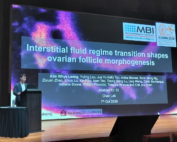
Chan lab members present their latest research at the International Conference on Mechanics in Medicine and Biology, Singapore!
Congratulations to Kosei for winning Best Oral Presentation, and to Kelly and Neha for their Poster Prize Awards!

WANG Tiantian
PhD Student, Class of August 2026

Sudha MERLA
PhD Student, Class of August 2026

FENG Shenlei
PhD Student, Class of August 2026

LI Xukuan
PhD Student, Class of August 2026

Ryu NG Zhi Xiong
PhD Student, Class of August 2026

Nandhini KRISHNAMURTHY
PhD Student, Class of August 2026

Sanchit KORDE
PhD Student, Class of August 2026

Hiroki James LEE
PhD Student, Class of August 2026

