
What is the ‘Fork Initiation and Zipper’ model?
What is the ‘Fork Initiation and Zipper’ model? The ‘Fork Initiation and Zipper’ Model Nectin-nectin cis interactions enable the formation of nectin-nectin trans interactions on apposing cells. These interactions, being uncooperative and short-lived in [...]
What is the role of plaque proteins in adherens junction assembly?
What is the role of plaque proteins in adherens junction assembly? Cytoplasmic plaque of adherens junctions One of the primary roles of cell-cell adhesion complexes is to connect the actomyosin network of one cell [...]
What is the role of adaptor proteins in the stabilization and function of core adherens junction components?
What is the role of adaptor proteins in the stabilization and function of core adherens junction components? Recruitment of plaque proteins to adherens junctions The difficulties in establishing a direct link between the α-catenin–β-catenin [...]
What is the role of cadherin and nectin recruitment in adherens junction assembly?
What is the role of cadherin and nectin recruitment in adherens junction assembly? Cadherin Recruitment Type I cadherins, also known as classical cadherins, are commonly found in adherens junctions (AJs) and desmosomes. They are [...]
How does integrin clustering affect integrin signalling?
How does integrin clustering affect integrin signaling? Localization of Integrin The concentration of β subunits is generally high while that of α subunit is the factor limiting the amount of heterodimers that localize on [...]
What is zyxin?
What is Zyxin? Zyxin is enriched along actin filaments, stress fiber bundles, and at cell-cell or cell-matrix adhesion sites [1][2]. Zyxin is specifically found in more mature adhesions [3] and its absence in early [...]
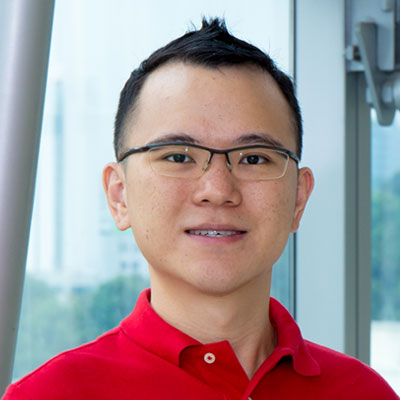
Ding Wei Yung
Alumni
Principal Investigator
Research Interests
Cell-Matrix and Cell-Cell Mechanotransduction, Molecular Mechanisms of Mechanobiology
Wei Yung’s interest lies in understanding the sophistication of cells as robust machines. Using C. elegans, a 1mm nematode, as a model system, he investigates the cellular machinery underlying newly fertilized zygotes that drives critical force-dependent processes such as polarization and cytokinesis.
Biography
Wei Yung completed his Bachelor’s degree in Bioengineering (Second Class Upper) from the National University of Singapore in 2012. In his honors dissertation under the co-supervision of Professor James Goh and Professor Wong Hee Kit, he optimized the conditions required for the construction of interbody spinal fusion device using primary adipose stem cells seeded in a biodegradable polycaprolactone/tricalcium sulphate (PCL/TCP) scaffold. The work was presented in the Bioengineering Showcase 2012 and he was awarded the Best Poster Award. After he was enrolled in the Mechanobiology Graduate Program, he joined Dr. Zaidel-Bar’s Cell Adhesion and Morphogenesis Lab and is currently searching for novel genes involved in regulating C. elegans early embryogenesis.